
Why Do Nations Need Borders?
The Purpose of Physical, Religious and Cultural Boundaries


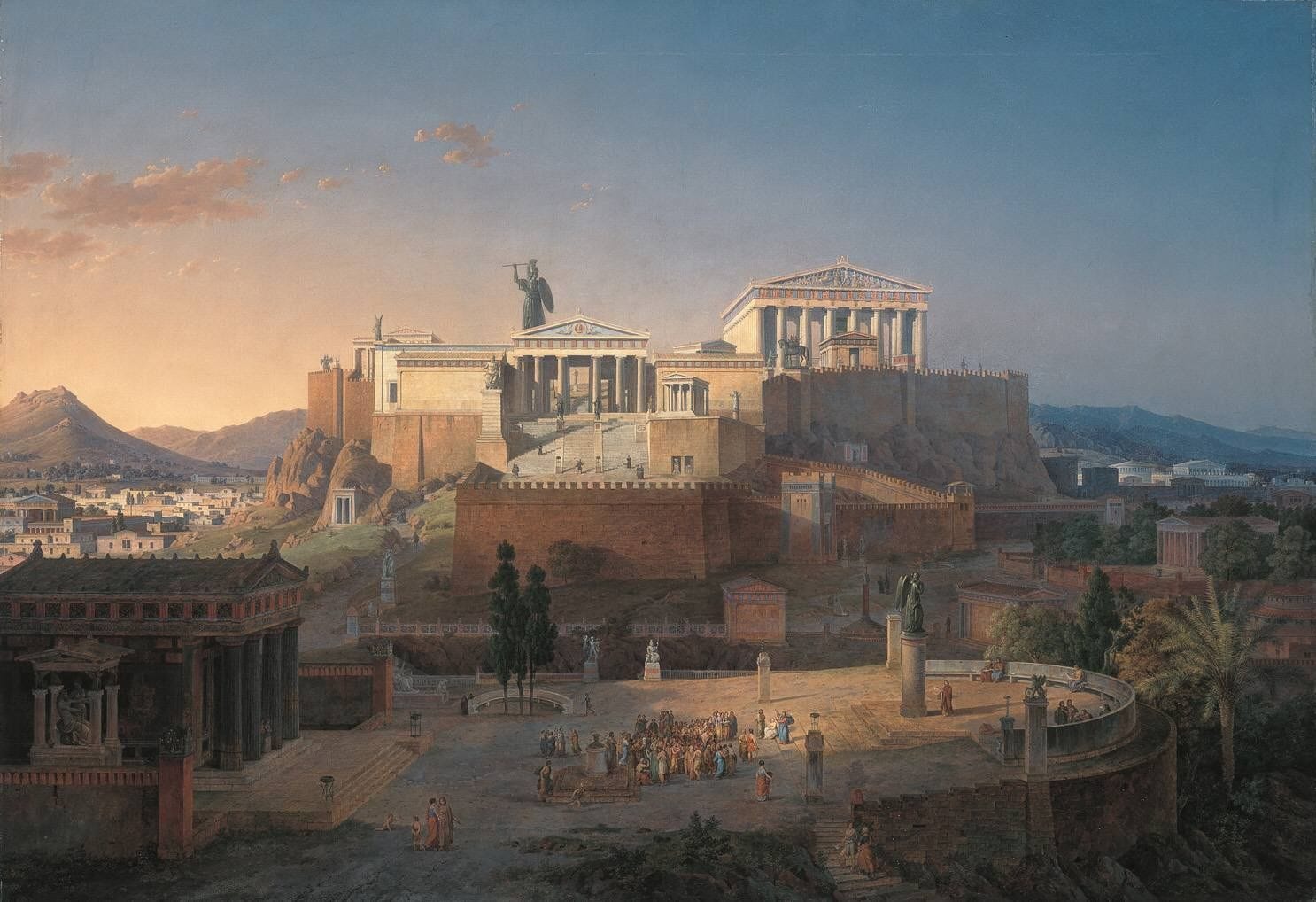
Historians and political theorists have long noted that no society — ancient or modern — appears out of a void as drifting abstractions that later harden into institutions. Every civilization begins as a people already shaped by land, faith, and inherited culture.
And just as a household needs walls to protect the family within, a people require boundaries — physical and cultural, visible and invisible — that distinguish them from outsiders and preserve the form of life they mean to hand on.
Yet an opposing view insists the analogy is outdated: that nations are the remnants of an antiquated past, that borders are arbitrary lines drawn by history, and that humanity is better understood as a single moral community rather than distinct peoples.
This is why the question “Why do nations need borders?” predates contemporary arguments about sovereignty or immigration. It belongs to the older inquiry into how order is created and how justice survives across generations. At its center lies the more unsettling question: what is a nation?
Is it an accident, is it an idea, or is it a family?
If it is merely an accident or an idea, then borders are arbitrary lines. But if a nation is a family then borders are not optional — they are the conditions of its survival, and must be defended.
Reminder: You can get tons of members-only content dedicated to useful knowledge, and support our Mission at the same time for a few dollars per month 👇
Two full-length, new articles every single week
Get actionable principles from history to help you navigate modernity
Access to the entire archive of useful knowledge that built the West
Support independent, educational content that reaches millions
The Classical Understanding: Borders as the Form of a People
According to the Ancients, a people did not emerge as an abstract collection of individuals but as a koinōnia — a living fellowship or extended family whose character was inseparable from the land it inhabited and the boundaries that defined it.
Rather than treating geography as an accident, the ancients saw it as the primordial architect of a people’s habits, virtues, and limits. In the Laws, Plato writes that “the habits of the citizens must be molded by the laws, and the laws must follow the nature of the place.”
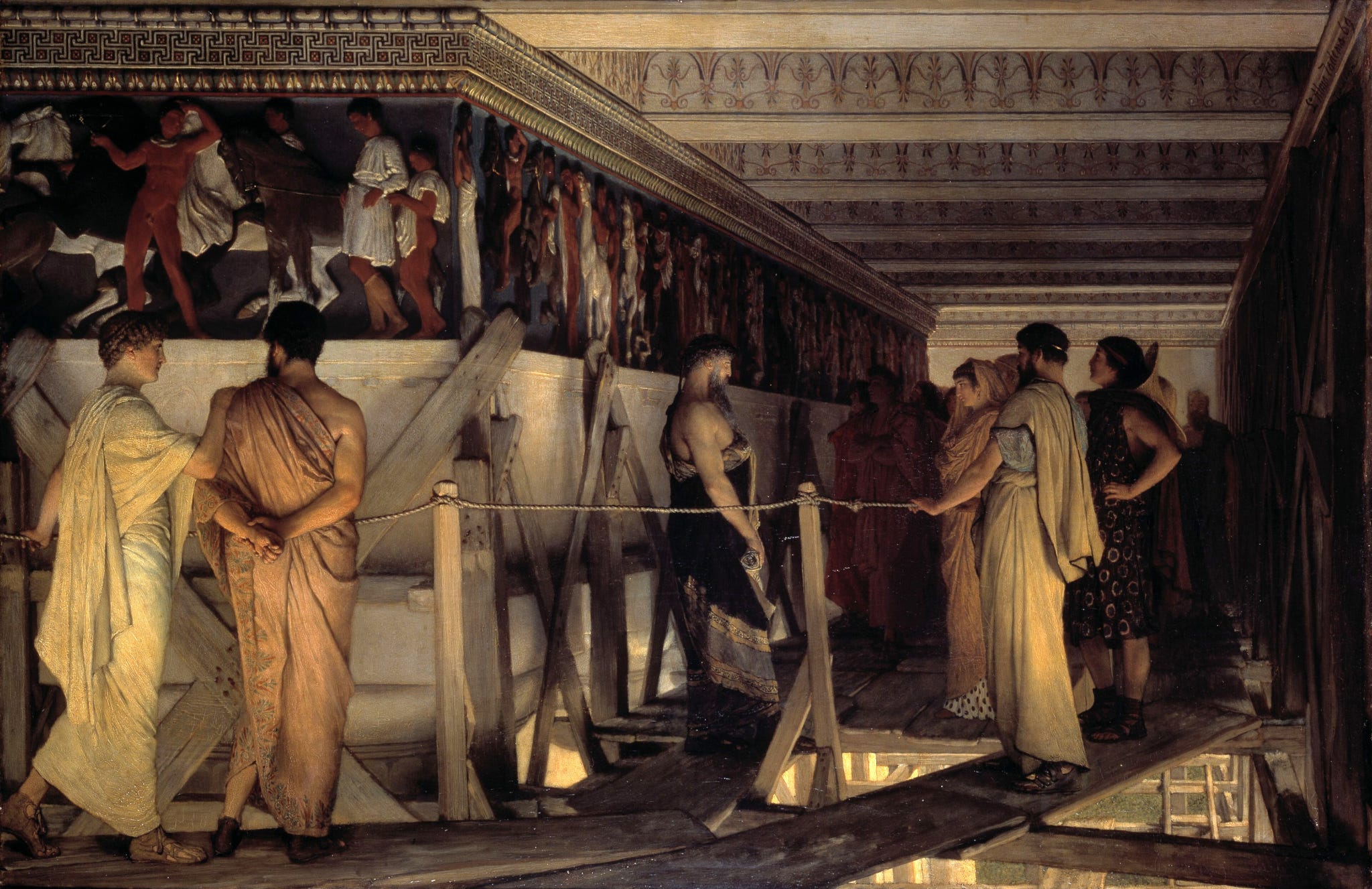
Mountain ranges, rivers, coastlines, and plains were not neutral features but formed a people as much as their own parents. In this sense, their geography and subsequent borders were not imposed from without, but rather, inextricably connected to who a people, and these geographic features formed the boundaries of their society.
Plato’s reflections on the city-state (polis) presuppose this intimate bond between land and people. Rather than being an administrative unit, Plato argued that the city‑state was an extended family, a community of shared descent, shared memory, and shared culture. Its members could meaningfully know, recognize, and care for one another only within a determinate space.
Moreover, in his Republic, Plato warns that “When a state becomes many instead of one, it is no longer a state.” A city-state that extends beyond the scale of familial recognition ceased to be a unified people, because it lost the cultural and historical intimacy that made it a single people.
Aristotle sharpened this philosophical insight by grounding political life in the natural progression from household to village to city, each stage deepening and reinforcing the koinōnia. This progression was genealogical as well as political.
The city-state was the natural extension of the household whose shared history, language, religion, and customs united and formed them as a people. In his Politics, Aristotle insisted that “a state when composed of too many is no longer a state, for law has no strength when the mass of the people is too great,” and he tied this directly to geography, noting that “the character of peoples differs according to their location; for the climate has much to do with the formation of habits.” This development was always tied to place.
The virtues appropriate to a maritime people differed from those of a mountain people because the land itself disciplined their dispositions. Thus, “the state must have a definite territory, for the state is a community of families and of clans for the sake of a good life.” Borders not only preserved a people’s safety but also its civilizational character and morality.
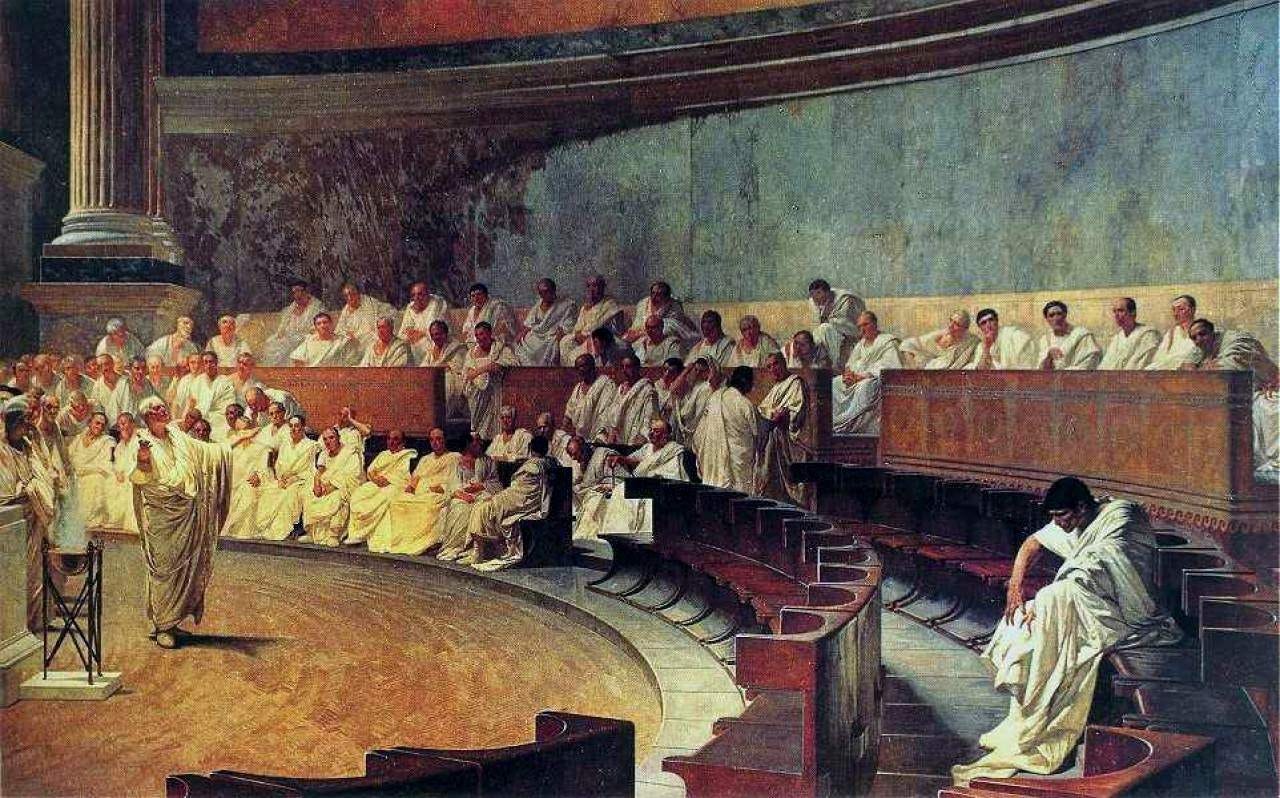
Marcus Tullius Cicero’s conception of the people (populus) was not an accidental collection of individuals under law but the union of a people by shared customs, affections, and religious rites. This civic family was formed as a conscious reflection of its own lineage and cultural inheritance. As he wrote in De Re Publica, “a commonwealth is the property of a people; and a people is not every assemblage of men, but an assemblage united by agreement in justice and partnership in common good.”
Romanitas, the distinctive character of the Roman people, was inseparable from the city’s sacred boundaries (pomerium), the disciplined order of its agrarian landscape, and the rhythms of life shaped by the Italian peninsula. To this effect, Cicero wrote that “the walls of the city are not the ramparts of the stones, but the laws and customs of our ancestors,” which reflected the general consensus that borders were as cultural as well as physical.
To belong to the populus Romanus was to belong to a historical family whose identity had been forged by its land and its memory. However, Romanitas was adoptive as well as ancestral since those who accepted its laws, cultus, and civic virtues could be integrated into the populus without dissolving its identity. This was possible because the principles of proportionality, assimilation, and the common good were maintained since “The safety of the people was the highest law”.
The Christian Understanding: Universal Faith, Particular Peoples
Christianity entered the ancient world with a revolutionary claim. Through Christ, the Church transcended the limits of tribe and territory, announcing a community united in faith rather than descent. St Paul’s proclamation that the Gospel was for “Jew and Gentile” alike introduced a spiritual universality into human affairs, a unity that no political order could produce.
Yet this universality did not abolish the natural order of peoples and sovereignty. Paul’s own letters presuppose the legitimacy of civil authority, and the early Church never imagined that the spiritual unity of believers somehow erased the concrete distinctions of culture, law, and territorial integrity of particular peoples.
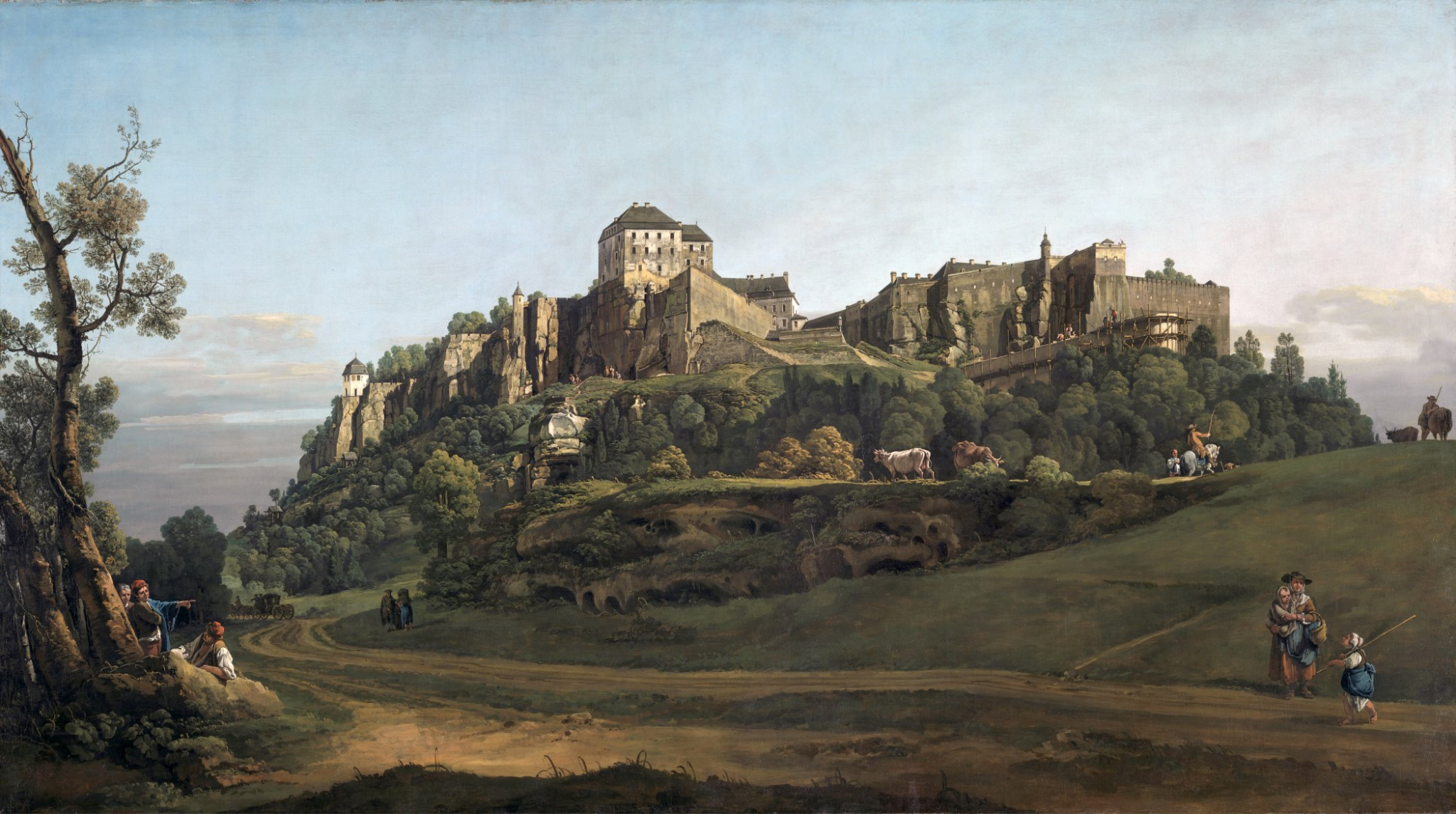
This distinction between supernatural unity and natural differentiation became foundational for Christian political thought. When St Augustine wrote The City of God, he clarified that the Church — the heavenly city — is gathered from all nations without displacing them. Earthly communities, with their laws, borders, and sovereignties, remain necessary for the preservation of order and justice in the temporal realm.
Augustine’s contrast between the two cities was not a call to abandon the earthly city but to understand its role in directing man toward one of his dual ends — temporal flourishing (eudaimonia). For Augustine, the Church is a supernatural community that transcends temporal borders without negating their political necessity.
The earthly city, shaped by history, geography, and shared civic practice, forms a people whose common life requires clear boundaries. Augustine underscores this by recalling that “God divided the nations, setting the bounds of the peoples,” a scriptural affirmation that political order presupposes territorial differentiation. Thus he could say, “The earthly city, which does not live by faith, desires an ordered concord of civic obedience,” a concord that depends on defined authority, territorial integrity, and national sovereignty.
Without such boundaries, political authority cannot fulfil its charge to restrain disorder, adjudicate competing claims, and secure the conditions for civic peace oriented toward the common good.
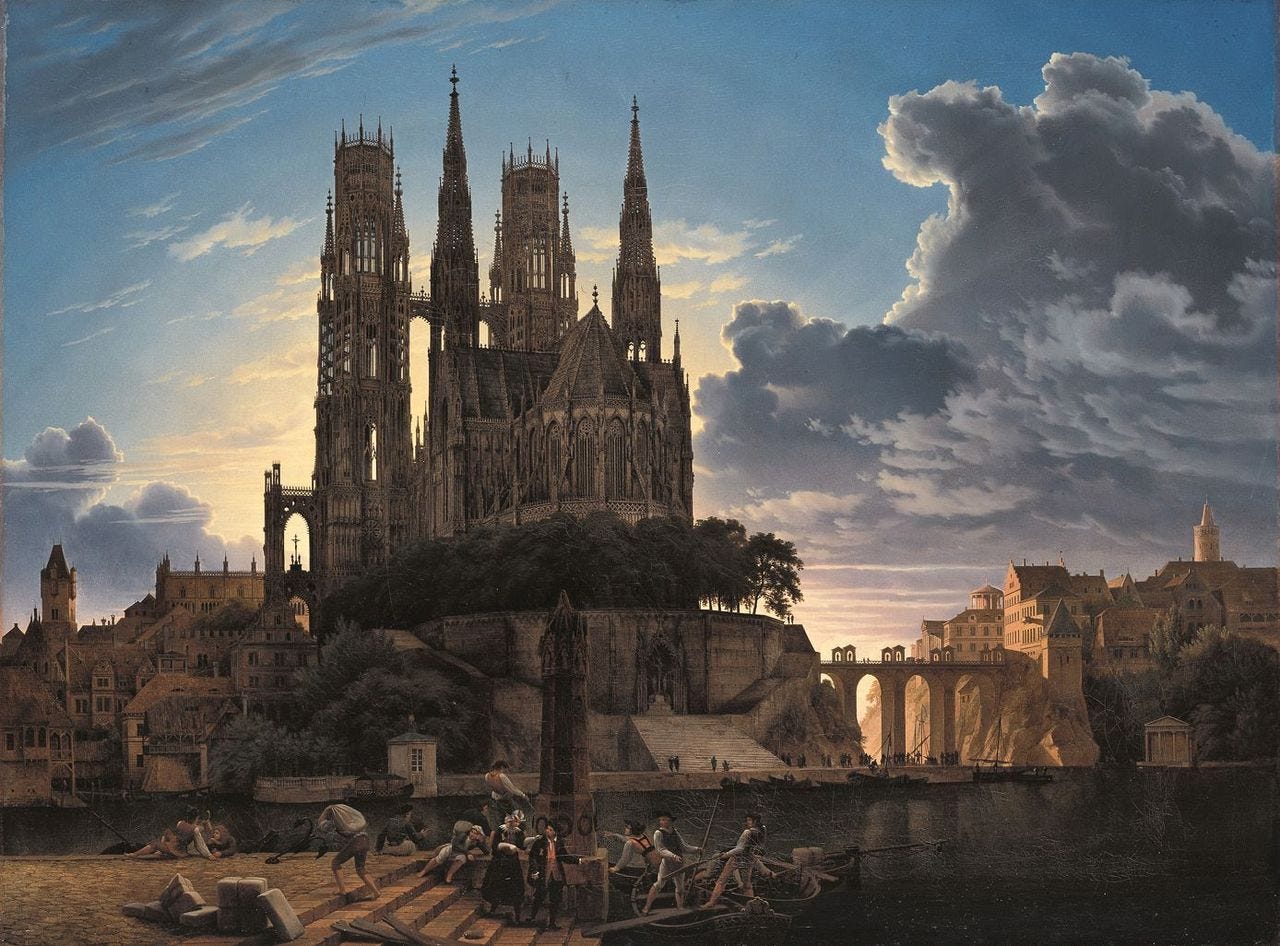
St Thomas Aquinas later refined this synthesis with greater philosophical precision. Drawing on Aristotle, he affirmed that political communities arise from the natural sociability of human beings and that their particular forms reflect the concrete circumstances of their land, history, and customs.
For Aquinas, this diversity is not accidental, since “Different peoples have different customs, according to the diversity of their conditions.” The common good of a people is inseparable from the order that binds them together — an order that requires defined authority, stable jurisdiction, and territorial integrity. Sovereignty is not merely a pragmatic necessity but a moral requirement: rulers must have the capacity to govern a determinate people for their flourishing.
Aquinas thus completes the classical‑Christian account: the universality of the Church pertains to grace, while the plurality of nations pertains to nature. The supernatural fellowship of believers does not erase the natural bonds that constitute a people; it presupposes them. By maintaining their borders, nations preserve the concrete cultural and religious forms through which the life of grace is transmitted across generations.
In this way, Christian thought deepens the Greco‑Roman understanding of borders as the form of a people, affirming that distinct nations, shaped by their own histories and environments, remain essential to moral and political life.
Borders, Justice, and the Preservation of a People
Unlike the ancient and medieval, the modern age is animated by a radically egalitarian impulse to level all distinctions between man and woman, parent and child, citizen and foreigner, nation and world — and in its zeal to erase hierarchy, it also erases form and identity.
What earlier ages understood as the natural foundations of civic life — the family, the community, the nation — is now treated as an arbitrary constraint to be overthrown.
Yet, recent history has shown that a society that undermines these foundations does not liberate but destroy itself. This egalitarian project inevitably turns against the family, the first and most fundamental community. It undermines sovereignty, the authority by which a people governs its own life. And it rejects borders, the visible expression of a nation’s right to exist as a distinct people shaped by its own history, land, and faith. Such gestures, however noble they appear, unsettle the natural order on which any society depends.
A family without authority breeds children conditioned to servitude, a community that cannot define itself cannot defend itself, and a people without borders becomes an inconsistent mass without identity, memory, or purpose. When everyone is welcome, no one belongs, and rather than promoting universal brotherhood, the dissolution of borders leads to new and extreme forms of tribalism which tear apart the very fabric of society.
The Greco-Roman and Christian traditions maintain that the virtue of justice requires rendering every man his due, and this includes rendering a people its due: the right to its own land, its own laws, and its own way of life. These would admit that borders are inherently exclusionary and divisive, but this is not done for hatred of the other but for preservation of the self according to the order of charity (ordo caritatis).
A house has walls so that a family may be preserved within it. The walls distinguish one household from another and make care, responsibility, and protection possible. Similarly, a nation without borders is like a house without walls: it fails in its primary duty, which is the safeguarding of its people and the common good. In attempting to help everyone, it helps no one.
A nation that refuses to defend its borders is not practicing compassion — it is preparing its own extinction. For this reason, borders exist, and a people must defend their borders, for in defending their borders they also defend their land, their history, their language, their religion, their culture and their destiny — and in extreme circumstances this defense requires force.
No nation state was ever legitimately founded and there is no ethical right to establish physical nations much less national boundaries.