


The question of what makes nations ‘great’ is an inherently awkward one. Not necessarily because it is difficult to answer, but because answering it honestly requires facing uncomfortable truths.
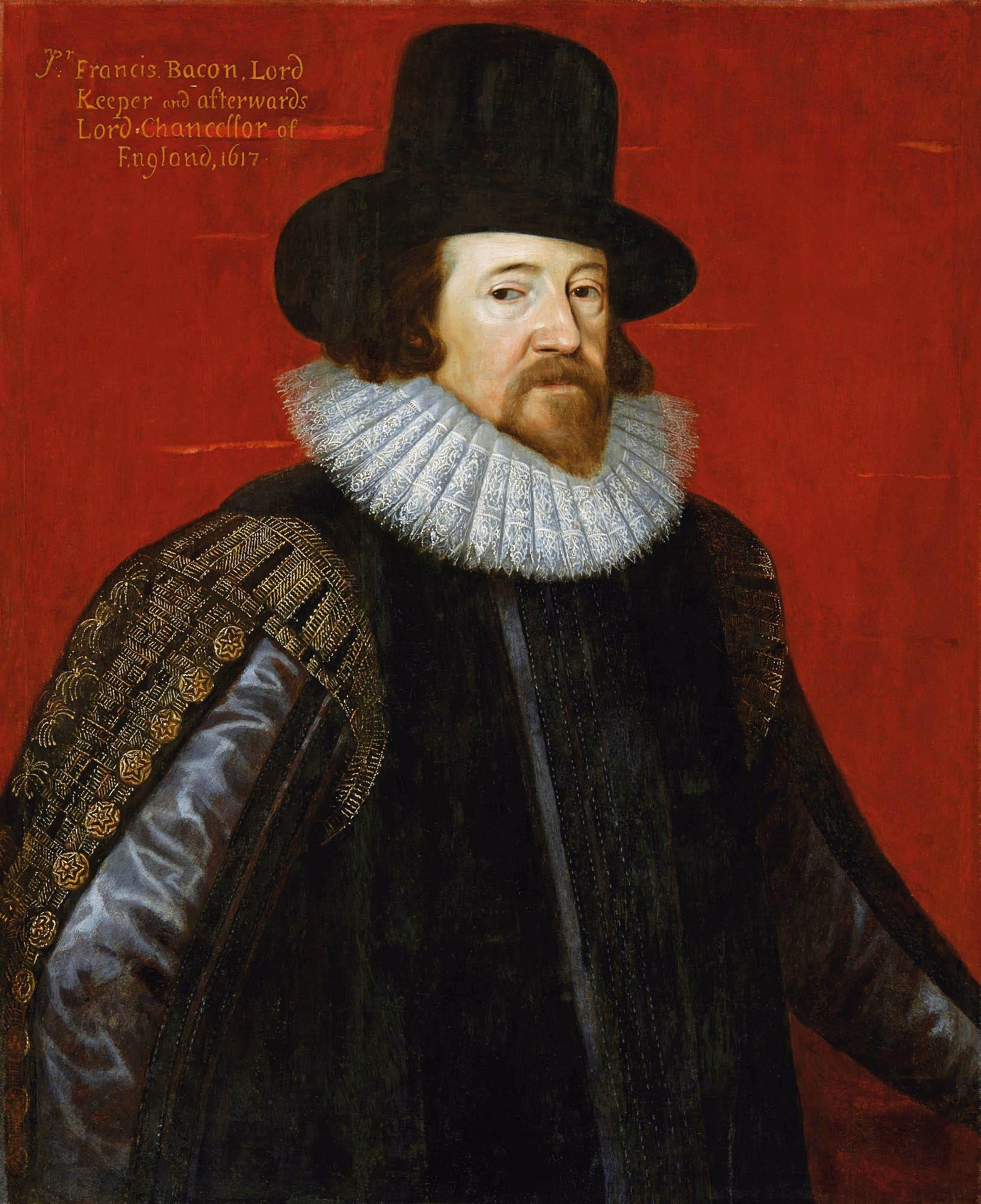
One man who certainly feared no such controversy was Francis Bacon, Lord Chancellor and Attorney General of England under King James I. As one of the most influential philosophers of Early Modern Britain, whose lifetime and office indeed coincided with the beginning of Britain’s rise to a global power, Bacon’s answer to this question warrants attention.
What makes Of the True Greatness of Kingdoms and Estates, written by Bacon in 1597 and revised in 1625, especially fascinating is that it also holds up a mirror to nations which already consider themselves great. Is that greatness built on rock, or sand?
So what does make a country truly great, and is your country on track to achieve greatness, or lose it?
Reminder: You can get tons of members-only content dedicated to useful knowledge, and support our Mission at the same time for a few dollars per month 👇
Two full-length, new articles every single week
Get actionable principles from history to help you navigate modernity
Access to the entire archive of useful knowledge that built the West
Support independent, educational content that reaches millions
Does the Ruling Class Fiddle or Govern?
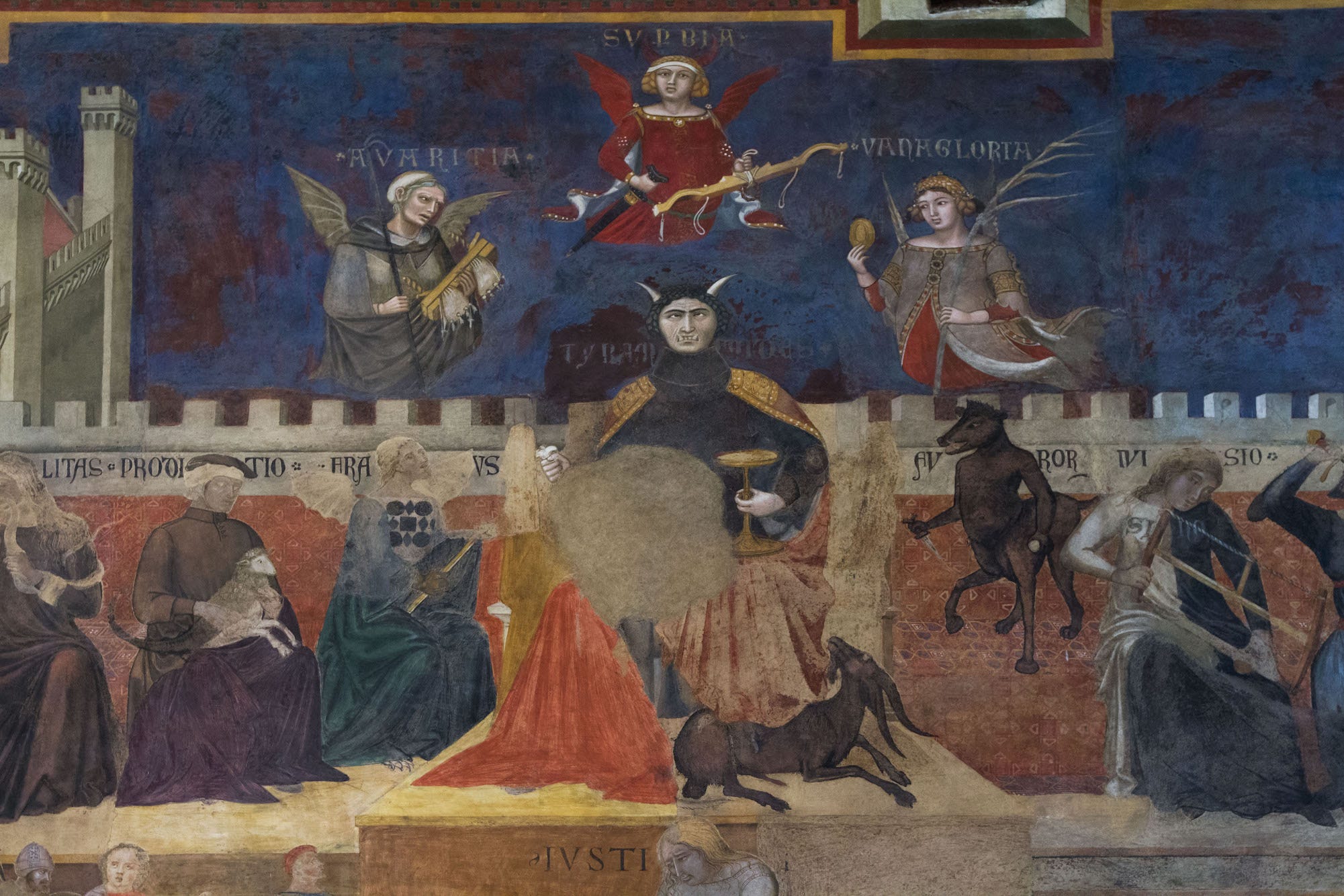
Bacon opens by reminding us of the Athenian admiral Themistocles, whose rise to political statesmanship involved constant struggle against the established elites of Athens, who disdained his lowly birth and his populism. In particular he recalls the admiral’s iconic retort when mocked for not being able to play the lyre:
“Thus it came about that, in after life, at entertainments of a so‑called liberal and polite nature, he was forced to defend himself rather rudely, saying that tuning the lyre and handling the harp were no accomplishments of his, but rather taking in hand a city that was small and inglorious and making it glorious and great.”
Plutarch, Life of Themistocles, II.3
This, then, sets the scene for Francis Bacon’s primary measure of a nation’s success. What kind of statesman is elevated in it? Who occupies its key decision-making roles? Men who fiddle, or men who can genuinely “make a small town a great city”?
In other words, are those who are perceived as ‘great statesmen’ simply those who are skilled at image and ‘politics’, or those who actually get things done and are prepared to do what it takes to raise the country up, regardless of popularity? It is remarkable that Bacon, who lived centuries before the advent of professional politics and before political campaigning became a multimillion dollar industry, remained so clear-sighted about this:
“For if a true survey be taken of counsellors and statesmen, there may be found (though rarely) those which can make a small state great, and yet cannot fiddle: as, on the other side, there will be found a great many that can fiddle very cunningly, but yet are so far from being able to make a small state great, as their gift lieth the other way; to bring a great and flourishing estate to ruin and decay”
Francis Bacon, Of the True Greatness of Kingdoms and Estates
If the ruling class itself openly treats the acquisition of power as a game to be played, and the public tolerates it, then the ‘greatness’ of that nation is resting on a broken staff. Especially when the ‘game’ is so drawn out and so dependent on so many conflicting interests and backroom deals that only the unscrupulous have the will to see it through, or even get involved at all. The cumulative effect, ultimately, is deeply corrosive to the public good:
“And certainly, those degenerate arts and shifts whereby many counsellors and governors gain both favour with their masters and estimation with the vulgar, deserve no better name than fiddling; being things rather pleasing for the time, and graceful to themselves only, than tending to the weal and advancement of the state which they serve”
Francis Bacon, Of the True Greatness of Kingdoms and Estates
But even if the governing cliques are corrupt, can the resources of their countries make up for it?
Size Matters Not
“An argument fit for great and mighty princes to have in their hand; to the end that neither by over-measuring their forces they lose themselves in vain enterprises: nor, on the other side, by undervaluing them they descend to fearful and pusillanimous counsels”
Francis Bacon, Of the True Greatness of Kingdoms and Estates
All countries possess resources and assets, be it in the form of economic goods or manpower. While the extent of these of course varies from one state to another, so too does the confidence of the country in them.
Excessive faith or pessimism in them are equally dangerous, as does anything which distorts the perception either the government or the governed has of their country’s true power. The country may have vast reserves of natural resources, but are they being exploited efficiently, and to the benefit of the country?
Perhaps the most obvious example of this is the country’s perception of its military:
“The greatness of an estate in bulk and territory doth fall under measure ; and the greatness of finances and revenue doth fall under computation. The population may appear by musters ; and the number and greatness of cities and towns by cards and maps; but yet there is not anything amongst civil affairs more subject to error than the right valuation and true judgment concerning the power and forces of an estate.”
Francis Bacon, Of the True Greatness of Kingdoms and Estates
An army may be large on paper, but a paper tiger in war. There are many reasons for this, ranging from poor leadership and thinly stretched resources to ineffective doctrines.
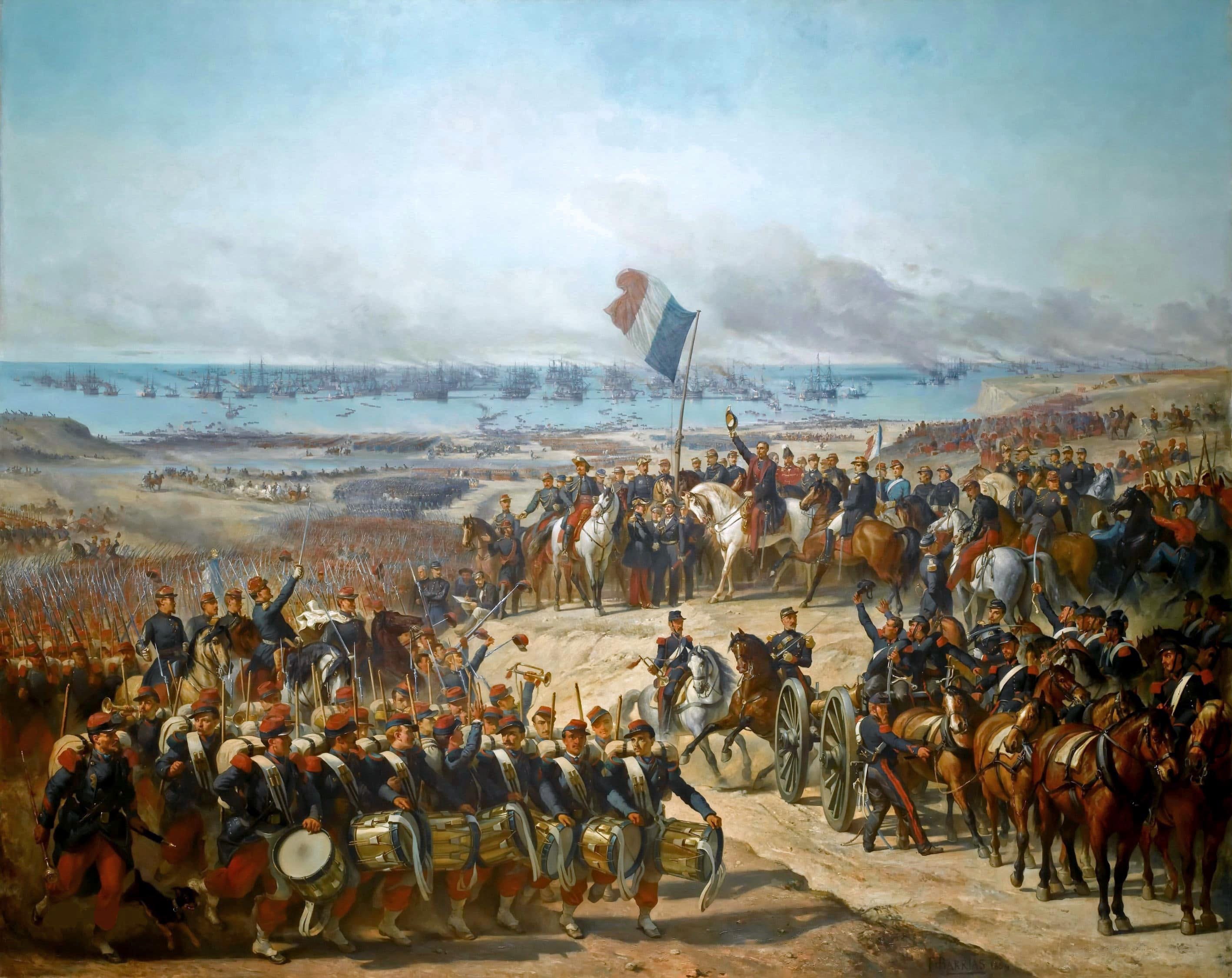
A particular flaw of great powers lies in a failure to adapt after victory, as complacency leads the military establishment to continuously assume — and subconsciously hope — the next conflict will be waged like the last. This is precisely what would happen to France in the 19th century, when the French Army marched fatally unprepared against the rapidly modernized forces of Prussia in 1870. After suffering defeat after humiliating defeat, the Franco-Prussian War revealed to the traumatized French public that the ‘prestige’ of their armed forces had blinded them to the new reality of its actual wartime performance. Arguably, the country has never fully recovered its martial image from this disaster.
Bacon likewise warns against the childish notion that ‘my country is bigger so it must be better’:
“The kingdom of heaven is compared, not to any great kernel or nut, but to a grain of mustard-seed; which is one of the least grains, but hath in it a property and spirit hastily to get up and spread. So are there states great in territory, and yet not apt to enlarge or command; and some that have but a small dimension of stem, and yet apt to be the foundations of great monarchies”
Francis Bacon, Of the True Greatness of Kingdoms and Estates
Virtually all empires have been undone by powers they had once written off as insignificant. The vast and multicontinental Persian Empire, after all — the world’s first superpower — disintegrated to a single campaign launched from Macedon, a comparatively tiny kingdom that even Greeks had long considered a barbarian backwater. Alexander the Great, ultimately, like the Prussians of the 19th century, marshalled fewer resources far more effectively.
For Bacon, the martial aspect of the state is one that stands central to any discussion of a country’s ‘greatness’. However, it is not simply in the sense of ‘how good’ the country is at waging war:
“Walled towns, stored arsenals and armories, goodly races of horse, chariots of war, elephants, ordnance, artillery, and the like; all this is but a sheep in a lion’s skin, except the breed and disposition of the people be stout and warlike. Nay, number (itself) in armies importeth not much? Where the people is of weak courage; for (as Virgil saith), It never troubles a wolf how many the sheep be”
Francis Bacon, Of the True Greatness of Kingdoms and Estates
That is, when judging the greatness of states, the character of the country’s military cannot be divorced from the character of the civilian population. A house divided, after all, cannot stand.
So what is the character of a people which can truly call its nation ‘great’?
