
What Really is 'Western' Art?
How to reconnect our Art to its roots...


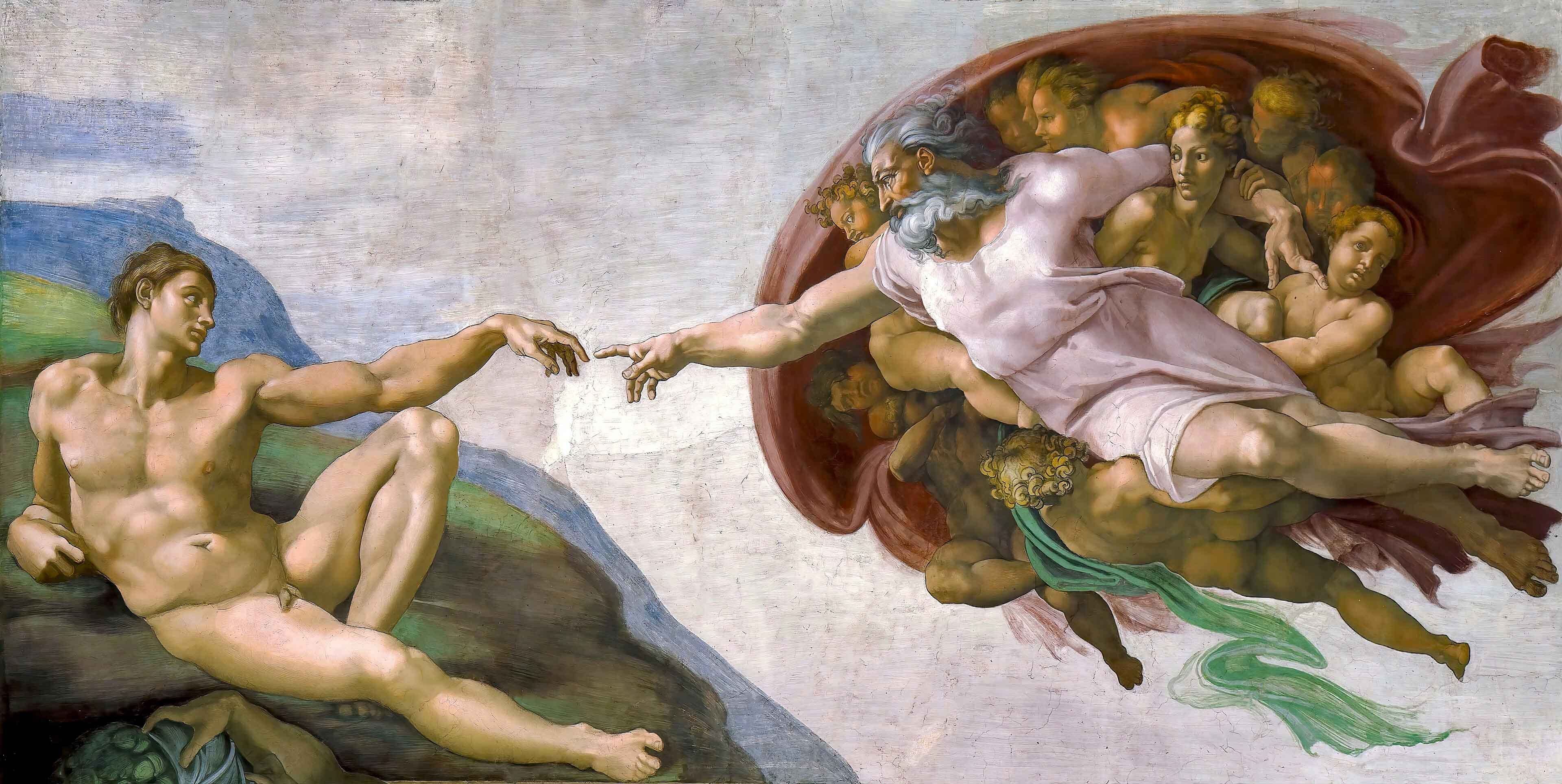
Poll after poll has shown, decade after decade, that the general public thoroughly rejects ‘modern’ art.
It has done so for so long that this issue could well be called the canary in the coal mine when it comes to the disconnect between governors and governed across the Western world. The ‘aesthetic’ disconnect has indeed been present for so long, however, that it has largely been taken for granted, with protest regularly shut down with the Orwellian line that ‘anything is art’.
This vagueness has an unfortunate tendency to spill across the divide, and as a result ‘Western art’ is too often defended in abstract terms that modernists quickly pounce upon to discredit criticism. If we are to truly stand up for our civilizational aesthetic therefore, it is critical we have a proper understanding of what Western art actually is, what specific qualities set it apart, and therefore why even overwhelming institutional messaging has failed to win the Western public over the modern art.
So what is Western art, how did it complement our civilization, and how can the broken aesthetic bond of our society can be remade?
Reminder: You can get tons of members-only content dedicated to useful knowledge, and support our Mission of revitalizing the Western Mind at the same time for a few dollars per month 👇
Two full-length, new articles every single week
Get actionable principles from history to help you navigate modernity
Access to the entire archive of useful knowledge that built the West
Support independent, educational content that reaches millions
The Western Wilderness
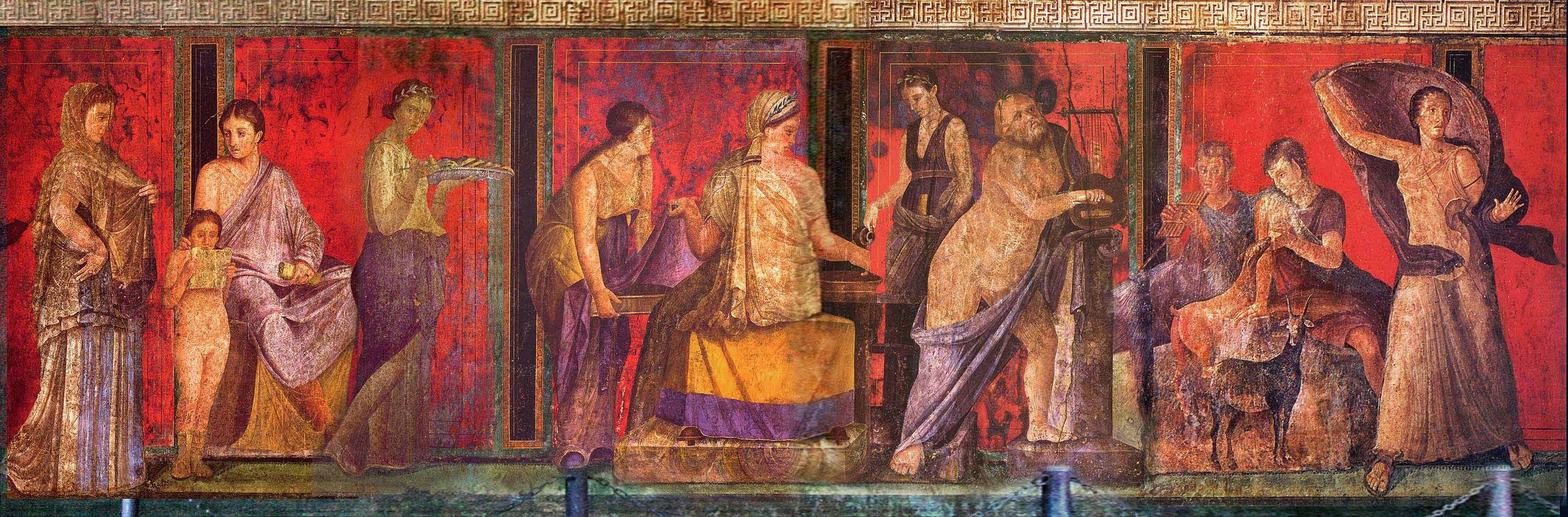
The quality and extent of art in Ancient Rome is often overlooked, particularly as her marble sculptures tend to dominate the public’s perception of it.
But the Romans were exceptionally talented painters, as evidenced by the breathtaking frescoes which adorned both public and private buildings alike, and which still survive today. Drawing upon Etruscan and Greek traditions, the Romans achieved extraordinarily detailed depictions of people, animals and landscapes alike, and by the reach of their empire, elevated this into the first genuinely ‘Western standard’ of art.
It is clear too that Roman painters adhered to a certain cultural expectation when it came to ‘what art should be’, and that was a faithful depiction of the subject. The oldest encyclopedia in the world, the Natural History of Pliny the Elder, indeed contains a critical passage on this very subject, giving us all we need to know about what Roman elites considered tasteful or not in the visual arts:
“The painting of portraits, used to transmit through the ages extremely correct likenesses of persons, has entirely gone out… Consequently nobody's likeness lives and they leave behind them portraits that represent their money, not themselves… indolence has destroyed the arts, and since our minds cannot be portrayed, our bodily features are also neglected”
Pliny the Elder, Natural History, XXXV.2
We have, therefore, our first key anchor in Western art. That it should reflect nature, and that straying from this reflects a normalization of questionable morals.
With the collapse of Rome in the West however, all of this came to an abrupt end. For hundreds of years Italy and beyond were condemned to an aesthetic wilderness, defined by conflicting Germanic and Eastern influences which produced the same result — natural fidelity was out, and abstract was in. The art, therefore, was a tangible representation of Western Europe’s subjugation, and fragmented identity. At least until Italy’s reawakening…
The Return to Form
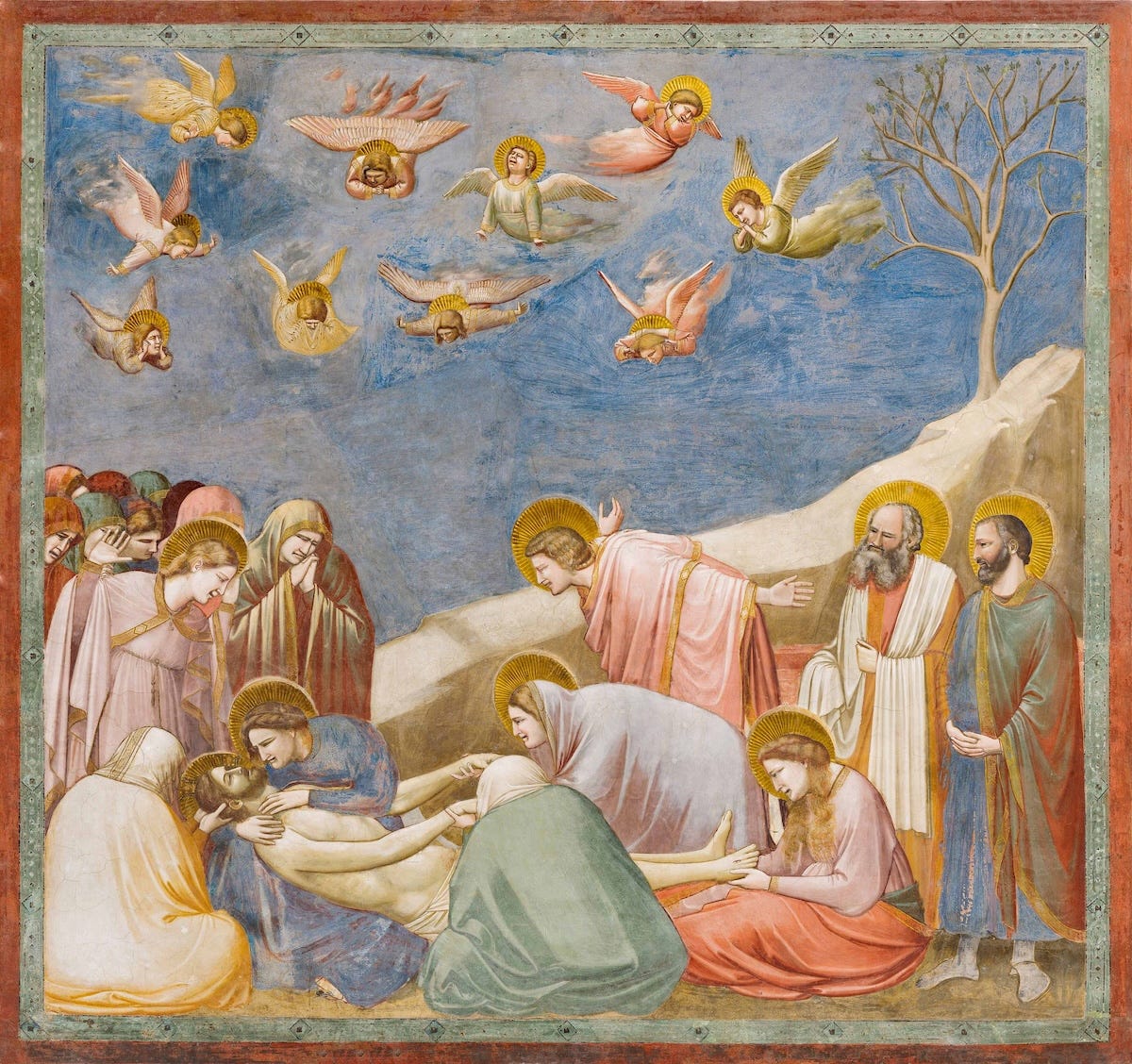
In medieval residences, art was a shadow of what it had been in Roman villas.
It tended to be extremely basic, consisting of simple geometric shape patterns. In Italian churches, it was all but indistinguishable from the icons you would see in Byzantine Greece. Scenes were rigid, two-dimensional and almost entirely devoid of emotion. Set upon brilliant gold-field backgrounds, such icons were inherently abstract.
It is clear, however, that there was no small resentment towards this situation. Giorgio Vasari, the Florentine painter and father of Art History itself, likened it to a foreign occupation. An occupation that was first truly resisted in the late 13th century by arguably the first true painter of the Italian Renaissance, Giotto. Turning his back on Byzantine tradition, from his Crucifix to the decorations of the Scrovegni Chapel Giotto dared to paint three dimensional scenes, with realistic figures and naturalistic backgrounds. Note the language Vasari used in the 16th century to describe him:
”The child not only equalled the manner of his master, but became so good an imitator of nature that he banished completely that rude Greek manner and revived the modern and good art of painting, introducing the portraying well from nature of living people, which had not been used for more than two hundred years.”
Giorgio Vasari, Life of Giotto
Vasari does not mention Pliny the Elder in the biography. But separated though they were by over a thousand years, the unity of themes across this pagan/Christian divide is as uncanny as it is unambiguous. The art natural to Italy, and by extension the West, is once again anchored to Nature. Vasari doubles down on this in the same biography:
“That very obligation which the craftsmen of painting owe to nature, who serves continually as model to those who are ever wresting the good from her best and most beautiful features and striving to counterfeit and to imitate her, should be owed, in my belief, to Giotto, painter of Florence, for the reason that, after the methods of good paintings and their outlines had lain buried for so many years under the ruins of the wars, he alone, although born among inept craftsmen, by the gift of God revived that art, which had come to a grievous pass, and brought it to such a form as could be called good.”
Giorgio Vasari, Life of Giotto
This, then was the central driving force behind the Italian Renaissance in Art. A rebirth of the classical world, portrayed in a return to Nature. Again and again, ‘natural’ appears in contemporary descriptions of Renaissance artists and their work. None more so, however, than in reference to arguably the greatest painter the Western world has ever produced — Raphael.
Raphael, ultimately, achieved the union of natural and artificial grace. He painted the human form as it was, in surroundings which elevated both the subject and the message. Consider, if nothing more, the words that were chosen for his epitaph, and which can still be read clear as day upon his tomb in the Pantheon:
“Here lies Raphael, whom Nature feared to be outdone while he lived, and when he died, Nature died with him”
Epitaph of Raphael Sanzio, Pietro Bembo, c. 1520
But upon his death in 1520, Western art stood at a crossroads. How do you improve upon something almost everybody had agreed was already perfect?
If Nature is the baseline, then there are only two paths to take. Our civilization has seen both, but only one remains rooted to the actual tradition of Western art.
Curiously, Raphael’s own words have the answer…
