
Western Oligarchy and the Infantilization of the Masses
The elite "anywheres" of today, like Roman senators of antiquity, keep a tight grip on power

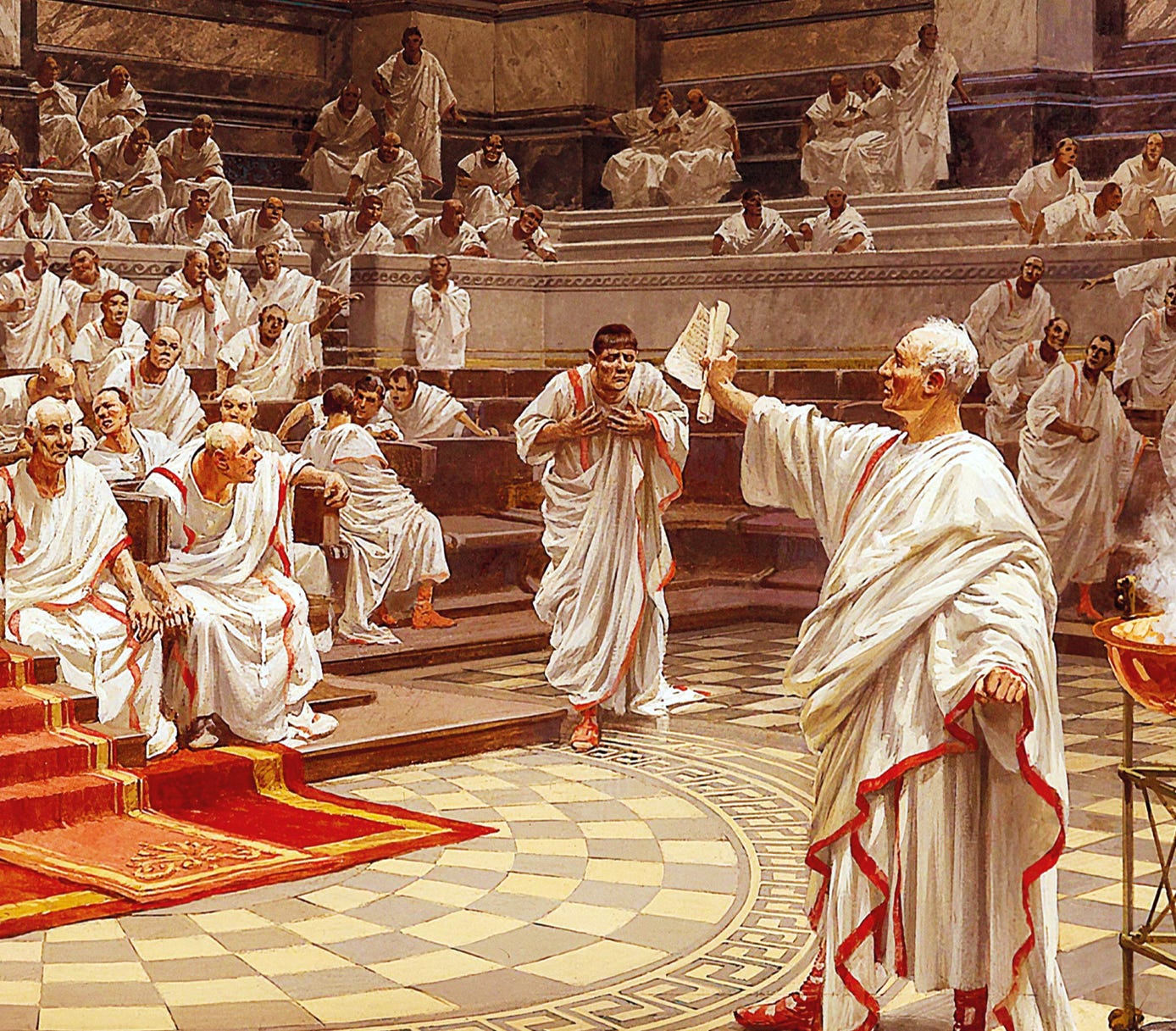
This piece by Dr. David Engels is part of multi-part series, Rome Reloaded, exploring the striking parallels between ancient Roman society and our own. Enjoy!
“For since the state fell under the control and power of a small oligarchy, kings and princes have only paid taxes to them, and peoples and tribes have only paid tribute to them. The rest of us, all good and brave people, noble and non-noble alike, are considered worthless rabble, without influence, subject to those whom we, if the state were right, should have to fear. Thus, all favour and power, all honours and all wealth are in their hands, or in the hands of whomever they choose. They leave us only with enmities and election defeats, lawsuits and poverty. How long will you put up with this, you brave men?” (Sall., Cat. 20,7-14)
Whether we are talking about Rome in the first century BC or the West in the 21st century AD, in both civilizations we observe the paradoxical concentration of extreme power in the hands of a few individuals, despite a political system that is officially committed to the common good of all citizens and sees itself as participatory. Then as now, a globally oriented, economically highly mobile and politically influential upper class dominates all essential decisions, sometimes openly and directly through institutional means, sometimes through pressure, lobbying, blackmail and backroom intrigues, but time and again economic and political interests merge into an impenetrable thicket. Two millennia separate the Roman upper classes on the one hand and the modern ‘anywhere’ elite of the modern Western world on the other – and yet they are linked by a striking structural similarity. It is about the formation of elites, the concentration of power, economic Caesarism and the simulation of republican ideals in oligarchic structures.
The Roman Senate: A Republic in the Service of the Aristocracy
Originally, the Roman Senate was a body of experienced, venerable men who served the community; but in the late Republican period, it increasingly developed into an oligarchic stronghold. Power was concentrated in the hands of a few families, access to the political class of the nobility was strictly controlled, offices were inherited within families, and economic resources ensured overwhelming dominance. The senatorial elite lived off land ownership, speculation, client networks and slave labor, but continued to present itself as the guardian of the common good. Rhetorically, they were committed to the populus Romanus, but in reality, all reforms were blocked, social climbers were discriminated against and political opponents were defamed. The Gracchi, for example, who attempted to promote social justice through land distribution and grain laws, were violently removed from power, just as the ancient Roman conservatism of a Cato was ridiculed and also feared to some extent, as it was seen as a call for a return to overly dangerous simplicity. The republic was formally intact, but in reality it was primarily a system for preserving and increasing wealth.
This included the close relationship between the senatorial class and the “ordo equester”, the knights, the wealthiest class in the Roman census system, from whom the senators had been separated out of concern for that very monopoly of power (for example, by prohibiting their participation in maritime trade and restricting them to land ownership), but with whom they continued to share indivisible converging interests. The senators often used the “equites” to participate in the lucrative financial speculations of tax collectors and grain traders, while the “equites” persuaded their senatorial friends to pass favorable laws – and both, of course, sought to constantly expand the empire in order to plug the ever-growing debt holes, open up new sources of income, and keep pace with their rivals in the competition for magnificent aristocratic self-representation.
Reminder: you can get tons of useful members-only content and support our mission for a few dollars per month 👇
Two full-length, new articles every single week
Access to the entire archive of useful knowledge that built the West
Get actionable principles from history to help navigate modernity
Support independent, educational content that reaches millions
Anywheres and Somewheres
Unfortunately, the situation in the modern West is no different. If one looks to where real power actually resides—not in the parliaments of insignificant small and mid-sized European states, but in Brussels, Washington, or Davos—the inseparable entanglement of politics and business becomes apparent. There is hardly a senior politician who has not worked for one major bank or another, hardly a statesman who, after leaving office, is not appointed to various boards or elected to international institutions. The “Anywheres” have long since defeated the “Somewheres.” Democratic confirmation through occasional elections is more optional than obligatory; those who are not popular—as most are not—are carried along and passed on through party cronyism, as the European Commission illustrates all too well. As a result, not only have entire political dynasties emerged, but private wealth has also become an essential prerequisite for anyone who truly matters and does not wish to remain merely someone else’s puppet.
“Davos” is a striking illustration of where real decisions are made: an annual gathering that has no democratic legitimacy whatsoever, yet represents the highest form of assembly of the West’s economic, political, and media elites—a place of networking, influence-peddling, consensus-building, and ideological agenda-setting. The participants—corporate executives, statesmen, experts, and celebrities—discuss the future of the world, especially that of the West, undisturbed by democratic interference. Naturally, the rhetoric of the common good is cultivated here: people talk about climate protection, social inclusion, justice, and sustainability. In practice, however, those present predominantly represent the very structures from which they benefit: global supply chains, deregulated financial markets, automated production processes, digitized communication systems, the climate industry, and debt speculation. The boundaries between lobbying interests and left-green political rhetoric have become so fluid that they scarcely attract attention anymore—especially since a servile media establishment, living off the crumbs that fall from the tables of the powerful, does everything it can to conceal or downplay scandals and conflicts of interest.
The Illusion of Participation
To be sure, the emergence of such an oligarchy from what was originally a participatory republican system was and remains possible only because the broad masses of citizens tolerate this development with at least indifference—unless their approval, or at least their silence, is bought through short-term electoral promises. Long-term perspectives of shifting power seem less urgent or threatening than everyday worries about survival: Only in this way did the fiction of an oligarchy dressed up in republican garb become possible in the first place. In ancient Rome, popular assemblies were allowed to continue meeting, magistrates were elected, and tribunes theoretically possessed veto power; yet in reality, a few families controlled the game and ran networks that extended across the entire empire into the most distant provinces, increasingly drawing a formidable military clientele to their side as well. Election campaigns were conducted with enormous financial expenditures, votes were bought, opponents were prosecuted through the courts, and populism was often reduced to a form of managed opposition; those who truly rebelled sometimes risked their lives. It is therefore no surprise that Sallust wrote to Caesar:
“But since the time when the people, gradually driven from the countryside to the city, were forced by unemployment and poverty to lead an unsettled life, they began to seek income elsewhere and to promise their freedom, along with the republic itself, to the highest bidder. In this way, the people who ruled and commanded the world lost their unity, and instead of the empire that belonged to them all, each created only his own servitude.” (Sall., epist. 1,5,4-5)
Today, all conceivable democratic procedures still exist—there are elections, parliaments, courts, referendums, petitions, and a wide array of civil-society NGOs—but at the same time, political decision-making has long since moved away from the arena of democratic participation. International treaties, bought-and-paid-for expert committees, supranational organizations, and a state-funded “civil society” are increasingly determining ever more areas of life; nation-states, by contrast—originally the carriers of democratic self-determination—are increasingly being reduced to executive bodies for globally defined directives.
A striking feature common to both systems is the moral self-presentation of their respective elites. Roman senators and equestrians emphasized their “pietas” as well as their love for the republic and the people; they founded temples, financed public games, provided for veterans, organized public banquets, and voted through ever more expansive grain distributions. In doing so, they not only stabilized their popularity and power, but also deepened mass dependency, the infantilization of citizens, and the development of unhealthy systems of clientelism. It is difficult not to think here of the systematic buying of popularity and votes in modern democracies through targeted benefits for specific pressure groups; of the professed commitment to the supposedly nonpartisan salvation of democracy, the climate, refugees, or the rule of law; or even of quite open forms of vote-buying, as recently seen with Elon Musk. All of these appear only superficially idealistic or philanthropic. Beneath them lies nothing more than a relentless struggle for greater power and influence—especially since a large share of the calls for humanistic sacrifice ultimately does nothing more than fill the coffers of opaque investment firms.
Caesarism
At the same time, this development also prepares the ground for the internal dissolution of the system through the transition from oligarchy to Caesarism. As soon as a few oligarchs distinguish themselves as particularly wealthy and powerful, break away from the prevailing political consensus, present themselves as supposed champions of the opposition, and succeed in bringing parts of the forces of law and order over to their side, an increasingly dangerous phase of conflict begins—between the new “great individuals” on the one hand and the forces of systemic inertia on the other. Whether Pompey, Caesar, Mark Antony, or finally Octavian, the model of the populist demagogue gradually gave way to that of the autocrat, sometimes through short-lived agreements and triumvirates, sometimes through ruthless struggles for sole power.
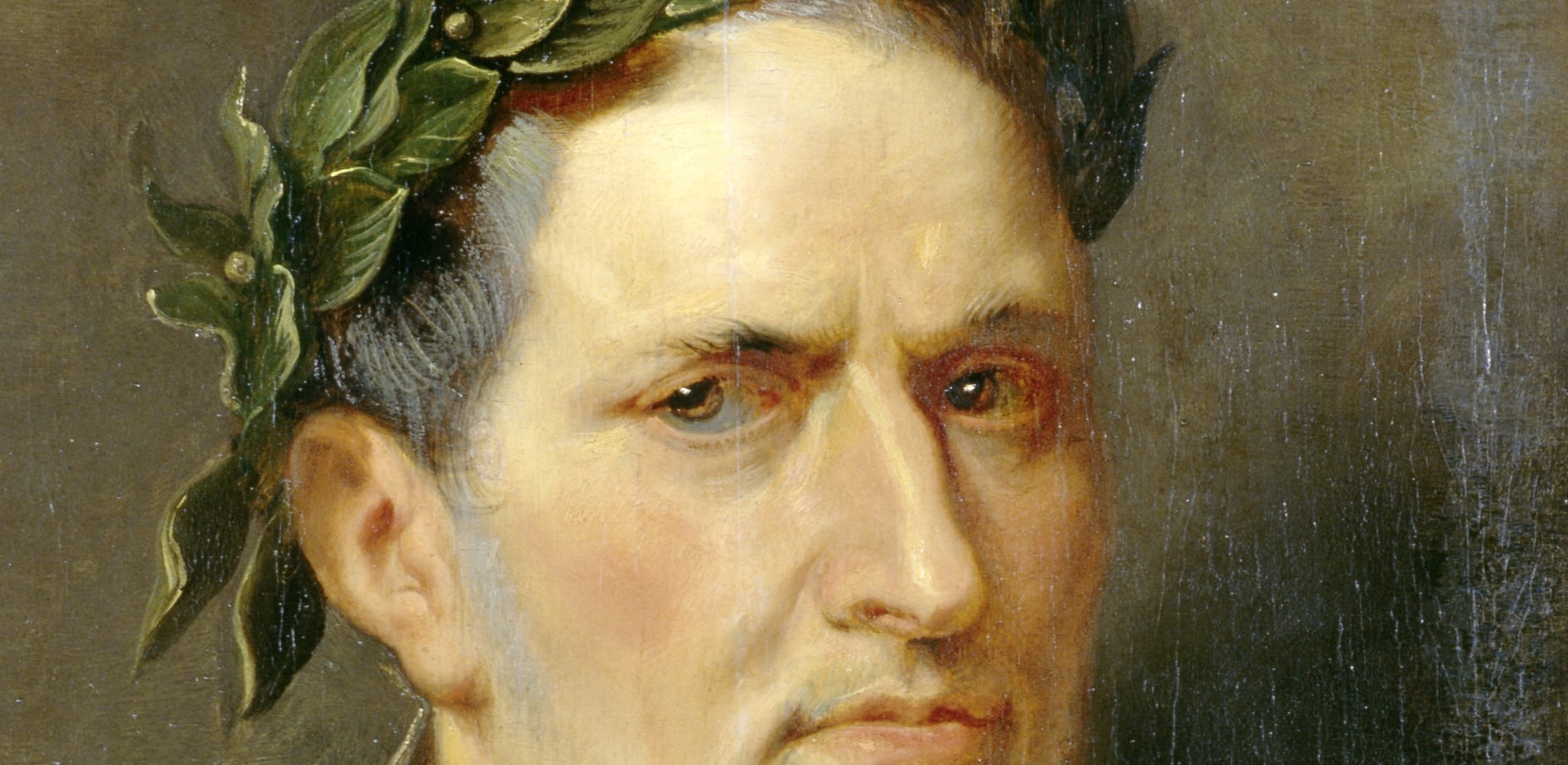
The fundamental prerequisite for this new form of power was control over money, public opinion, and the means of repression—or, as Crassus, the richest man in the Roman Empire, put it: only those who were able to raise and equip their own legion from their annual income—or who knew how to borrow the necessary funds from speculators and financiers and later recover them, as Caesar did—could truly be considered “rich.”
If we look at the United States today, at the unique concentration of military, financial, and media power in the hands of a tiny political family clan that no longer pursues the anonymous, constitutionally ornamented consensus of collective exploitation of the population, but instead seeks the long-term entrenchment of its own charismatic power—and if we consider that citizens and voters have scarcely any realistic alternative between the two available options, and that, as in late Republican Rome, they may no longer even recognize such an alternative as desirable—it becomes clear that the West, too, is not far from this stage of development.
This was a really interesting read, especially the idea that republican forms can stay intact even as real power slowly drifts elsewhere.
What stood out to me wasn’t just elite capture, but how participation starts to feel symbolic. The institutions are still there, but a lot of actual decision-making moves into places that feel technical, international, or basically out of reach.
I also wonder if this is less about bad actors and more about scale. As systems get bigger and more complex, power tends to pool where coordination is easiest. Elections still matter, but they often happen downstream of choices that were already set in motion.
OK. Now we know the disease. But what is the cure?