
Tradition or Progress: Which Should We Prioritize?
Finding the Golden Mean for Civilization


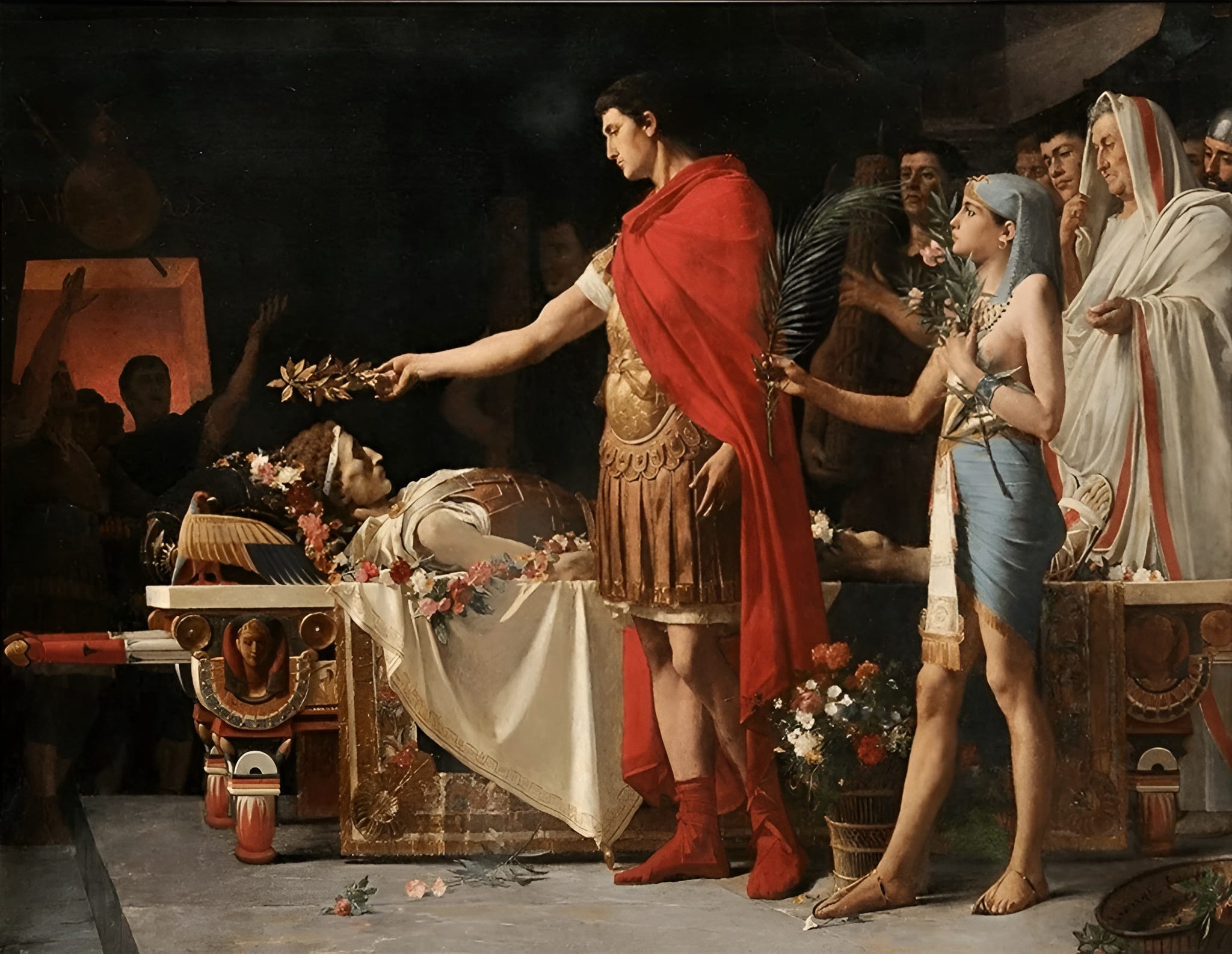
Civilizations seldom recognise themselves as standing between two genuine goods. They more readily imagine themselves pressed by contending forces, driven to choose one side of a cultural divide and cast the other aside. Tradition and progress are two forces often placed in this posture of conflict, yet their opposition is more apparent than real.
In the Nicomachean Ethics, Aristotle argued that virtue lies not at the extremes of excess or deficiency but in the measured mean between them — a proportion that adjusts itself to circumstance and to one’s state in life. This mean is not a fixed midpoint but a fitting measure, discerned through reason and ordered toward the dual ends proper to human flourishing.
Civilizations, like the persons who shape them, flourish when they cultivate this proportion — when their customs, laws, and aspirations are directed by an ordered sense of purpose. They falter when a single impulse is allowed to dominate, when what should be a partial good extends beyond its proper bounds and distorts the whole.
In this light, tradition and progress are not adversarial forces but complementary dispositions: tradition as the preservation of the inherited form of a civilization — its ordering principle — and progress as the renewing impulse that keeps that form from hardening into sterility. One provides structure, continuity, and measure; the other introduces vitality, adaptability, and the controlled turbulence through which a living culture grows.
Only when these tendencies are held in disciplined equilibrium — each checking the other’s drift toward stagnation or upheaval — can a civilization remain both firmly founded and capable of enduring.
Reminder: You can get tons of members-only content dedicated to useful knowledge, and support our Mission at the same time for a few dollars per month 👇
Two full-length, new articles every single week
Get actionable principles from history to help you navigate modernity
Access to the entire archive of useful knowledge that built the West
Support independent, educational content that reaches millions
Tradition as Civilizational Memory
Tradition, at its best, is a form of cultural memory. It binds individuals to a lineage of meaning, stabilizes institutions, and provides the moral architecture within which human action becomes intelligible and rightly ordered.
In Ancient Rome, the Mos Maiorum — the “way of the ancestors” — was an unwritten constitution of customs, virtues, and precedents that governed Roman life more powerfully than any legislation. It embodied the accumulated wisdom of the forefathers and prescribed the character expected of every Roman, ordering religion, politics, and social conduct with a gravity no legislation could rival. Fidelity to the Mos Maiorum was understood by plebs and politicians alike as the most effective safeguard against socio-political novelty, moral corruption, and institutional decay.
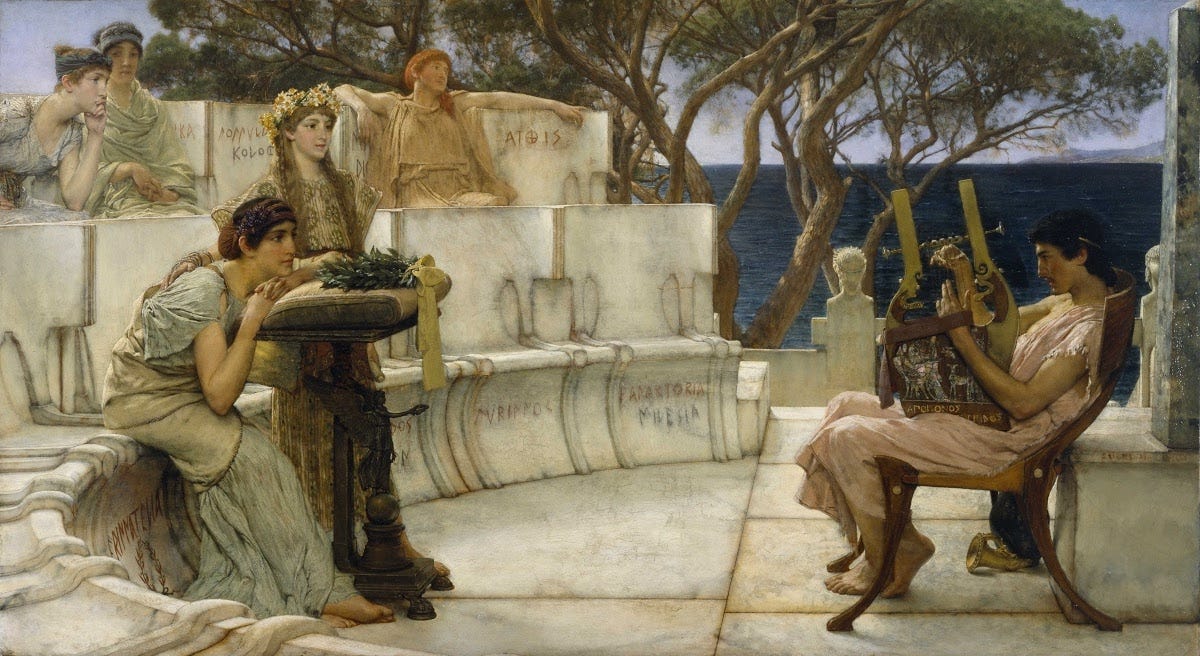
Aristotle would have recognized in the Mos Maiorum a species of practical wisdom. Like phronesis, tradition is cumulative since it distills the experience of generations and offers guidance no single legislator could have devised alone. It anchors a people in something larger than themselves, it tempers the volatility of human passions, and it provides continuity amid the flux of circumstance.
Yet Aristotle also warns that every virtue has its excess. When tradition ossifies, it ceases to be a safeguard and becomes a snare. In political life, this excess takes the form of fundamentalism — the refusal to acknowledge altered circumstances, the insistence that the past must be replicated without deviation, the belief that fidelity requires immobility. Such societies punish creativity and innovation, and in doing so, they forfeit their vitality. In this condition, a civilization drifts into stagnation, entering the long winter that precedes collapse.
The late Roman Republic confronted social and political transformations that demanded adaptation: the expansion of empire, the influx of wealth, and the restructuring of military power. Yet many elites desperately clung to the Mos Maiorum — among other traditions — as if it were a fixed and unalterable code. What had once been a source of cohesion became an impediment to a much needed reform, and the result was paralysis, unrest, and ultimately civil war.
Fundamentalism, then, is the excess of tradition. It treats the past as complete, demands that the future conform to it without deviation, and rejects the creative adaptation necessary to civilizational health. It mistakes memory for destiny, and in doing so, makes decline inevitable because it is unable to bear the pressures of an ever-changing world.
Progress as Creative Response
If tradition is memory then progress is imagination. Progress is the capacity of a society to respond to new conditions, to innovate, and to envision possibilities beyond inherited forms and convention. Progress is not restricted to technological dimension but permeates the arts, culture, and institutions themselves. It allows a civilization to remain dynamic, to adjust its structures to shifting realities, and to cultivate new expressions of its underlying spirit.
Roman history again provides a useful illustration. The early Empire, particularly under Caesar Augustus, demonstrated a remarkable capacity for creative adaptation and progress. Rather than abolishing the Republic entirely, he reformed and reimagined it.
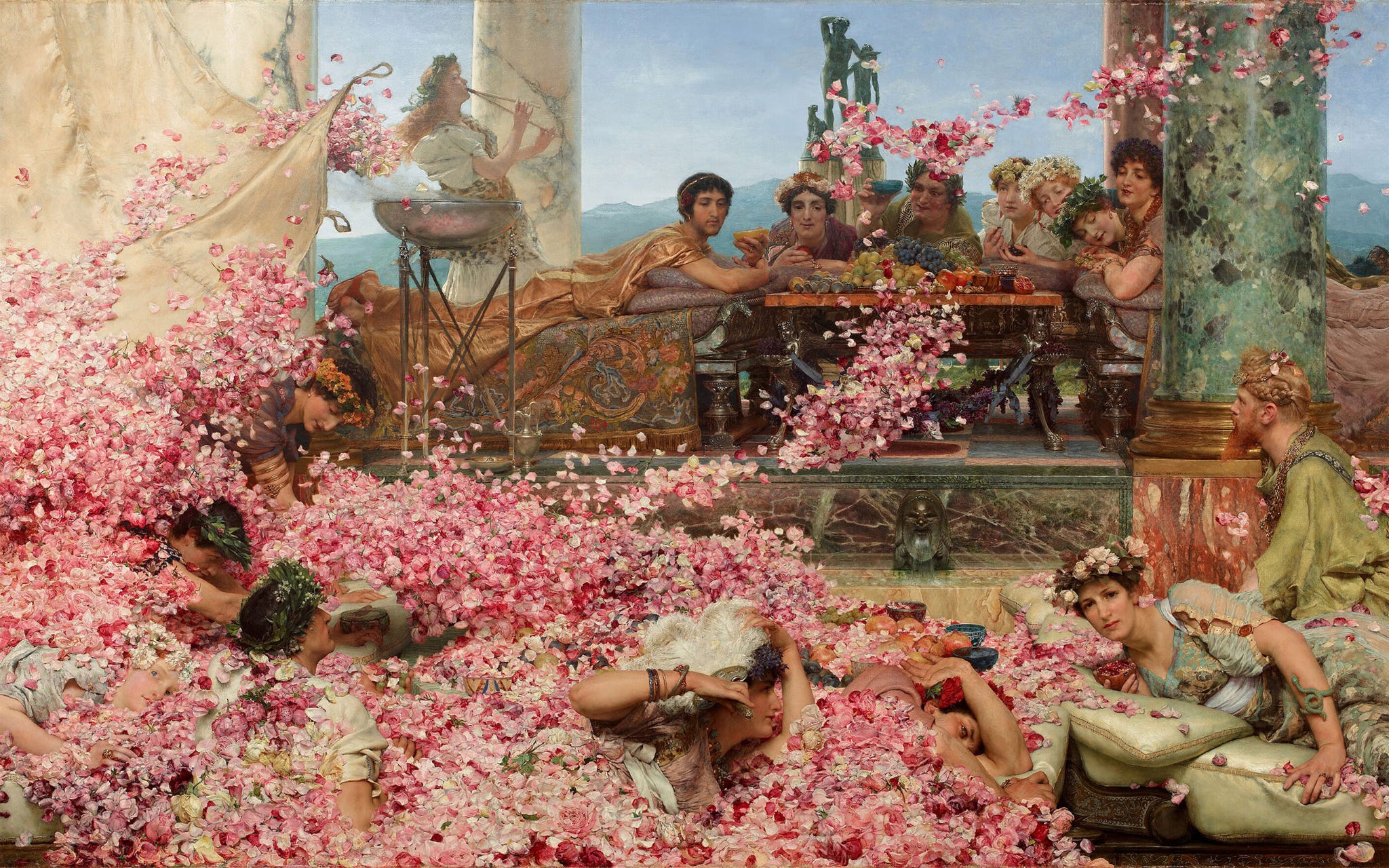
Through his Principate, Augustus promoted political innovation which he carefully disguised as continuity. He promoted the Mos Maiorum, preserved the Republic’s rhetoric, rituals, and offices while subtly transforming their functions. This allowed Rome to stabilize after decades of civil war, to integrate diverse peoples, and to administer a vast territory with unprecedented efficiency.
This was progress in the Aristotelian sense; a prudent adjustment proportionate to circumstance, guided by the inherited values of Roman public life. In this regard, progress, when rightly ordered, is a form of practical intelligence. It recognizes that circumstances change and that institutions must evolve accordingly. It is dynamic, responsive, and creative.
But progress, too, has its excess. When progress becomes unrestrained, when it abandons the past rather than building upon its firm foundations, it degenerates into the vice of Modernism. It is the belief that novelty is inherently superior, that inherited forms are obstacles to liberation, and that the future must be pursued without regard for continuity. Modernism treats tradition as a burden rather than a resource, abandons social conventions, and dissolves the cultural memory that gives shape to human life.
Rome experienced this excess as well. By the later Empire, the cultural confidence that had once guided Roman adaptation gave way to a restless pursuit of novelty. Traditional civic virtues weakened, public life fragmented, and moral discipline eroded. Ammianus Marcellinus lamented elites who sought entertainment rather than duty, luxury rather than service.
Progress, severed from memory and tradition, loses its orientation toward the common good. A civilization captured by this impulse becomes unmoored, and becomes a breeding-ground of self-indulgence and licentiousness which hastens its own decline.
Whereas an excess of tradition leads to civilizational death by stagnation, an excess of progress leads to death by exhaustion. This pattern is not confined to antiquity but recurs throughout history — even in our modern world.
The Equilibrium
A civilization endures only when it sustains the delicate proportion between the memory that anchors it and the imagination that renews it. Thus, the Aristotelian mean between tradition and progress is a discipline of judgment, a continual effort to preserve the inherited form of a culture while allowing it to adapt to the shifting conditions of history.
When this proportion is maintained, a civilization remains both firmly founded and dynamic. It is capable of adapting to new circumstances without forfeiting the moral architecture that provides coherence and direction.
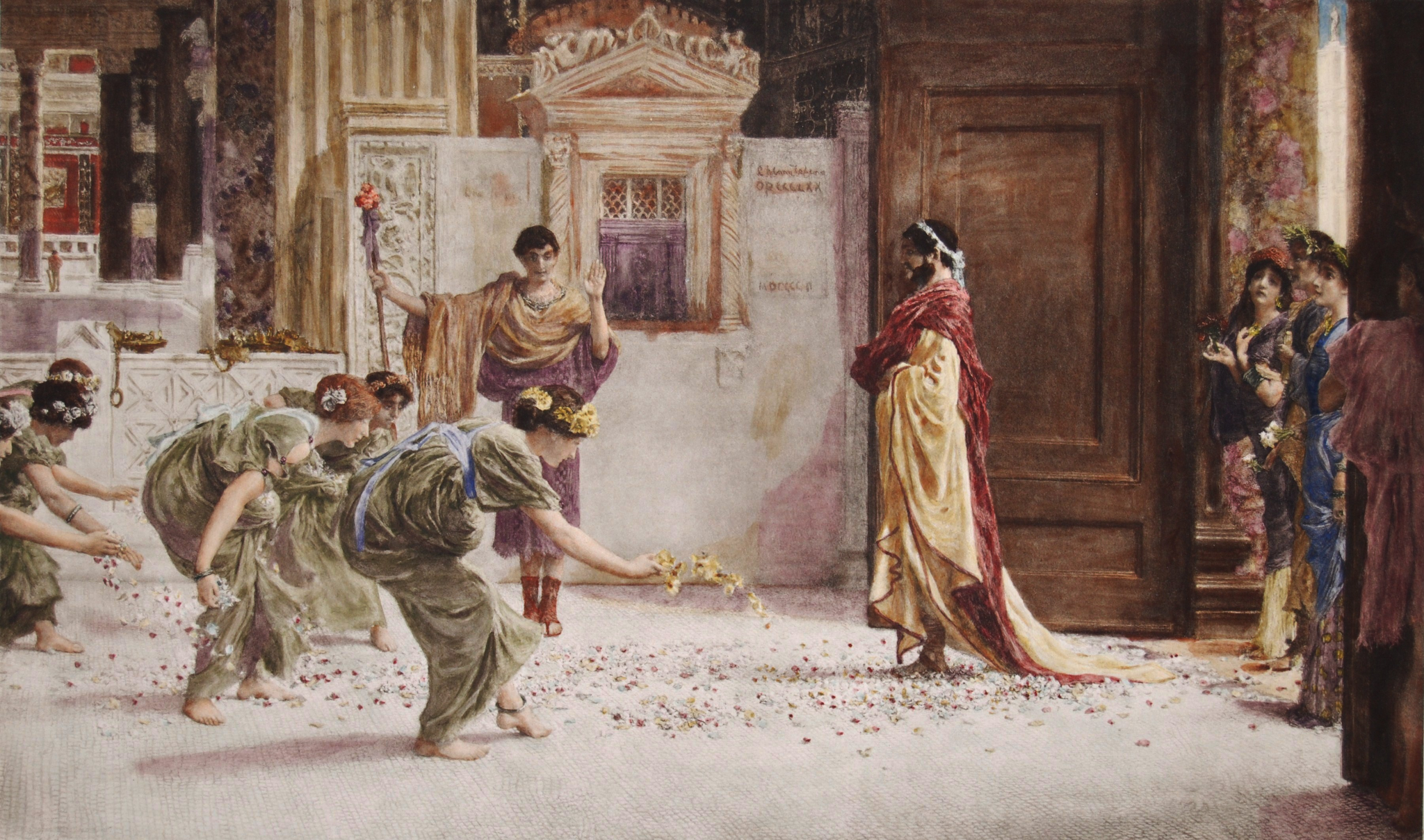
But the modern world has allowed the balance to tilt dangerously toward unrestrained progress — or Modernism — for far too long. It exalts novelty as an intrinsic good, dissolves inherited forms with little regard for the goods they once safeguarded, conflates liberty with license, and mistakes perpetual motion for vitality. In doing so, it risks the exhaustion that follows from excess — the slow dissolution of cultural memory, moral discipline, and spiritual purpose.
A civilization that burns through its own substance in pursuit of perpetual progress eventually finds itself hollowed out and unable to sustain the weight of its own ambitions or transmit a coherent vision of the good to the generations that follow. In such an age, the corrective is not a retreat into nostalgia but a deliberate re-centering of the equilibrium.
The West is experiencing social and political uncertainty, and in times such as these, the circumstances demand the stabilizing power of tradition — not to freeze a culture in place but to restore the order, continuity, and moral certainty without which renewal becomes impossible.
The Golden Mean must shift toward the Mos Maiorum that tempers passion, binds generations to one another, and restores proportion to an age of disorder. Only by recovering this anchoring force can our civilization regain the strength and security it needs to progress without undermining the very foundations that give progress meaning.
Join the fight for the Soul of our Civilization!
By subscribing to Atlas Press, you are supporting an honest group of guys who are working to help revitalize Western Civ through the re-enrichment of the Western mind. We appreciate your support greatly and hope you join us.
I absolutely agree that Western society has stretched too far into modernism in many ways (I would argue the capitalistic structure in the states is partly to blame with the constant need for novelty and consumerism). But the reaction to this has been the far-right extremism that touts “tradition” as a weapon for very dangerous goals. What does this use of tradition to bring equilibrium mean in practice then? Moderate politicians seem to struggle despite being the likeliest examples of a more balanced state.
https://www.justgiving.com/team/shakih-imran-ahmed-3?utm_medium=team&utm_content=shakih-imran-ahmed-3&utm_source=copyLink&utm_campaign=pfp-share&invite=true