
The Power of the Great Man
Charlemagne, Napoleon, and the making of the West


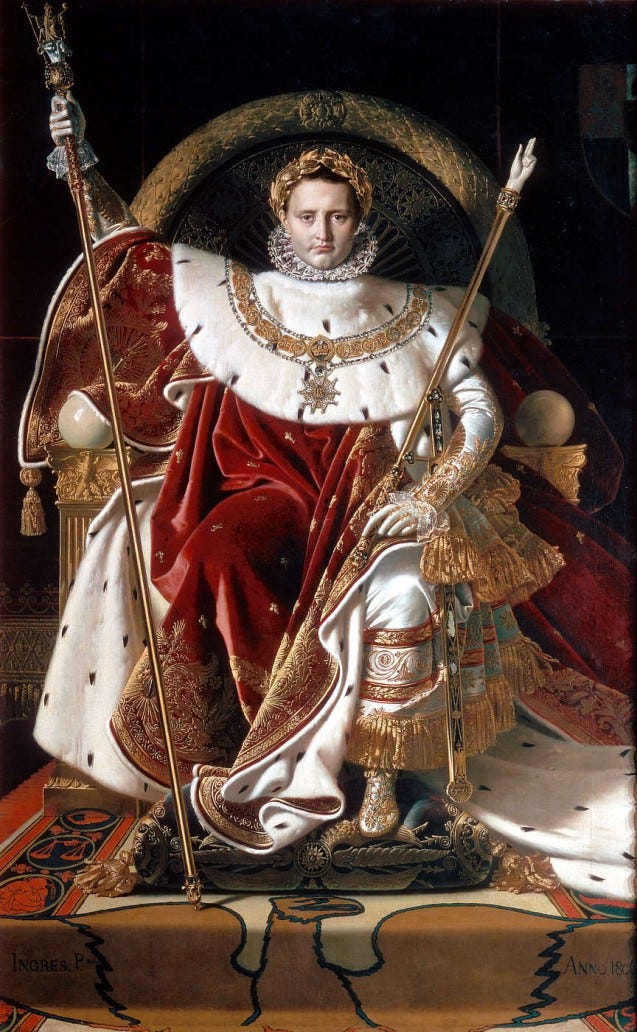
History is often described as the slow movement of powerful trends and forces — geography, demography, economics, and culture — shaping the destinies of peoples over centuries. This view, which is fashionable among modern historians, treats individuals as mere expressions or instantiations of these deeper currents.
Yet this interpretation, for all its analytical neatness, obscures a fundamental truth. At the decisive thresholds of history, in decisive moments when the future hangs suspended, it is not these abstract, impersonal forces that redirect the flow of events, but individual men.
Great men are undoubtedly conditioned and impacted by the trends and forces of their age, but this must never be mistaken for a submission to these very same trends and forces. The age provides the proverbial stage, but the individual man assumes the role as both director and actor and must play his part accordingly.
Spengler, like many historians, would argue that a single man, disciplined, directed, and defiant, can crystallize latent forces that would otherwise remain inert, summon them into coherence, and wield them as a weapon, thus imposing himself upon his world and redirecting the course of human history.
This is most evident in two of history’s most influential figures — Charlemagne and Napoleon Bonaparte — whose influence radiated far beyond their lifetimes. Both emerged in periods of social and political fragmentation, and both imposed form upon formlessness, reshaped political structures, cultural identities, and the imagination of Western Civilization. Rather than being products of their times, each became the architect of a new order.
While their legacies differ, their impact demonstrates the recurring truth that when a civilization reaches a moment of upheaval, it is the decisive individual — not the trend or force — who becomes the hinge upon which the future is determined.
Reminder: You can get tons of members-only content dedicated to useful knowledge, and support our Mission at the same time for a few dollars per month 👇
Two full-length, new articles every single week
Get actionable principles from history to help you navigate modernity
Access to the entire archive of useful knowledge that built the West
Support independent, educational content that reaches millions
Charlemagne: The Great Man Who Reforged the West
When Charlemagne inherited the Frankish kingdom in 768 AD, Western Europe was less a coherent realm than a fractured social and political landscape. The shadow of Rome still stretched across the continent, but its institutions had long since disintegrated under the weight of invasions and political decay.
Local warlords partitioned the old provinces into petty dominions, long-standing trade networks were severed, and the intellectual tradition flickered dimly in the remote discipline of Catholic monasteries. Into this disordered world stepped a ruler whose imagination refused to accept the limits of his age.
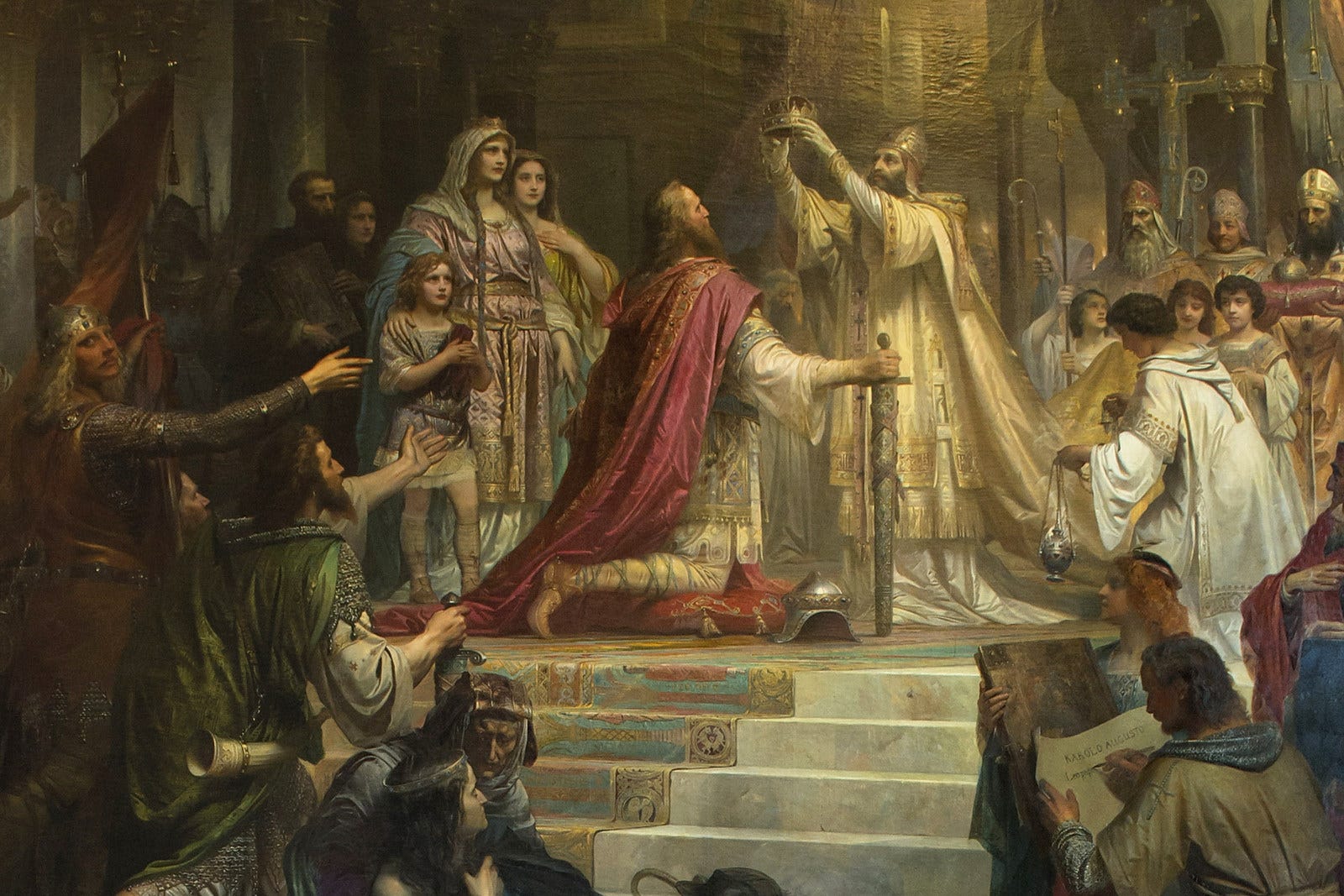
Charlemagne possessed not only an instinct for consolidation but a temperament oriented toward order. His campaigns — relentless, deliberate, and often personally led — were the outward expression of an inward resolve. Frontier pressures may have shaped the context of the Saxon Wars, yet their driving force was a sovereign intent on turning a resistant borderland into a coherent Christian polity.
Einhard’s claim that Charlemagne pursued these wars “with the greatest determination” points to a personality that would not abide the centrifugal forces of his age which would have naturally drifted further towards dissolution.
Similarly, his administrative reforms bore the imprint of his character. Charlemagne divided his realm into counties governed by counts, and he dispatched the missi dominici as royal envoys to supervise them. These inspectors enforced justice, ensured fiscal discipline, and carried the king’s authority across vast distances. No structural trend demanded such a system; rather, it was the intentional design of a man who believed that power must be organized if it is to endure.
Charlemagne also understood that culture is a mode of governance. The Carolingian Renaissance — the schools, the scriptoria, the standardization of Latin — emerged as a deliberate restoration shaped by a ruler who grasped that learning had slipped toward extinction.
Alcuin of York praised him for reviving study “which had almost perished,” a judgment that mirrors the king’s conviction that civilization survives only through cultivation. His reforms reveal a mind that treated education as the very architecture of order and the scaffolding upon which a coherent political identity emerges.
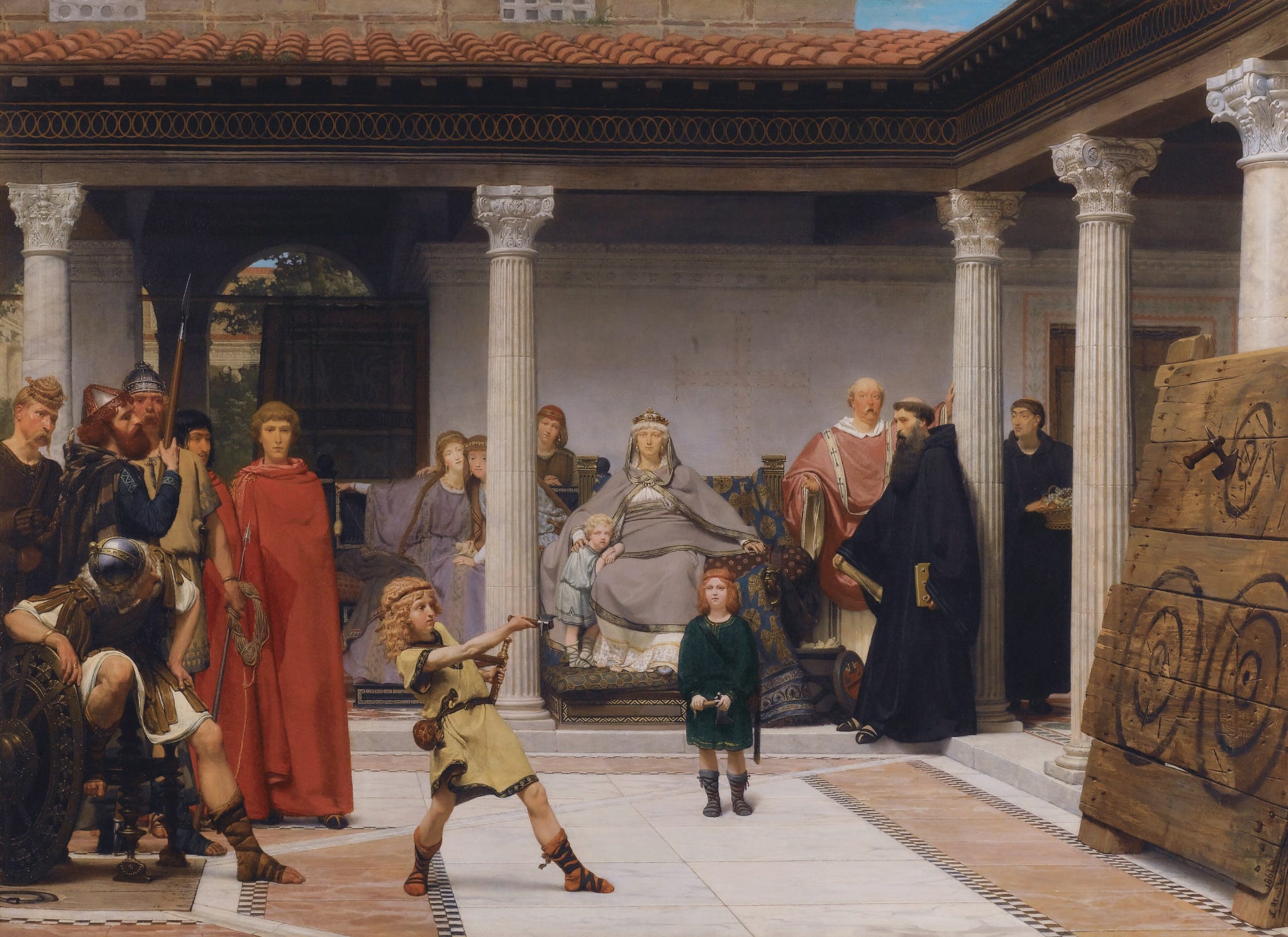
The coronation of Charlemagne on Christmas Day in 800 AD crystallized this social and political vision. When Pope Leo III placed the imperial crown upon his head, the gesture marked the reassertion of Western imperial authority and established a political ideal that would shape Europe for a millennium.
The Holy Roman Empire emerged as the outward form of Charlemagne’s inner imagination — an imperial architecture conceived in his mind and realized through the force of his character, bearing the unmistakable imprint of the man who forged it.
Charlemagne stands among the great men of history because his personality fused audacity, administrative genius, and an almost preternatural sense of civilizational purpose. He combined the Germanic warrior’s instinct for decisive action with the Roman statesman’s capacity for long-range institutional design, enabling him to subdue fractious frontiers while simultaneously orchestrating a cultural renaissance.
Moreover, his curiosity drove him to gather scholars, reform liturgy, standardize law, and impose coherence upon a fragmented world; his charisma bound nobles, clergy, and conquered peoples into a single political imagination.
Napoleon: The Great Man Who Engineered Modernity
A thousand years after Charlemagne, Europe again entered yet another age of upheaval. The infamous French Revolution overthrew the Ancien Regime Charlemagne had established, unleashing a wave of ideological fanaticism that swept across the continent with unprecedented velocity.
Thrones wavered, revolutionary armies moved with accelerating force, and the streets of Paris became the central arena in which ambitious figures tested their claims to authority. Historians often describe this era as the natural consequence of social and economic transformation, yet such interpretations overlook the extraordinary rise of a Corsican artillery officer who advanced from obscurity to command the political imagination of Europe.
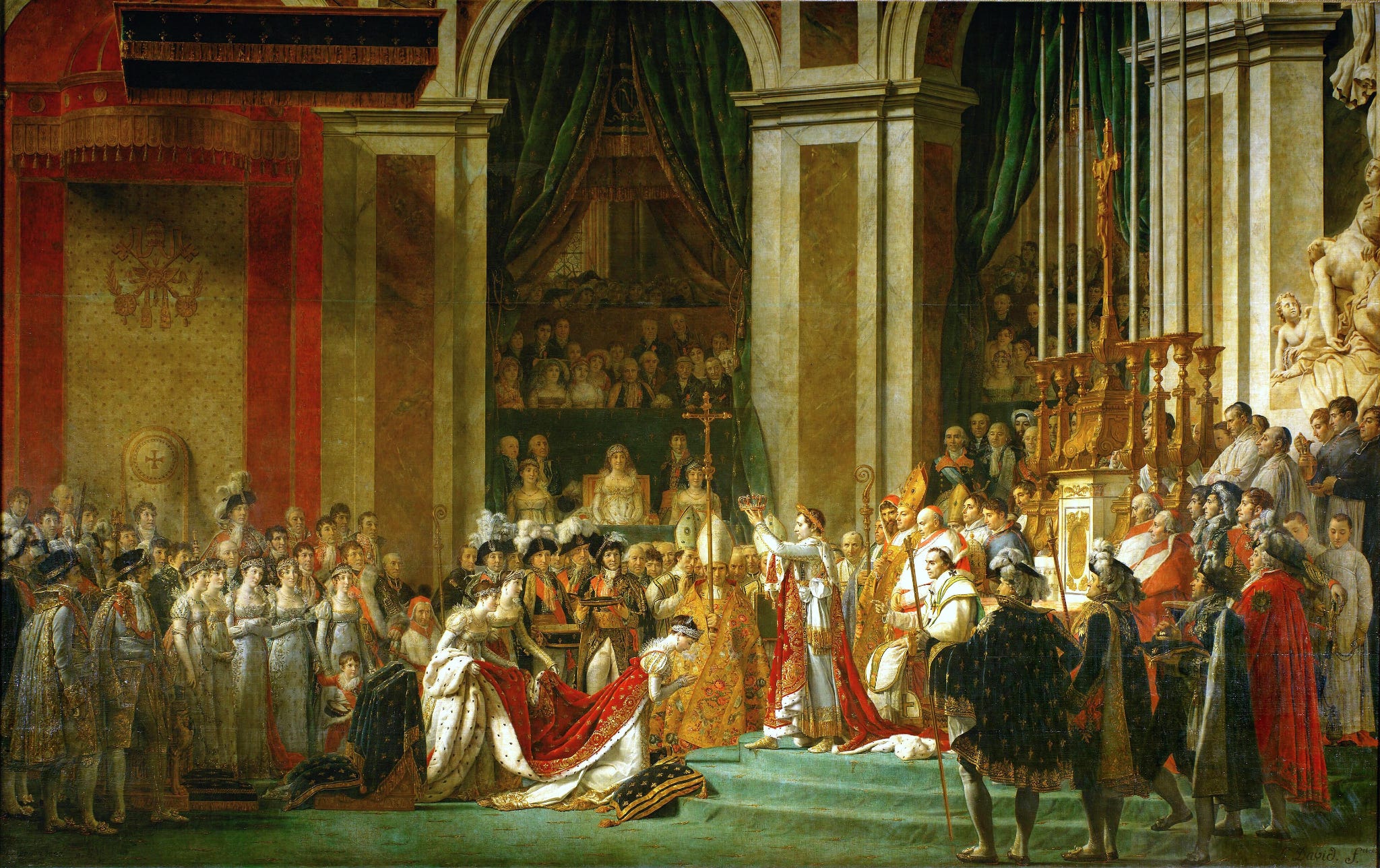
Into this unsettled world stepped a figure whose meteoric rise revealed how, in periods of civilizational rupture, the individual can emerge as the organizing principle of an entire age.
Napoleon Bonaparte possessed a clarity of mind that shaped every stage of his rise, and this intellectual steadiness allowed him to navigate the Revolution with an instinct for opportunity and a disciplined sense of its possibilities. His Italian campaigns revealed a strategic intelligence that redefined the conduct of war, for he combined speed, concentration, and psychological insight in a manner that astonished even seasoned commanders.
Claus von Clausewitz later observed that Napoleon “stood so high above all his contemporaries that he towered over them like a giant,” a judgment that captured the scale of his military imagination and the reach of his strategic vision. His victories emerged from a mind capable of discerning patterns within chaos, drawing them into coherence, and converting that coherence into decisive action.
His influence extended far beyond the battlefield. Napoleon reorganized France with a precision that reflected his administrative temperament. The Napoleonic Code, issued in 1804, established legal equality, secured property rights, and provided a rational civil framework that endured long after his empire fell, spreading across Europe and shaped legal systems on multiple continents. They emerged from a statesman who understood that institutions are the vessels through which a civilization preserves its identity and directs its future.
Napoleon also restructured education, finance, and administration. He founded the Bank of France, centralized taxation, and created a merit‑based bureaucracy that rewarded ability rather than lineage. These measures stabilized a nation exhausted by revolution and restored order to a society that had drifted toward complete dissolution.
Napoleon’s achievements resembled those of Charlemagne since he imposed order upon a fragmented Western world through purposeful administrative design, cultural renewal, and the disciplined exercise of his authority. Both men recognized that power acquires permanence only when it is organized, codified, and embodied in institutions capable of outlasting their creators.
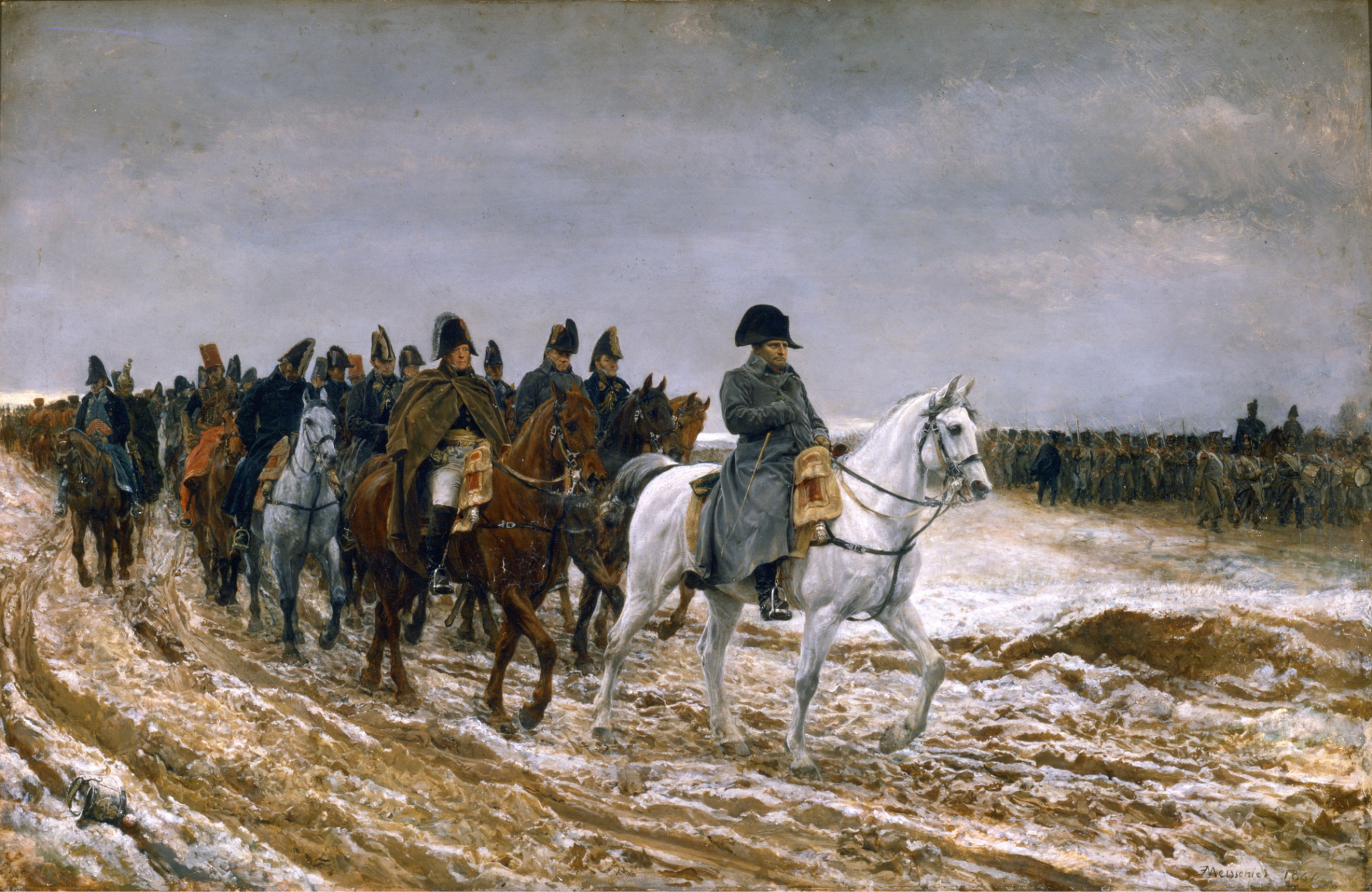
Napoleon’s vision extended across the continent, and he sought to construct a European system unified by law, administration, and a shared political imagination. His coronation in 1804, when he lifted the imperial crown and placed it upon his own head, echoed the moment a millennium earlier when Charlemagne received the crown in Rome.
Both ceremonies revealed rulers who understood empire as a personal vocation and who treated the imperial title as the outward form of an inner civilizational purpose. Napoleon’s gesture unsettled Europe because it displayed a sovereign who claimed authority through deliberate will, assuming responsibility for the destiny of nations with the same commanding certainty that had once marked the Carolingian revival.
Napoleon occupies a singular place among the great men of history because his character combined relentless energy, strategic imagination, and an unshakable conviction that he carried the future of Europe within his grasp. He possessed a mind that could absorb complexity at a glance and convert it into action with astonishing speed, shaping events through a force of personality that few rulers have ever matched.
His will animated armies, reorganized states, and recast the political vocabulary of an entire continent, leaving institutions and ideas that endured long after his banners fell. He entered a fractured world and infused it with direction, momentum, and a new sense of political possibility, giving Europe a coherence that had eluded it since the collapse of the old regime. His life reveals how a single individual, endowed with vision and disciplined resolve, can set the trajectory of civilizations and leave an imprint that continues to shape the imagination of later ages.
Napoleon’s career also exposes the limits of the view that history unfolds through impersonal trends and forces. His ascent cannot be reduced to demographic pressures, ideological movements, or institutional decay since these elements had existed long before he appeared and persisted long after he fell. What altered the trajectory of modern Europe was the arrival of a man whose will, imagination, and administrative genius redirected energies that would otherwise have remained diffuse.
In this sense he stands beside Charlemagne since both men demonstrated that at certain civilizational thresholds, the individual does not merely participate in history but becomes the crucible through which history is forged.
The Return of the Great Man
Charlemagne and Napoleon lived in different ages, separated by a millennium, yet their lives reveal a single civilizational pattern.
Each emerged at a moment when the old order had collapsed and the future lay unclaimed. Each confronted a world drifting toward fragmentation. Each imposed structure, direction, and purpose upon societies that had lost the capacity to generate these things for themselves. Their achievements were not the mechanical outcome of geography, economics, or demography, but the expression of a single will capable of gathering the scattered energies of an age and shaping them into a coherent political form, thereby altering the trajectory of history itself.
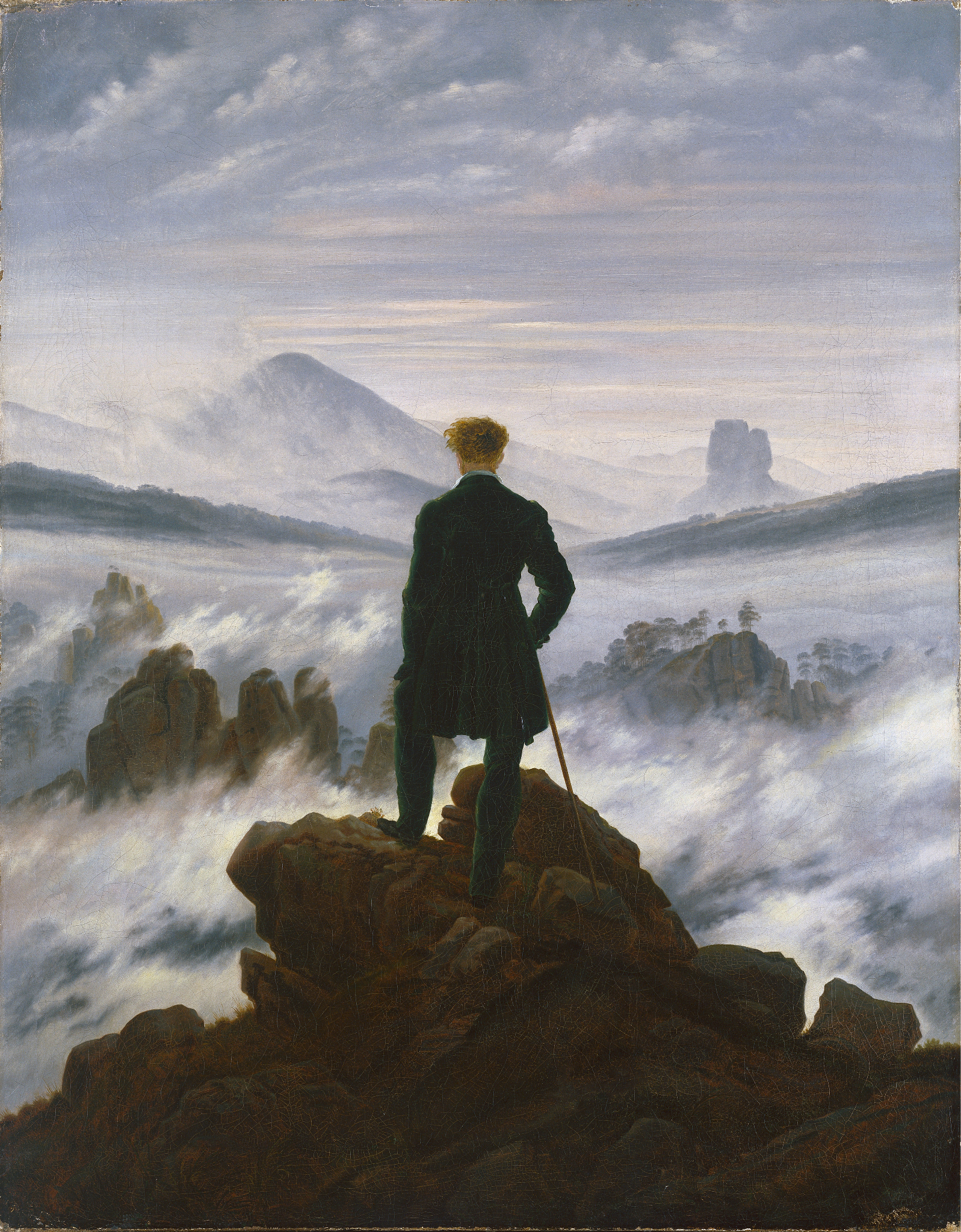
The modern world resists this truth. It prefers to speak of systems, structures, and forces, as though history were an impersonal machine and human beings mere passengers carried along in its carriages. This view flatters our desire for detachment while excusing our reluctance to act.
It teaches that agency is an illusion, that the great man is a myth, and that the currents of history are too vast and too strong to be redirected by a single will. Yet this doctrine of inevitability is itself a symptom of civilizational fatigue and the onset of what Spengler described as the “civilizational winter.” The very figures who built the world we inhabit — saints, kings, emperors, explorers, reformers, conquerors, founders — stand as living refutations of the idea that history moves without human direction.
At decisive thresholds, it is the individual who gives the age its form. It is the individual who crystallizes diffuse forces into a single movement, and it is the individual who rallies armies to conquer foreign lands, not economics.
The lesson of Charlemagne and Napoleon is therefore unmistakable: when a civilization hangs in the precocious balance, one man will always emerge to assume responsibility for its future. What our age requires is precisely such a figure — a new Charlemagne, a new Napoleon, and perhaps, he is already here.
Exceptional essay.
Very interesting and well written, thank you!