


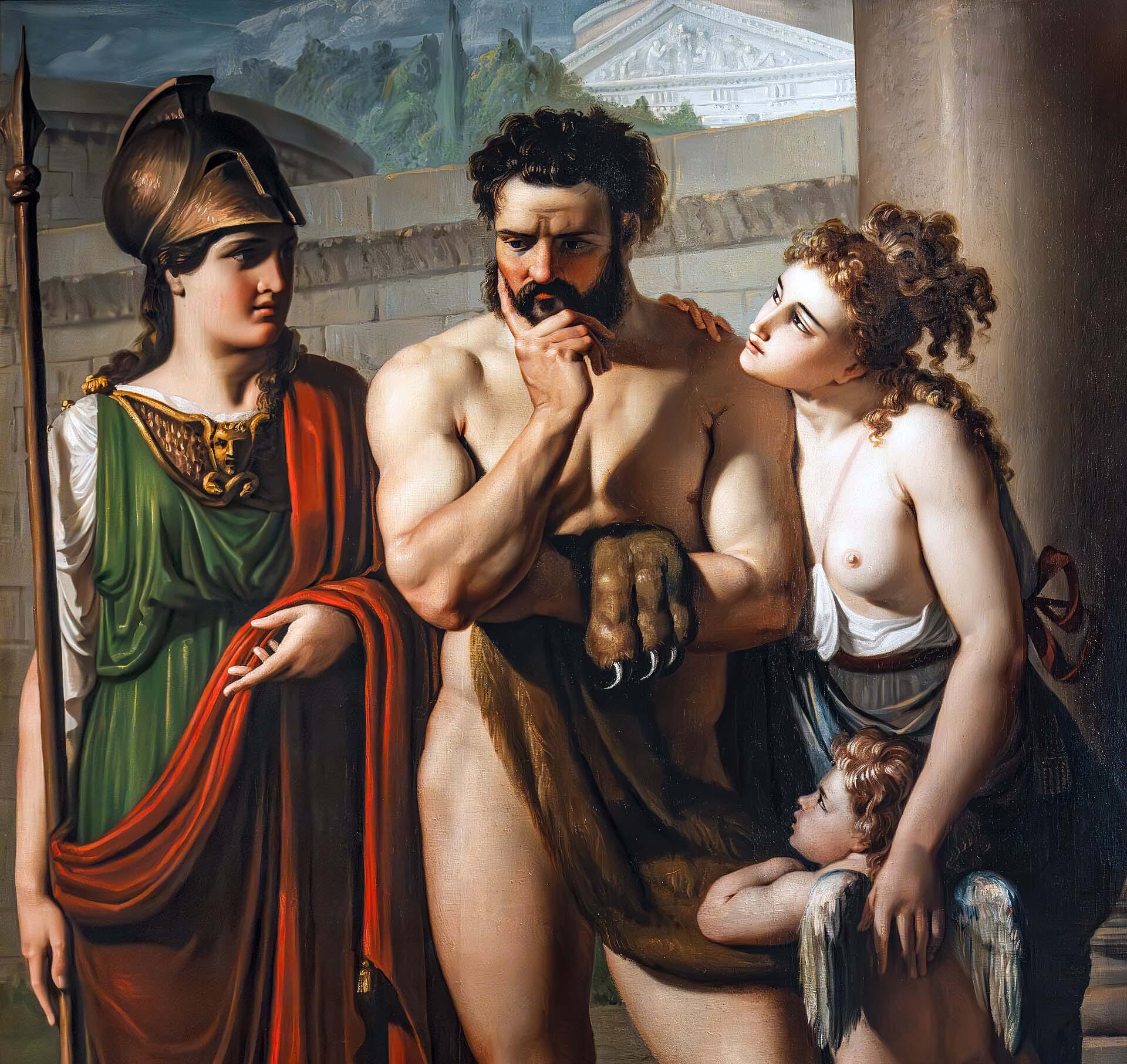
“Which way, Western man?” has become a popular meme in recent years, highlighting an often humorously obvious choice between an idyll or a dystopia.
But thousands of years ago, an ancient myth toyed with the exact same idea. A myth that enjoyed spectacular popularity in art and literature through the Renaissance and beyond, and one tied to arguably the most famous hero of classical mythology — Heracles.
Facing the crossroads of life, the son of Zeus was faced with a choice between the easy or the arduous life, while personifications of Vice and Virtue attempted to sway him to their respective paths. Their arguments, and the choice that Heracles ultimately makes, have much to teach us about the role of purpose in a fulfilling life.
So, how can we make sure that when we find ourselves at the next crossroads of life, we make the right choice?
Reminder: You can get tons of members-only content dedicated to useful knowledge, and support our Mission of revitalizing the Western Mind at the same time for a few dollars per month 👇
Two full-length, new articles every single week
Get actionable principles from history to help you navigate modernity
Access to the entire archive of useful knowledge that built the West
Support independent, educational content that reaches millions
The Easy Path
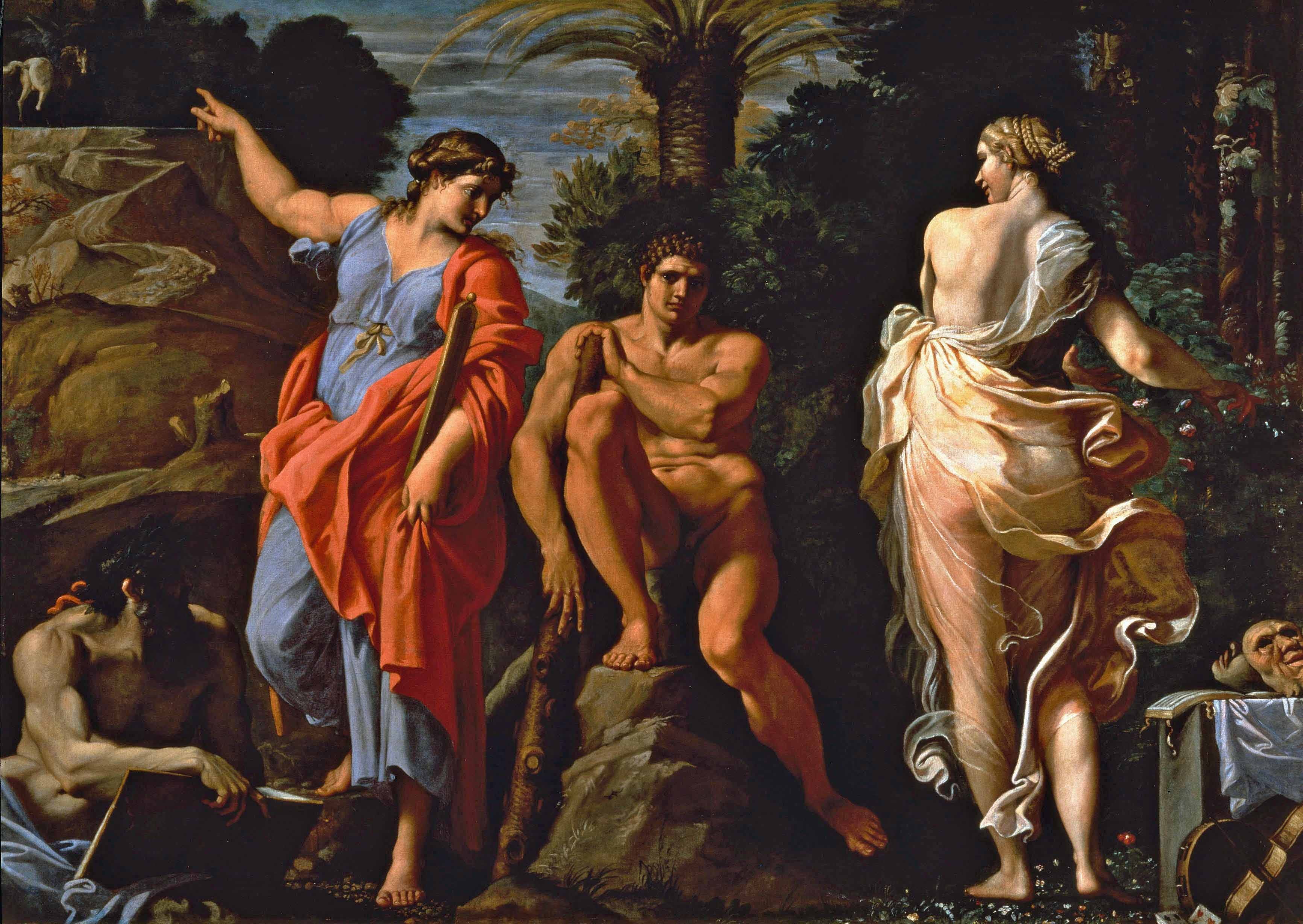
The most famous account of the myth comes from the Socratic dialogues, or Memorabilia, of Xenophon. In it, we learn that Heracles experienced this moral crisis at a highly symbolic moment in his life. Specifically, when he “was emerging from boyhood into the bloom of youth”. In other words, at the most vulnerable moment in a young man’s life.
It is then, after all, that the forces of temptation are at their strongest, when the lure of ambition is most blinding and the thought of restraint is most unappealing. But just as the hero sits down upon a rock at the crossroads to contemplate his future, the figures of two mysterious young women appear:
“The one was fair to look upon, frank and free by gift of nature, her limbs adorned with purity and her eyes with bashfulness; sobriety set the rhythm of her gait, and she was clad in white apparel. The other was of a different type; the fleshy softness of her limbs betrayed her nurture, while the complexion of her skin was embellished that she might appear whiter and rosier than she really was, and her figure that she might seem taller than nature made her; she stared with wide-open eyes, and the raiment wherewith she was clad served but to reveal the ripeness of her bloom. With frequent glances she surveyed her person, or looked to see if others noticed her; while ever and anon she fixed her gaze upon the shadow of herself intently”
Xenophon, Memorabilia II.1.22
Before the women even open their mouths, it is clear that they are of different matter. Both are ‘young’ and ‘attractive’, but something in their bearing sets them apart. One is calm, the other clearly self-conscious. Her apparent vulnerability might be mistaken for innocence by the naive man. It is a deadly trap however. For when the moment to speak comes, she quickly asserts herself:
“Now when these two had drawn near to Heracles, she who was first named advanced at an even pace towards him, but the other, in her eagerness to outstrip her, ran forward to the youth, exclaiming, 'I see you, Heracles, in doubt and difficulty what path of life to choose; make me your friend, and I will lead you to the pleasantest road and easiest. This I promise you: you shall taste all of life's sweets and escape all bitters. In the first place, you shall not trouble your brain with war or business; other topics shall engage your mind; your only speculation, what meat or drink you shall find agreeable to your palate; what delight of ear or eye; what pleasure of smell or touch… trust me I will not lead you where you shall replenish the store by toil of body and trouble of soul. No! Others shall labour, but you shall reap the fruit of their labours; you shall withhold your hand from nought which shall bring you gain. For to all my followers I give authority and power to help themselves freely from every side.“
Xenophon, Memorabilia II.1.23-25
At once, the more ‘intense’ woman promises Heracles the fulfilment of dreams if he takes the road which falls away behind her. She is the full force of youthful vigor unleashed, barely able to contain her excitement at all the senses her path will satisfy. She is, too, youthful passion that is blinded by inexperience and deaf to wise counsel.
She bats aside any fears of consequence, assuring Heracles that he “shall taste all of life’s sweets and escape all bitters”. After all, why worry yourself with the concerns of later age when you are young? Why save for tomorrow’s rain when you can spend in today’s sun? But here too come the first deceptions. As well as overloading the hero’s base impulses, she assures him that there will be no price to pay. Fortunately for Heracles however, she is not the only woman confronting him. However, as the first concludes her pitch, he does ask her name:
“'What, O lady, is the name you bear?' To which she: 'Know that my friends call be Happiness, but they that hate me have their own nicknames for me, Vice”
Xenophon, Memorabilia II.1.26
So, what can Virtue offer instead that can compete?
The Hard Path
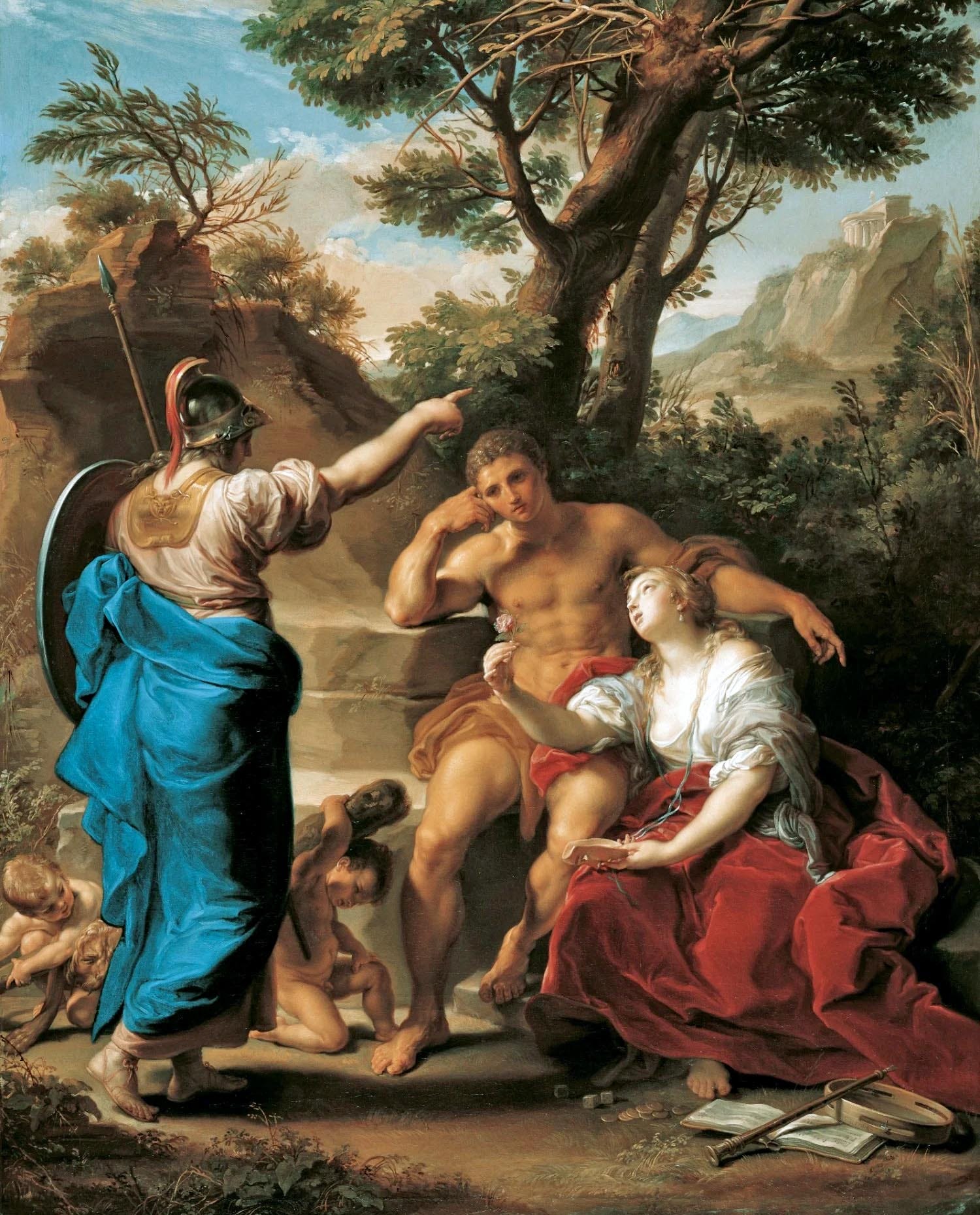
While Vice fawns upon Heracles and does all possible to distract him, Virtue, who has been waiting patiently throughout, now turns to the hero:
"'Heracles, I too am come to you, seeing that your parents are well known to me, and in your nurture I have gauged your nature; wherefore I entertain good hope that if you choose the path which leads to me, you shall greatly bestir yourself to be the doer of many a doughty deed of noble enterprise; and that I too shall be held in even higher honour for your sake, lit with the lustre shed by valorous deeds. I will not cheat you with preludings of pleasure, but I will relate to you the things that are according to the ordinances of God in very truth”
Xenophon, Memorabilia II.1.27-28
Virtue of course faces an uphill battle winning over the youthful demigod. Instant gratification, after all, has a marketing advantage over delayed satisfaction. But there is one word that she knows can pierce through the promise of pleasure — honor.
Heracles fixes her with his attention. As the very epitome of a hero, no word can inspire or terrify him quite like honor. To gain it is glorious, to lose it a death before death. Virtue knows this well, understanding that glory, and the perception of glory, is the single surefire way to the heart of any man. It is the perfect force to balance the selfish impulse with selfless calling. For while glory can win a man spectacular fame, all men know it cannot be won without earning it in the eyes of others. A man who aspires to martial honor on the field of battle knows full well he cannot achieve it without going to war.
Virtue, pressing her advantage, continues threading the needle of promise with healthy realism:
“Know then that among things that are lovely and of good report, not one have the gods bestowed upon mortal men apart from toil and pains. Would you obtain the favour of the gods, then must you pay these same gods service; would you be loved by your friends, you must benefit these friends; do you desire to be honoured by the state, you must give the state your aid; do you claim admiration for your virtue from all Hellas, you must strive to do some good to Hellas; do you wish earth to yield her fruits to you abundantly, to earth must you pay your court; do you seek to amass riches from your flocks and herds, on them must you bestow your labour; or is it your ambition to be potent as a warrior, able to save your friends and to subdue your foes, then must you learn the arts of war from those who have the knowledge, and practise their application in the field when learned; or would you e'en be powerful of limb and body, then must you habituate limbs and body to obey the mind, and exercise yourself with toil and sweat.'“
Xenophon, Memorabilia II.1.27-28
It is certainly a bold move on Virtue’s part to sell her path with “toil and pains”. Certainly, no rewards can be won without working for them, but calling toil “lovely and of good report” seems a perverse exaggeration. How can pain possibly be a good thing?
Indeed it is at this moment that Vice senses an opening, and seizes her chance to regain the attention of Heracles. How ever can pain compete with pleasure?
Rather easily, it turns out, when we focus not on what something promises, but what it brings…
