
The French Revolution is Happening Today
The template for every modern revolution was laid in France in 1789


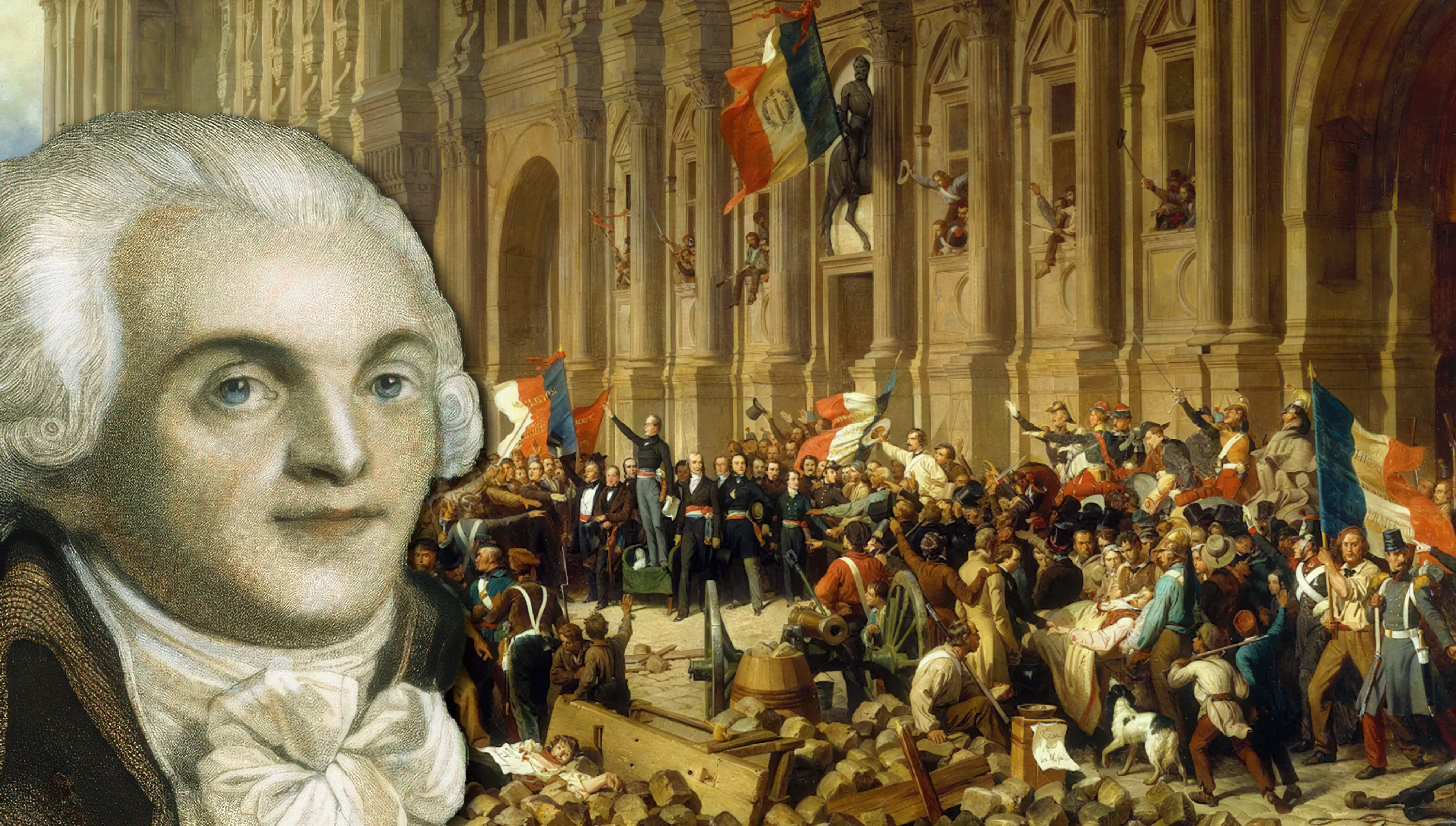
There are moments in history so transformative that they transcend their immediate context and become archetypes — patterns that echo across centuries. The French Revolution (1789–1799), with all its fervor, violence, and visionary ambition, is one such moment whose ominous shadow stretches far beyond the eighteenth century and whose rhythm can be heard again in various keys across the world today.
To understand why the French Revolution was so transformative, one must first appreciate the world it sought to destroy. The Ancien Régime was a civilizational synthesis between monarchy, Church, guild, family, and local custom woven into a sophisticated and interdependent organism that had existed for almost a millennium — since the coronation of Charlemagne at Aachen. It was precisely this world that the revolutionaries sought to overthrow.
As Christopher Dawson observed in The Gods of Revolution, “The French Revolution is the turning point of modern history for it was the first attempt to create a new order on a purely rational and secular basis.” It was more than the overthrow of a monarchy or the convulsion of a nation; it was the invention of a new political order, a new anthropology, and a radical reorientation of civic life. In Dawson’s words, it was “a revolt against the Christian order of Europe,” and in that revolt it inaugurated a new pattern of political transformation — one that begins with the delegitimization of inherited authority, proceeds through the sacralization of reason or ideology, and culminates in the creation of a new moral and political orthodoxy enforced with quasi-religious fanaticism.
And this is not confined to the past. Today, the West, though outwardly stable, exhibits many of the same symptoms that preceded the revolutionary storm of 1789. The erosion of traditional institutions, the suspicion toward and rejection of authority, the elevation of abstract reason or ideological purity as the supreme arbiter of public life — all these echo the same revolutionary spirit.
Granted, the parallels are not identical, nor need they be. History rarely repeats itself with mechanical precision, but the underlying pattern is unmistakably familiar.
This is a teaser of our paid subscriber deep dives. You can get tons of members-only content dedicated to useful knowledge and support our Mission at the same time for a few dollars per month 👇
Two full-length, new articles every single week
Access to the entire archive of useful knowledge that built the West
Get actionable principles from history to help you navigate modernity
Support independent, educational content that reaches millions
The Delegitimization of Institutions
Oswald Spengler, with his sweeping morphological vision of history, argued that the French Revolution was “the first great act in the political downfall of the West”, not because it destroyed the monarchy per se, but because it revealed the deeper dissolution of the cultural soul that had sustained Europe for a millennium.
But contrary to initial assumptions, the French Revolution began long before the infamous storming of the Bastille. The revolutionary spirit germinated in the salons, in pamphlets, and academies where figures like Voltaire, Diderot, and the philosophes — often linked through Masonic and literary societies — subjected the Ancien Régime to decades of relentless critique. The Storming of the Bastille was the flashpoint in a much deeper war against the monarchy, Church, and tradition, fracturing the bonds that had held French society together.
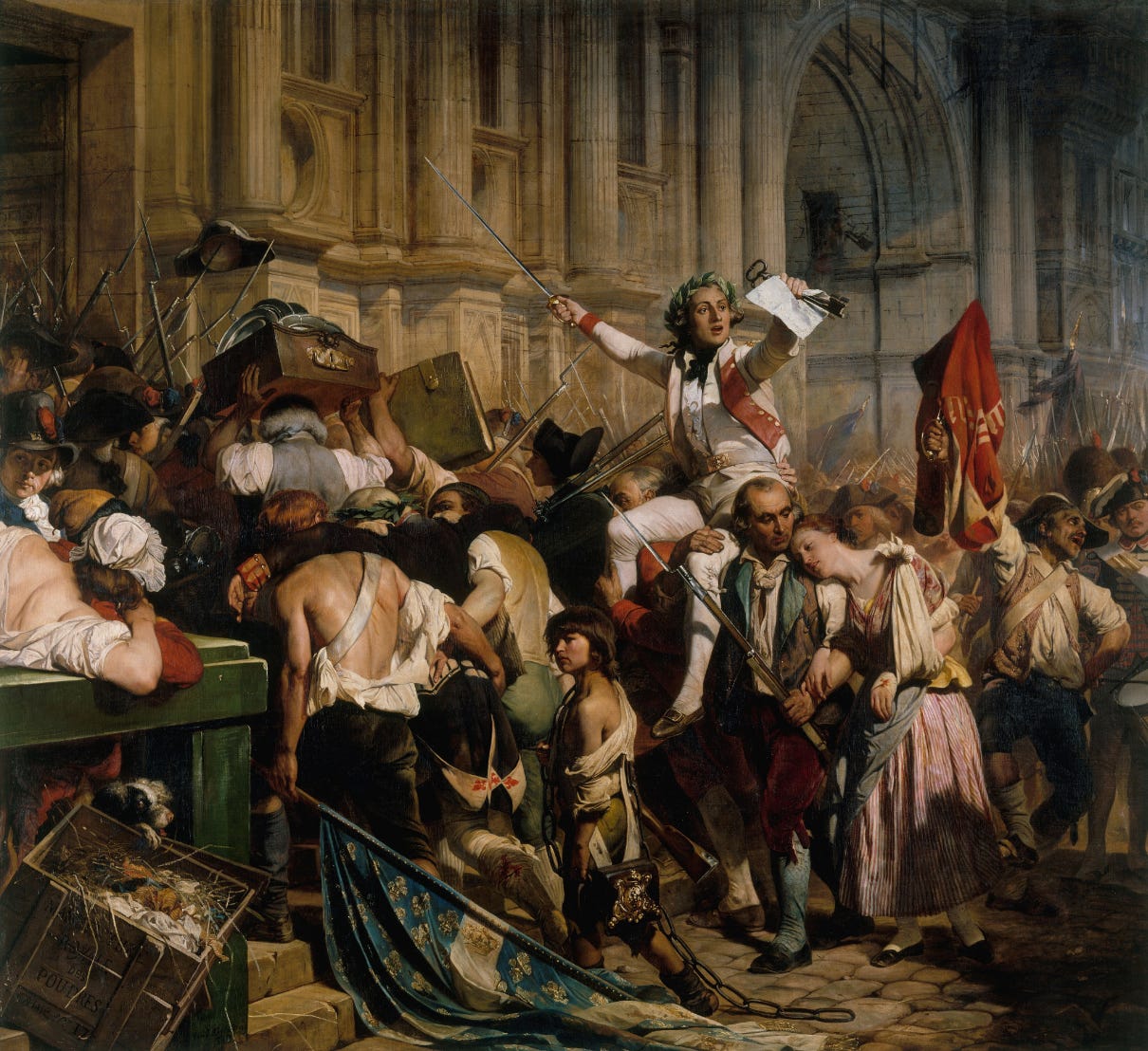
Modern Western institutions face a similar crisis of legitimacy. The family, the Church, the university, and even the nation‑state are increasingly treated not as repositories of inherited wisdom but as arbitrary constructs or remnants of an oppressive past. The language of systemic critique — so central to revolutionary France — has become the lingua franca of contemporary discourse. Just as the philosophes portrayed the monarchy as an irrational relic, radical intellectuals and academics condemn traditional institutions as barriers to progress, emancipation, or self‑actualization and openly encourage the dismantling of the current moral and political order.
Belief in authority is the true foundation of any social order, and once that belief erodes, even the strongest institutions begin to fracture. The French learned this when the monarchy — still wealthy, still armed, still administratively intact — collapsed almost overnight because its legitimacy had been hollowed out by decades of intellectual assault. The modern West, with its pervasive skepticism toward inherited norms, faces a comparable danger. The question is not whether institutions can withstand criticism — they always have — but whether they can endure the loss of the moral and metaphysical convictions that once gave them coherence and purpose.
The Undermining of the Church
No institution suffered more profoundly in the French Revolution than the Church. The Civil Constitution of the Clergy, the confiscation of ecclesiastical property, the suppression of religious orders, and the cultic experiments of the Hébertists and Robespierre were not accidental excesses but deliberate attempts to reorder society on a non‑Christian foundation. Dawson captured this with precision: “The Revolution was the first great effort to create a secular culture, independent of Christian tradition,” and the revolutionary leadership made clear that they were not interested in reforming the Church but in replacing it.
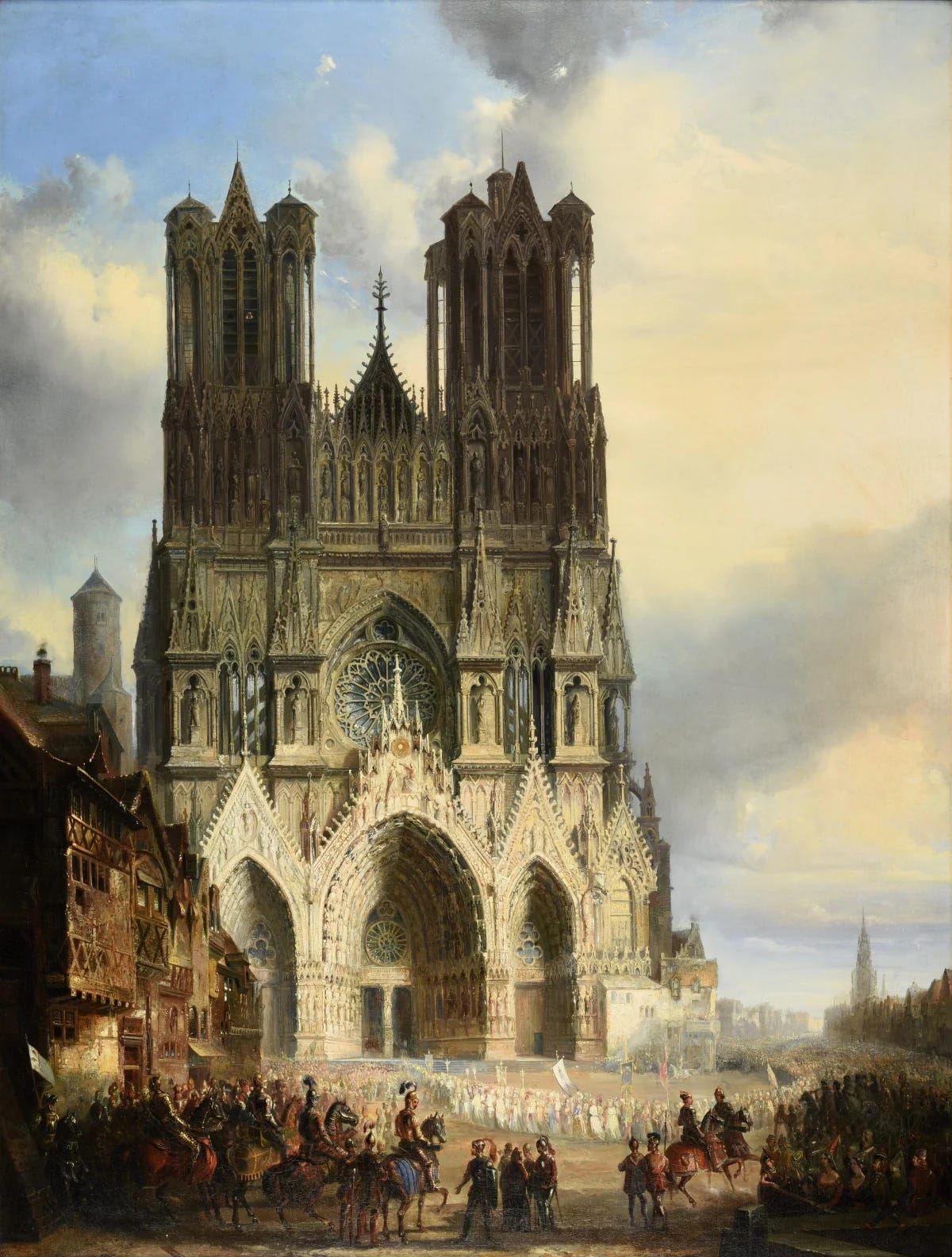
The modern West, though less overtly violent, exhibits a similar impulse. The marginalization of religious authority, the confinement of faith to the private sphere, and the rise of secular moral frameworks all reflect a cultural shift that echoes the revolutionary project. The Church is no longer regarded as the custodian of moral truth and tradition but as one voice among many, often dismissed as antiquated and oppressive. The desacralization of public life that began with the Festival of Reason in 1793 reached its logical conclusion in a society where transcendence was treated as a psychological artifact rather than a metaphysical reality.
Spengler emphasized the inevitable decline of religious vitality in late cultures, noting that the French Revolution marked the moment when the Western soul ceased to believe in its own religious symbols. Whether one accepts his determinism or not, the insight captures the essence of the revolutionary rupture: a civilization severing itself from the spiritual roots that once gave it coherence, and entering a phase of cultural exhaustion.
The revolutionaries of today continue this anti-religious pattern. These seek to replace — or rather, usurp — the Church’s moral authority with new ethical and political absolutes that lack transcendent grounding, while simultaneously dismantling traditional monuments, language, and symbols as vestiges of a past deemed unworthy of preservation. The result is a self‑destructive form of existential nihilism that accelerates the very decline it claims to remedy.
Decapitating the Old Regime
The destruction of the Ancien Régime reached its most dramatic expression in the Terror, when the revolutionaries’ ideological fervor crystalized into a mechanism of unrestrained violence.
The Committee of Public Safety, under Robespierre and Saint‑Just, claimed to defend the revolutionary principles of liberty, equality, and fraternity, yet its tribunals operated with a severity the monarchy could have never comprehended. In the name of virtue, thousands were condemned to death as enemies of the new republic, revealing how swiftly abstract ideals can degenerate into lawlessness when detached from moral restraint.
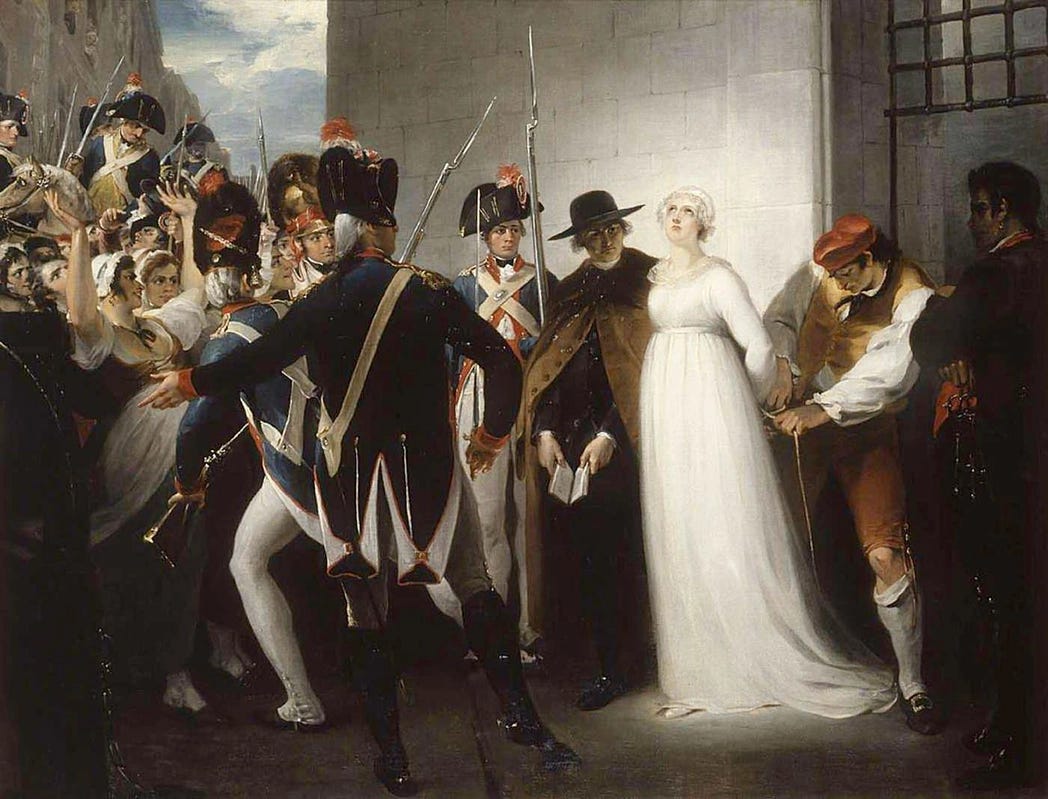
The trial of King Louis XVI was less a legal proceeding than a ritualized act of political purification, intended to sever France from its entire historical inheritance. His execution marked the symbolic point of no return, presented by the revolutionaries as the necessary sacrifice for the birth of a new political order. Yet, like the opening of Pandora’s box, it unleashed forces they could not control. Rather than liberating France, regicide destabilized it, removing the last vestige of continuity and opening the way for factions to compete for absolute power. In killing the king, the Revolution killed the principle of legitimacy that had anchored French society for centuries — one that would not re‑emerge until Napoleon Bonaparte imposed order through his extraordinary genius and will.
The revolutionary government that followed proved far more oppressive than the Ancien Régime it claimed to replace. The monarchy’s bureaucracy had been cumbersome and often unjust, but it lacked the ideological absolutism that defined the Jacobin state. Under the Law of Suspects, ordinary citizens lived under constant threat of arrest; speech, association, and even private opinion became matters of state scrutiny.
Similarly, contemporary revolutionary movements begin with calls for liberation until they harden into systems of ideological conformity, where dissent is pathologized, deviation is treated as treason, and challenges to the prevailing orthodoxy are punished with excommunication and death. The same dynamic that once filled the prisons of Paris now manifests in the social, professional, and institutional pressures that enforce ideological uniformity in the modern West — different circumstances, but the same revolutionary impulse toward totalizing control.
A New God of Reason
Perhaps the most striking feature of the French Revolution was its attempt to enthrone Reason as the supreme deity of public life. The Festival of Reason, the transformation of churches into Temples of Reason, and the elevation of abstract principles — Liberty, Equality, Fraternity — to quasi‑religious status all reveal the Revolution’s determination to replace the Christian God with an immanent, human‑made source of meaning. Will Durant noted in The Story of Civilization that once the old faith had been dismantled, the Revolution felt compelled to invent a new one, grounded not in revelation but in rationalist abstraction. In this new civic creed, the glorification of liberty as the highest virtue often concealed a deeper glorification of license, severed from the moral constraints that had once given freedom its form.
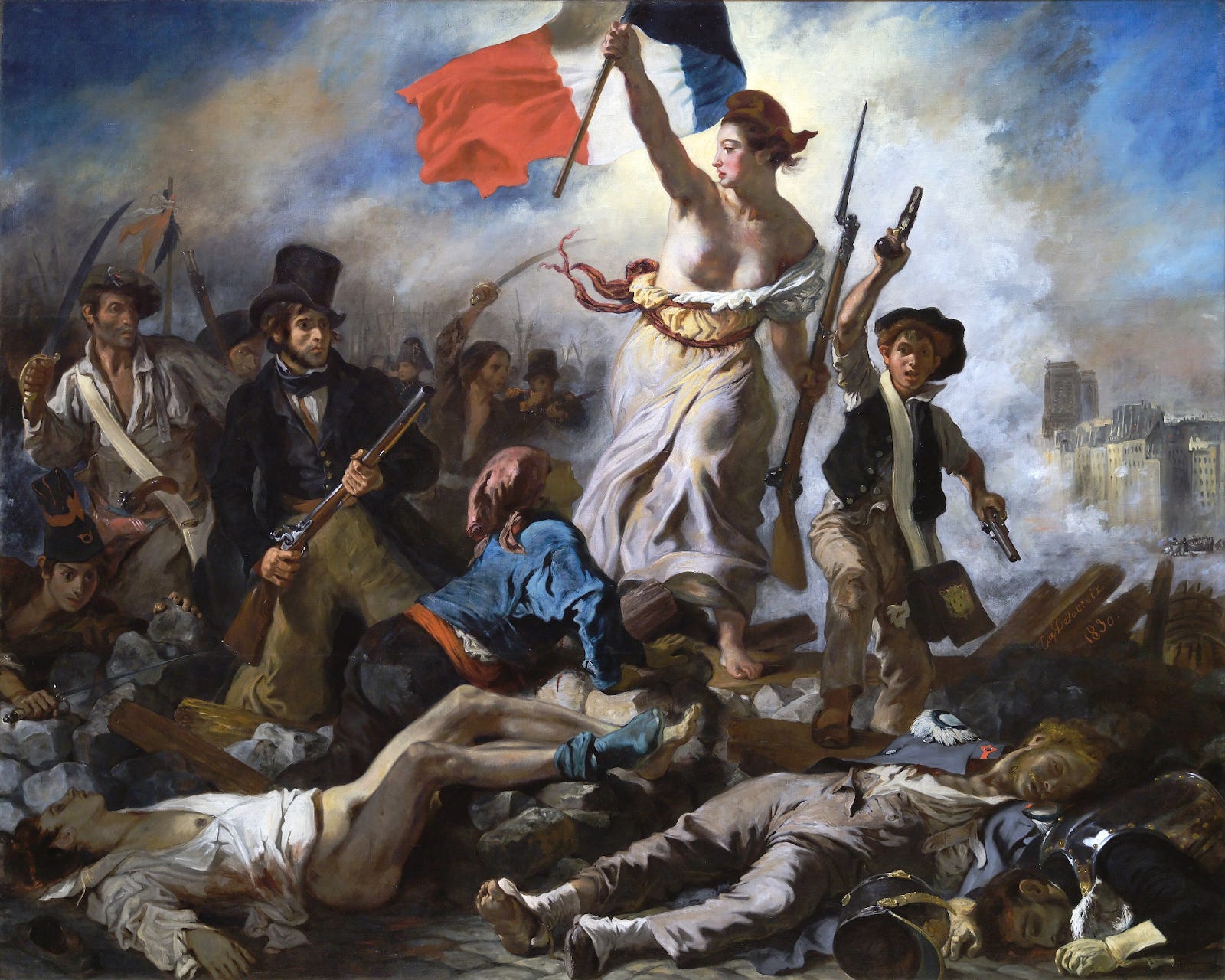
This pattern has become a hallmark of modern revolutions. When traditional religious frameworks collapse, they are never replaced with neutrality but with new ideological creeds that demand loyalty with even greater devotion. In his Decline of the West, Spengler captured this process in his stark diagnosis that “The victory of reason is the beginning of death.” For Spengler, a culture that elevates the intellect to the status of a deity sows the seeds for its own dissolution, because reason, once absolutized and detached from wisdom, becomes coercive and ultimately destructive of the organic life it seeks to govern.
The modern West, though outwardly secular, is saturated with moral imperatives that function as religious dogmas. Principles such as progress, autonomy, equality, and human rights — though valuable in themselves — often acquire an absolutist tone, enforced with a zeal reminiscent of the Jacobin tribunals, while rituals of denunciation, moral purification, and ideological conformity now unfold on digital platforms rather than in revolutionary courts. And as in 1793, the celebration of liberty frequently masks an unbounded individualism that mistakes license for freedom, eroding the very moral foundations that make genuine liberty possible.
The Lessons from History
The French Revolution offers more than a dramatic episode in European history; it stands as a warning of how swiftly a civilization can unravel once its spiritual and cultural foundations are stripped away. Its legacy reveals that dismantling an old order — however imperfect — unleashes consequences far beyond the intentions of its architects, and that societies built on purely rational or ideological principles inevitably degenerate into the most violent and intolerant regimes imaginable.
Dawson’s reminder that “civilization is a spiritual order” remains as relevant now as it was in 1789. Most importantly, the Revolution reveals that civilizations are not held together by material strength alone, but by a metaphysical order that cannot be replicated by man‑made decree. Yet the modern West, confident in its technological sophistication and political institutions, increasingly forgets that its power and stability rest on moral and metaphysical foundations it no longer fully understands.
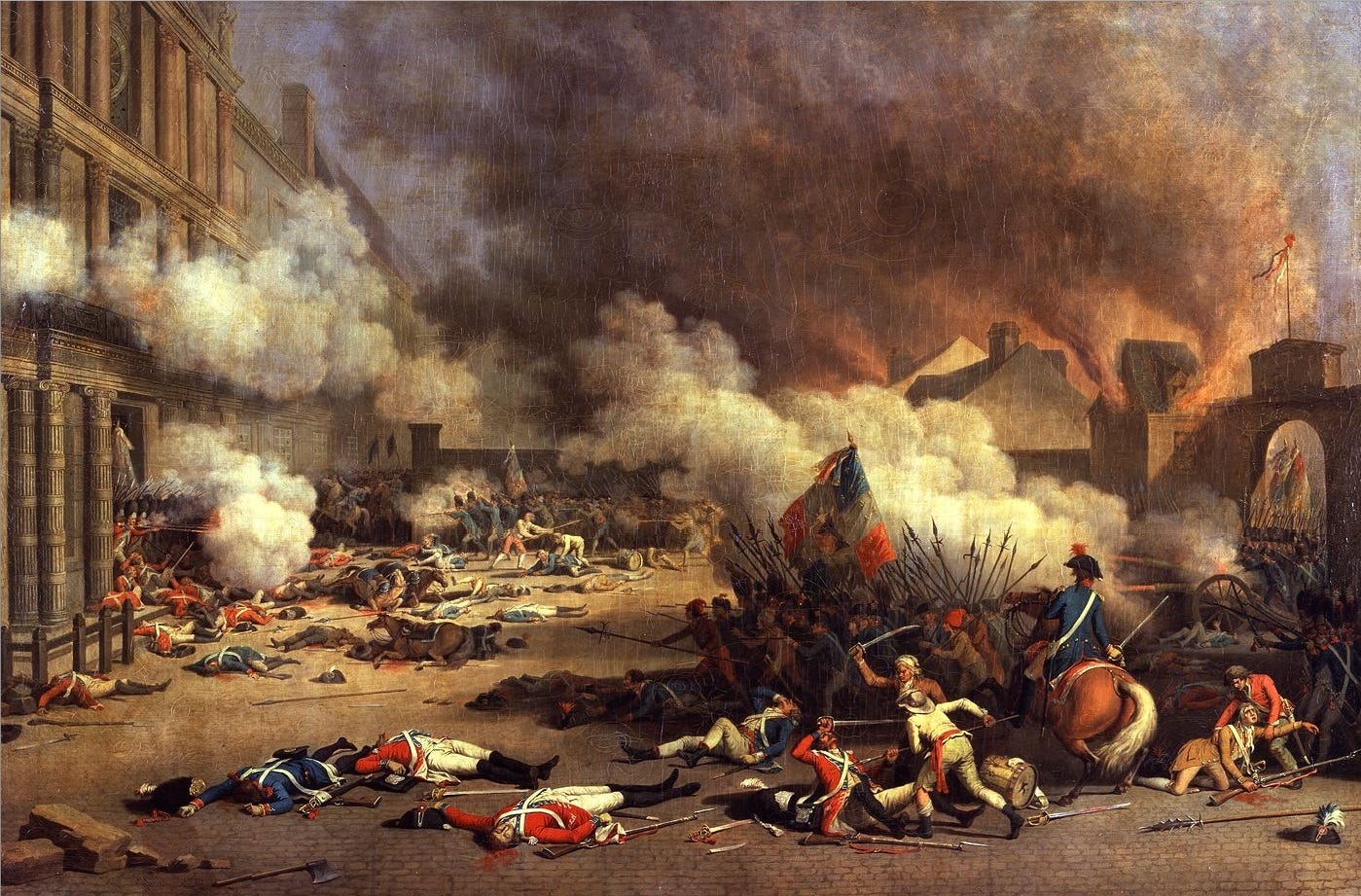
The revolutionary spirit is alive today — not in barricades or guillotines, but in the cultural impulse to delegitimize inherited norms, desacralize public life, and enthrone new ideological orthodoxies. But here lies the deeper danger: unlike the France of 1789, which still lived within the memory and structure of a Christian civilization, the contemporary West stands far removed from the Old World that once anchored it.
We are re-enacting the revolutionary drama without the civilizational inheritance that once made a counter-revolution possible. If we cast off the last remnants of that inheritance, we may discover that we have severed the final threads capable of holding our society together — and that, this time, there may be no cultural reserves left from which to rebuild.
Join the fight for the Soul of our Civilization!
By subscribing to Atlas Press, you are supporting an honest group of guys who are working to help revitalize Western Civ through the re-enrichment of the Western mind. We appreciate your support greatly.
The French Revolution did not destroy the Medieval Order. It destroyed the Absolutist Order, which was a Modern creation and very different in nature.
was the French Revolution led by Luis XVI?