
The Christian Iliad
The Virtues which Conquered Paganism...


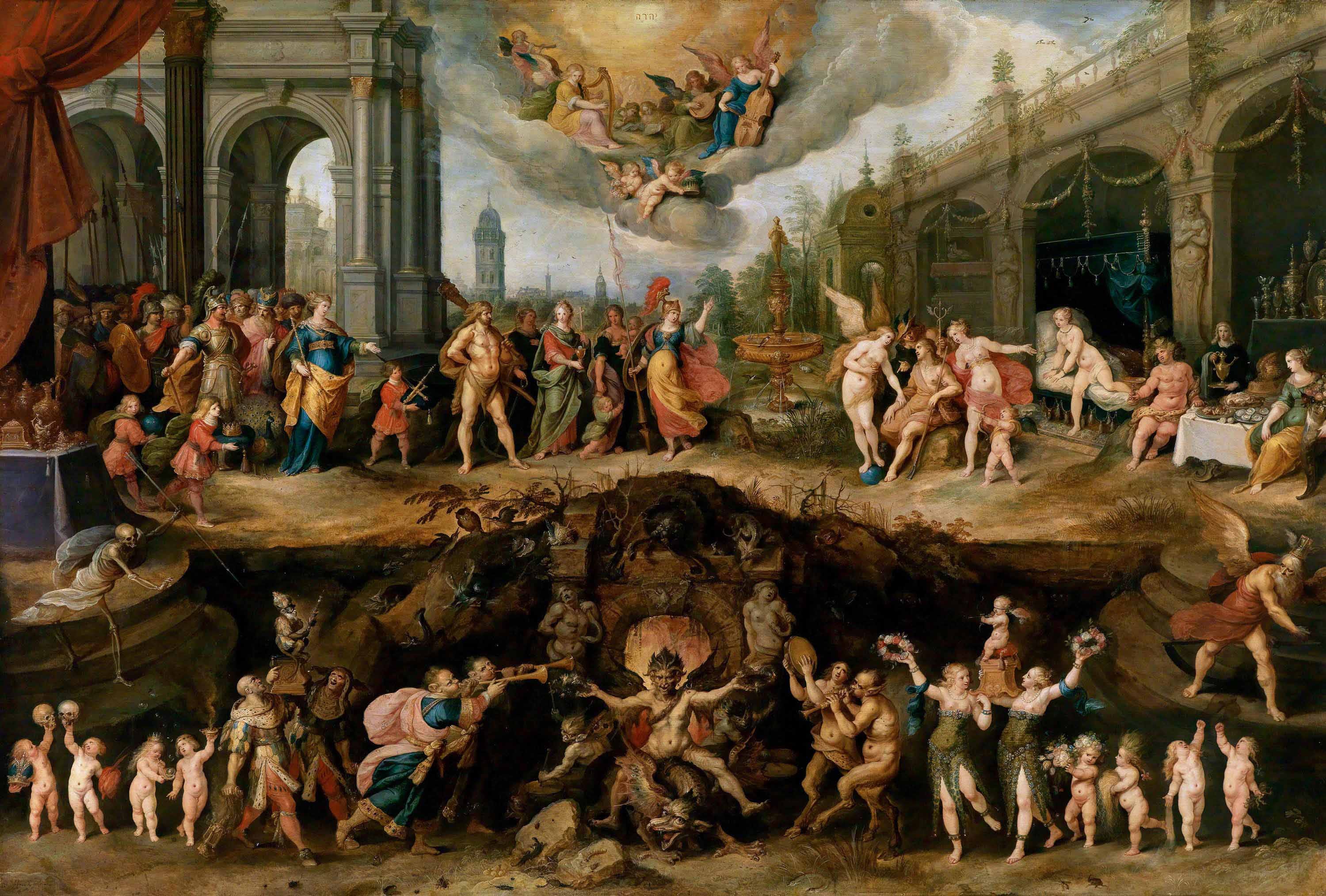
Homer’s Iliad and Odyssey are of course Titans of Western literature, which have endured for thousands of years, for good reason.
Who after all could not be inspired by tales of heroes, of gods and of monsters? All in works that colourfully celebrate heroism itself, while still reflecting profound insight into grounded humanity?
Nevertheless, when Rome embraced Christianity, the epics of pagan mythology presented a slight dilemma. So around the year AD 405 one man, Prudentius, wrote a new epic. A reimagining of the Iliad, where instead of heroes, it is the personification of Christian virtues who wage war against the vices, in a series of dramatic and violent duels. The Psychomachia which resulted was one of the most popular poems of Medieval Europe, and is a powerful allegory of the victory of Christianity over Paganism.
So, in a special piece today, we explore which specific virtues our early Christian ancestors identified as the keys to our ultimate victory…
Reminder: You can get tons of members-only content dedicated to useful knowledge, and support our Mission of revitalizing the Western Mind at the same time for a few dollars per month 👇
Two full-length, new articles every single week
Get actionable principles from history to help you navigate modernity
Access to the entire archive of useful knowledge that built the West
Support independent, educational content that reaches millions
Faith vs the Old Gods
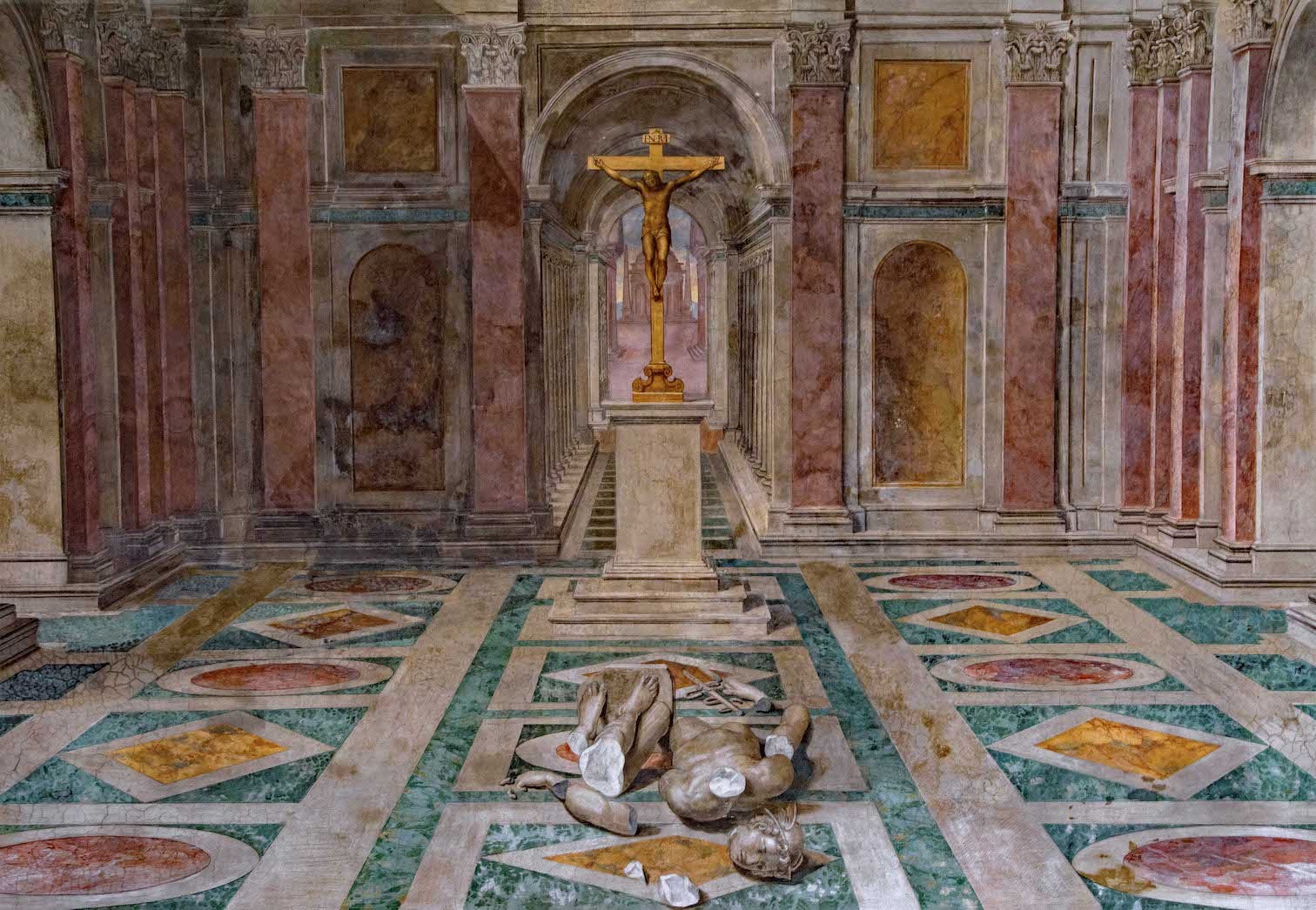
As the two armies face each other across the plain of Man’s destiny, each Virtue marks his or her opposite number, and readies for battle. As the trumpets blast, the first Virtue to enter the fray is Faith:
“Faith first takes the field to face the doubtful chances of battle, her rough dress disordered, her shoulders bare, her hair untrimmed, her arms exposed; for the sudden glow of ambition, burning to enter fresh contests, takes no thought to gird on arms or armour, but trusting in a stout heart and unprotected limbs challenges the hazards of furious warfare, meaning to break them down”
Prudentius, Psychomachia, 21-27
Faith, of course, is the exact opposite of the Homeric image of heroism. To view her, one would never imagine her as the champion of God against the champion of the old gods who now faces her on the field. She is not bedecked in ornate armor, nor does she even carry a weapon. For her, “stout heart” is both arm and armour.
Appearances of course, can be deceiving, and just because this is a Christian poem does not mean it will be squeamish…
Lo, first Worship-of-the-Old-Gods ventures to match her strength against Faith’s challenge and strike at her. But she, rising higher, smites her foe’s head down, with its fillet-decked brows, lays in the dust that mouth that was sated with the blood of beasts, and tramples the eyes under foot, squeezing them out in death. The throat is choked and the scant breath confined by the stopping of its passage, and long gasps make a hard and agonising death.
Prudentius, Psychomachia, 28-35
The champion of the old gods, literally choking on the blood of all the beasts ever sacrificed in pagan ritual, is entirely unprepared for the knockout blow of a Faith unburdened by cruel ritual.
As the gathered hosts are shocked at how quickly this all happens, things ‘get serious’. The spirits of the thousands of Christian martyrs cheer on the Virtues, as deadlier Vices begin the charge…
Chastity vs Lust
With Faith victorious, a more violent duel beckons:
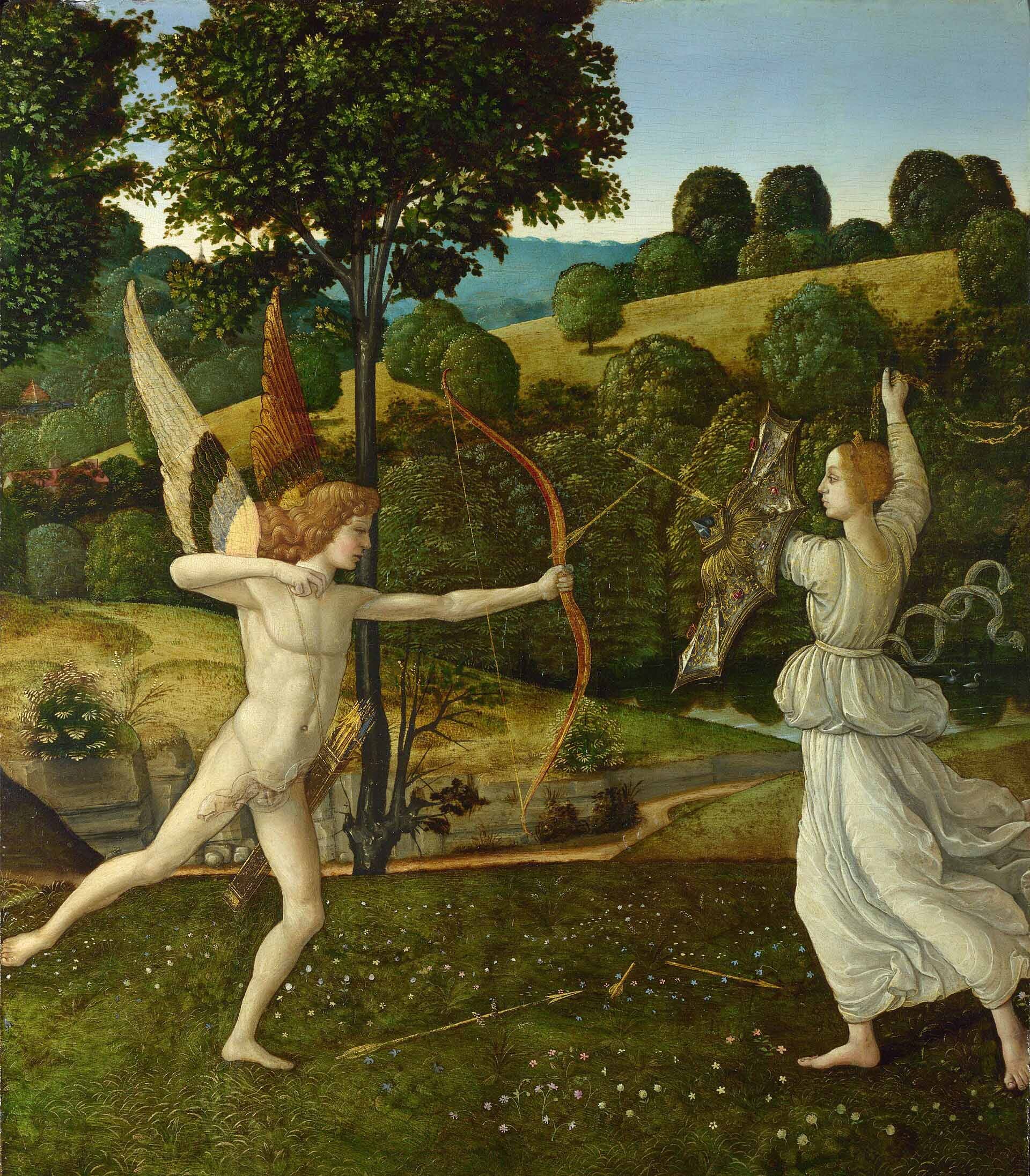
“Next to step forth ready to engage on the grassy field is the maiden Chastity, shining in beauteous armour. On her falls Lust the Sodomite, girt with the fire-brands of her country, and thrusts into her face a torch of pinewood blazing murkily with pitch and burning sulphur, attacking her modest eyes with the flames and seeking to cover them with the foul smoke”
Prudentius, Psychomachia, 40-45
Chastity, unlike Faith, is at least physically equipped for war. But Lust plays dirtier tricks. For just as the base temptations of the flesh seek to conquer us through our eyes, so too does Lust try now to scorch the gaze of Chastity.
The weak man is defeated here, for once burned by Lust he is all too easily blinded for life. But the chaste man who sees through the smoke cannot be beaten:
“But the maiden undismayed smites with a stone the inflamed fiend’s hand and the cursed whore’s burning weapon, striking the brand away from her holy face. Then with a sword-thrust she pierces the disarmed harlot’s throat, and she spews out hot fumes with clots of foul blood, and the unclean breath defiles the air near by. “A hit!” cries the triumphant princess. “This shall be thy last end; for ever shalt thou lie prostrate; no longer shalt thou dare to cast thy deadly flames against God’s man-servants or his maid-servants; the inmost fibre of their pure heart is kindled only from the torch of Christ”.
Prudentius, Psychomachia, 46-57
The heat of pagan fire and embers of burning Lust are no match for the warming flame of Christ. Whereas the godless are led astray through the flesh, when the word of Christ is united to the flesh, men are elevated to “nobler things”. The pagan man seeks his own glory. The Christian man aspires to the glory of all Man.
So with Lust now bleeding out, broken upon the battlefield, the Vices send forth a champion stronger yet…
Patience vs Wrath
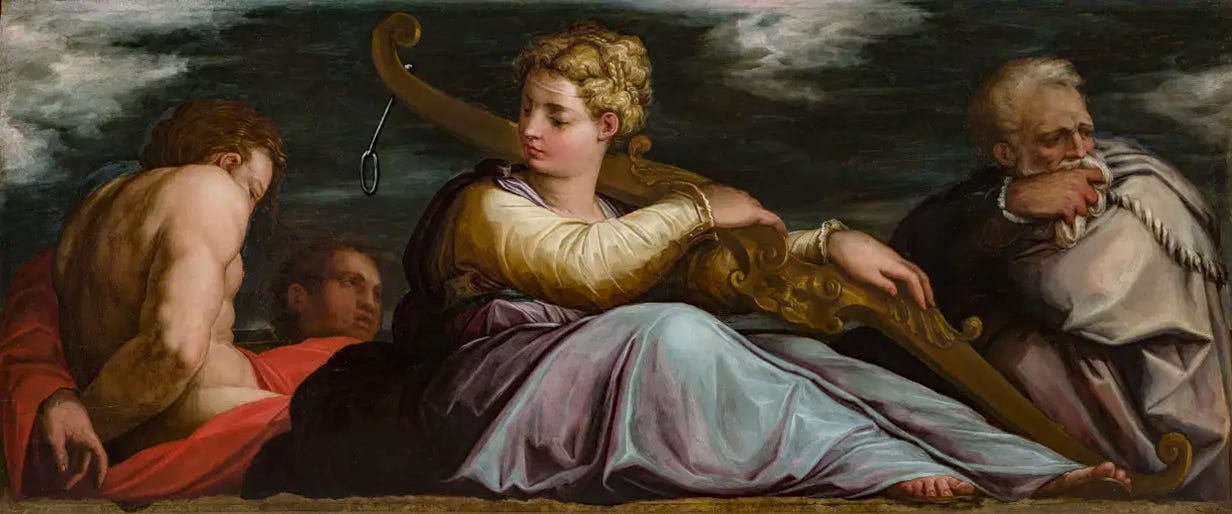
A man who conquers Lust is a man who can see the horizon over the foreground. Such a man is well on his way to cultivating a higher Christian virtue — Patience.
As Saint Augustine observed, true patience is the ability to “endure evils with equanimity so as not to abandon, through a lack of equanimity, the good through which we arrive at the better” (De Patientia, 2). It is the conviction to hold true to your position in the face of adversity, and therefore the anchor of all your virtues. A patient man is in control. An impatient man has lost control.
Thus Patience now faces her sworn enemy — Wrath:
“Lo, mild Patience was standing with staid countenance, unmoved amid the battle and its confused uproar, with fixed gaze watching the wounds inflicted as the stiff javelins pierced the vital parts while she waited inactive. On her from a distance swelling Wrath, showing her teeth with rage and foaming at the mouth, darts her eyes, all shot with blood and gall, and challenges her with weapon and with speech for taking no part in the fight”
Prudentius, Psychomachia, 109-115
Unable to contain her rage, Wrath hurls a pike at Patience, taunting her as it flies:
““Here’s for thee”, she cries, “that lookest on at our warfare and takest no side. Receive the death-stroke in thy calm breast, and betray no pain, since it is dishonour in thine eyes to utter a cry of pain”, So speaks she, and the pine-shaft, launched through the yielding airs, goes hissing after her angry words. Sure-aimed, it hits the very stomach and smites hard with full force, but is struck off by the resistance of a hard cuirass, and rebounds”
Prudentius, Psychomachia, 118-124
Patience, however, is armored by Christ, and cannot be bested by mere impulse. Hence the pike strikes, yet harmlessly ricochets off. The patient man is not derailed by provocation, harsh words or rash actions. As a result Wrath, her self-control further unravelling at this revelation, is consumed by her own rage. Her “wild passion fires her to slay herself”.
A man who cannot control his emotions, ultimately, is his own worst enemy.
With Patience now victorious, the battle line of the Virtues is steadied. It will need to be, for the central duel of Christianity and Paganism is about to begin…
