
The Baptized Barbarian
Western Man as the Disciplined Savage


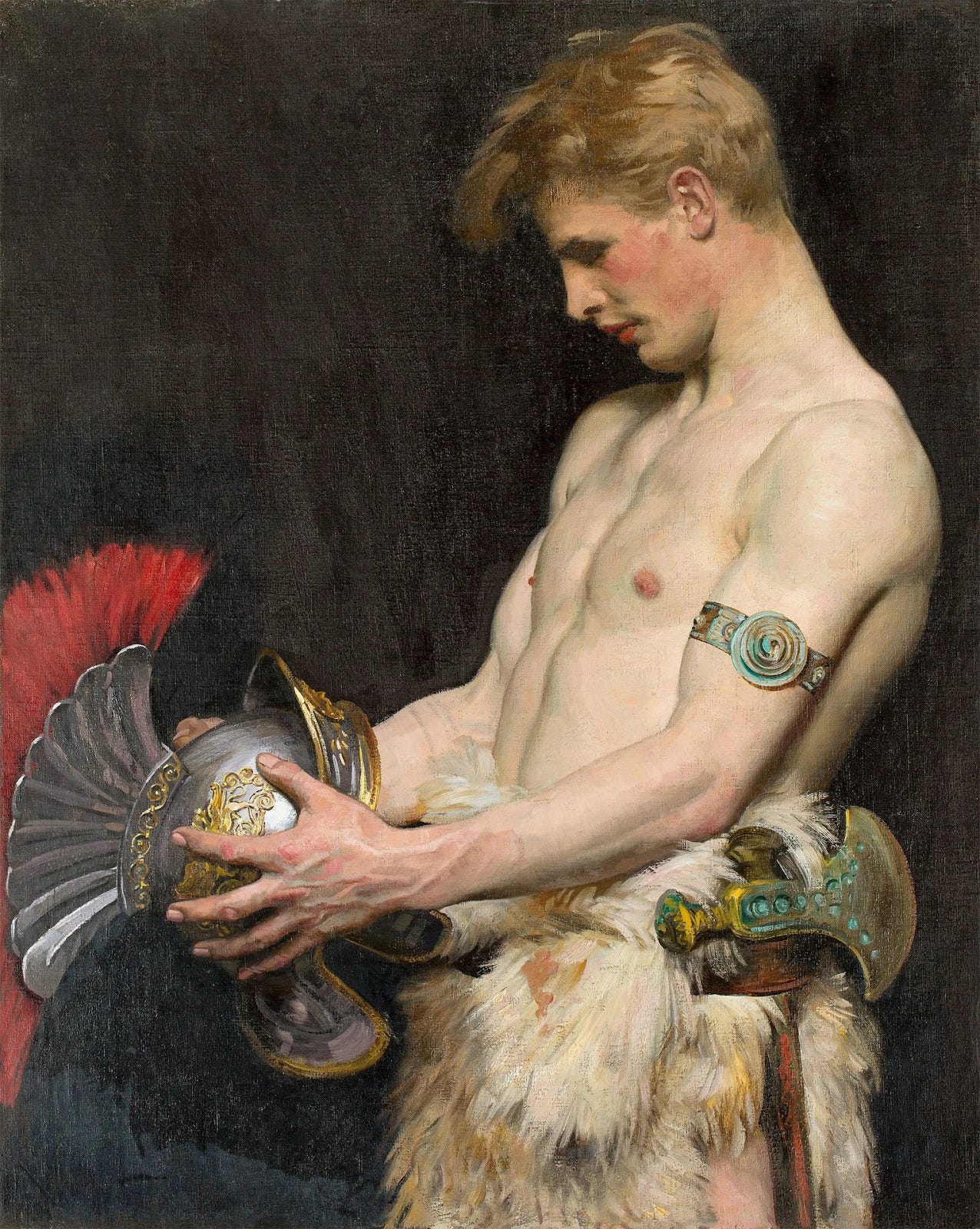
Western civilization has long held in productive tension two opposing forces: a raw, ancestral vitality and a disciplined spiritual form. This dynamic lies at the heart of two influential interpretations of Western culture. Oswald Spengler saw cultures rising when their primal energies crystallize into a distinctive form, while Christopher Dawson argued that they endure only when that energy is directed by a spiritual vision.
Nowhere is this dynamic more evident than in the Christianisation of the Germanic peoples.
When the Germanic peoples entered a Roman world in decline, they gradually came to embrace the Christian faith, and their encounter with the Gospel set in motion a cultural transformation that shaped the early medieval West. Their pagan vitality was reinterpreted through a Christian theology and anthropology wherein martial courage became the virtue of fortitude, tribal loyalty became fidelity, and the old heroic code was reformed into a moral universe ordered by the Cross.
Within only a few generations, the same peoples who had once plundered and terrorised the Roman frontiers were constructing the political and religious foundations that would become the Holy Roman Empire, and the descendants of Germanic warriors were emerging as mounted knights defending the West from her enemies.
This transformation is not exclusive to the Germanic peoples alone, but rather, reflects a broader pattern that recurs throughout Western history – namely, the baptized barbarian.
The baptized barbarian is one whose nature unites ferocity and restraint, instinct and order, poetry and power, and the capacity for decisive violence with the capacity for spiritual discipline. He embodies the fusion of Spengler’s sense of destiny with Dawson’s conviction that only a spiritual horizon can give that destiny meaning.
In the baptized barbarian, the civilized and the savage are not adversaries but integrated strengths, each summoned when the moment demands it.
Reminder: You can get tons of members-only content dedicated to useful knowledge, and support our Mission at the same time for a few dollars per month 👇
Two full-length, new articles every single week
Get actionable principles from history to help you navigate modernity
Access to the entire archive of useful knowledge that built the West
Support independent, educational content that reaches millions
The Barbarian
The term barbarian is often misunderstood and maligned. According to Spengler and Dawson, barbarian does not refer to moral chaos or unrestrained cruelty but rather a raw, pre‑civilized human vitality not yet shaped by a universal moral or legal horizon. It is the unrefined potency that precedes form, the elemental energy from which a culture is shaped.
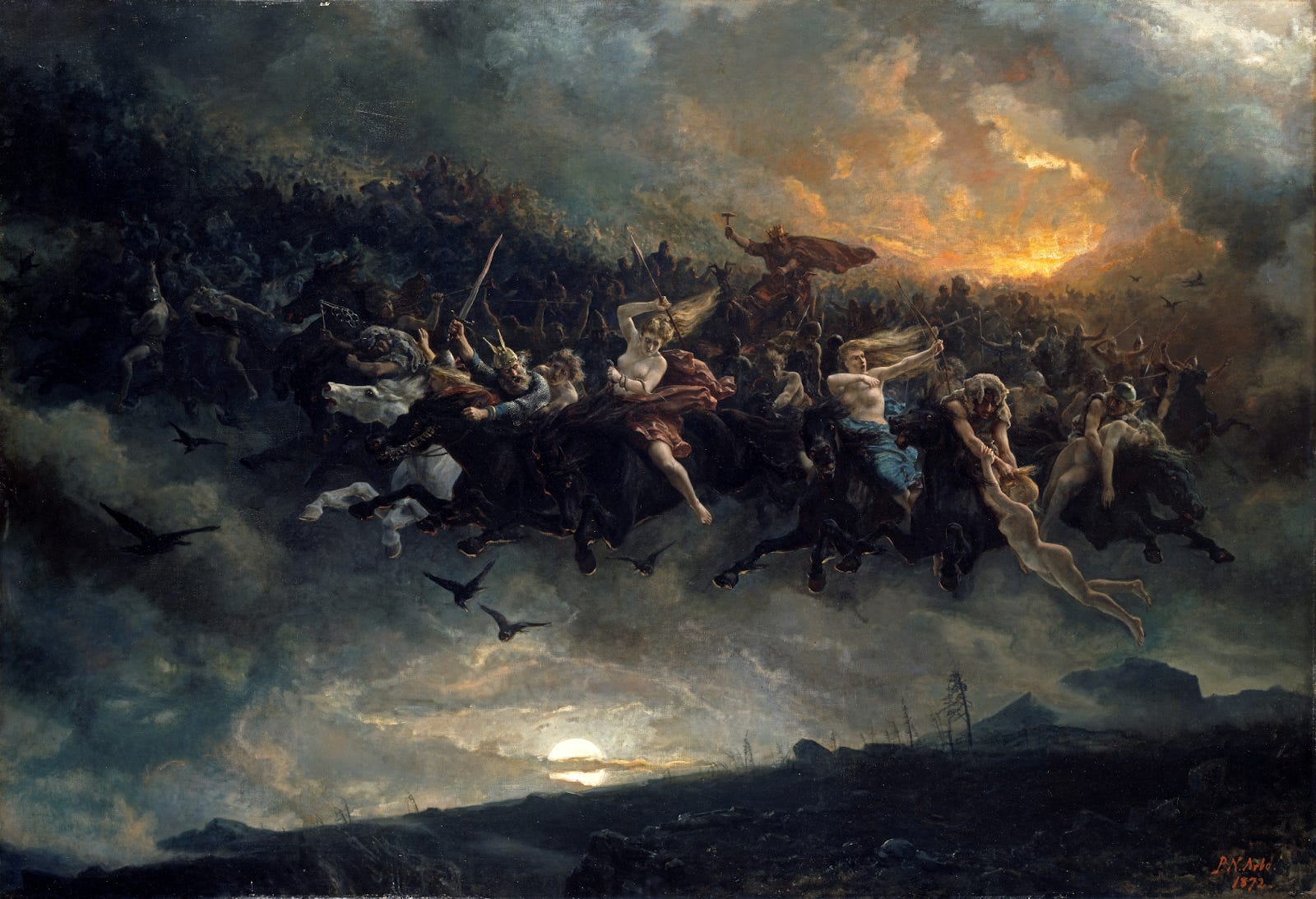
In his Germania, Tacitus described the Germanic tribes beyond the Rhine as animated by Furor Teutonicus, a particular ferocity that was both a source of terror and admiration. This furor, however, was not confined to the battlefield alone. It permeated every aspect of a world structured by clan feuds, ritualized raiding, and the ever‑present possibility of violent reprisal. From his youth, the barbarian was formed within this severe environment, conditioned to regard courage, vengeance, and martial prowess as the highest of virtues and the very currency within a society built on honor and respect.
Their mythology mirrored this harshness: a cosmos destined for Ragnarök, where gods and giants alike would meet in a final cataclysm of frost and fire. To a Roman sensibility, such a worldview seemed to sanctify violence as an end in itself, as if the Germanic imagination could not conceive of order without first passing through the crucible of annihilation.
Their religious practices reinforced this impression, too. The worship of Odin, god of frenzy and poetic ecstasy, and the veneration of Thor, the thunder‑wielding defender of the clan, cultivated a spirituality in which courage, fatalism, and ecstatic violence intertwined.
Even their social customs bore the marks of this primal world. Sexual norms were looser, more permissive, and often tied to fertility rites or clan alliances rather than to any universal moral code. In this, they stood in sharp contrast to the Roman familias, whose domestic order was governed by strict legal expectations and patriarchal discipline.
What appeared to Roman eyes as ungoverned ferocity was, in fact, a primitive but loosely regulated social order expressed through unwritten laws, sacred oaths, and the frenzied choreography of battle — a world in which honor was inseparable from the capacity to fight and die.
Yet even these brutal elements were not without restraint. The comitatus ethic bound chieftains and their warbands in reciprocal loyalty, just as assemblies bound communities through sacred oaths. Their world was severe, but it was not completely formless. It possessed precisely the kind of primal spirit that Spengler regarded as the initial wellspring from which a distinctive cultural form might crystallize, and which, in Dawson’s view, would one day be refined, elevated, and ultimately perfected by Christian revelation.
The Baptism
In his Summa Theologiae, St Thomas Aquinas wrote that “grace does not destroy nature, but perfects it.” Drawing on this principle, historians such as Christopher Dawson maintain that the baptism of the Germanic peoples did not abolish their culture but perfected it through discipline. The warrior became a knight, the clan became a kingdom, and impulse became vocation.
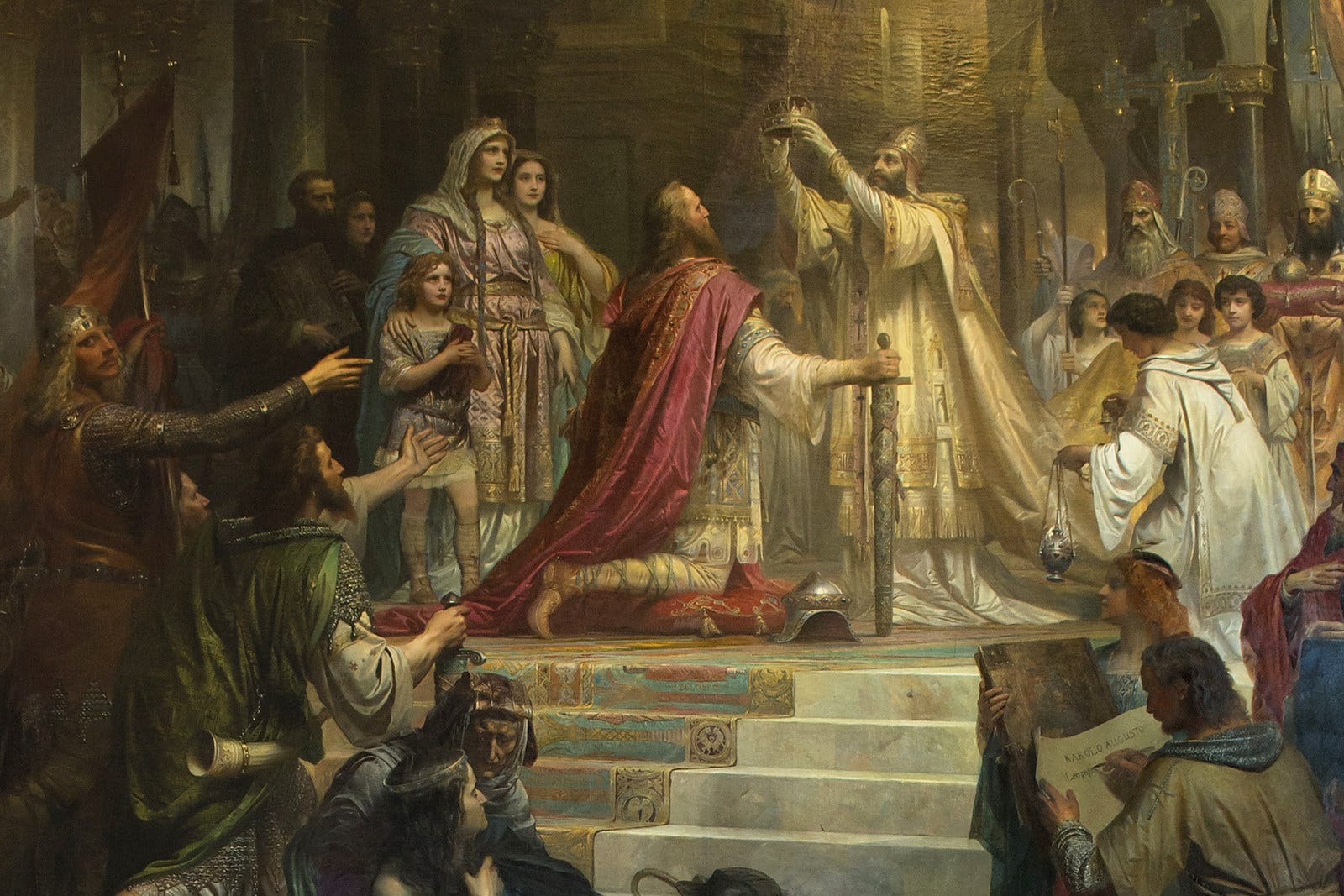
This transformation unfolded through a remarkable fusion of Greco‑Roman and Germanic traditions. Roman legal‑administrative order supplied the institutional framework; Germanic honor culture provided the emotional and social vitality; Christian theology furnished the metaphysical architecture. The result was a new civilizational synthesis — the Holy Roman Empire — and in the coronation of Charlemagne we see the fusion of Roman symbolism, Christian liturgy, and Germanic kingship.
The same martial intensity that once animated Germanic clan feuds and heroic raids was now harnessed in defence of Christendom. The furor Teutonicus was not suppressed but sanctified and given a new telos under the sign of the Cross. The liturgical anointing of kings, the blessing of ancestral swords, and the development of knighthood and chivalry reveal how Christianity absorbed Germanic vitality and transformed it into a disciplined, militant piety. Thus, the Holy Roman Empire preserved the spirit of the barbarian while binding it to a universal moral horizon in a fusion of spiritual authority and martial responsibility.
In this way, the baptized Germanic world was not destroyed or abandoned but elevated and perfected.. The furor Teutonicus became militia Christi, and the restless energy of the barbarian was transfigured into the steadfast courage of the Christian knight.
Power and Poetry
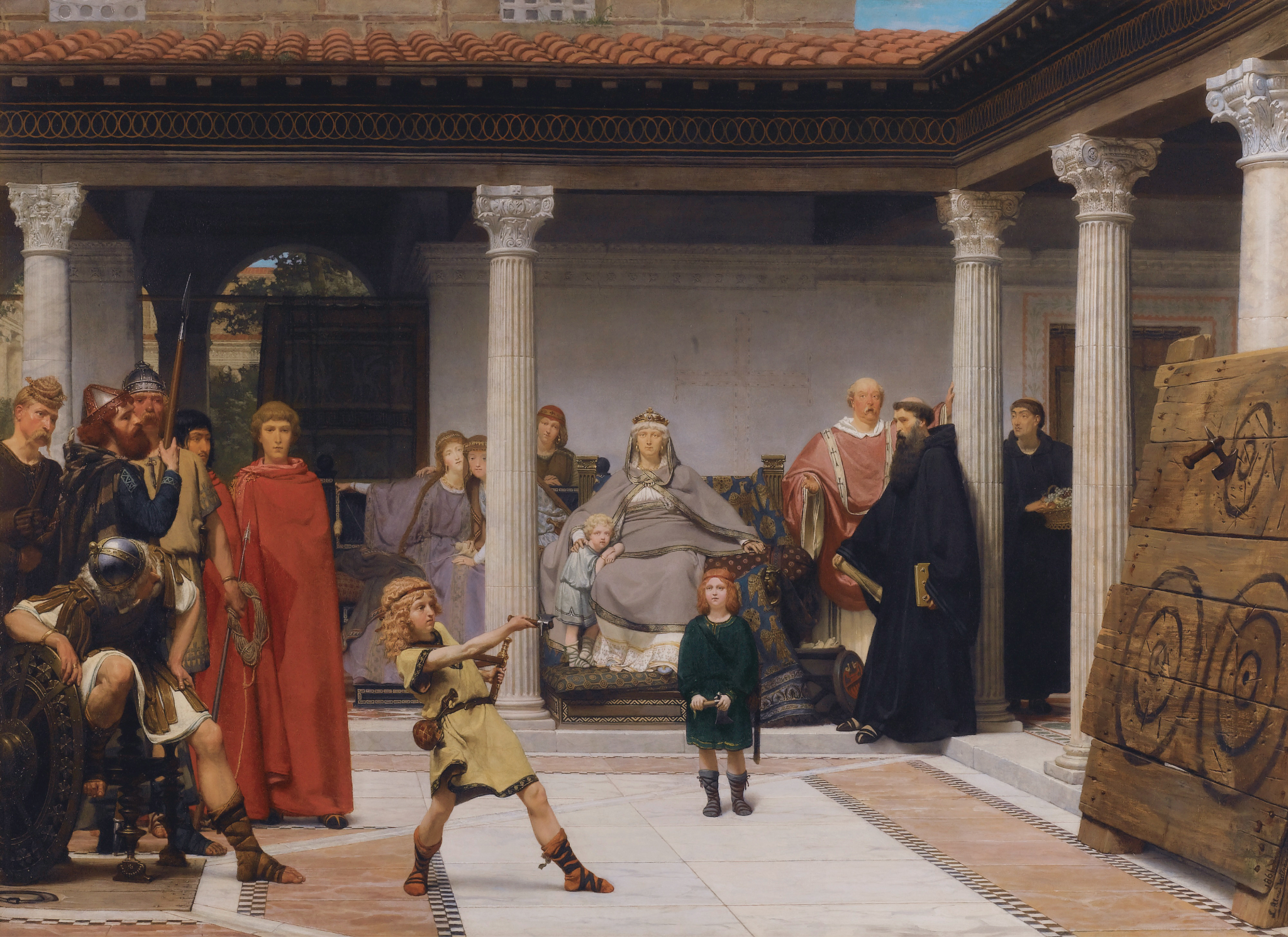
The baptism of the Germanic peoples revealed a deeper pattern within Western man, namely, his capacity to wage war while simultaneously cultivating beauty, order, and artistic refinement.
Across the medieval landscape, the same society that trained its sons for the defence of Christendom also raised monasteries and cultivated the arts since the stronghold and the sanctuary depended upon the same disciplined spirit. The fortress and the fresco, the armory and the archive, the castle and the cathedral; all these could only emerge from a people whose capacity for violence created the very conditions necessary for beauty to flourish. In this duality, we see a cultural logic in which strength secured the space for order and contemplation, and beauty in turn gave that strength its higher purpose
This coexistence of force and form, poetry and power reflected what Dawson described as the Western capacity to integrate diverse energies into a coherent whole, with Christianity serving as the principle of unity. Thus, the same civilization that produced armored cavalry also produced Gregorian chant, and the same civilization that built war machines also built the palaces of Aachen and Würzburg.
The genius of Western man lay in his capacity to wield power without surrendering to it, and to cultivate beauty without retreating from the world that demanded his vigilance — and sometimes, violence.
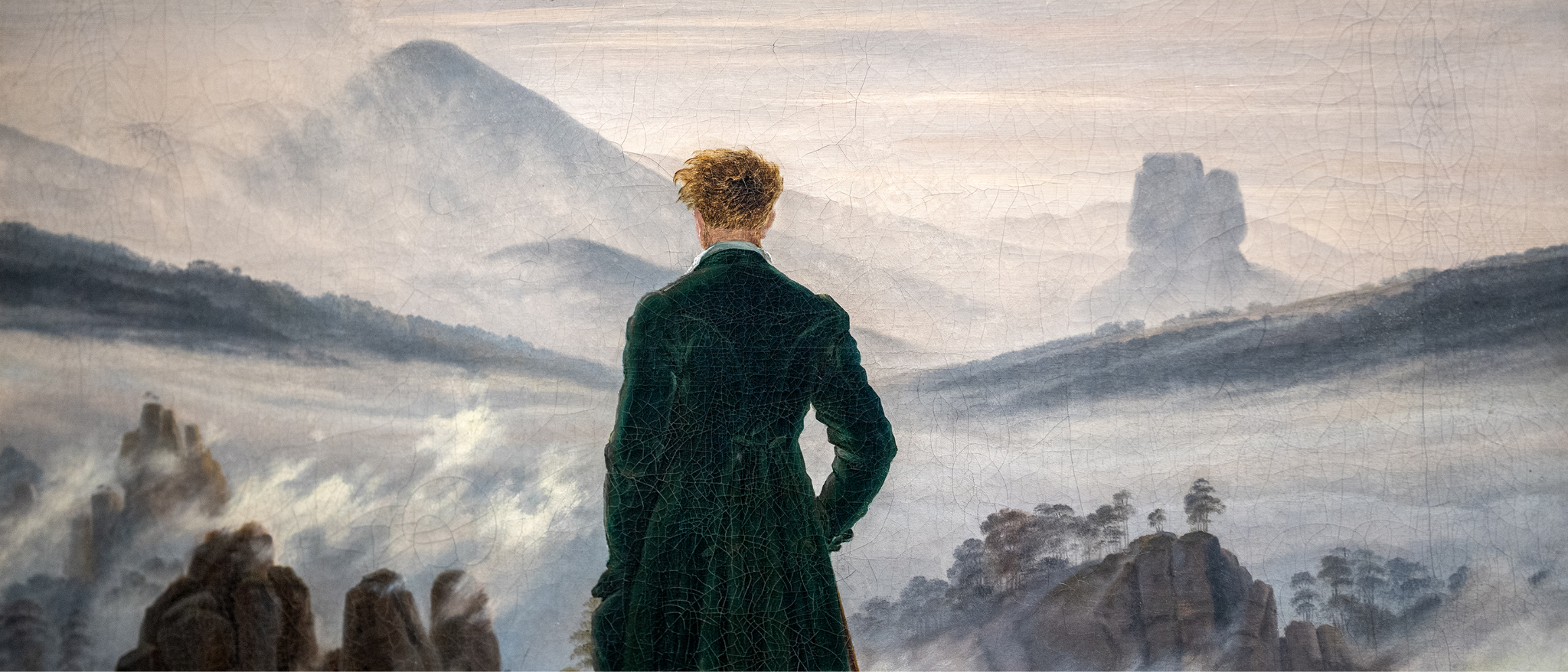
The Barbarian Inside the Gates
If the baptized barbarian of the early medieval world represents the fusion of vitality and form, then modern man represents its dissolution. He is a new kind of barbarian — not because he lacks a patrimony, but because he has inherited one and deliberately abandoned it. His condition is not the invincible ignorance of noble savagery but apostasy, and for that reason, his blindness carries a deeper culpability.
Unlike the ancient barbarian, modern man lacks vitality. He fears death, clings to comfort, and mistakes tolerance and fragility for virtue. He has recovered the pagan hunger for pleasure without the pagan reverence for the sacred, he indulges in conflict without honor, and worships the self without any metaphysical horizon to orient his existence. Transcendence has been traded for immanence, and the principle of unity that Dawson regarded as the hallmark of Western civilization has dissolved into a spiritual and cultural oblivion.
In a word, his world is not pre‑civilizational but post‑civilizational — a landscape of ruins whose foundations he no longer recognises or understands.
The deepest loss, however, is aesthetic. Beauty cannot survive where nothing is defended, and nothing can be defended by a people who have lost the furor to protect the conditions necessary for its flourishing. The medieval synthesis of power and poetry depended on men willing to wield force in service of order; but when the capacity to defend dissipates, the arts naturally degenerate, the sanctuary is abandoned, and the cathedral becomes nothing more than a crypt.
Thus, modern man, having rejected both the Cross and the disciplined vitality that sustained his civilization, becomes a barbarian stripped of grandeur — a creature of energy and appetite without form, and of desire without destiny. In losing his faith and his capacity for violence, he has forfeited the world they created.
Join the fight for the Soul of our Civilization!
By subscribing to Atlas Press, you are supporting an honest group of guys who are working to help revitalize Western Civ through the re-enrichment of the Western mind. We appreciate your support greatly and hope you join us.
So beautifully said. I pray there's still hope for us as a civilization.
https://www.justgiving.com/team/shakih-imran-ahmed-3?utm_medium=team&utm_content=shakih-imran-ahmed-3&utm_source=copyLink&utm_campaign=pfp-share&invite=true