
Retreat and Rebuild or Stand and Fight?
The Benedict Option vs the Boethius Option


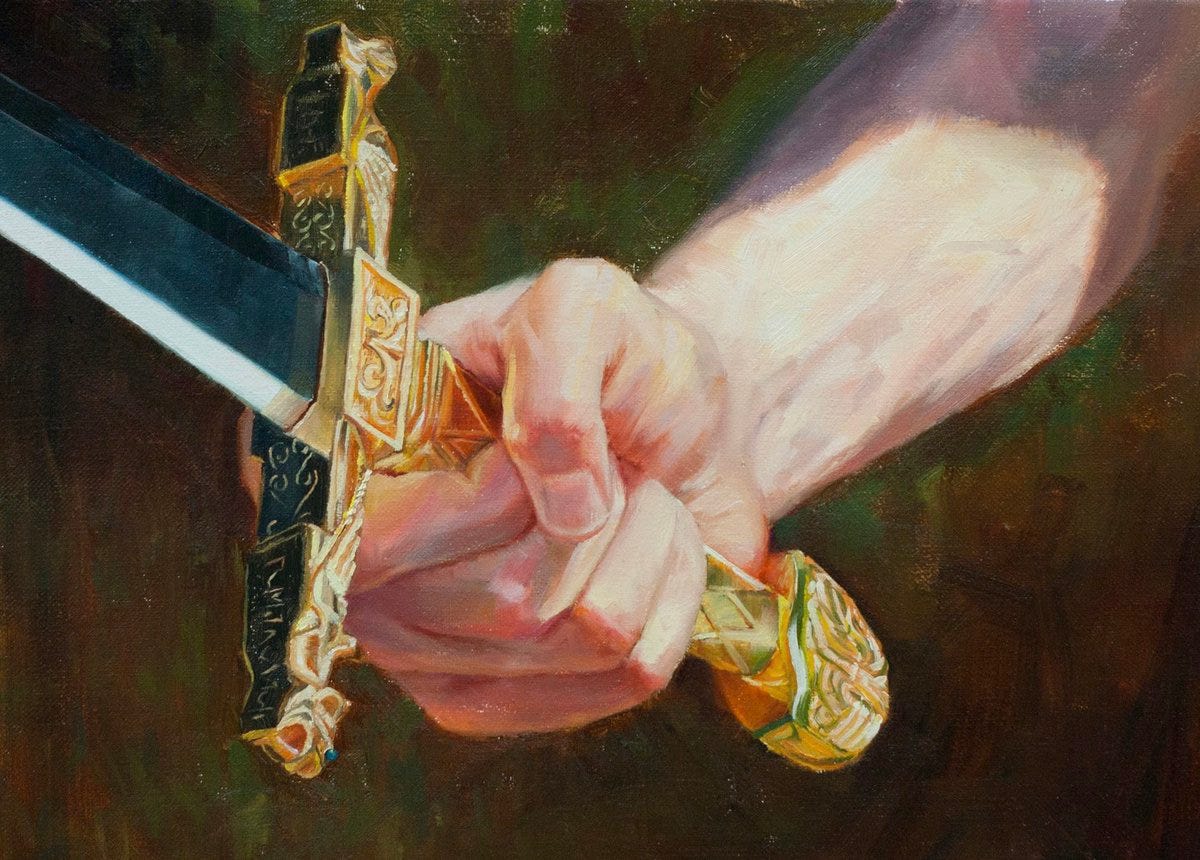
We inhabit an age that earlier centuries could scarcely imagine — a world that has not merely drifted from Christianity but has turned decisively against it. The modern West, once shaped by the liturgy, the sacraments, and the moral imagination of Christendom, now treats its own inheritance as a superstition to be purged from public life.
Instead, public life is governed by a radically secular creed that tolerates Christianity only when it is silent, private, and politically harmless. As a result, the Church is increasingly pushed to the margins, its institutions weakened, its symbols mocked, and its moral claims dismissed as relics of an unenlightened past.
We live, unmistakably, in a post‑Christian society, and the hostility is no longer subtle.
The question presses upon us with new urgency: what are we to do, and how should Christians respond when the civilization built by their ancestors no longer recognizes them?
Two answers have emerged in our time — the Benedict Option and the Boethius Option — each founded in a different moment of civilizational crisis, and each offering a distinct vision of Christian fidelity in an age of dissolution.
Reminder: You can get tons of members-only content dedicated to useful knowledge, and support our Mission at the same time for a few dollars per month 👇
Two full-length, new articles every single week
Get actionable principles from history to help you navigate modernity
Access to the entire archive of useful knowledge that built the West
Support independent, educational content that reaches millions
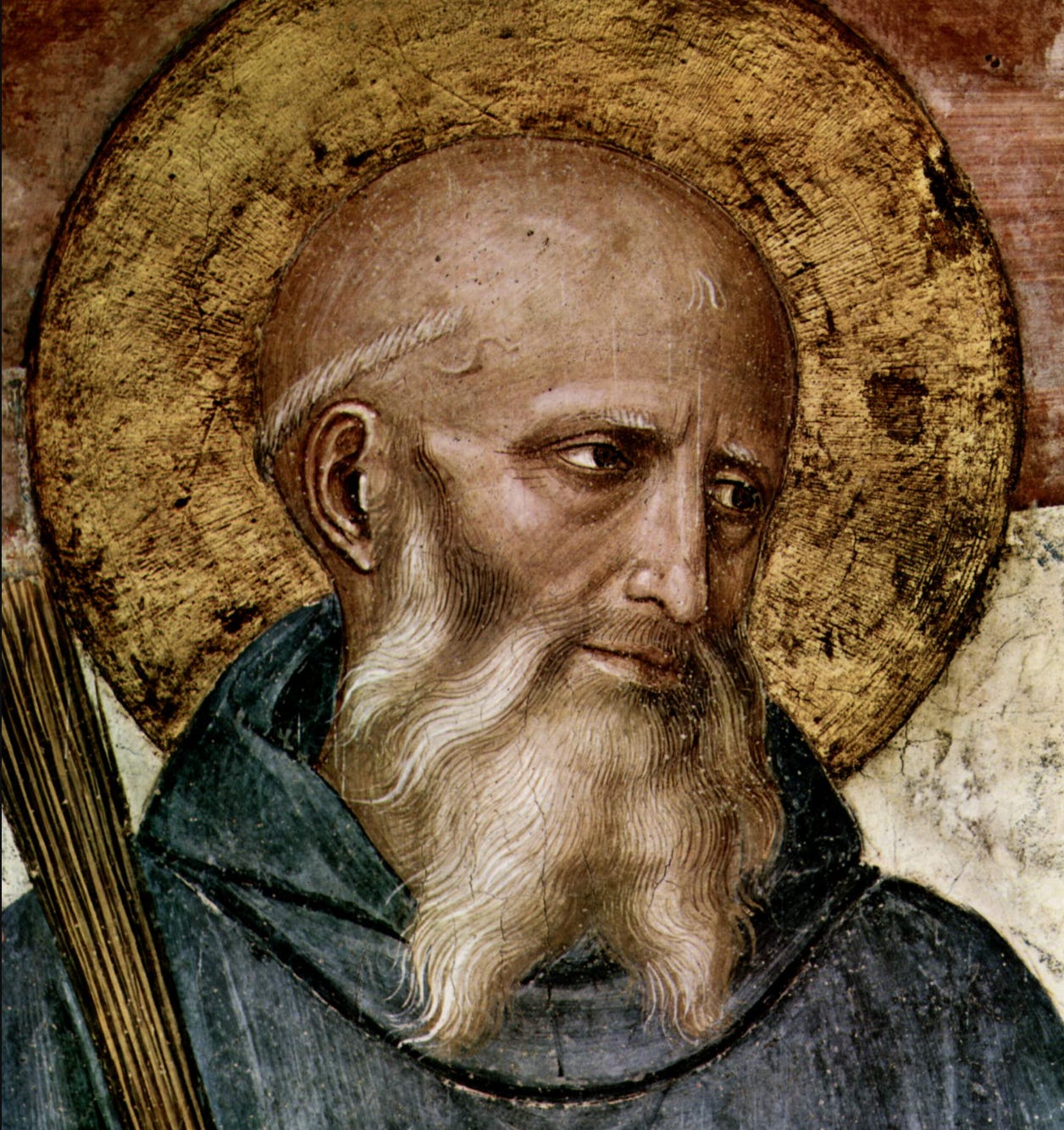
Benedict the Monk
St Benedict of Nursia lived at the twilight of the ancient world. Rome had fallen, the old civic order had collapsed, and the cultural unity of the West had broken apart into warring fragments.
Born around AD 480 in the Umbrian town of Nursia, Benedict was raised in a noble Roman family and sent to Rome for his education, only to find the city spiritually diseased and morally disordered. Disillusioned by the decadence of urban life, he abandoned his studies and fled into the hills east of the city, eventually taking refuge in a cave at Subiaco, where he lived for three years as a hermit devoted to prayer, fasting, and ascetic discipline.
In this landscape of civilizational ruin, Benedict refused to waste his strength attempting to resuscitate the dying institutions of the empire. His withdrawal was not an escape from responsibility but a deliberate act of purification, a turning away from imperial decay toward the stability of prayer, work, and communal discipline.
His example proved contagious. Others, equally disillusioned by the collapse of Roman public life, gathered around him, and together they formed the first nuclei of what would become a new monastic culture. From these early companions emerged a constellation of small communities, each shaped by the principles that Benedict would later codify in his Rule.
From this withdrawal emerged a new civilizational seed. Benedictine monasteries became islands of order amid the wreckage of Europe. They preserved Sacred Scripture, safeguarded learning, cultivated the land, and formed men whose lives were governed by the Regula Benedicti — a rule that bound the soul to obedience, humility, and stability.
Rather than conquering a fallen world, Benedict and his followers chose spiritual retreat, and in time, they became the humble architects of a perfected Roman Empire — Christendom.
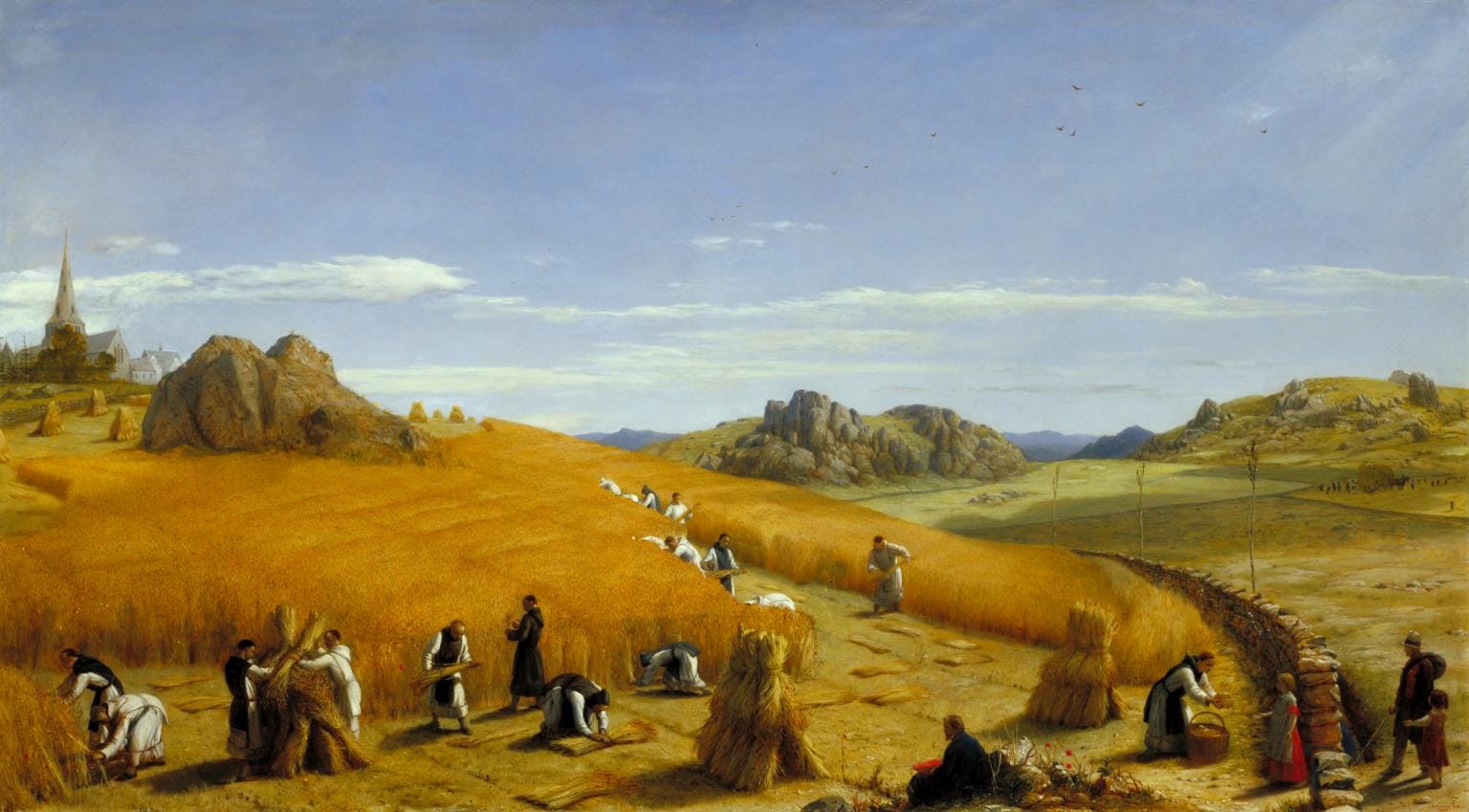
The Benedict Option
The Benedict Option, as invoked today, draws inspiration from this ancient pattern. It proposes that Christians, confronted by a hostile culture, should form intentional communities where the faith can be preserved, transmitted, and lived without compromise. It is a call to rebuild the household, the parish, the school, and the local community as counter‑cultural sanctuaries — places where Christian life can flourish even as the wider society collapses into moral and spiritual dissolution.
For many, this vision is compelling. It recognizes that the modern world is not only indifferent to Christianity but antagonistic to it. It acknowledges that the formation of Christian character requires a stable environment, not the constant turbulence of a secular culture that seeks to reshape the soul. Moreover, it echoes the wisdom of St Thomas Aquinas, who wrote in his Summa Theologiae that “peace is the tranquility of order”, and that order must be cultivated deliberately and not simply assumed.
The Benedict Option thus offers a path of withdrawal for the sake of preservation — a retreat into smaller, intentional communities where the Christian faith can be lived in its fullness.
It is a noble vision, and in certain contexts, a necessary one — but it is not the only vision.
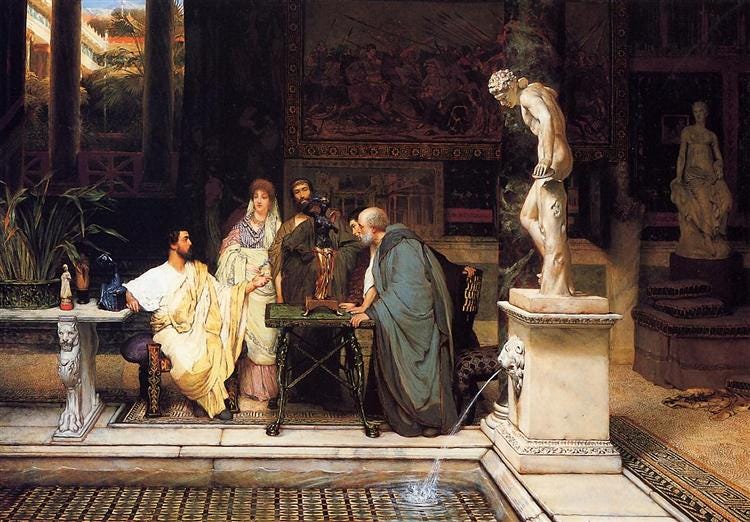
Boethius the Statesman
Anicius Manlius Severinus Boethius lived not in seclusion but at the very center of Roman political life. As a Roman statesman, philosopher, and Christian, he served the Ostrogothic kingdom during one of the most turbulent periods of late antiquity. When political intrigue turned against him, he was falsely accused of treason, imprisoned, and eventually executed. Yet in his confinement, Boethius produced one of the most influential works of the Western tradition: The Consolation of Philosophy.
In that dark cell, awaiting death, he wrote words that have strengthened the faithful for centuries: “Nothing is miserable unless you think it so; and on the other hand, nothing brings happiness unless you are content with it.” And again, reflecting on divine providence, he affirmed: “All fortune is good fortune, for it either rewards, disciplines, amends, or punishes.”
Boethius did not retreat from the world. He remained within its structures, fulfilled his public duties, and bore witness to the Christian faith even when fidelity demanded suffering. His example is one of steadfast endurance — a refusal to yield the public square to falsehood. He trusted that God governs history even when history appears governed by injustice.
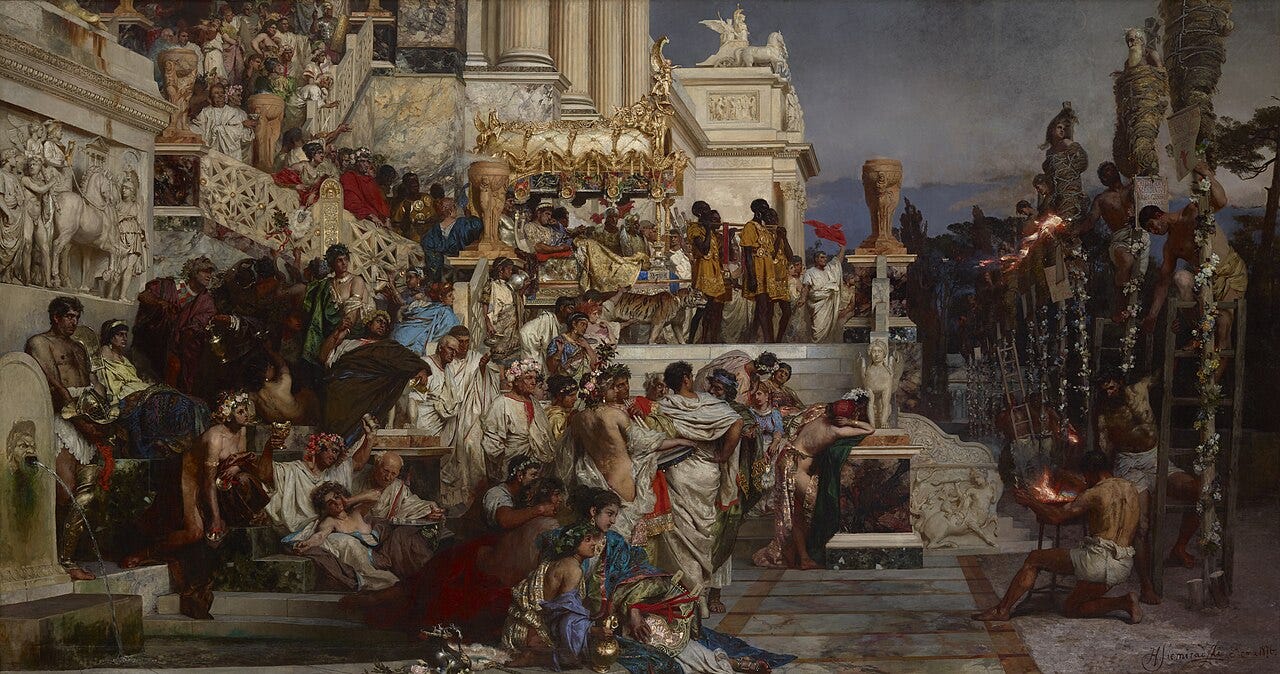
The Boethius Option
The Boethius Option calls Christians to remain in the world, to endure persecution without despair, and to defend truth even when the institutions of society turn against them. It is the path of the statesman, the scholar, the teacher, the parent, the priest — those who cannot withdraw because their vocation binds them to the very places where the faith is contested.
Pope Leo XIII, writing in an age that already sensed the coming secular storm, insisted that Christians must not abandon the public sphere: “Christian wisdom must be allowed to exercise its saving influence in the laws and institutions of the State.” His words echo the Boethian spirit — a call to remain engaged, to labor for the common good, and to trust that divine providence governs even the darkest hours.
The Boethius Option is not a passive endurance but an active witness and fidelity. It is the steadfast readiness to speak truth in a world that punishes truth‑tellers; it is the fortitude to fulfil one’s duties even as the surrounding order collapses; and it is the unshakable conviction that all things — blessings and sufferings alike, prosperity and adversity — are governed by Divine Providence, and that in the end, Christ conquers.
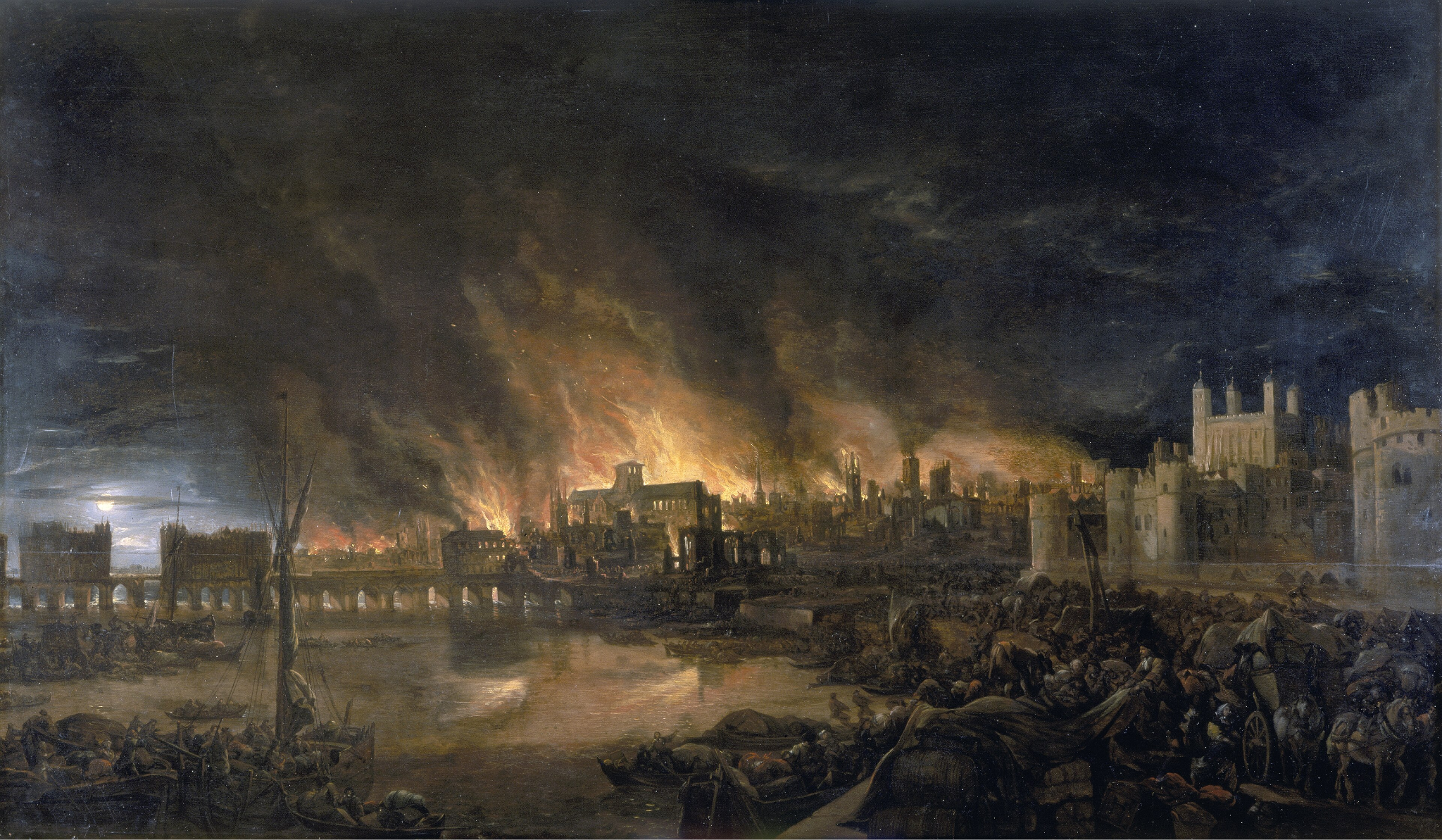
Benedict or Boethius?
Both the Benedict Option and the Boethius Option arise from moments of civilizational crisis, both respond to a world that has turned against the faith, and both seek to preserve Christian truth in an age of dissolution.
Yet our age differs from theirs in one decisive respect.
Benedict withdrew into a wilderness that still existed. There were mountains to flee to, valleys to hide in, monasteries to build far from the reach of imperial decay. The world was vast, and the collapse of Rome created spaces where new forms of Christian life could take root. Moreover, those who followed him were already a people accustomed to the land — men and women who knew how to farm, to build, to endure hardship, and to sustain themselves apart from the machinery of a collapsing state. Their withdrawal, though radical, was not a departure from the skills or rhythms of life they already possessed.
We possess no such spaces, nor do we possess the habits that once made such withdrawal possible. There is no wilderness left. The modern world is global, interconnected, and totalizing. Its secular ideology reaches into every institution, every school, every corporation, every digital platform, every corner of public life. There is no Subiaco to retreat to, no Monte Cassino beyond the reach of the empire. The entire world has become the empire.
However, this does not render the Benedict Option meaningless. Those called to monastic life should embrace it with zeal, and those capable of forming intentional communities who are already accustomed to such a life should do so since the Church will always require places of refuge, formation, and stability. But for the vast majority of Christians, withdrawal is not possible.
We are parents, workers, students, and citizens. We inhabit the public square whether we wish to or not. Our children must be formed in a world that seeks to deform them. Our institutions must be engaged because they shape the lives of millions. Our culture must be contested because it will not leave us alone.
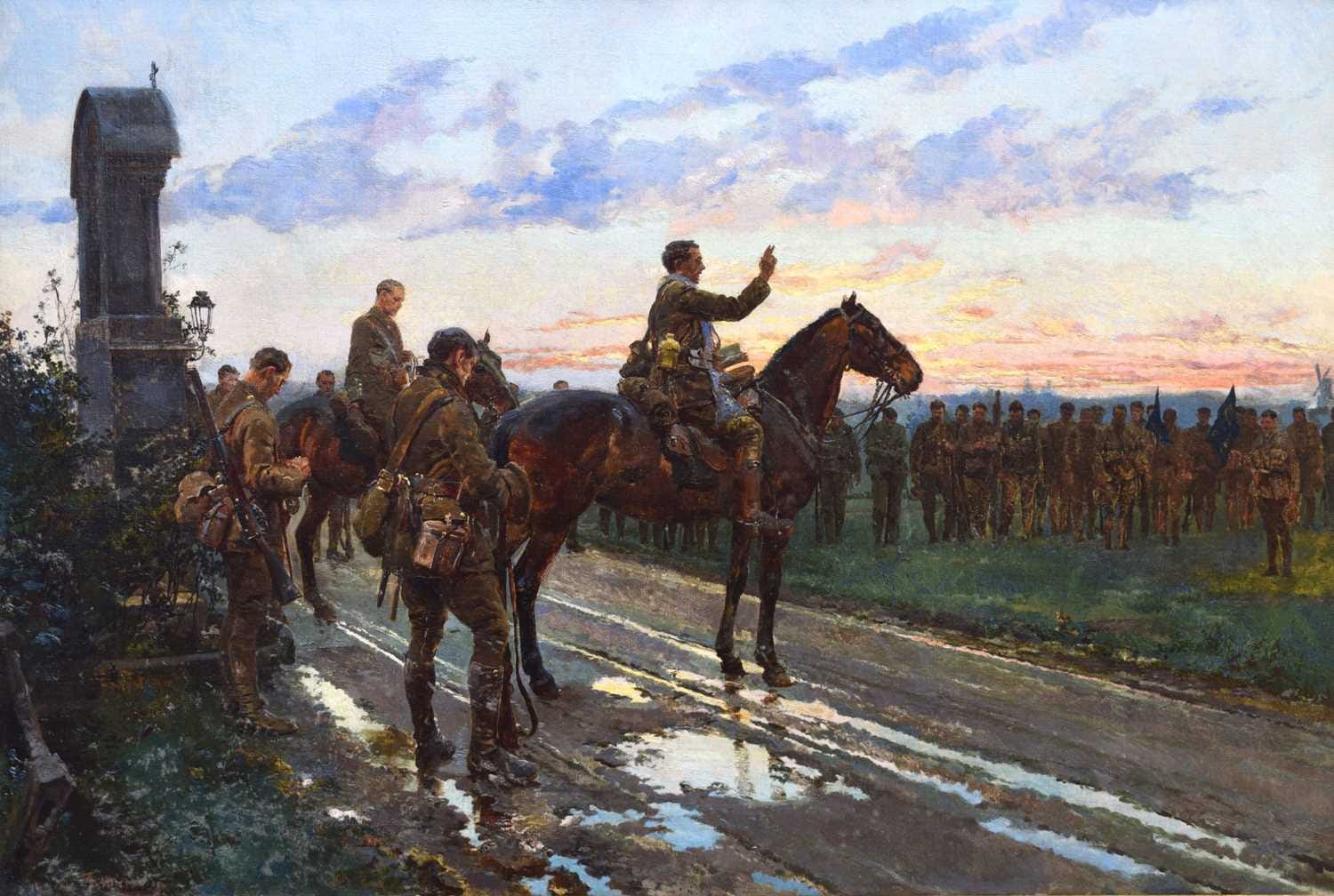
Why Our Age Demands Boethius
In such a world, the Boethius Option is not simply one path among many but the path demanded of most Christians. It calls us to remain where we are, to endure hostility without surrender, and to trust in Divine Providence even when the world appears governed by madness. Aquinas, reflecting on fortitude, taught that “the principal act of courage is to endure and withstand dangers.”
That same courage — the courage to remain steadfast when reason falters and the age descends into confusion — is what Boethius himself embodied. It summons us to speak truth with the serenity and confidence of Boethius, who asked, “If God exists, whence comes evil? If He does not exist, whence comes good?” — a question that still pierces the conscience of the modern world.
In his Sapientiae Christianae, Pope Leo XIII warned that Christians must not shrink from public duty, insisting that “to recoil before an enemy, or to keep silence when from all sides such clamors are raised against truth, is the part of a man either devoid of character or who entertains doubt as to the truth of what he professes.” And unlike Benedict’s followers, who could step away from a dying order to build anew, we inherit a civilization that our ancestors spent centuries constructing — a civilization sustained by their labor, their sacrifice, and their faith.
As Leo XIII also taught, the Christian must “strive that the State may be constituted and governed in accordance with the rules of the Gospel,” for abandoning this task is to betray both faith and heritage. To abandon it is not humility but a dereliction of duty. It is to dishonor the very inheritance we claim to defend. The Boethius Option is precisely this: the courage to endure, the courage to remain, and the courage to witness.
We live in a post‑Christian world. There is no frontier left to flee to. If you wish to choose the Benedict Option, then join a monastery.
For the rest of us, the age demands Boethius.
Join the fight for the Soul of our Civilization!
By subscribing to Atlas Press, you are supporting an honest group of guys who are working to help revitalize Western Civ through the re-enrichment of the Western mind. We appreciate your support greatly and hope you join us.
There's really good work done in this article at challenging the Benedict option. Not sure where I land on it yet. I suspect the regime is pushing people towards the Benedict Option.
The ultimate question for Christendom to endure, is whether or not the meaningful and intentional communities the Benedict Option focuses on can materialize. Can we de-atomize contemporary culture?
That would depend on the situation.
I have to read your your stance.