
Restoring the Soul of Civilization
The Maccabees, Franco, and the Pattern of Religious Revivals


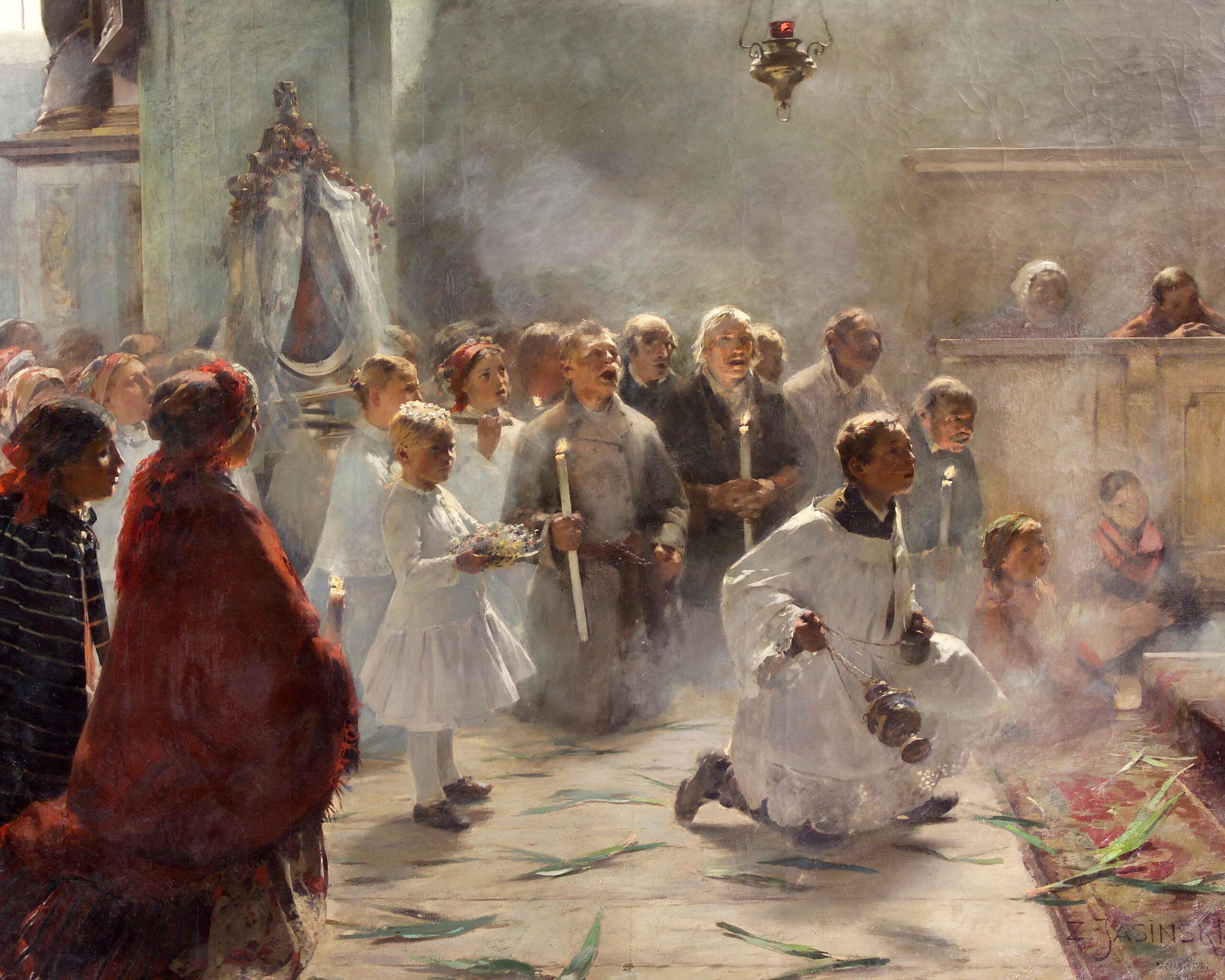
Religious revivals appear throughout history with a rhythm that suggests more than coincidence. They rise in moments when a culture senses its own exhaustion, when institutions lose vitality, and when the spiritual imagination seeks renewal.
Oswald Spengler, reflecting on the morphology of civilizations, wrote that every culture possesses a distinct soul, and that this soul periodically reasserts itself when threatened by decline. His insight clarifies why revivals do not erupt as isolated anomalies but instead follow the deep pulse of a civilization’s inner form. They arise when a people feels the weight of disorder and turns again to the sources of meaning.
Classical historians often describe these moments as restorations rather than innovations. A people looks backward in order to move forward. Warren H. Carroll, whose historical vision combined narrative precision with theological depth, argued that history cannot be understood without acknowledging the spiritual forces that animate it. In such hours, a civilization retrieves the symbols, rituals, and memories that once gave coherence to life, drawing strength from the very traditions it had neglected.
Similarly, in his Story of Civilization, Will Durant observed that “civilization is a stream with banks,” and that religion forms one of those banks, guiding the flow of the civilizational soul. When the bank of religion erodes, the stream dissipates, losing force and direction.
It is precisely in these moments of erosion — when a people confronts the fragility of its own order — that religious revivals emerge as instruments of civilizational renewal. The pattern reaches its clearest expression in the Maccabean Revolt of ancient Israel and in Fransisco Franco’s twentieth‑century institutional reform of Spain’s Catholic order.
Reminder: You can get tons of members-only content dedicated to useful knowledge, and support our Mission at the same time for a few dollars per month 👇
Two full-length, new articles every single week
Get actionable principles from history to help you navigate modernity
Access to the entire archive of useful knowledge that built the West
Support independent, educational content that reaches millions
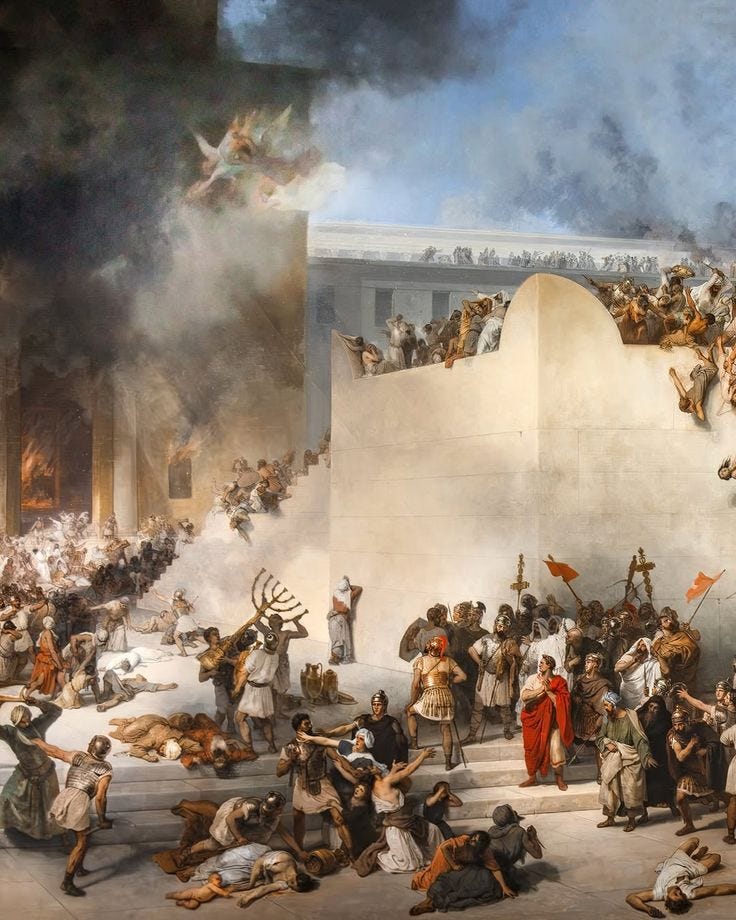
Insurgency: The Maccabean Revolt
The world of the Maccabees was one of cultural pressure and spiritual crisis. After the conquests of Alexander the Great, the Near East became a mosaic of competing Hellenistic kingdoms. Greek language, customs, and civic ideals spread across regions that had long maintained distinct religious traditions. For many communities, this encounter produced a creative synthesis, but for others, it threatened the very foundations of their identity — and Judea experienced the latter.
The Seleucid ruler Antiochus IV attempted to impose Hellenistic customs upon Jewish life to the extent of banning traditional Jewish practices because these were seen as forms of political resistance.
For years the Jews had watched Greek customs incrementally creep deeper into their cities — through the imposition and adoption of Greek games, fashions, festivals — but they endured them so long as the Temple remained untouched. However, when the Greeks “set up the abomination of desolation upon the altar”, forcing the sons of Judea to offer libations to a pagan god as a sign of submission, the Jews could endure it no longer.
From that desecration, restoration in the form of revolt became a necessity.
Mattathias, a respected elder of Modein, was thrust into a decisive moment. Ordered to offer sacrifice in obedience to the Seleucid decree, he instead drew his weapon and struck down the Judean who stepped forward to violate the covenant, crying out, “Let every one that is zealous for the law, and maintaineth the covenant, follow me”.
With that summons the spark of revolt was lit.
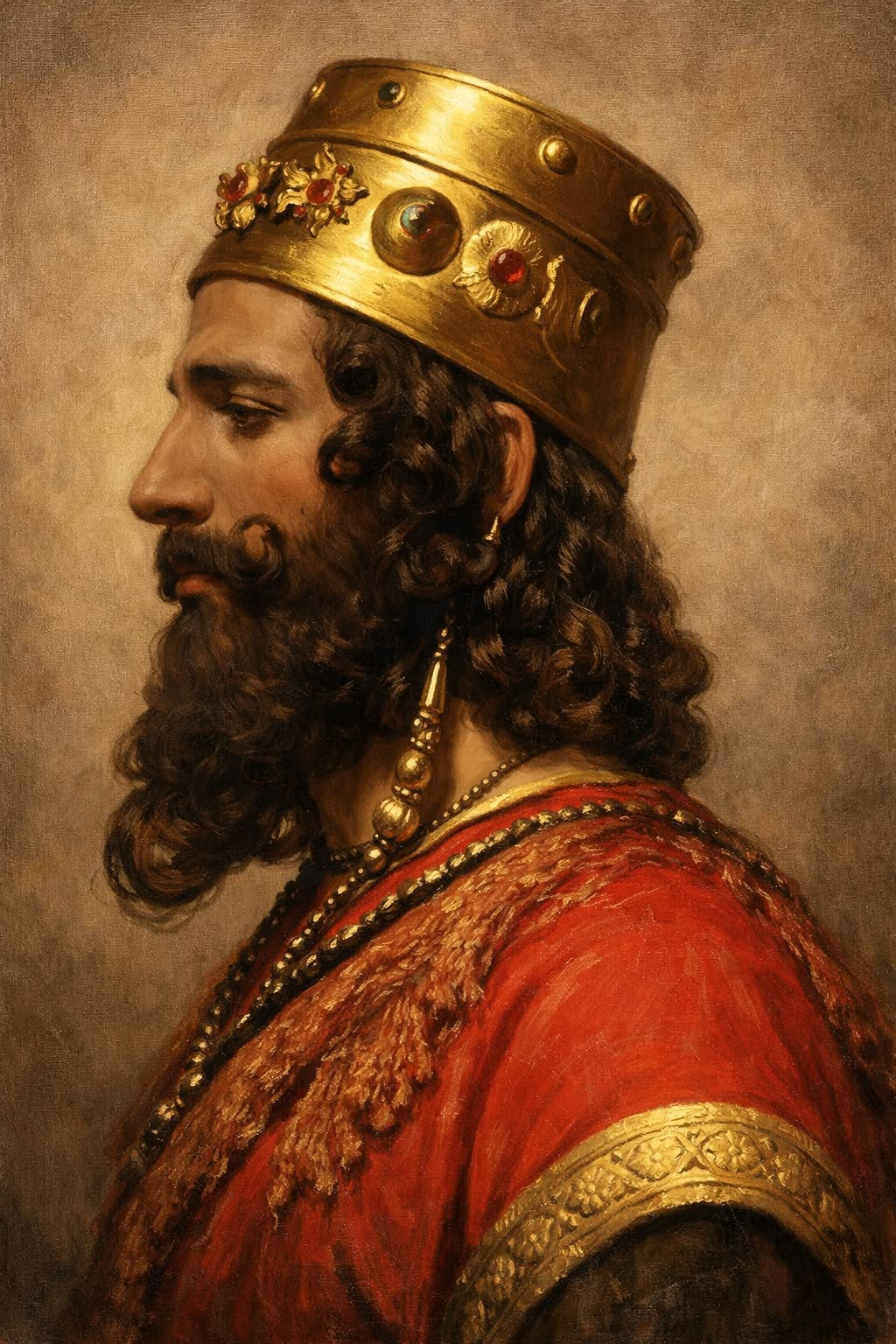
Mattathias and his sons — above all Judas Maccabeus — transformed that spark into open war against the Seleucid kingdom, fusing national liberation with religious restoration. Their cause was animated by a spiritual zeal that refused assimilation and sought to restore obedience to God rather than imperial power.
Against overwhelming odds, the Maccabees won victory after victory against the Greeks. Their forces were small, mobile, and accustomed to striking from the hills and narrow passes of Judea, using the terrain to offset the Seleucid advantage in numbers and equipment.
Judas Maccabeus rallied his fighters, “arm yourselves, and be valiant, and be ready against the morning, that you may fight with these nations that are assembled against us to destroy us and our sanctuary”, reminding them that “the battle is not ours, but God’s”. In doing so, he effectively framed each engagement as an act of faith as much as arms, turning their guerrilla tactics into a form of covenantal warfare.
The Maccabean Revolt (167–160 BC) reveals a pattern common to every true revival: renewal begins not with the many but with a steadfast remnant who refuse to yield, refuse to forget, and refuse to surrender the inheritance entrusted to them. Their campaign was not the march of a conventional army but the persistence of a small, fervent band who struck swiftly, withdrew into the hills, and returned again with renewed zeal.
Animated by faith, they challenged and even overthrew a far larger imperial power, since zeal for God introduces an unquantifiable variable into battle that no empire can calculate.
In time, the Seleucid forces — exhausted by constant ambushes, stretched supply lines, and the impossibility of extinguishing a religiously driven insurgency — were compelled to concede ground. Their withdrawal opened the way for Judas and his men to reclaim Jerusalem, drive out the occupying garrison, and restore the Temple, bringing the long‑awaited rededication that became the enduring symbol of their victory.
Warren Carroll saw in the Maccabees one of history’s clearest confrontations between faith and tyranny, calling their uprising “a miracle of fidelity in an age of compromise.” Similarly, Christopher Dawson’s insight that “the great civilizations have been the creations of religious forces” finds its proof in their victory.
In defending their faith, the Maccabees not only preserved their nation but established an enduring pattern for religious revivals. This model of a fervent few restoring religion entered the Western imagination and reappears in every age effectively shaping and reshaping the spiritual trajectory of Western civilization.
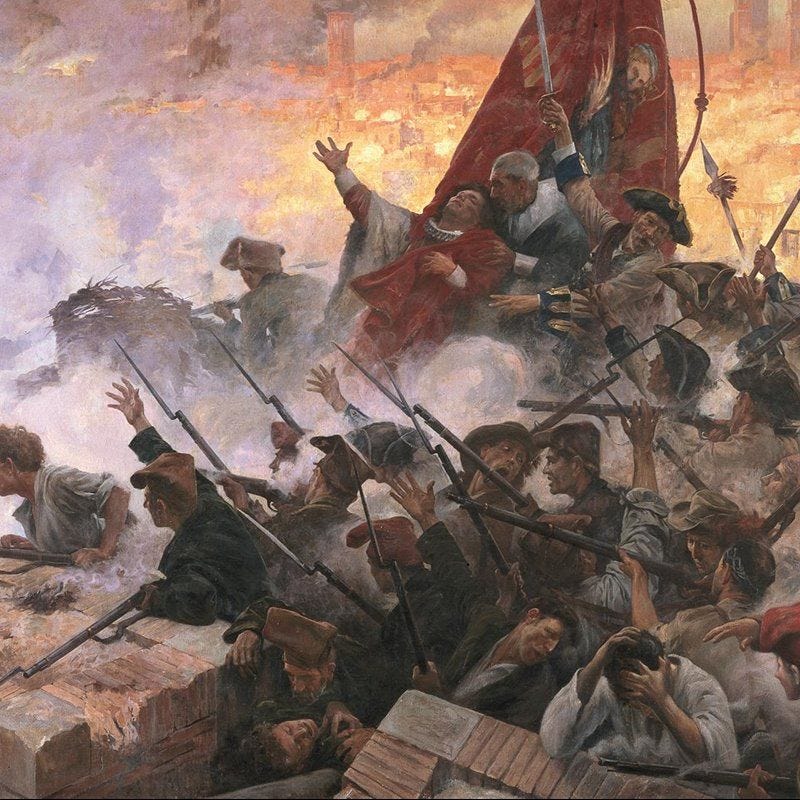
Institutional Reform: The Spanish Civil War
The modern world presents a landscape unlike that of the Maccabees — industrialized, ideologically fractured, and spiritually disoriented — yet the rhythm of revival endures, assuming new forms suited to a modern age of mass politics and cultural upheaval.
In twentieth‑century Spain, a nation strained by regional divisions, economic instability, and violent ideological currents, the return to religious tradition emerged through a deliberate act of civilizational reconstruction, a state‑directed attempt to re-anchor a people in the Christian spiritual order they had nearly abandoned.
Spain entered the century in a condition of profound cultural erosion. Anti‑clerical riots, the burning of churches, and the murder of clergy revealed a society tearing at the seams of its own inheritance.
The revolutionary factions on the Republican side — particularly the militant Communist elements — unleashed a wave of iconoclasm that recalled the French Revolution not only in violence but in its desire to sever a civilization from its religious history. In such an atmosphere, Will Durant’s observation that “when the present fails us, we return to the past” found unmistakable confirmation in the Spanish Civil War (1936—1939) as an existential battle of a nation fighting for its soul.
As the conflict deepened, Francisco Franco emerged as the unifying figure among the Nationalist forces. For many Spaniards, the war ceased to be a contest of political programs and became instead a struggle over the soul of their civilization. Following the Nationalist victory in 1939, Franco presided over an ambitious reconstruction program that not only sought to restore order but to re‑consecrate the public and political life of the nation.
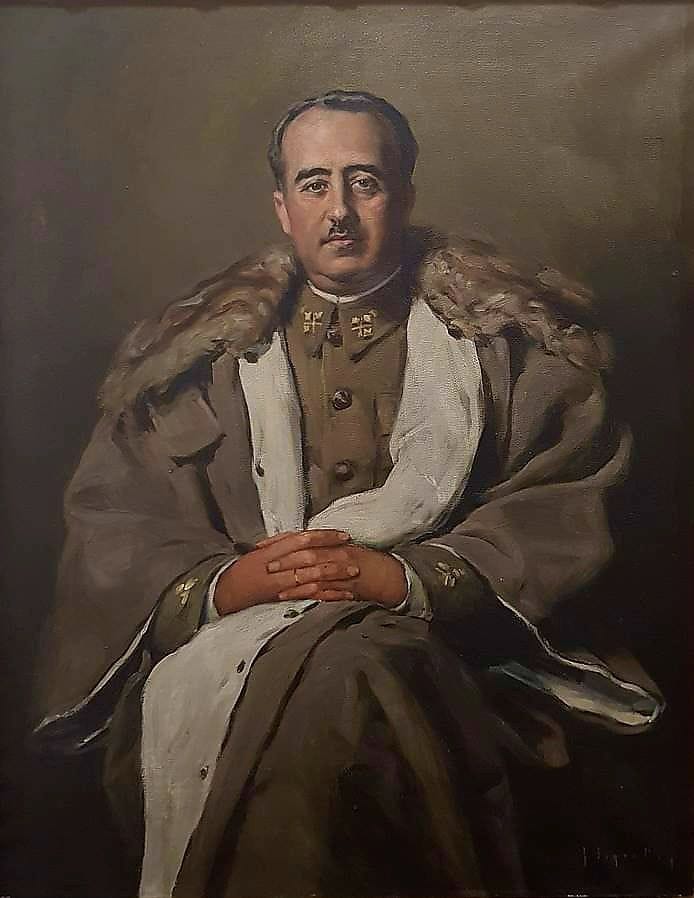
Where the Maccabees revived faith through insurgent zeal, Franco coordinated the imposition of renewal from above — a conscious re‑ordering of institutions, education, ritual, and public symbolism.
Across Spain, religious instruction returned to schools, concordats re‑shaped Church‑state relations, and traditional Catholic festivals and devotions were elevated as civic expressions of national continuity. In short, Catholicism was publicly enthroned as the religious framework of Spain, serving as both a revival and an antidote to the ideological disintegration of the modern age.
In The Last Crusade, Warren H. Carroll described the Spanish Civil War as “the great ideological crusade of the twentieth century,” not to romanticize its brutality but to underscore the depth of the rupture. For Carroll, Spain’s post‑war return to Catholic tradition was the instinctive act of a civilization attempting to reclaim its spiritual center after standing on the brink of dissolution.
Christopher Dawson’s warning in Progress and Religion that “a society which has lost its religion has lost its culture” finds unmistakable confirmation here, namely, Spain’s religious revival was not an accidental political policy choice but deliberate civilizational necessity.
Spengler’s morphological reading of history further illustrates this phenomenon. Late civilizations, sensing their own exhaustion, often attempt to recover the vitality of earlier ages — not by resurrecting the past in its original form, but by reasserting the spiritual and moral depth that once animated it.
Spain’s religious reconstruction fits this pattern precisely. They were a people confronted by ideological chaos who instinctively reached for the only source capable of restoring form and order — the Catholic religion that had shaped their civilization for centuries.
What emerges from Spain’s experience is a different species of revival — a restoration imposed from above rather than ignited from below, an institutional re‑ordering rather than an insurgent return. Yet the civilizational rhythm endures: in moments of conflict and upheaval, a people instinctively seeks the religious order that once held their world together.
Why Religious Revivals Reappear Across the Ages
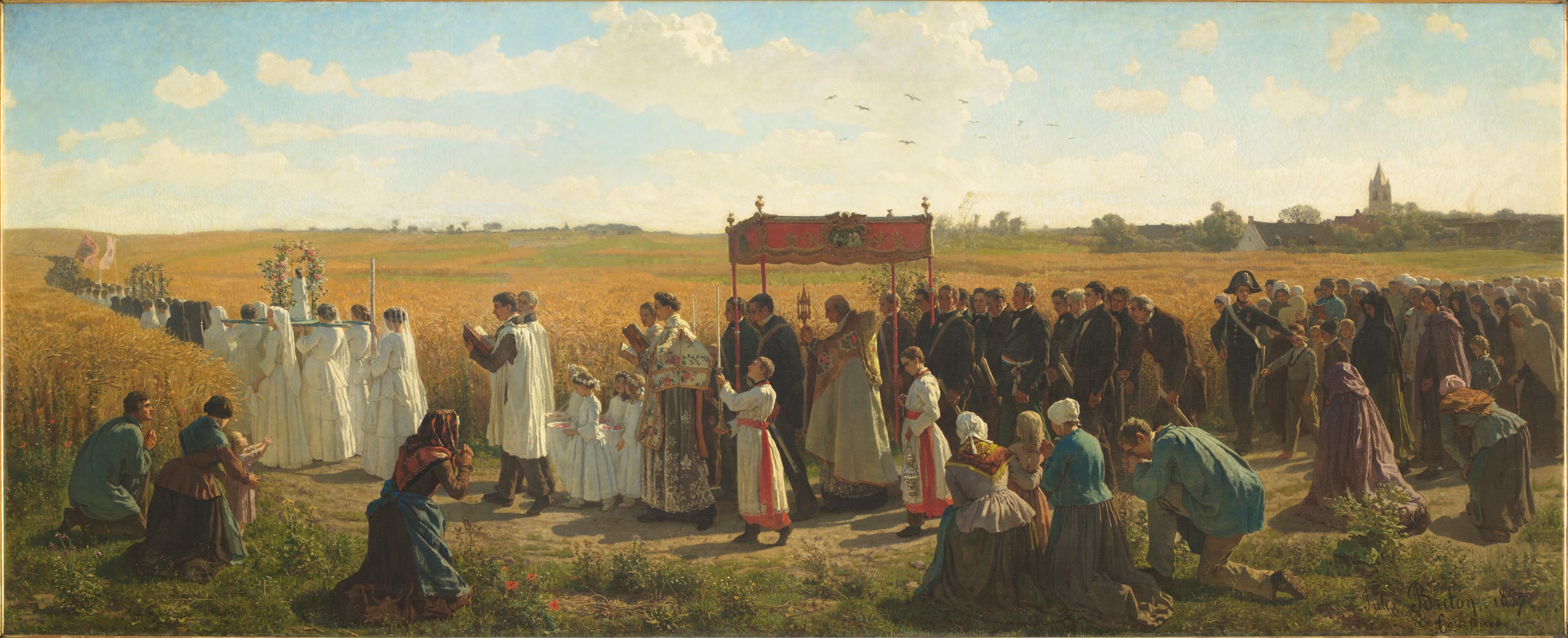
The pattern of religious revivals reveals a recurring truth about human societies. When cultural foundations weaken, when institutions lose coherence, and when the collective imagination becomes unsettled, a people often return to the faith, sacred symbols, and religious practices that once gave them identity.
This return is not nostalgia, but rather, an attempt to recover meaning. It is the civilizational instinct for self‑preservation — a way of arresting decline by re‑anchoring life in the sources that once gave it form. In moments of impending fracture, religious revival functions as a kind of civilizational reset, a renewal of the spiritual order that keeps a culture from dissolving into chaos.
Modern societies face their own forms of dissolution, but on a scale unknown to earlier ages. Rapid technological acceleration uproots habits faster than communities can absorb them, moral frameworks shift with such speed that meaning has collapsed, and globalization dissolves traditional boundaries of faith and community without supplying new forms of identity and cohesion. The result is a civilization that is materially powerful yet spiritually hollow, restless in its prosperity and anxious in its freedom.
In such an environment and under such conditions, spiritual revivals are not only possible but imminent.
A civilization that is spiritually exhausted eventually turns to the only sources capable of renewing its original strength. In this convergence of memory and crisis, Carroll’s claim that “history is the drama of man’s response to God” provides the final key: every spiritual revival is a reckoning — a moment when a civilization stands before its own soul and decides whether it will continue drifting toward dissolution or recover the faith that once held its world together.
It is here that a people chooses, once again, what it will worship and which religious vision it is willing to defend as the foundation of its future.
Join the fight for the Soul of our Civilization!
By subscribing to Atlas Press, you are supporting an honest group of guys who are working to help revitalize Western Civ through the re-enrichment of the Western mind. We appreciate your support greatly and hope you join us.
Another good, well conceived, article. Would like to hear more of your thoughts re Spengler and his work.
Interesting take on the Spanish civil war, which makes for an interesting compare/contrast to the Ukraine-Russia war.
This article explores the pattern of revival throughout time & civilization and how there’s more rhythm to it than coincidence. I love how it describes the soul within every culture, and when it senses its own disorder and breaking point of decline coming along, a final straw falls & revival ensues because a remnant of ppl feel a necessity for restoration and see revolt as an appropriate response.
As I’m reading I’m thinking about how often revival is preached & declared but also wondering about what “revolt” would look like, or if it is as feasible, necessary now as it was back then? The Jews decided they had enough when they were forced to make worship & sacrifices to pagan gods. What does that crossing of the line look like today, & what does a response of revolt look like today in America?