



The Iliad, though born in an age unimaginably distant from our own, continues to challenge and inspire the modern world. It confronts us with something perennial, namely, the hard limits of human excellence and the fierce aspirations that drive men to strive against them. These are the virtues that make heroes — not in the sentimental, moralizing sense preferred by modernity, but in the older, classical conception of heroism.
Classical historians, philosophers, and theologians have long recognized in the Homeric ideal the foundations of the West’s heroic imagination. Aristotle, reflecting on the poetic tradition, observed that “poetry is more philosophical and more serious than history, for poetry speaks of the universal.”
Thus the deeds of the heroes of the Iliad are more than a chronicle of ancient warfare. In the individual actions of Greek and Trojan champions alike, we encounter the raw universal qualities that have embedded themselves in the Western consciousness, for in their triumphs and in their failures we are compelled to look inward and measure ourselves against the standard they set.
For all its material advantages, the modern world is lacking something essential. We have inherited a civilization we no longer understand, having lost the very qualities that built the ruins we now admire at a distance. What we require is a restoration of the Homeric ideal — not as an indulgence in antiquarian fantasy, but as a rediscovery and reassertion of the virtues that once animated the Western spirit: kleos, timē, aretē, alkē, and aidos.
These Homeric values were embodied in the heroes of the Iliad. In figures such as Sarpedon and Achilles, Agamemnon and Menelaus, Diomedes and Odysseus, Ajax and Hector, Glaucus and Priam, we see how these men understood their purpose, their obligations, and their place within the moral order of their world.
Their stories are mirrors, and in them — if we dare to look — we may still find the qualities needed to remake the modern world.
Reminder: You can get tons of members-only content dedicated to useful knowledge, and support our Mission at the same time for a few dollars per month 👇
Two full-length, new articles every single week
Get actionable principles from history to help you navigate modernity
Access to the entire archive of useful knowledge that built the West
Support independent, educational content that reaches millions
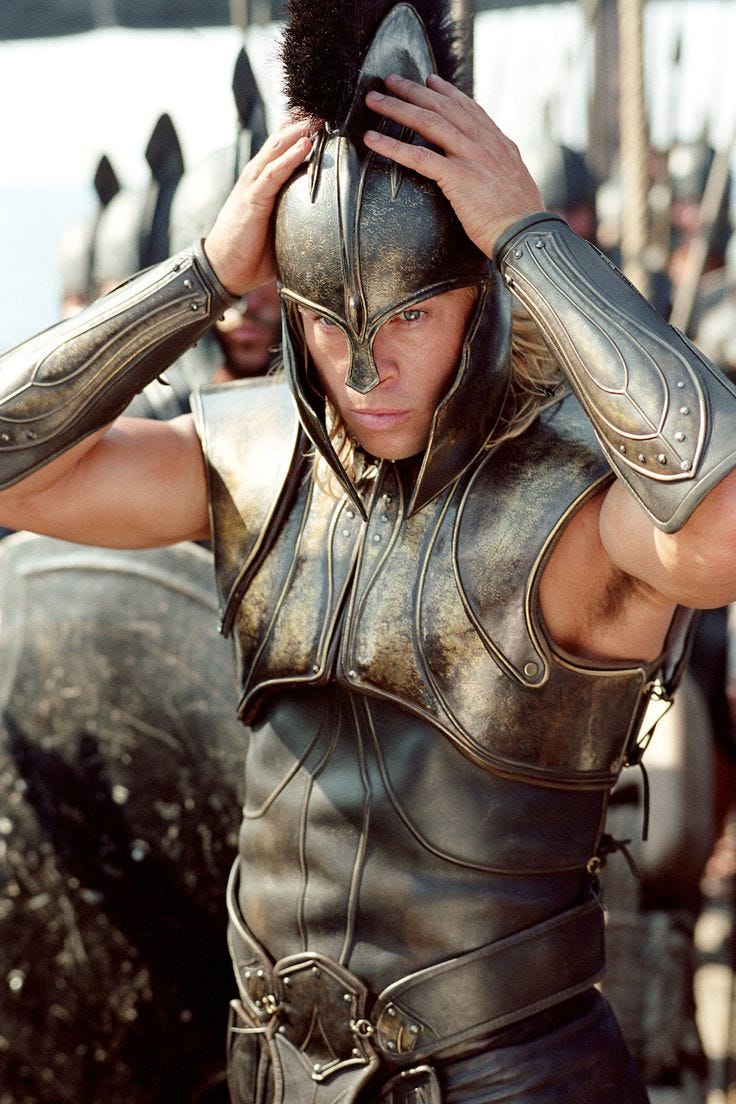
Kleos: The Desire for Immortal Fame
Kleos, the longing for glory that outlives one’s mortal life, is the first and most formative of the Homeric ideals. It is the recognition that human life is fragile and fleeting, and that the only permanence available to mortals lies in the memory of heroic deeds.
Sarpedon, speaking to Glaucus, articulates the desire for kleos in his remark, “Let us go forward, so that many may say, ‘Our kings are not inglorious.’” In this brief exhortation, the essence of kleos is laid bare. Sarpedon knows that a warrior’s life is fragile and that death is certain. Rather than a tactical command, his call to advance is more than a tactical command is an appeal to live — and, if necessary, to die — in a manner worthy of everlasting praise.
Achilles embodies the Homeric ideal of kleos in the very structure of his life. Confronted with the choice between obscurity and a short life crowned with glory, he chooses the latter, knowing as he declares “I shall win glory everlasting”. His grief, his wrath, and his final return to battle all arise from the conviction that a life without greatness is a life not worth living. For both Sarpedon and Achilles, kleos is more than an ornament but destiny.
To the modern man who prefers a life of comfort, the desire for kleos is confronting. And yet, the impulse has not vanished. Men still seek to leave a mark that outlasts them, though often in diminished or distorted forms.
The hunger for remembrance survives in the pursuit of reputation, online visibility, curated identities, and the desperate hope that one’s name might linger a little longer in the minds of others. Even the impulse to launch projects, movements, or personal “initiatives” reflects a faint desire to establish something that stands beyond the self, however thin its foundations may be.
These are pale imitations of the ancient longing for everlasting glory, and shadows of a virtue once tied to courage, sacrifice, and the willingness to stake one’s life on something greater than oneself.
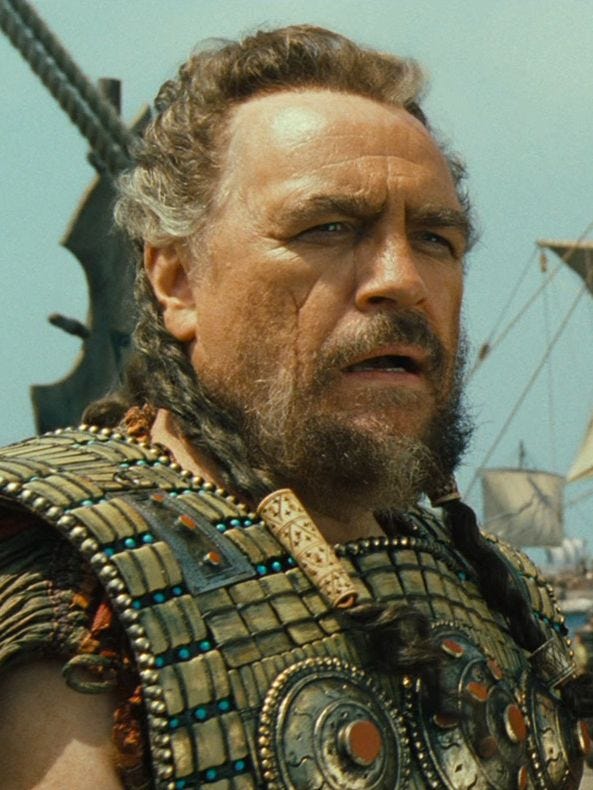
Timē: Honor and the Weight of Social Worth
If kleos is the aspiration for immortality, timē is its daily currency. Rather than being a private sentiment, honor in the Homeric world was a public reality — the visible measure of a man’s standing among his kin and countrymen. It is the recognition that one has fulfilled the demands of courage, loyalty, and rightful action.
Agamemnon’s quarrel with Achilles is more than a petty dispute over the captive woman Briseis; it is a deliberate assault on the very structure of honor that orders the Achaean world.
When Agamemnon declares, “I am king of men, and my power is greater,” he does more than seize a captive, he publicly humiliates the greatest warrior in the host. The act is a political wound as much as a personal one — a king who cannot recognize merit corrodes the authority he claims to uphold, and a warrior stripped of timē has no reason to fight. The cohesion of the Achaean army trembles because the moral architecture sustaining it has been violated at its core.
Menelaus, too, is defined by timē, and his role in the war is far more than the grievance of a wronged husband. Paris’s abduction of his wife Helen is a grievous act of public dishonor and a direct assault on Menelaus’s standing among kings.
As the poem reminds us, “For me alone they suffer, for my sake the war is waged,” and to leave such an insult unanswered would be to accept humiliation before the world. His determination to besiege Troy is more than vengeance, it is the necessary restoration of the honor that legitimizes his rule and safeguards the dignity of his house.
In the modern world, honor is often dismissed as archaic or even dangerous, yet every society possesses its own forms of timē. Modern honor attaches itself to wealth, influence, spectacle, and the curated self — a thin and weightless currency. To restore timē is to re‑establish the link between public esteem and genuine excellence. As Aristotle observes, honor is “the prize of virtue,” and when severed from virtue it becomes hollow.
Modern man, however, routinely dishonors himself. He trades conviction for approval, integrity for convenience, and dignity for celebrity. When honor collapses, nothing rises to replace it except vanity, appetite, and the restless pursuit of being seen.
Aretē: Excellence and the Fulfillment of one’s Purpose
Aretē is the fulcrum upon which the entire heroic vision turns — the point where raw courage is shaped into the fullness of excellence. In Diomedes and Odysseus, Homer presents two expressions of this ideal, each revealing a different expression of human potential.
Diomedes personifies aretē in its most incandescent form. His excellence is the hard-won product of discipline and long training, a life shaped by the conviction that mediocrity is a betrayal to his nature. Diomedes moves through the battlefield like a man who has reached the outer limit of his own powers and refuses to retreat from it, challenging gods and men alike without hesitation or the faintest gesture of surrender.
In the Iliad, Homer recounts that Phegeus and Idaeus charge Diomedes together in a chariot, attempting to overwhelm him by force and speed. Rather than retreat, Diomedes meets their charge head‑on, and “he slew them both, and stripped the armour from their shoulders.” In the pre-modern world, the stripping of an enemy’s arms and armor in the heat of battle — known as the spolia optima — was the ultimate symbol of martial excellence which immortalized him.
Odysseus reveals a different but equally demanding form of aretē. His excellence lies in endurance, judgment, and the disciplined clarity that allows him to perceive what others overlook. He is the man who continues when others falter, who sees steadily when others are confused, who acts with deliberation when the world is clouded by fear. Homer captures this quality in the simple but decisive line: “Odysseus stood firm, and did not forget his cunning.”
His aretē is not the blaze of sudden force like Diomedes but the steady triumph of wisdom ordered towards victory — the capacity to read a situation, to restrain impulse, and to choose the right course of action when lesser men are ruled by panic or pride. In him, excellence becomes a matter of interior strength: the endurance to suffer, the judgment to discern, and the prudence to act only when action serves a worthy end.
The modern world has lost this understanding of excellence. Modern man still strives, but his striving is disordered. He pours effort into pursuits unworthy of attention, mistaking popularity for achievement and novelty for mastery. He cultivates skills that do not ennoble the soul, and instead, pursues distinctions that are of no consequence.
To restore aretē is to recover the older truth that excellence is not the perfection of trivial talents but the disciplined formation of the whole person toward ends that deserve the labor of a human life.
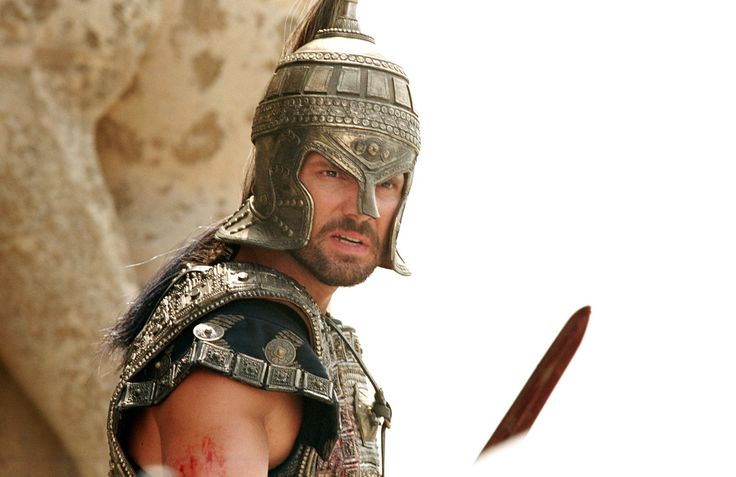
Alkē: Courage in the Face of Danger
Alkē is the operational heart of the heroic life. Often synonymous with andreia, alkē is the virtue without which all others collapse. It is the courage to stand and face danger — and in most cases, certain death — without retreat.
In the Iliad, Homer characterizes Ajax as “a tower of strength,” advancing with the fierce resolve of a man who has accepted danger as the price of duty. In battle he shows a near‑reckless disregard for his own safety, wading on many occasions into the press of spears to hold the Achaean line. His courage is both inspirational and gravitational as his courage draws the Achaeans into his orbit and forces them forward onto victory.
Hector’s courage belongs to an entirely different order. He courageously accepts the challenge to face Achilles in single combat knowing he is doomed to die and that Troy will fall without his leadership on the battlefield. Yet, he subdues his fear and accepts his fate. “Hector, the breaker of horses, did not shrink from the fight… He stood alone before the gates, awaiting Achilles.”
His bravery is the fulfilment of duty in the face of annihilation — the courage of a man who chooses honor before his kin and countrymen knowing that honor will lead to his death.
Modern man, by contrast, is effeminate. He lacks the courage to resist the smallest of temptations — the lure of convenience, the narcotic pull of entertainment, and the endless pursuit of pleasure — and as a result, he finds himself unable to resist anything at all. When the will is trained only to yield, defeat is inevitable.
To restore alkē is therefore to recover the discipline that orders desire, strengthens the will, and prepares the soul to face not only private temptations but the greater evils that press upon a broken world with unwavering courage.
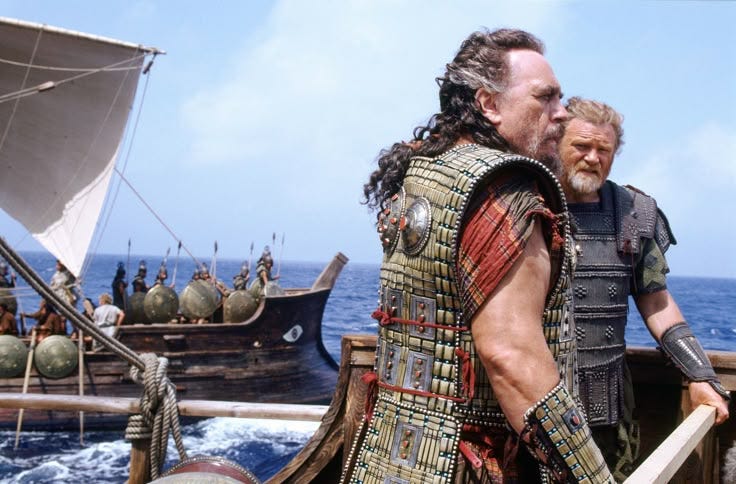
Aidos: Shame-Respect and the Moral Conscience
Aidos is the most interior of the Homeric virtues. It can be understood as the reverent shame that restrains a man from violating what is sacred.
Glaucus embodies aidos when he discovers his ancestral bond with Diomedes on the battlefield. Realising that their grandfathers once exchanged gifts and swore friendship, he refuses to profane that inherited bond for the sake of momentary glory. Instead, he declares, “Let us avoid each other’s spears, even in the press of battle.” In this moment, aidos overcomes the frenzy of war as Glaucus honors lineage, loyalty, and the sacred obligations of hospitality.
Priam embodies another dimension of aidos when he enters Achilles’ tent to ransom Hector’s body. While a lesser man may have clung to pride or fear, aidos requires that man embraces temporal shame so that the dead be honored.
Thus Priam passes behind enemy lines under the cover of darkness, kneels before Achilles, and declares, “I have endured what no man on earth has ever done before — I have kissed the hand of the man who killed my son.” Achilles, stunned by his enemy’s bravery, surrenders Hector’s body, and in doing so, yields to the ancient laws that bind all mortal men.
Modern culture treats shame as pathology, yet rightly ordered shame is a safeguard of virtue. It prevents the soul from collapsing into self‑indulgence or dishonor. Modern man, however, has been conditioned to feel no shame at all. He broadcasts his vices and parades his impulses. He apologizes only when pressured, never from conscience, and treats every boundary as an imposition on his sovereign will.
To restore aidos is to recover the truth that one’s life is accountable to standards that transcend personal preference — the humility that acknowledges obligation and the dignity of those to whom it is owed.
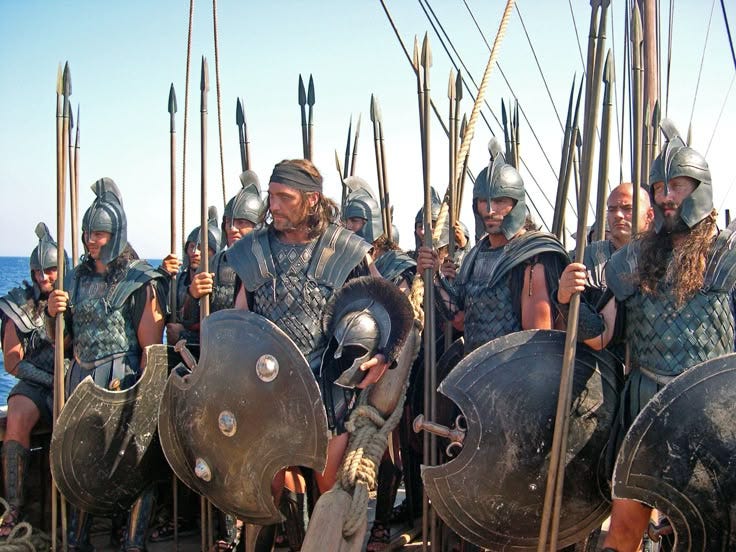
Restoring the Homeric Ideal in a Modern World
By restoring the Homeric ideal in a Modern world, we do not mean the return of Bronze Age warfare, rather, the recovery of the virtues that once animated the heroic imagination.
The first task is to return to the classics as an antidote to the present. By studying the lives and deeds of great men, one begins to rediscover the blueprint for greatness that can be applied in a modern world.
The second task is careful and deliberate habituation of virtue. Kleos requires sacrifice, timē demands integrity without praise, aretē calls for disciplined cultivation of mind and body, alkē encourages the confrontation of fear, and aidos forces one to consider the moral weight of their actions. Rather than shrink from difficulty, embrace every opportunity to grow — from the most trivial challenges to the greater.
The third task is to cultivate connections that honor virtue. Iron sharpens iron, and no one becomes heroic in isolation. Seek out individuals who value these heroic ideals and encourage one another to embody them.
The task is demanding, yet not beyond reach. As Homer reminds us, “The gods give nothing without effort”, and the restoration of the heroic ideal begins with the willingness to strive.
Join the fight for the Soul of our Civilization!
By subscribing to Atlas Press, you are supporting an honest group of guys who are working to help revitalize Western Civ through the re-enrichment of the Western mind. We appreciate your support greatly and hope you join us.
I recently went back to college to finish my bachelor’s degree and one of the classes I took was Hebrew and Greek Legacy, another was Ethics and Public Policy. In both classes I read Greek classics which questioned humankind’s moral and ethical thought and actions. I realized these classes, so close to graduation, were the only ones where I had read any Homer or Aristotle. My education had truly been lacking. These ideas should be taught at middle school level to develop the young mindset. Not for the “glory in warfare” but for honor and principles. The lack of this kind of education explains the moral decline of our civilization.
Just the way I want to raise my kids: avoiding shallow substitutes for true meaning, the courage to take responsibility for their words and actions, striving for higher moral standards, etc. Thank you for this post! Can't wait for my boy to grow old enough to read and discuss the Iliad with me.