


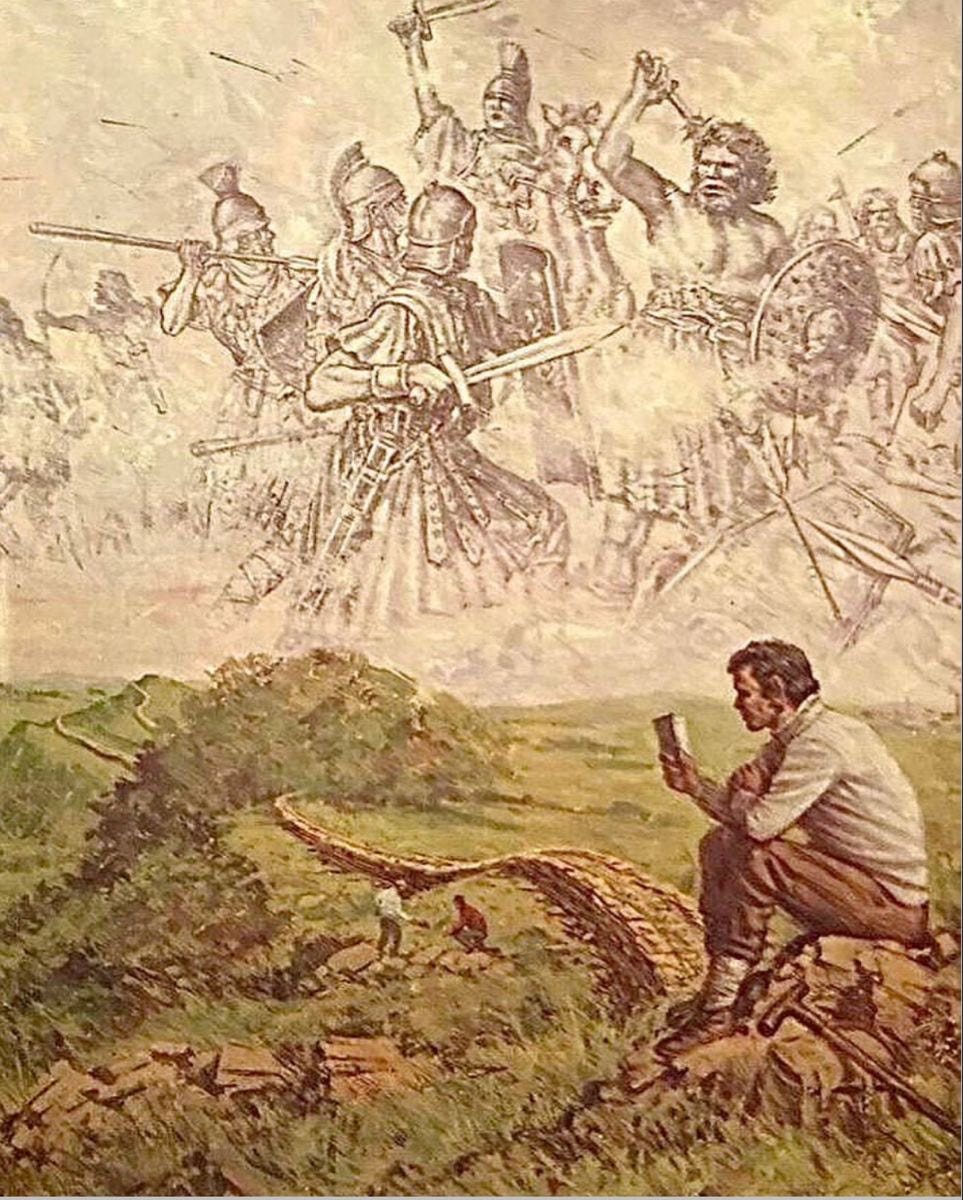
It’s a symptom of our growing illiteracy that the act of reading is considered an intellectual exercise. “It doesn’t matter what you read, just that you read it.” This sentiment would be familiar to an Englishman in the 1300s (in fact, 14th century English criminals convicted of manslaughter could avoid hanging by reading a single verse of the Bible). The same sentiment could get you 1M likes on TikTok today. But your great grandfather was reading Cicero in Latin.
So why do you even read books? Have you ever thought about it? Forget technical manuals for a second; if you’re reading Excel for Dummies or Advanced Quantum Mechanics, you probably have a concrete practical purpose in mind. Good for you, I am proud, you are still allowed to read those. Instead let’s focus on the soft stuff. Literature, history, philosophy. What’s the point?
Reminder: you can get tons of useful members-only content and support our mission for a few dollars per month 👇
Two full-length, new articles every single week
Access to the entire archive of useful knowledge that built the West
Get actionable principles from history to help navigate modernity
Support independent, educational content that reaches millions
Entertainment Vs. Information
There are two sides to this debate: entertainment or information. Unfortunately, reading books for entertainment is ridiculous. You do not live in a log cabin on the prairie. You have Netflix, you have video games, you have TikTok, you have Twitter (you really spend too much time on Twitter anon). No one reads books for entertainment anymore, because paper is an inferior entertainment platform. The only people who still read books for entertainment are women who prefer their porn to have DIY visuals. The stats back me up on this. If you’re tempted to disagree, go walk the aisles of Barnes & Noble.
So we’re left with one answer: information. But what kind of information are you trying to learn from a fiction book? The book is literally labelled FALSE on the cover. I can hear the outraged answer from the literati already. It will be something like “I read to understand the human condition by engaging deeply with a wide breadth of human experience and perspectives.” Good. I agree. And since this is the same basic answer as to why you should read history, philosophy, etc as well (books that are deceptively labelled NOT FALSE on the cover), I think it’s fair to lump all these subjects together.
But if this answer is correct, it leads us to a troubling conclusion: New books are not worth reading. Why? Because everyone alive today has the same perspective, and none of us have experienced a wide breadth of anything. Especially not those of us who are likely to get platformed by a major publisher.
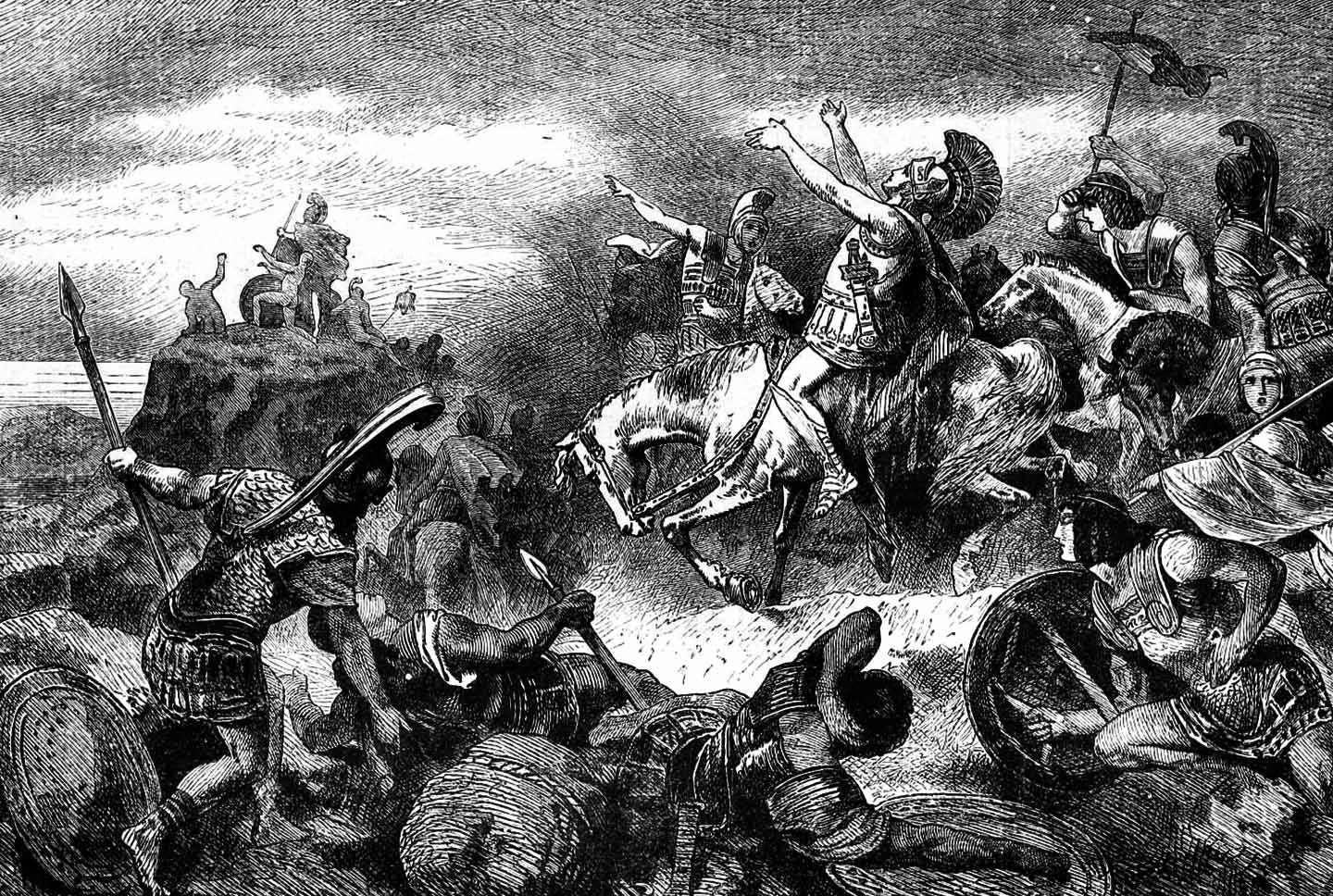
Take history books. The average ancient historian led troops, tutored a prince, governed a province, advised a king, made a fortune, fell from favor, was exiled, and buried 7 of their 10 children. The average modern historian passed a few tests then wrote a book on their laptop next to their cat. And worse, they all passed the same tests at the same institutions. And they all wrote the same statements on their applications to get into those institutions. And while attending those institutions, they all adopted the same opinions. Anyone who did otherwise was filtered out before they could become a professor with a publishing deal. Everything is like this now.
Meanwhile Xenophon was an Athenian student of Socrates who joined a Greek mercenary group that marched 1000 miles into Persia to overthrow the King of Kings on behalf of the King’s brother. When the King’s brother died and the group’s commanders were all killed by Persian treachery, he led the troops 1000 miles home himself while being constantly harried by hostile armies. He then tried to establish a colony on the Black Sea, survived a mutiny, raided the Thracians, fought for the Spartans, was exiled by Athens, and settled down to manage an estate and write it all up.

How To Find Perspective
Contrast Xenophon with Mary Beard, who studied at Cambridge and now teaches at Cambridge. She holds the same opinions as everyone else at Cambridge. She’s remarked before that, “I actually can’t understand what it would be to be a woman without being a feminist.” This seems like a peculiar failing for an ancient historian. After 9/11, she wrote an article saying that many people thought “the United States had it coming,” and that “world bullies, even if their heart is in the right place, will in the end pay the price.” That caused some controversy on the world stage, but earned her a promotion at Cambridge. I don’t know if she’s ever talked publicly about religion or democracy or climate change or immigration, but I could tell you exactly what she thinks about these things anyway. So why would you bother reading what she thinks about Rome? The answers are just as predictable.
Thankfully it’s still possible to find people with unique experiences and perspectives. But you can’t find them by traveling around the world. The world is too hyperconnected now, and everyone is converging to the same opinions. You have to find them by traveling back in time. There are hundreds of people with just as much experience of the human condition as Xenophon who have written great books throughout the millennia: Polybius was a Greek politician taken hostage by the Romans, who befriended Scipio Aemilianus and stood beside him as Carthage was burned to the ground. Bernal Díaz del Castillo was a conquistador who wrote about conquering the Aztec Empire. William Wells Brown escaped slavery in America at the age of 19 before writing biographies of Black Americans. Konstanty Michaowicz was a Christian Serb who wrote about being captured by the Ottoman Turks and being trained as a Janissary before escaping. Talk about the breadth of human experience! Have you read all of these? If not, why would you even consider picking up another book written by another Cambridge professor?

I haven’t even bothered to trot out the usual argument in favor of reading old books, which is survivorship bias: Any book written hundreds of years ago that people are still talking about is likely to be very good. This is true but uncontroversial, so what’s the fun in discussing it? I state it here only so that you know that I know it.
In conclusion I leave you with a rule of thumb for actually understanding the human condition by engaging deeply with a wide breadth of human experience and perspectives: Half the books you read must’ve been written before WW2, half of those must’ve been written before the American Revolution, and half of those must’ve been written before the fall of Rome.
Make sure to subscribe to our friend, the Roman Helmet Guy (currently on a side quest to get Iran renamed to Persia!)

There's only about a dozen books published after 1800 that are worth reading.
Another excellent article!
Good stuff!
It reminds me of Thucydides on “The society that separates its scholars from its warriors will have its thinking done by cowards and its fighting by fools.”
We now have our thinking done by cowards who have lived not, but who instead think they can think while living inside a pretty classroom.