


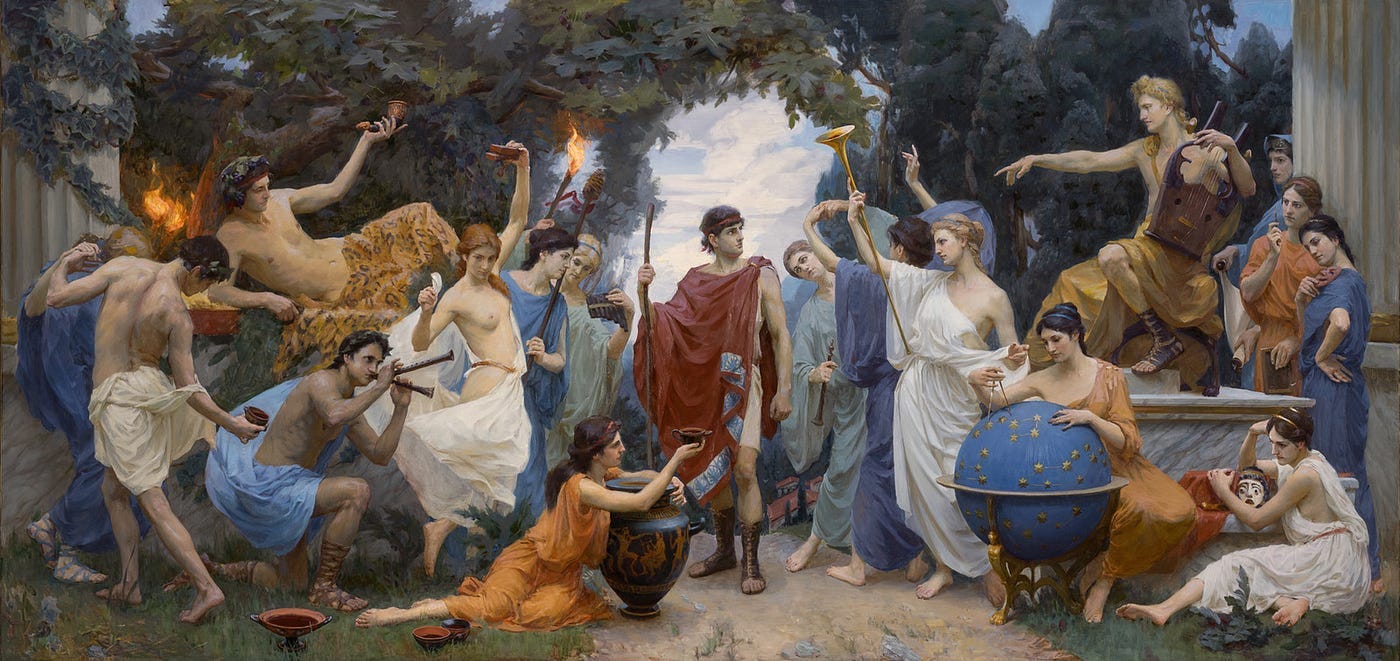
Religion in the ancient world expressed itself through two broad modes that, while never mutually exclusive, reveal deep cultural instincts shaping the later development of Eastern and Western Christianity.
The first may be called the mystical or participatory mode, a form of religion that emphasizes direct experience of the divine, interior transformation, and the possibility of union with God. The second mode is rational or systematic, emphasizing order, doctrine, clarity, and conceptual precision. These modes are not rigid categories but tendencies that permeated the ancient Mediterranean.
Both modes of religion existed in Judaism, Hellenism, and Roman culture, yet each Christian tradition inherited and developed one more strongly. The East gravitated toward mystical participation, while the West gravitated toward systematic articulation. At the same time, both traditions preserved significant internal diversity. The East produced rigorous dogmatic definitions, and the West produced profound mystics, reminding us that these modes describe tendencies rather than strict theological divisions.
Reminder: You can get tons of members-only content dedicated to useful knowledge, and support our Mission at the same time for a few dollars per month 👇
Two full-length, new articles every single week
Get actionable principles from history to help you navigate modernity
Access to the entire archive of useful knowledge that built the West
Support independent, educational content that reaches millions
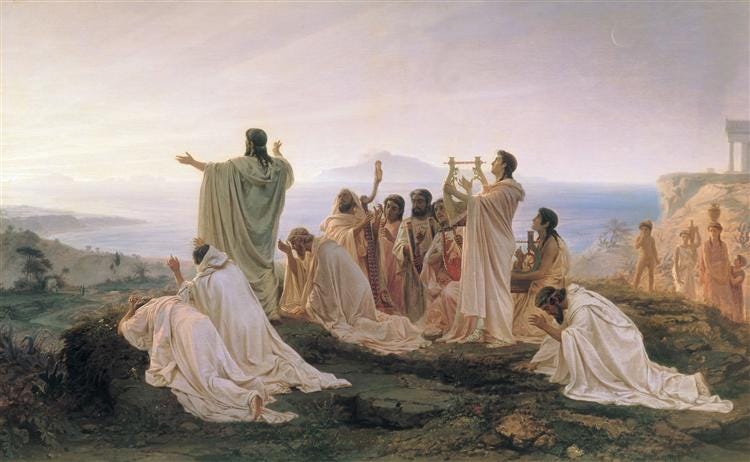
Eastern Religion: Mystical, Theotic, and Apophatic
Before Christianity emerged, the Eastern Mediterranean world was already shaped by powerful mystical traditions that emphasized ecstatic experience, divine union, and transformative ritual.
The Dionysian mystery cults, for example, invited participants into intense rites involving music, dance, and symbolic death‑and‑rebirth. These rituals aimed not at intellectual understanding but at direct participation in the divine life of Dionysus. Initiates sought a kind of ecstatic liberation, believing that the god’s presence could be felt in the body and in the dissolution of ordinary consciousness.
Other mystery religions — such as the Eleusinian Mysteries — promised secret knowledge and personal transformation through ritual initiation. Meanwhile, Hellenistic philosophical traditions like Platonism and Neoplatonism taught that the soul could ascend toward the divine through contemplation and purification.
Plotinus, for instance, described mystical union with the One as an experience “beyond knowing,” where the soul becomes what it contemplates. Jewish apocalyptic mysticism also contributed to this atmosphere, with visions of heavenly ascent and participation in divine glory.
Together, these traditions created a cultural environment where mystical experience, symbolic transformation, and the search for union with the divine were seen as central to religious life.
Eastern Christianity emerged within this world shaped by ancient Near Eastern religiosity, Hellenistic metaphysics, and Jewish apocalyptic mysticism. Platonism and Neoplatonism taught that the soul ascends toward the One through purification and contemplation, while Jewish visionary traditions imagined heavenly ascent and participation in divine glory. These currents formed a spiritual atmosphere in which the early Eastern Fathers naturally understood salvation as transformation rather than mere pardon, as participation rather than mere instruction. The Eastern instinct was to approach God through mystery, silence, and the recognition that divine reality surpasses all conceptual grasp.
Even the structure of the Divine Liturgy reflects this instinct: the iconostasis veils the altar, signaling that the Eucharistic sacrifice unfolds within a realm of mystery into which the faithful are invited but never fully admitted. In short, the liturgical space surrounding the altar itself becomes a theological statement about divine transcendence.
This instinct reached its classical expression in the apophatic theology of Pseudo‑Dionysius the Areopagite, who taught that the soul approaches God “by the negation of all things,” since the divine is “beyond every affirmation and every denial.” His hierarchical vision of the cosmos, culminating in a union beyond intellect, shaped the Byzantine tradition profoundly.
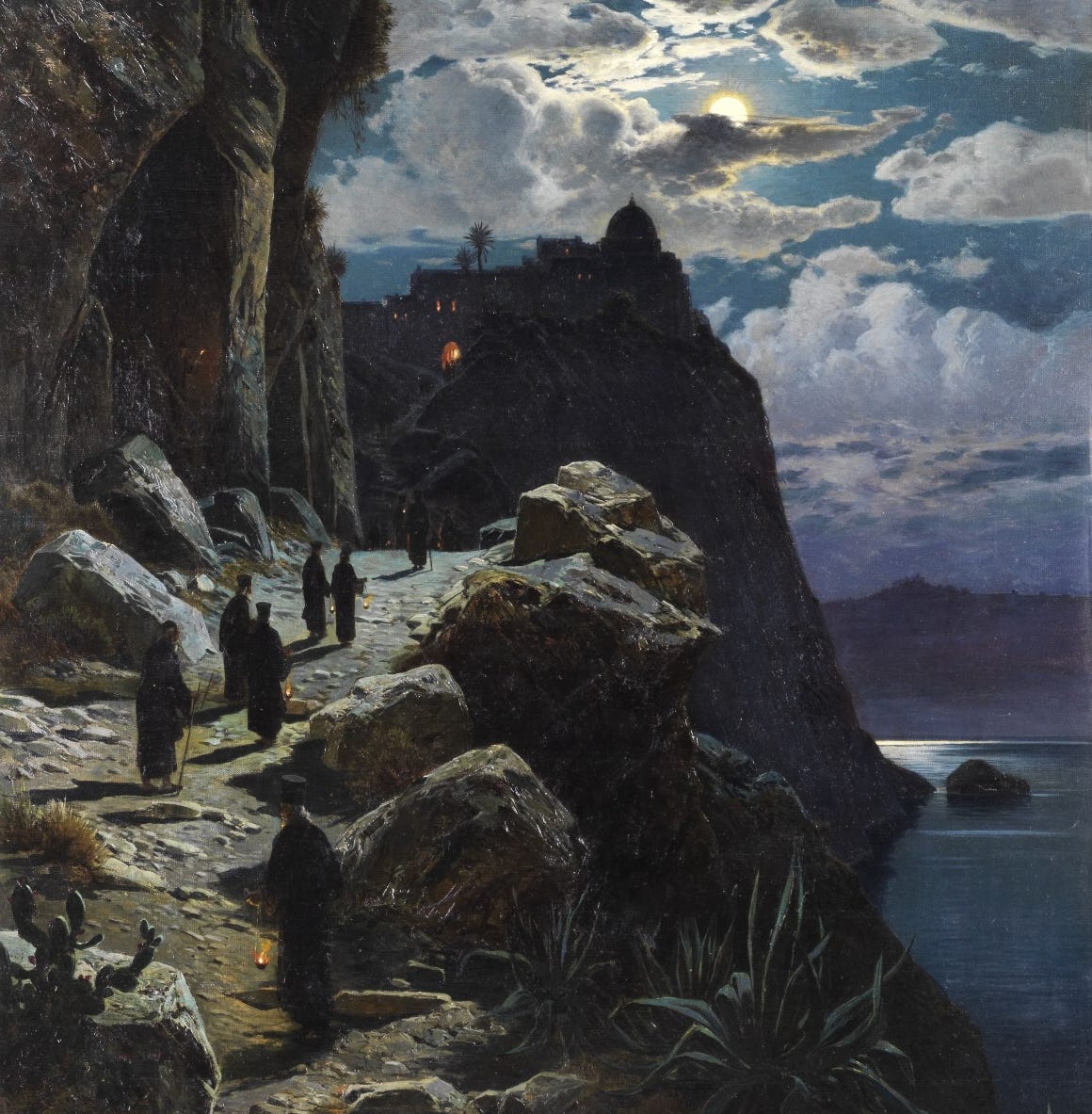
St Maximus the Confessor deepened this mystical orientation by presenting the cosmos as a liturgy in motion, a vast ascent toward deification in which human beings serve as mediators. His doctrine of synergy — divine grace cooperating with human freedom — expresses the Eastern conviction that salvation is a dynamic participation in divine life.
Gregory Palamas, defending the hesychast monks of Mount Athos, articulated the distinction between the divine essence and the divine energies, safeguarding both God’s transcendence and the possibility of real participation in His uncreated life. For Palamas, the apostles on Mount Tabor didn’t simply behold a created symbol but the uncreated light itself.
Thus Eastern Christianity became a tradition oriented toward Theosis, mystical participation, and liturgical experience rather than conceptual system‑building. Its theology is contemplative and ascetical, shaped by the conviction that God is known primarily through unknowing. As Gregory of Nyssa observed, “Concepts create idols; only wonder comprehends anything.”
The East does not reject reason, but it subordinates reason to the higher knowledge of union, preserving the mystery of the Divine from the reduction to human categories.
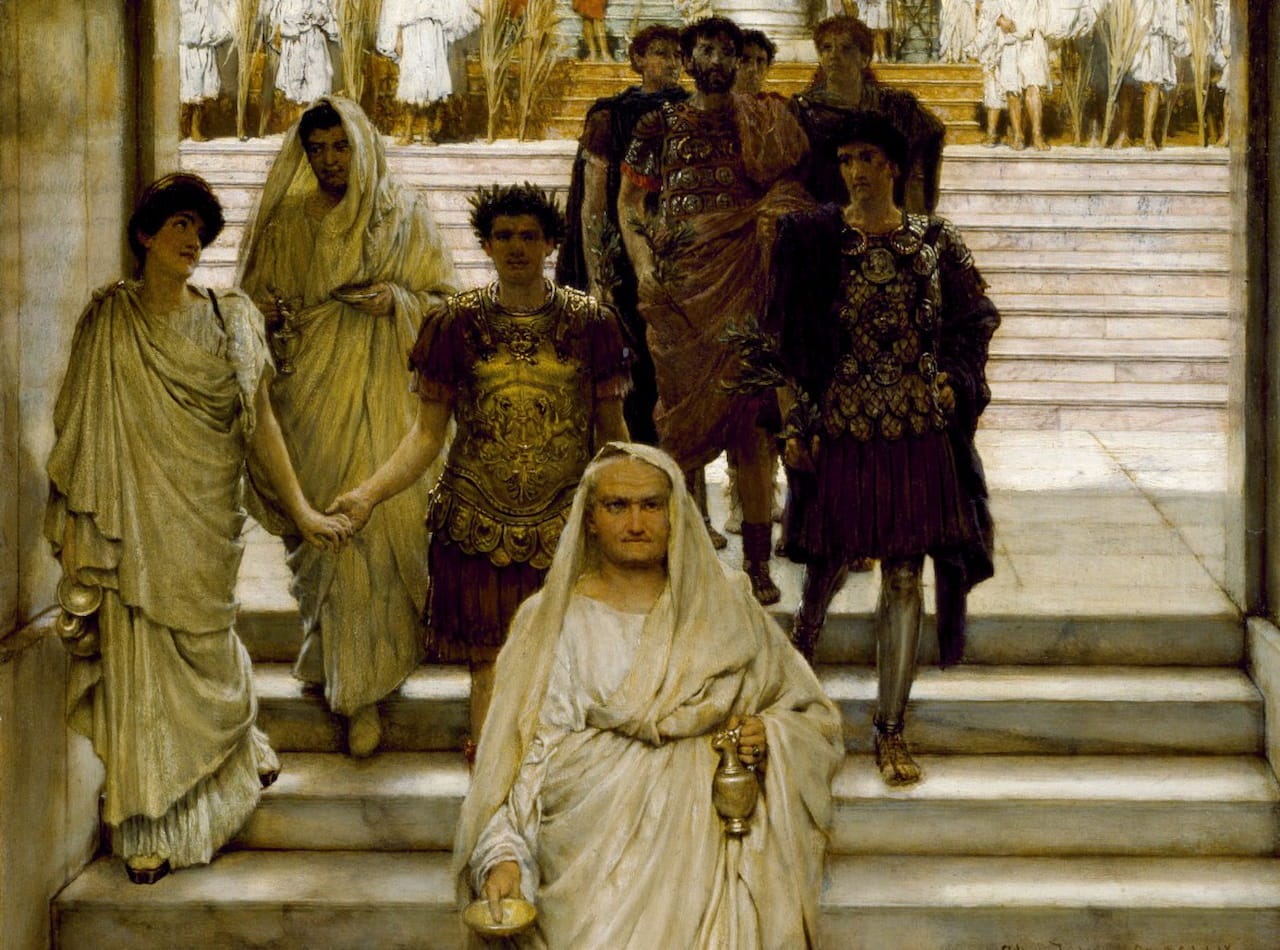
Western Religion: Systematic, Juridical, and Conceptual
Before Christianity, Roman religion was shaped by a strong concern for order, stability, and correct ritual practice. The Latin word religio itself was distinct from fides — which referred to personal faith or belief — but in the strict observance of one’s duties toward the gods in accordance with justice. The Romans believed that peace between man and the gods — which they called the Pax Deorum — was maintained only when sacred rituals were performed exactly as tradition required according to the Mos Maiorum. If a priest mispronounced a word or performed a gesture incorrectly, the entire ceremony had to be repeated.
The Pontifex Maximus, which is the greatest bridge between gods and men, oversaw the religious calendar, supervised sacrifices, and ensured that public rituals were carried out according to tradition. This office later became associated with the emperor himself as the principle of spiritual and political unity.
Roman religion was therefore highly structured, legalistic, and focused on maintaining cosmic and civic order. It did not encourage mystical union or ecstatic experience; instead, it emphasized duty, discipline, and the careful management of divine favor. These habits of mind — precision, order, and legal reasoning — formed the cultural soil into which Western Christianity was planted.
Western Christianity developed within this cultural world of Rome, where religio meant the maintenance of right order, duty, and justice, and when Christianity took root in this environment, it naturally absorbed these religious dispositions. The Western instinct was to articulate doctrine clearly, to define boundaries, and to construct systematic theological frameworks that safeguarded the integrity of the faith which is reflected in the writings of the early Western Fathers.
St Augustine stands as the principal architect of the Western theological imagination. Through the introspective brilliance of the Confessions, the sweeping historical vision of the City of God — where he claimed that the Church perfected what Rome only prefigured — and his penetrating treatments of sin, grace, and Christian doctrine forged the intellectual framework by which West would learn to understand its relationship with God, the human person, and the drama of salvation.
As the Western Church moved from Augustine’s conceptual clarity to the practical demands of governance, St Gregory the Great emerged as the figure who translated this theological vision into durable institutional form. Great, with his pastoral acuity and administrative genius, embodied the Western instinct for order, discipline, and practical governance. His Regula Pastoralis and liturgical reforms reveal a mind concerned not with speculative ascent but with shaping the moral and ecclesial life of the Christian people. Moreover, by assuming the ancient title Pontifex Maximus, he consciously styled the papacy as the new Roman principle of unity, gathering under ecclesial authority what the empire had once held together by law and power.
The medieval scholastics brought the Western mode to its fulfilment. St Thomas Aquinas, drawing on Aristotle, Augustine, and the Fathers, constructed a theological system of extraordinary coherence.
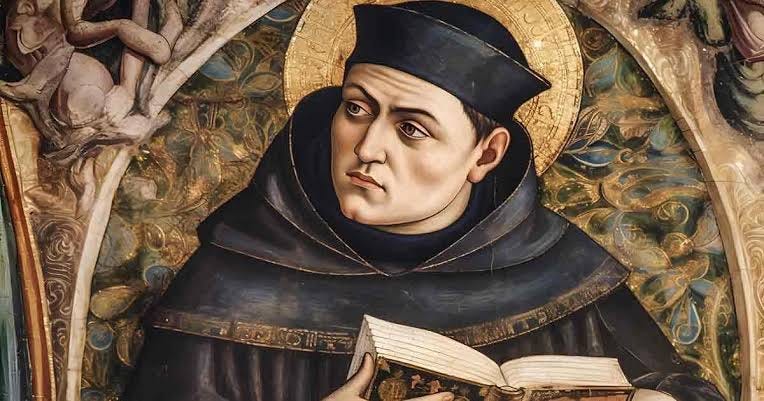
Aquinas’ Summa Theologiae stood as the high point of Scholasticism, a synthesis that drew the Western intellectual inheritance into a unified and architectonic whole. His principle — “grace does not destroy nature but perfects it” — encapsulated his entire theological vision as it expressed what he accomplished with the classical world: he baptized Aristotle and the Greco‑Roman philosophical tradition, receiving their insights into nature, virtue, and metaphysics, yet showing how supernatural revelation elevated and completed everything pagan reason had only partially grasped. In doing so, he argued that grace perfected Western culture itself, fulfilling rather than negating its deepest intellectual instincts.
His method was rigorously cataphatic, defining terms and distinguishing concepts, while still acknowledging the limits of human reason, and as a result, Western theology developed in the same spirit. The belief that the sacraments conferred supernatural grace ex opere operato reflected the ancient Roman instinct for legal precision, objective ritual form, and stable ecclesial order. Finally, Thomism understood the sacraments as Christ’s efficacious work in visible signs, and the Mass fulfilling rather than replicating the ancient Pax Deorum.
In this way, the West “baptized” Roman intellectual habits just as the East “baptized” Hellenistic mystical ones. Ultimately, the West’s strength lay in its clarity, coherence, and capacity for doctrinal development, and its systematic theology provided a stable framework that guarded the faith from confusion.
The Synthesis of East and West
In the modern world, Eastern Christianity continues to emphasize mysticism, liturgy, asceticism, and apophaticism. Theosis remains the goal of Christian life, and experiential knowledge of God is sought through prayer, sacrament, and the hesychastic tradition defended by Gregory Palamas. As a result, the East remains a living witness to the conviction that God is encountered more deeply in silence than in syllogism.
Western Christianity, by contrast, continues to emphasize systematic theology, moral clarity, and doctrinal precision. Its universities and seminaries cultivate analytical approaches to Scripture and doctrine. Even its mystical writers, such as Teresa of Avila or John of the Cross, articulate their experiences with conceptual rigor. This instinct has produced remarkable intellectual achievements, yet it can sometimes appear distant from the experiential depth cherished by the East.
These tensions are not merely theological but reflect different cultural and religious sensibilities. The Eastern doctrine of the essence–energies distinction seems to conflict with the Western doctrine of divine simplicity, and mystical experience appears to stand in tension with rational definition. Yet these contrasts reveal complementary strengths rather than irreconcilable oppositions.
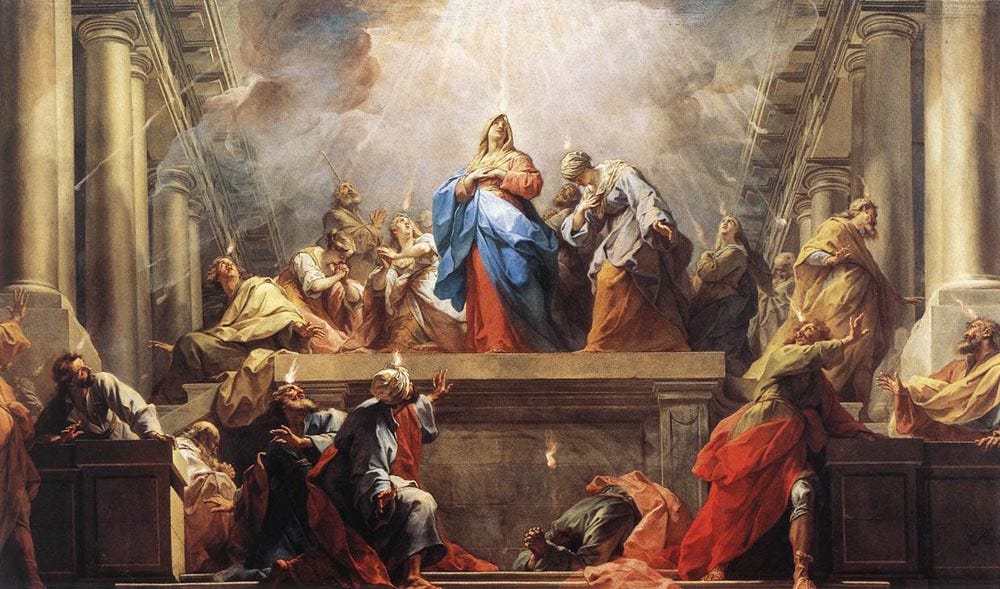
A mature Christian theology requires both instincts. The East reminds the West that God transcends conceptual mastery, and the West reminds the East that clarity protects mystery from distortion. Such a synthesis would not erase the differences but integrate them into a fuller vision of the Christian life.
The East’s great conciliar definitions — especially in Christology — demonstrate that it, too, maintains doctrinal clarity when the integrity of the faith demands it, just as the West’s mystical tradition — from Bernard of Clairvaux to John of the Cross — shows that rational precision never excluded contemplative depth.
As St John Paul II observed, the Church needs both East and West, “the two lungs with which she breathes,” so that she may be drawn ever more deeply into the contemplation of God.
Join the fight for the Soul of our Civilization!
By subscribing to Atlas Press, you are supporting an honest group of guys who are working to help revitalize Western Civ through the re-enrichment of the Western mind. We appreciate your support greatly and hope you join us.
This was beautifully written
Subbed you.
Glad I stumbled on your piece today.
Kindly check out my work and connect back if it sticks.
I promise you'd like them
https://lawrenceomoregiejr.substack.com/p/finding-happiness-in-solitude?utm_source=share&utm_medium=android&r=3g3d4k
https://lawrenceomoregiejr.substack.com/p/i-know-you-think-im-happy?utm_source=share&utm_medium=android&r=3g3d4k
https://lawrenceomoregiejr.substack.com/p/the-peoples-voice?r=3g3d4k&utm_campaign=post&utm_medium=web&showWelcomeOnShare=true
Do have a great read and a lovely weekend
Thank you for this article.