
Metternich on How to Save the West
Warning and Advice from the 19th century...


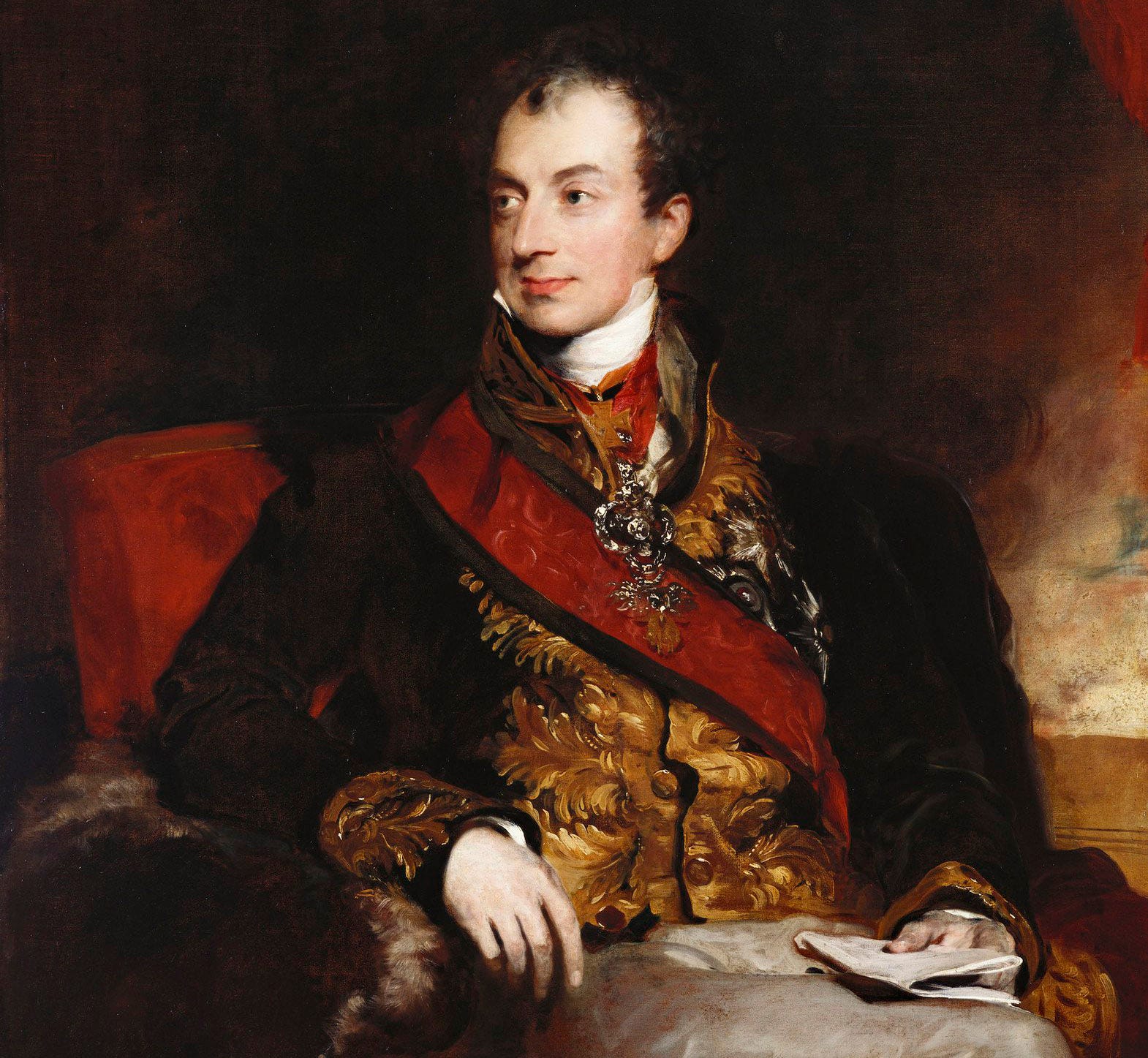
‘The West has fallen’ is by now a common theme on social media. Consequently, so too are proposals on ‘How to Save the West’.
Many however remain unaware that one man was fully two centuries ahead of the curve. This man was no mere fringe thinker however. Prince Klemens von Metternich, Chancellor of the Austrian Empire, was indeed a man so influential that the entire mechanism of great power diplomacy in the early 19th century was termed the ‘Metternich System’ after him.
Having witnessed the entire arc of the French Revolution, and served as Foreign Minister to Catholic Austria at the height of the Napoleonic Wars, Metternich knew better than anyone what had been unleashed upon the world.
In 1820 however, Metternich put all of these thoughts to paper, and sent his Political Confession of Faith to Emperor Alexander I of Russia. It is an extraordinary audit of the state of the Western world, what went wrong and how to fix it.
Today, we explore this remarkable warning and advice from history, from a man who predicted the future with chilling accuracy…
Reminder: You can get tons of members-only content dedicated to useful knowledge, and support our Mission at the same time for a few dollars per month 👇
Two full-length, new articles every single week
Get actionable principles from history to help you navigate modernity
Access to the entire archive of useful knowledge that built the West
Support independent, educational content that reaches millions
The Source of Evil
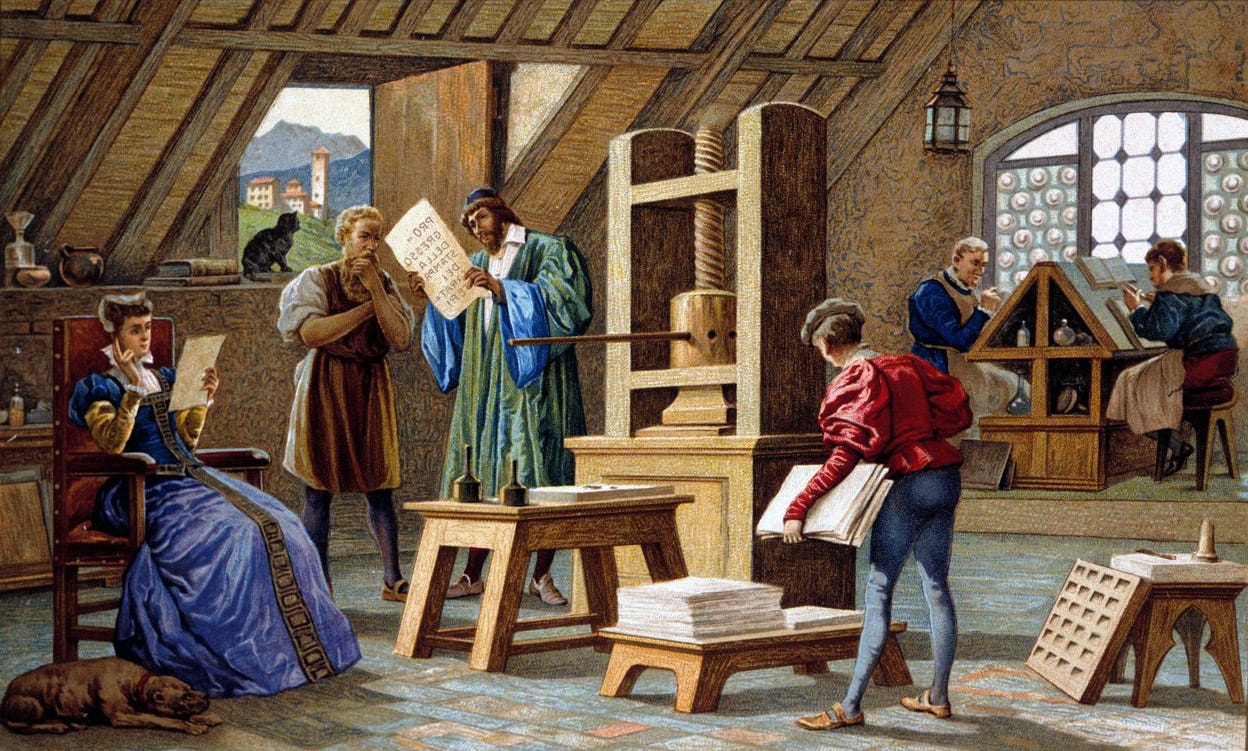
If you wish to cure illness, you must assume the role of a doctor. So too if you wish to cure a society of malaise. “Few men, however”, as Metternich states, “stop thoroughly to examine a disease which they intend to combat”.
Thus he begins with a frank diagnosis of Europe’s condition in the wake of the French Revolution:
“Kings have to calculate the chances of their very existence in the immediate future; passions are let loose, and league together to overthrow everything which society respects as the basis of its existence; religion, public morality, laws, customs, rights, and duties, all are attacked, confounded, overthrown, or called in question. The great mass of the people are tranquil spectators of these attacks and revolutions, and of the absolute want of all means of defence”
Prince Klemens von Metternich, Political Confession of Faith
Eerily prescient though his words are to anyone reading them today, they are also quite brilliant in identifying that what was happening was not the will of the majority. Most people, indeed, were “tranquil spectators” to widespread societal vandalism, whose support was claimed yet never sought by the ringleaders of these ‘revolutions’.
What we commonly call ‘revolutions’, after all, are almost never grassroots in origin. Virtually all of them have been top-down and elite-led coups d’état which are then retroactively marketed as ‘popular’. A common problem then is that people criticize the propagandized version of revolutions rather than their actual substance. Metternich then follows up with yet another observation that has aged like a fine wine:
“These are the precepts of morality, religious as well as social, and the necessities created by locality. From the time that men attempt to swerve from these bases, to become rebels against these sovereign arbiters of their destinies, society suffers from a malaise which sooner or later will lead to a state of convulsion”
Prince Klemens von Metternich, Political Confession of Faith
Man is anchored by faith, morality and place. Revolutionary leaders sought to dislocate Man from each, and society is unstable as a result. It really is as simple as that. More useful, however, is again identifying why this happened in the first place.
As per Metternich’s observation, the flourishing of Christianity was the singular thread that held European civilization together following the collapse of Rome in the West. Rome was conquered by the barbarians, yet the barbarians were conquered by Christ, and through Christ the European found common purpose, understanding and ethic. No matter his other curiosities, the resident of Atlantic Portugal shared with the Russian settler of the Siberian tundra a common allegiance to Christ. So too did the mightiest Emperor and lowliest serf.
But it would be a serious mistake to assert that the French Revolution was ‘Year 0’ of the breaking apart of this. A perfect storm of factors prepared the ground:
“The facilitation of the communication of thoughts by printing; the total change in the means of attack and defence brought about by the invention of gunpowder; the difference suddenly produced in the value of property by the quantity of metals which the discovery of America put in circulation; the spirit of adventure provoked by the chances of fortune opened in a new hemisphere; the modifications in the relations of society caused by so many and such important changes, all became more developed, and were in some sort crowned by the revolution which the Reformation worked in the moral world”
Prince Klemens von Metternich, Political Confession of Faith
More than anything else, an attitude of ‘win at all costs’ had been brewing ever since the Renaissance. The spread of the printing press allowed bad actors to whip up the populace through spreading libel which was difficult to challenge as quickly as it spread. The discovery of the New World triggered an ‘all or nothing’ global race between the great powers for resources, with elite society becoming ever more materialistic as a result.
But the true root of evil, however, was the perversion of our attitude towards knowledge…
Wisdom or Arrogance?
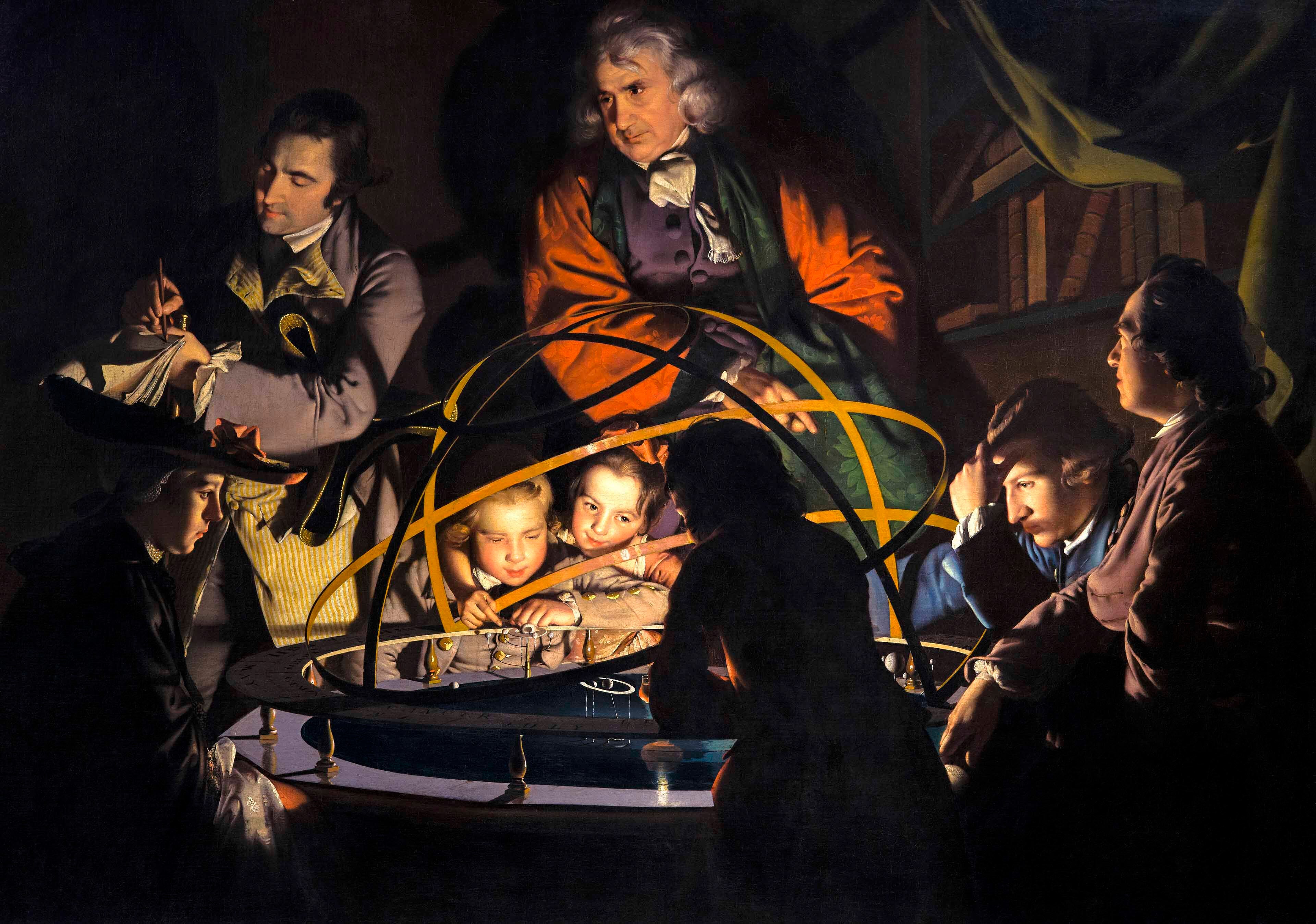
“The progress of the human mind has been extremely rapid in the course of the last three centuries. This progress having been accelerated more rapidly than the growth of wisdom (the only counterpoise to passions and to error)…”
Prince Klemens von Metternich, Political Confession of Faith
The advance of technology has been accompanied by a deadly two horse race in the background. That between knowledge and wisdom.
As society fragmented towards individualism, it was inevitable that knowledge would begin to flourish in fields increasingly isolated from each other. By the ‘Enlightenment’ of the 18th century, wisdom, fed by such mutilated knowledge, had morphed into a dangerous arrogance. Too many people began to view themselves as kings in their field, and therefore worthy of being kings over all fields:
“This evil may be as described in one word — presumption ; the natural effect of the rapid progression of the human mind towards the perfecting of so many things. This it is which at the present day leads so many individuals astray, for it has become an almost universal sentiment”
Prince Klemens von Metternich, Political Confession of Faith
The man sceptical of the Church, comfortable in his bubble and unaccustomed to opposition, saw fit to interpret all of society through his own narrow lens. At the same time, he considered himself above laws, customs and beliefs that he saw no way to credit himself for:
“Religion, morality, legislation, economy, politics, administration, all have become common and accessible to everyone. Knowledge seems to come by inspiration ; experience has no value for the presumptuous man; faith is nothing to him; lie substitutes for it a pretended individual conviction, and to arrive at this conviction dispenses with all inquiry and with all study; for these means appear too trivial to a mind which believes itself strong enough to embrace at one glance all questions and all facts. Laws have no value for him, because he has not contributed to make them, and it would be beneath a man of his parts to recognise the limits traced by rude and ignorant generations. Power resides in himself; why should he submit himself to that which was only useful for the man deprived of light and knowledge?”
Prince Klemens von Metternich, Political Confession of Faith
France, the eldest daughter of the Church, and therefore the kingdom which had taken Christian society for granted the most, was therefore most vulnerable to ‘presumptuous men’. Particularly in Paris, which by the 1780’s had a large number of newly wealthy men disconnected from the rural bedrock of France.
Selfish ambition, when sparked, is difficult to contain, and it was inevitable that ‘presumptuous men’ would lash out against the principal constraint upon their ‘new moral code’ — the Church. “Drag through the mud the name of God and the powers instituted by His divine decrees, and the revolution will be prepared!”, as Metternich described their plan.
Equally nefarious was the ability of the revolutionaries to hoodwink otherwise proud subjects by laundering subversive beliefs as ‘patriotic’. Especially after the revolution was marketed by ‘military glory’ under Napoleon:
“Nevertheless the revolutionary seed had penetrated into every country and spread more or less. It was greatly developed under the regime of the military despotism of Bonaparte. His conquests displaced a number of laws, institutions, and customs; broke through bonds sacred among all nations, strong enough to resist time itself ; which is more than can be said of certain benefits conferred by these innovators. From these perturbations it followed that the revolutionary spirit could in Germany, Italy, and later on in Spain, easily hide itself under the veil of patriotism”
Prince Klemens von Metternich, Political Confession of Faith
Yet Metternich did not view the situation as unsalvageable. On the contrary, knowing that revolutionary subversion is driven by elites and not the people actually makes combating this much more manageable, as long as the will exists.
As a result, Metternich devotes the remainder of his Political Confession to a clear six-point roadmap for any government that wishes to save Europe, the West, and Christendom itself…
