


In his eleven‑volume series The Story of Civilization, historian Will Durant warned that from barbarism to civilization requires a century but from civilization to barbarism needs but a day.
This observation captures not only the speed of civilizational collapse, but a much deeper and more confronting truth that speaks to the modern West. Every great empire passes from an age of form to an age of dissolution, and the philosophy that governs this late phase is the same across all ages.
It is the creed we now call liberalism.
Rather than being a political re‑alignment, liberalism is a metaphysical inversion — the replacement of inherited order with the sovereignty of appetite, the elevation of the individual above the common good, the will above the law, and desire above duty.
Liberalism reverses the hierarchy that made civilization possible in the first place. Order is the first principle of any enduring society, and liberalism is the gradual unravelling of that order — a slow corrosion of the restraints that once held barbarism at bay. When a society elevates autonomy above discipline, it inevitably begins to sanctify what earlier ages recognized as vice. In time, it not only tolerates licentiousness but enshrines it in law, confusing license for liberty.
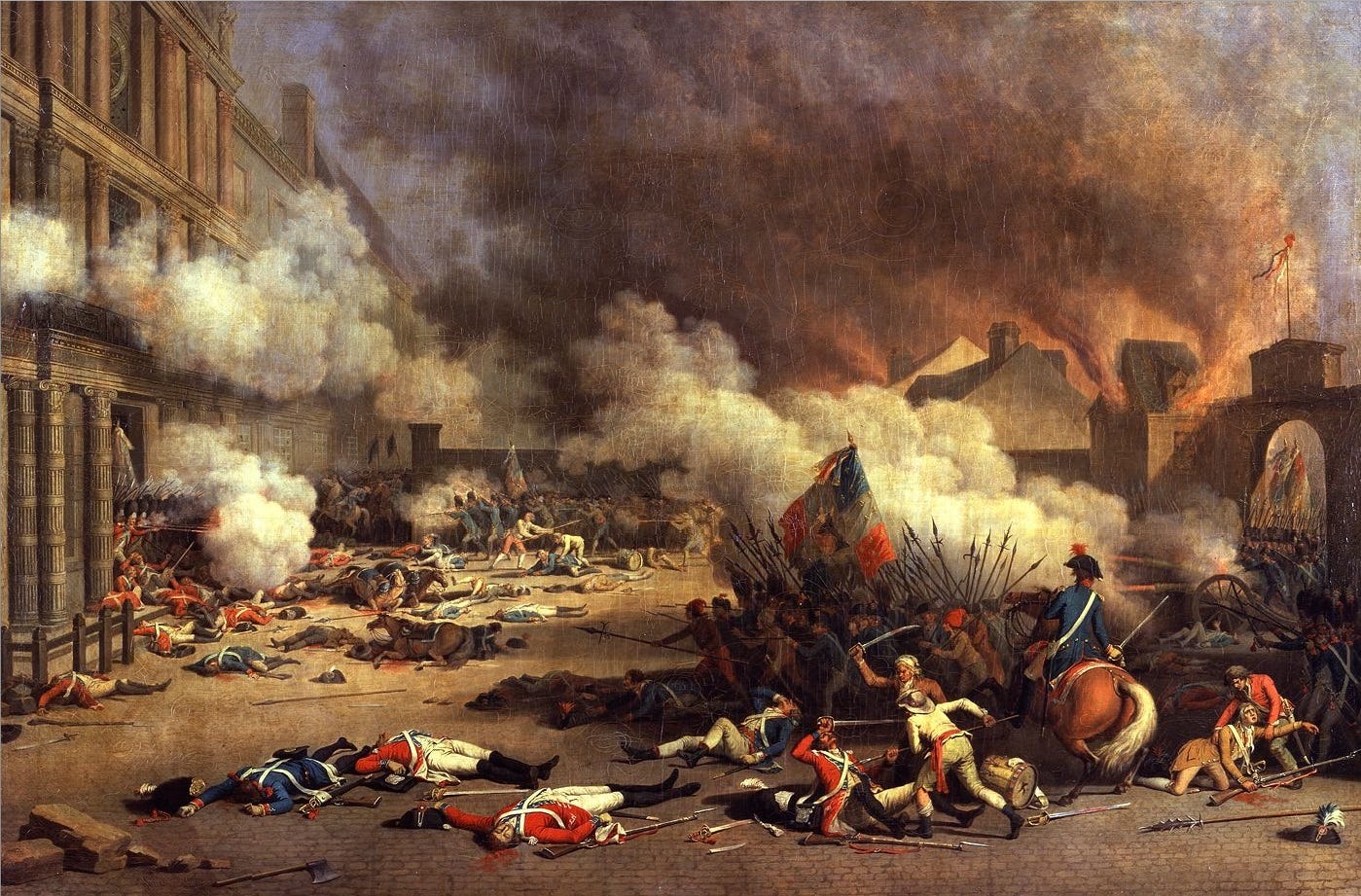
The infamous French Revolution reveals that even when the most refined peoples embrace liberalism, they become the barbarians inside the gates. Its descent from lofty ideals to blood‑soaked chaos stands as a warning that civilizations are not always conquered from without, but from within by heirs who have forgotten how to govern themselves.
Reminder: You can get tons of members-only content dedicated to useful knowledge, and support our Mission at the same time for a few dollars per month 👇
Two full-length, new articles every single week
Get actionable principles from history to help you navigate modernity
Access to the entire archive of useful knowledge that built the West
Support independent, educational content that reaches millions
The Exaltation of the Individual
The first principle of liberalism is the exaltation of the individual as the supreme measure of truth, morality, and political legitimacy. In this vision, the self becomes the final arbiter of meaning, accountable only to its own desires.
What appears as a political claim is, in fact, a metaphysical rupture since it presumes that human beings are self‑originating and self‑sufficient, that truth is not discovered but constructed, and that the moral order is no longer something to which one conforms but something one invents. As a result, objective truths become subjective, and the pursuit becomes less about aligning one’s self with the order of the universe, and instead, based on one’s solipsistic experience and perception.
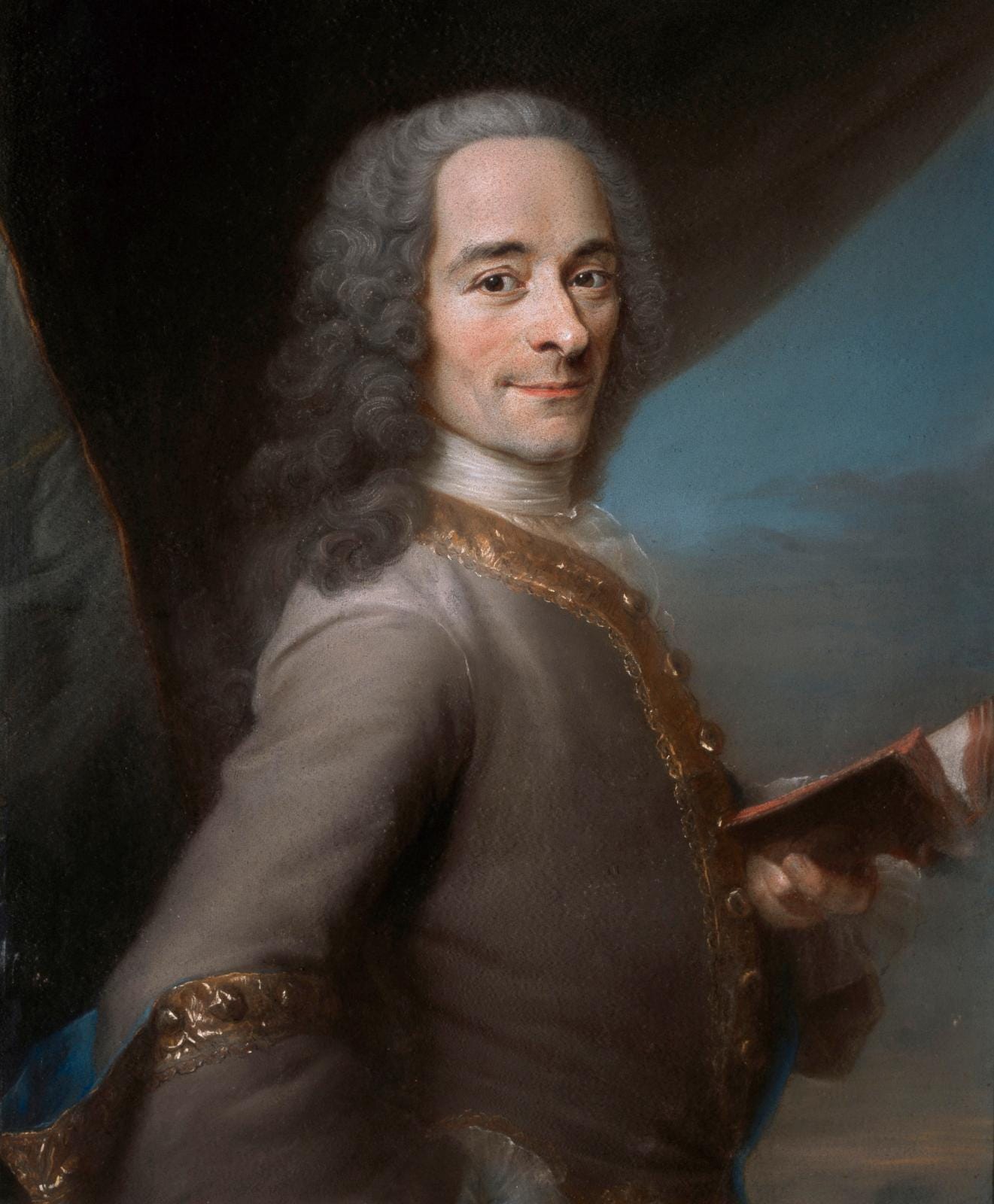
Spengler recognized this shift as the onset of “civilizational winter.” Once the individual is enthroned as the organising principle, the older structures of duty, hierarchy, and communal purpose lose their binding force. Once the individual is enthroned as the organising principle, the older structures of duty, hierarchy, and communal purpose lose their binding authority and the civilization begins to disintegrate into a new form of barbarism.
France in the decades before the infamous Revolution offers a striking illustration of this phenomenon. Moralists such as La Rochefoucauld had already noted that the self was becoming the hidden engine of public life, and by the mid‑eighteenth century, the Enlightenment philosophes openly recast the individual as the sole measure of truth Rousseau’s “inner voice” and Diderot’s sentimental morality signalled a decisive shift from an external moral order to the sovereignty of personal experience.
The Church, the monarchy, the guilds, and the complex networks of village life — the Ancien Régime — were increasingly dismissed as constraints upon the self’s right to define its own meaning by a people who sought to remake the world in their image and likeness.
In the modern West, one can hear echoes of the French Revolution — or at least, the beginnings of it. Identity has become an act of self‑creation rather than an inheritance received, and truth has become a matter of personal experience rather than participation in a universal order. The result is a society of atomized individuals — each demanding recognition, each resisting limits, each convinced of his own unbounded sovereignty. In time, this process accelerates to the point where individuals are unable to relate to one another. Their perceptions of reality are so fundamentally opposed that the existence of the other is seen as an existential threat that must be annihilated.
The Disintegration of the Natural Bonds of Community
The second principle of liberalism is the dissolution of the natural bonds of community that form the foundation of civilization.
Liberalism treats society as a voluntary association of individuals rather than an inherited order of families, parishes, guilds, and local loyalties. Christopher Dawson observed that the modern world has abandoned the religious foundations of European culture, and in doing so, abandoned the communal structures that transmitted culture across generations.
France in the eighteenth century offers a clear illustration of this abandonment. The Enlightenment’s elevation of abstract reason above inherited custom weakened the traditional bonds that had long held French society together. By the eve of 1789, the nation had ceased to be a network of interdependent communities and had instead become a collection of isolated individuals united only by shared grievances and revolutionary fervor.
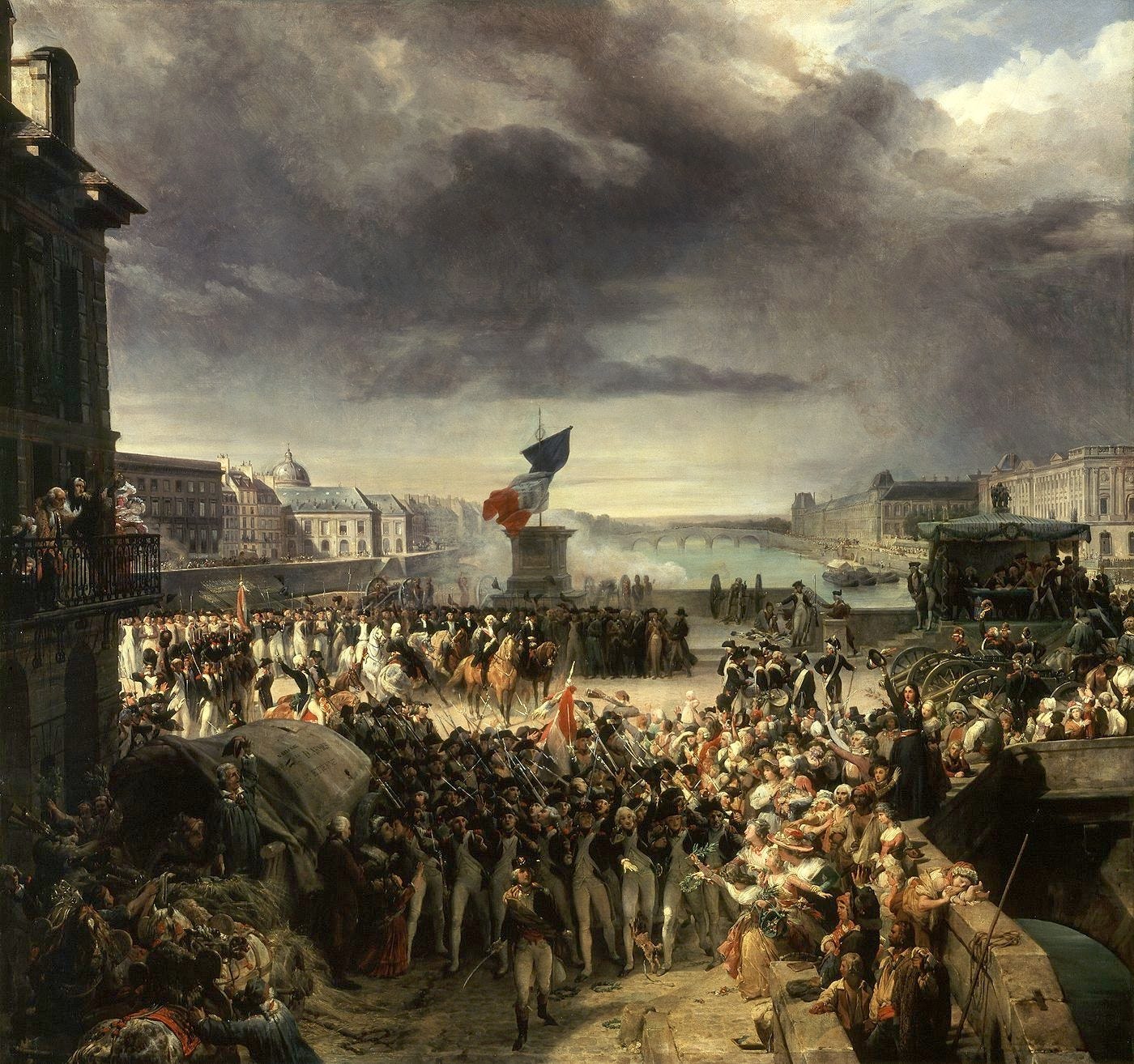
The National Assembly abolished the guilds, suppressed the monasteries, and reorganized France into administrative departments that ignored historic regions and local identities, replaced by a centralized state presiding over uprooted individuals. Even the family, universally understood as the building-block of civilization, was reimagined as nothing more than a legal construct subordinate to the state. To this end, Tocqueville later observed that the Revolution was not simply the overthrow of a political order, but the destruction of the communal fabric that had sustained French society for centuries.
The modern West faces an analogous crisis. Family structures have weakened and local communities have dissolved, leaving the West less a community of citizens than a marketplace of consumers. When no principle of unity remains, co-operation becomes impossible, and the common good collapses into a competition of private interests. In such a climate, citizens are incentivized to see their neighbours as potential threats, and turn violently against one another the moment opportunity presents itself.
The Separation of Church and State
The third principle of liberalism is the strict division between religious authority and political authority.
Historically, civilizations flourished when their political institutions were anchored in a transcendent moral order. Liberalism effectively severs this bond since it insists that the state must be morally neutral, religiously indifferent, and that public life must be stripped of all vestiges of the transcendent.
In the decades leading up to the French Revolution, the Enlightenment philosophers’ campaign against the Church was more than a critique of what they considered to be clerical over-reach, it was a philosophical assault on the very idea of a transcendent moral authority. Voltaire, Diderot, and their contemporaries treated the Church as an obstacle to progress. They sought to replace Christianity with a purely rational, secular ideology, but as their influence grew, their intention to destroy the Church became undeniable.
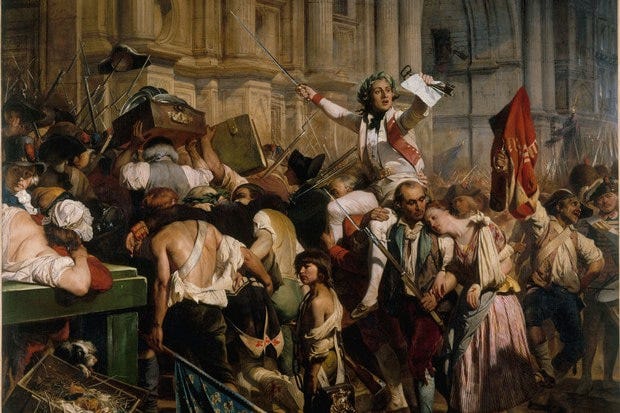
This antagonism culminated in the Civil Constitution of the Clergy which effectively subordinated the Church to the revolutionary state, severing centuries‑old bonds between religious and political life. Traditional holy days were forcibly abolished, church property was confiscated, religious orders were dissolved, and the calendar was rewritten.
Although the revolutionaries claimed merely to be removing religion from public life in the name of tolerance, they installed a new religion animated by ideological fervor, with philosophers as its priesthood and liberty as its god. The Cult of Reason, and later the Cult of the Supreme Being, was installed as a new civic religion in the place of Christianity. It demanded its own sacrifices, namely, those who held to the old faith were branded enemies of the state and met with mass execution, as the self‑proclaimed liberators descended into a tyranny more sweeping and totalitarian than any French monarch could have ever imagined.
The modern West undergoes the same desacralization, though in subtler and more bureaucratic forms. As public life is stripped of transcendence, religion is pushed into the private sphere — managed, regulated, and quietly sidelined. Churches close not only from dwindling attendance but from a cultural climate that persecutes and even punishes those who cling to something older than the prevailing orthodoxy because it is an indictment against the conscience of the revolutionary.
Faith is tolerated only when it is silent, compliant, and politically inconsequential, and in its place, the state and its cultural machinery elevate secular ideologies that function as civic religions, demanding assent while offering neither order nor meaning.
The result is a people severed from their spiritual inheritance — detached, disoriented, and ripe for whatever new ideology promises salvation. A population that has forgotten the sacred will follow anyone who claims to fill the spiritual void, often with catastrophic consequences.
Popular Will Supplanting Divine or Natural Law
The fourth principle of liberalism is the elevation of popular will above divine or natural law. When the will of the people becomes the highest authority, truth is determined by majority rule.
In his Lessons of History, Will Durant warned that “democracy is the most difficult of all forms of government since it requires the widest spread of intelligence.” When the citizens are unmoored from tradition, the popular will can be steered by demagogues and used as a force of destruction rather than renewal.
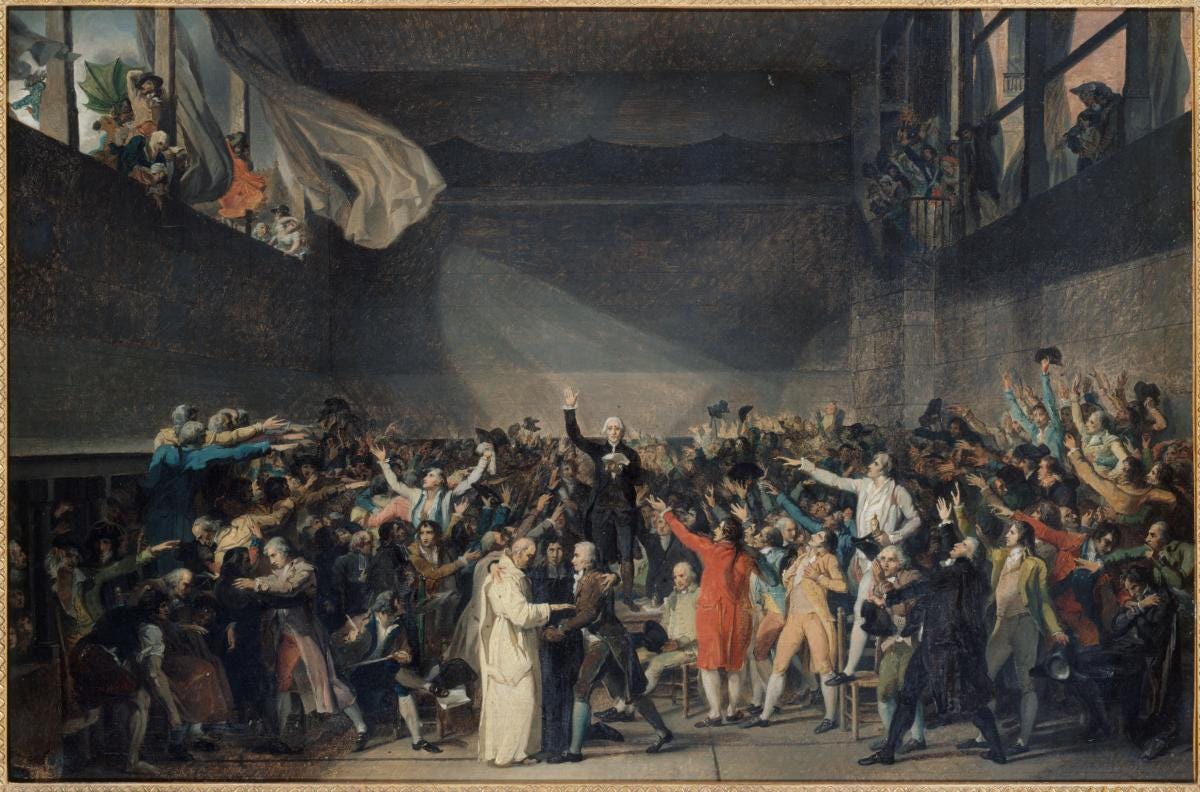
The Enlightenment’s insistence that legitimacy arises solely from the people severed political authority from any transcendent moral foundation. Rousseau’s doctrine that sovereignty resides entirely in the people was transformed, in revolutionary hands, into an instrument of absolute power. Once the National Assembly declared itself the sole voice of the nation, law became whatever a majority — or a loud minority — proclaimed it to be. The result was a moral volatility unprecedented in European history.
One year the Church was tolerated and the next it was abolished, one month the monarchy was constitutional and the next it was criminal, and the same assemblies that preached liberty sanctioned the Reign of Terror. The Revolution revealed the peril of grounding political authority solely in the shifting passions of the people since they are easily swept into movements they neither understand nor control.
Tocqueville later observed that without a transcendent moral standard, the general will could justify anything — confiscation, persecution, even execution — so long as it claimed to speak and act for “the people.”
The modern West faces a similar danger. Democratic institutions are increasingly steered by emotion, media manipulation, and ideological fervor. In such a climate, truth becomes a matter of consensus rather than correspondence to reality, and the result is political instability and cultural fragmentation — an inevitable collapse, because the very foundations of order shift beneath a populace that no longer knows what is true or binding.
Licentiousness and Moral Collapse
The final principle of liberalism is the transformation — or rather, degeneration — of liberty into license.
In his Lessons of History, Will Durant rightfully observed that “freedom and equality are sworn and everlasting enemies, and when one prevails the other dies” since a society that pursues absolute freedom inevitably destroys the conditions that make ordered liberty possible. Classical freedom meant the capacity to pursue the good whereas liberalism conflates freedom with the absence of restraint. When every desire becomes a right and every limit becomes an oppression, the moral fabric of society begins to unravel.
Rousseau pushed the Enlightenment’s celebration of autonomy in a radically different direction by idealizing the noble savage — a human being unshaped by institutions, unburdened by hierarchy, and uncorrupted by the disciplines of civilization.
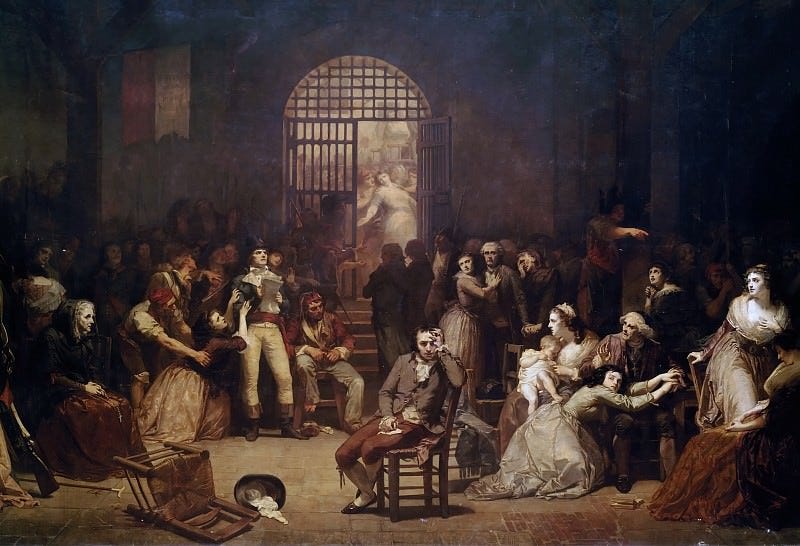
To accomplish this end, the revolutionaries systematically dismantled every social, moral, and political boundary so that the noble savage could re‑emerge and finally usher in an Edenic utopia. The National Convention abolished long‑standing moral and social restraints, from religious festivals to traditional marriage laws. The Festival of Reason, the cults of civic virtue, and the redefinition of moral norms were all attempts to replace inherited discipline with a freedom understood as unbounded self‑expression. This unrestrained liberty became license and quickly devolved into moral collapse and culminated in the orgiastic violence of the infamous Reign of Terror — proving the ancient observation that lust begets blood-lust.
In the West, the pursuit of absolute freedom has produced what Spengler recognized as a profound spiritual exhaustion. When every restraint is cast off, freedom ceases to be a discipline of the soul and becomes a weapon turned inward since freedom severed from virtue inevitably collapses into violence. A society that refuses limits soon discovers that its appetites can never be satiated, its institutions lose their moral authority, and its people become unleashed upon one another.
The West is plagued by rising civil disorder that no policing strategy can meaningfully contain, crime that grows not only in frequency but in ferocity, and a culture in which transgression becomes a form of self‑expression. Abroad, the same exhaustion manifests as wars waged without clarity of purpose, conflicts justified by abstractions rather than necessity, and a foreign policy that mirrors the inner chaos of a civilization that no longer knows what it stands for. All of this unfolds against the backdrop of collapsing birth rates and a pervasive sense of meaninglessness that no amount of material comfort can disguise, since a civilization that abandons limits ultimately abandons the very conditions that make freedom worth having.
The Antidote to Liberalism
If liberalism is dissolution of the inherited structures that once ordered the soul and bound communities together, then the only antidote is a deliberate return to the sources of strength that sustained earlier ages.
Tradition and religion are these deep roots from which the West drew its strength, its discipline, and its sense of purpose. Once a society has forgotten how to revere what is higher than the self it can no longer endure since it degenerates into barbarism until it devours itself.
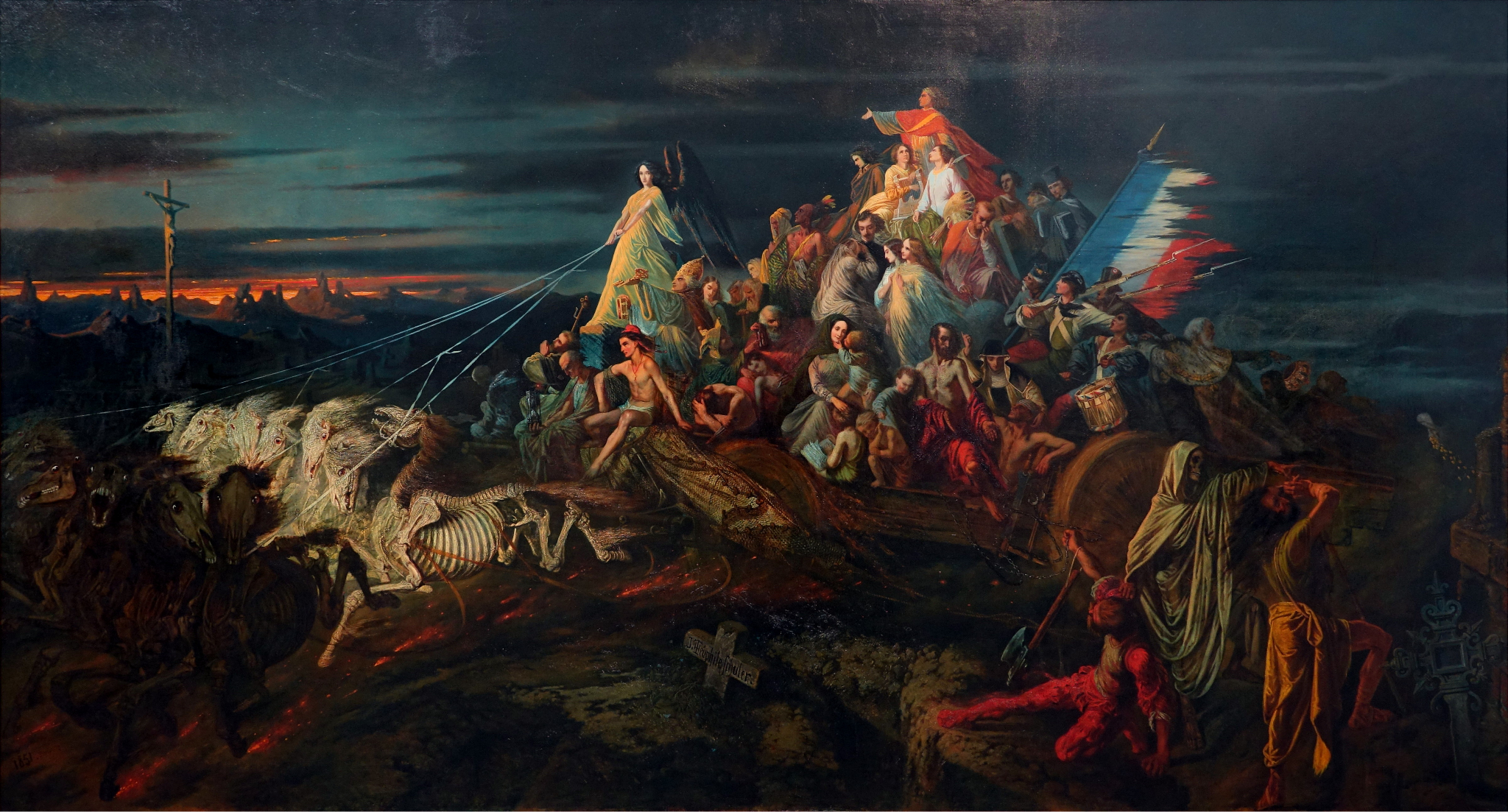
Renewal therefore requires more than political reform — it demands a recovery of asceticism, of limits freely embraced, of the virtues that train desire rather than indulge them. Only by restoring these older forms of life can the West arrest its descent and reclaim the inner discipline that once made ordered liberty possible.
If decline begins with the abandonment of tradition, then restoration begins with its recovery, and if liberalism dissolves the foundations of civilization, only a return to those foundations can prevent the collapse that otherwise awaits us.
Join the fight for the Soul of our Civilization!
By subscribing to Atlas Press, you are supporting an honest group of guys who are working to help revitalize Western Civ through the re-enrichment of the Western mind. We appreciate your support greatly and hope you join us.
This one misses the mark and overtly simplifies the current political dynamic by blaming “liberalism” whole cloth for not only the current disunity but all historical examples of civilizational collapse.
The writer does this by using the French Revolution and subsequent Reign of Terror as its primary evidence.
No serious historian concludes the French Revolution resulted in a net negative outcome. To ignore all the gains in civil liberties and the long-lasting, stable and successful liberal democracies that emerged from that turmoil is a dishonest read of history.
It also misappropriates real thinkers (Spengler, Tocqueville, Durant, Dawson) selectively and often against their own broader views. Durant was a humanist liberal who supported the Enlightenment and democracy—things this article claims are poison to the body politic.
The writer does this to construct a case that liberal democracy is self-destroying, and that the only salvation is a return to hierarchical, religiously-anchored order.
That is a terrifying and dangerous argument to make.
The historical truth is that stability in civilization is born of equilibrium between the competing forces of hierarchy, rigid order and individual liberty and social justice.
Individualism is a problem. But the issue in the modern West is not that individual rights are the central organizing principle, it is that individual desires are. We (via capitalism) have based everything on vices like greed, envy, covetousness etc.
If we want to examine this honestly, that’s where we should start.
As someone based in the US it feels like this definition of liberalism perhaps ironically is applied to the political party that calls themselves conservative (with their demagogue of a leader as the pinnacle of their values). I’d also point out their call for religious order is entirely self-serving, as it provides a layer of justification for their acts of individual elevation under the guise of “morality.”
The moderate liberal party in the US is in fact pushing for reforms for the greater good when it comes to social order and seeing beyond their individual interests (without the need for religion- you can in fact have a moral backbone and cultural inheritance without needing god to tell you why).