
Is Globalism Destined to Fail?
Echoes of the Bronze Age Collapse in the 21st Century


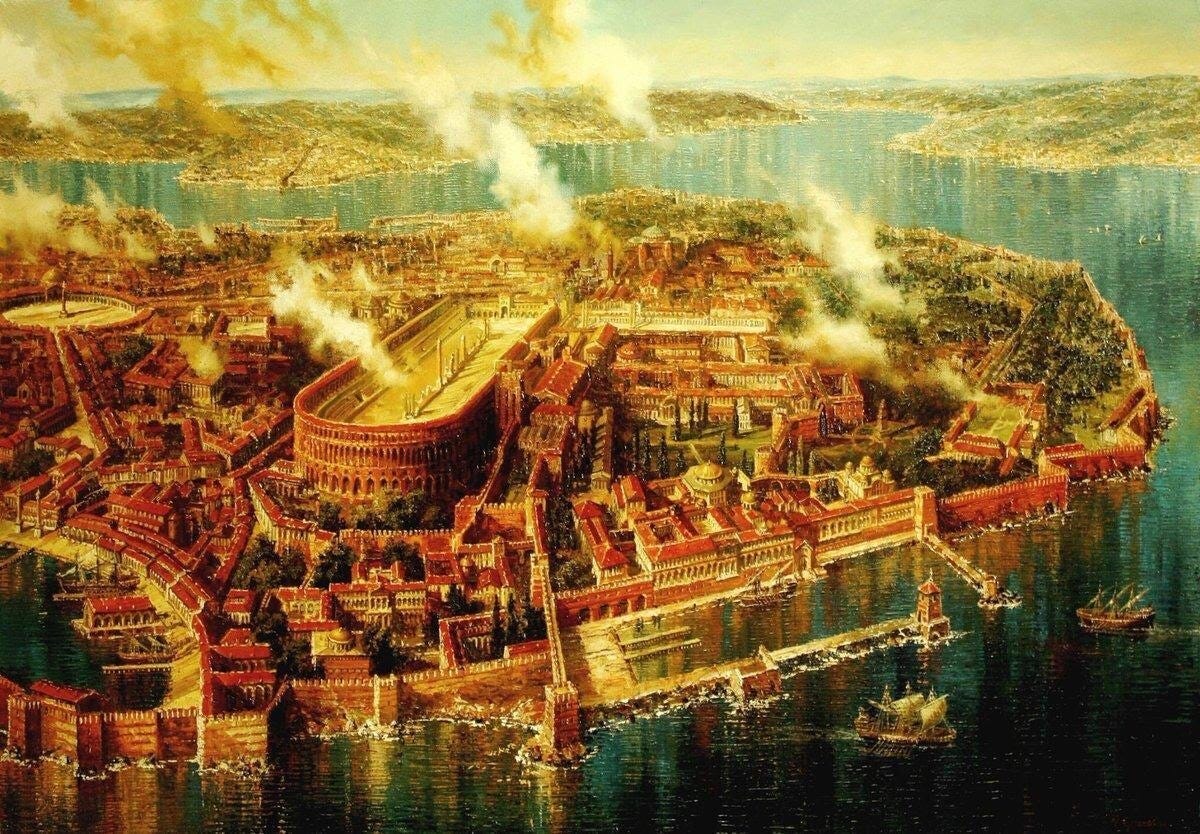
The Bronze Age Collapse, occurring between roughly 1200 and 1150 BC, remains one of antiquity’s most arresting civilizational ruptures. In scarcely a generation, the palace cultures of Mycenaean Greece, Hatti, Ugarit, and the northern dominions of the New Kingdom convulsed, contracted, or vanished outright. A world that had endured for centuries — hierarchical, literate, and exquisitely administered — entered a terminal crisis with astonishing speed.
Classical authors, writing from the far side of this abyss, preserved only attenuated memories of the disaster. Homer’s Iliad speaks of “cities laid low” and “peoples scattered,” while Hesiod’s Works and Days mourns the passing of a heroic race whose age had slipped irretrievably into myth and “perished.” Their laments are the faint afterglow of a systemic unraveling that later generations could sense but no longer fully reconstruct.
One of the last letters from Ugarit, sent by a desperate vassal to his king, captures the chilling moment. “The enemy ships are already here… there is no number.” Days later, the city was reduced to dust and ashes.
Historians Oswald Spengler and Arthur Toynbee argued that civilizations are more than the complex web of institutions. They are, in fact, living cultural organisms passing through discernible seasons of growth in spring, fulfillment in summer, decline in autumn, and collapse in winter. By this morphological reading, the Late Bronze Age — with its rigid palace bureaucracies, sclerotic aristocracies, and increasingly fragile networks of exchange — was already deep in its civilizational winter.
Yet the collapse continues to fascinate because of its central paradox. The Late Bronze Age was not a primitive or isolated world but a tightly interlinked system of trade, diplomacy, and shared technologies—a network whose sophistication in many ways anticipates the interdependence of the modern West. And like our own systems, it failed both gradually and abruptly: centuries of accumulated strain giving way to a cascade of shocks that no state could absorb.
However, no solitary catastrophe brought that world to its knees; rather, a sequence of converging crises — political, economic, and military — overwhelmed a civilization already weakened by long‑term structural fatigue. The Bronze Age Collapse is not just a distant historical event but a living analogue for the vulnerabilities of our present global order.
Reminder: Your support of just a few dollars a month would help us out a ton! Our goal is to arm you with as much useful knowledge as possible during these unstable times. Please consider subscribing 🤝
Two full-length, new articles every single week
Get actionable principles from history to help you navigate modernity
Access to the entire archive of useful knowledge that built the West
Support independent, educational content that reaches millions
Invasion, Warfare and Instability
The Sea Peoples remain one of the great enigmas of the Late Bronze Age, but their impact is unmistakable. Egyptian inscriptions portray them as a loose confederation of uprooted groups striking by land and sea, a mobile force moving through a world already in distress.
Ramses III, in the Medinet Habu reliefs, boasts of repelling them, claiming they came “from the midst of the sea, their hearts confident.” Whether they were invaders, migrants, mercenaries, or all three at once, they were both a symptom of systemic strain and an accelerant of collapse.
Across the eastern Mediterranean, warfare intensified and transformed. Fortifications expanded as cities braced for siege; weaponry shifted toward mass‑produced iron; and the dominance of chariot elites waned as infantry tactics rose to prominence.
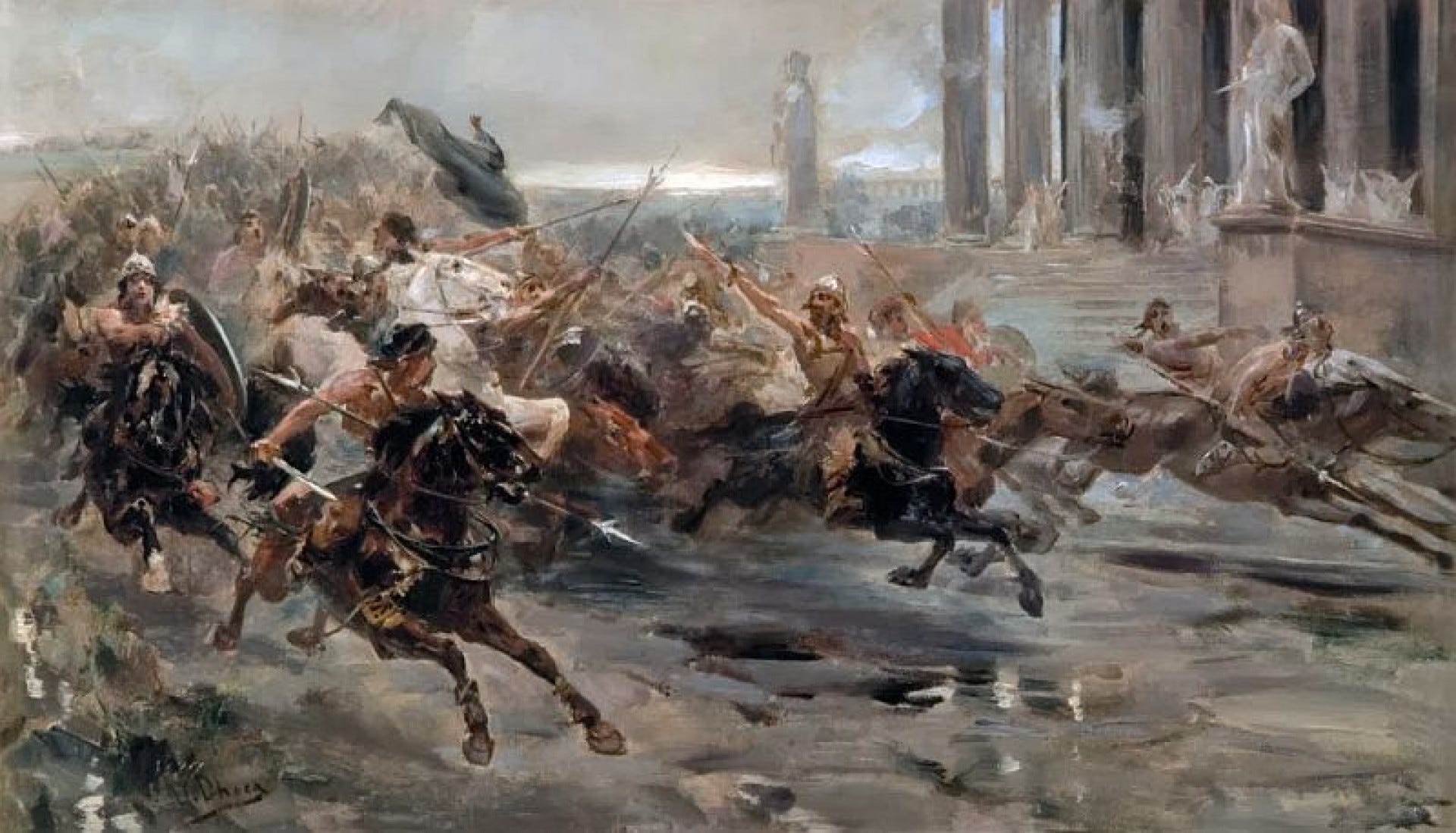
The old political order fractured into smaller, more militarized polities struggling to survive in a landscape of perpetual insecurity. Thucydides’ grim observation that “war is a violent teacher” finds an apt echo in this era. The collapse forced societies to adapt with unprecedented speed or disappear entirely — and many did.
The demographic consequences were equally profound. Cities shrank or vanished, Mycenaean citadels emptied, coastal towns in the Levant were abandoned, and inland settlements contracted into defensible hilltop refuges.
Homer’s Iliad preserves memories of wandering peoples and displaced warriors — “men who roam in exile” — while Hesiod’s Work and Days speaks of an age in which “the old heroic race” vanished and new peoples emerged in their place. Mass migrations, whether of the Sea Peoples, displaced Anatolians, or internal refugees, effectively reshaped the demographic landscape and precipitated the emergence of a new and unstable age.
In the contemporary West, the Sea Peoples take different forms: non‑state actors, large‑scale migration driven by conflict and economic disparity, and shifting geopolitical alignments that unsettle long‑standing assumptions about security and order.
These forces exert pressures strikingly similar to those that strained the Late Bronze Age world. Moreover, urban decline, demographic aging, and regional depopulation echo — although in an attenuated form — the patterns of decline seen in the archaeological record.
The lesson is not that collapse is imminent, but that sustained instability — military, demographic, or political — erodes the foundations of complex systems, leaving them vulnerable to the shocks they once could easily withstand.
The Disintegration of Proto-Globalism
The Late Bronze Age economy was a marvel of interdependence. Tin from Central Asia, copper from Cyprus, grain from Egypt, timber from Lebanon, and luxury goods from Crete and Anatolia moved through a vast network of palatial redistribution. Yet this intricate system, for all its sophistication, rested on foundations more fragile than its administrators understood.
Ugarit’s final tablets speak of merchants stranded abroad, ships lost at sea, and caravans that never arrived. They pleaded for grain shipments, while Hittite texts describe famine and Egyptian records speak of “years of hunger.”
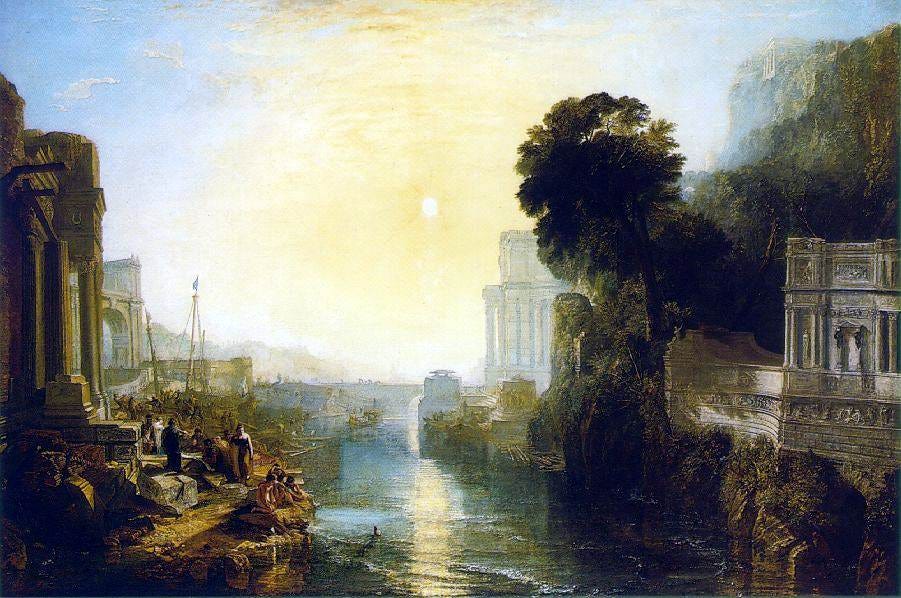
Agricultural decline struck at the heart of the Bronze Age order, which many historians suggest may have been linked to radical changes in the climate or even a series of natural disasters. These states depended on surplus extraction; when harvests failed, the administrative machinery that redistributed food, paid armies, and sustained elites began to collapse.
Hesiod’s admonition that “the earth bears harsh harvests” in troubled times preserves a cultural memory of this agricultural fragility while Herodotus’ later reflection that “prosperity never abides long in one place” warns of the inherent dangers of establishing such interconnected economic systems.
The breakdown of trade routes meant the breakdown of bronze production itself. Without tin, the metal that defined the age could no longer be manufactured at scale. Economic specialization — once a source of strength — incrementally grew into a dangerous dependency since the complexity that sustained the Bronze Age system hastened its unraveling.
Spengler saw such hyper‑complex, over‑extended economies as hallmarks of late civilizational phases, when urban centers grow parasitic on rural production and ecological limits are reached.
In the contemporary West, the parallels are difficult to ignore. Globalization has woven economies into an intricate web of interdependence, creating unprecedented prosperity while binding distant regions into a single, fragile system. When this system is working well, it has incredible advantages.
However, in the unfortunate event that one link in that chain fails — whether a factory closure, a blocked shipping lane, a drought‑stricken agricultural zone, or a geopolitical shock — the economic effects ripple outward with astonishing speed. Supply‑chains break down, financial systems unravel, and strategic bottlenecks reveal how exposed modern economies are to disruptions far beyond their borders.
The Bronze Age Collapse reminds us that an economic system optimized for efficiency is rarely optimized for survival; the tighter the interdependence, the more catastrophic the failure when the system finally breaks.
The Loss of Institutional Memory
One of the most profound consequences of the Late Bronze Age Collapse was the disappearance of the very traditions and institutions that had defined the Eastern Mediterranean for centuries.
Writing systems vanished almost overnight. Linear B writing disappeared from Greece, the Hittite cuneiform tradition ended, and the Ugaritic alphabet ceased. For generations afterward, Greece remained largely illiterate until the eventual adoption of the Phoenician script. Thucydides, reflecting on this earlier age, described it as a time when “the ancient Greeks lived scattered in small communities, without letters or arts,” capturing the cultural amnesia that followed the fall of the Bronze Age world.
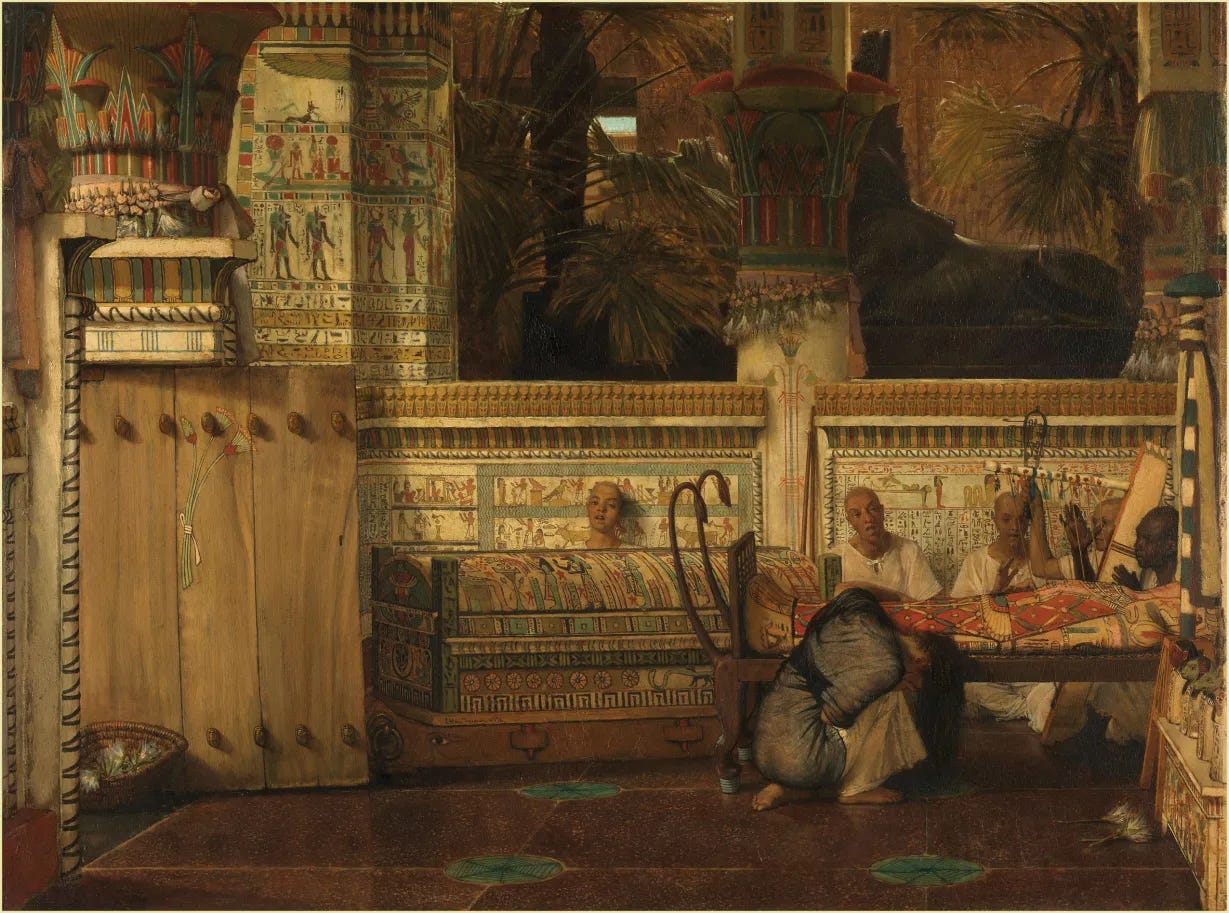
However, this loss of literacy was not confined to the disappearance of writing but also the loss of administrative and institutional memory. Without this continuity, states could not reconstitute themselves since they had no records of land, taxation, trade, and law since the collapse of writing paralleled the collapse of the institutions that had sustained it.
Modern archaeology also reveals the scale of this dissolution. Mycenae burned, Pylos was abandoned, Hattusa deserted, and Ugarit annihilated so swiftly that its king’s final letters — pleas for aid — remained unsent.
The poet of the Odyssey evokes a world already haunted by ruins, recalling “the smoke of burning cities” and “men slain far from home.” The Bronze Age system — centralized, hierarchical, and dependent on long‑distance networks — proved unable to withstand simultaneous shocks. When it fell, it left no structures capable of preserving its memory.
Spengler would have recognized in this pattern the end of a civilizational morphology: the moment when institutions lose their adaptive vitality and become ceremonial shells of their former selves. The palaces of Mycenae and Hatti, with their rigid administrative tablets and inherited aristocracies, had grown too inflexible and unable to foresee let alone respond to cascading crises.
Their destruction marked not only political collapse but the end of a cultural form. What followed was not immediate renewal but centuries of fragmentation, illiteracy, and localism — a long civilizational winter before a new spring of writing, politics, and new mythic traditions emerged to create a new world.
While the West still maintains high levels of literacy and communication, its institutional fatigue is unmistakable. Libraries built over millennia have migrated to digital archives vulnerable to decay, while institutional memory is eroded by rapid turnover, hyper‑specialization, and the accelerating influence of artificial intelligence. Moreover, public and political discourse continues to fragment, producing polarization and radicalization severe enough to undermine the very foundations upon which civilization rests.
The Bronze Age Collapse warns that when institutions and administrative systems become too complex, too centralized, or too rigid, their failure can erase collective memory itself. Great civilizations rarely fall from a single blow—they unravel when the structures that preserve their identity can no longer bear the weight of accumulated subtle socio-political crises.
The Bronze Age Collapse as the First Dark Age
Historians and archaeologists still debate the precise causes of the Bronze Age Collapse. What is beyond dispute, however, is that in its aftermath the Eastern Mediterranean entered a prolonged Dark Age.
Populations dwindled, long‑distance trade dissolved, scientific and artistic traditions stagnated, and once‑mighty kingdoms fragmented into small, localised communities. The descendants of these great states stood among the ruins of a world they could scarcely comprehend, marveling that a people so ancient could have been so advanced.
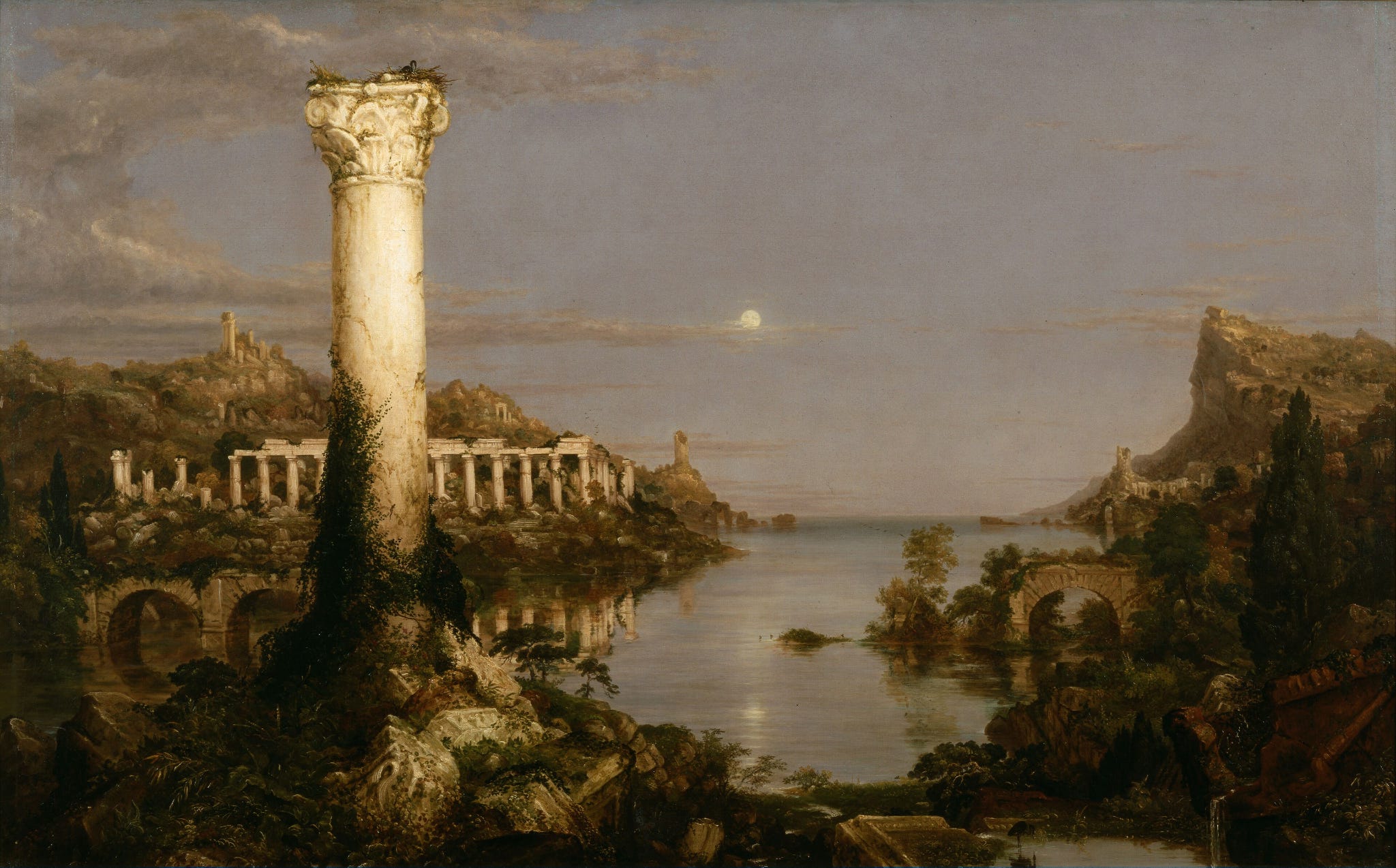
Yet even in this civilizational winter, the seeds of renewal endured. Out of the darkness emerged new alphabets, new political forms, and new epic heroes and traditions. The Homeric age laid the foundations of Hellenism, and with it the cultural architecture of Western Civilization.
The modern West, like the Late Bronze Age world, is navigating a precarious period marked by political uncertainty, institutional fatigue, and socio-cultural fragmentation. Whether this moment represents the beginning of a 21st‑century decline or the prelude to renewal remains unclear, but the same symptoms of strain are increasingly visible.
History warns that a world can be too interconnected, too optimized, too dependent on distant systems to endure catastrophe, and if another civilizational rupture were to occur, we must ensure that we — unlike the Mycenaeans — are not cast into a new Dark Age.
Join the fight for the Soul of our Civilization!
By subscribing to Atlas Press, you are supporting an honest group of guys who are working to help revitalize Western Civ through the re-enrichment of the Western mind. We appreciate your support greatly and hope you join us.
Excellent read. Now, more than ever, history repeating itself seems ever closer. You pointed out all the parallels so nicely!
Wonderful article as always, really gives some great perspective