


The question of capital punishment has accompanied human civilization from its earliest political formations to the present age. It stands at the intersection of law, morality, and metaphysics, demanding from the jurist and theologian alike a sober consideration of justice, authority, and the common good. As Aristotle observed in his Politics, “the law is reason free from passion,” and nowhere is this ideal more tested than when the state claims the right to take human life.
From the Roman Republic to the Christian Middle Ages and into the modern secular state, the history of capital punishment reveals a complex evolution of thought — one that culminates today in a cautious, even reluctant, theoretical acceptance of capital punishment, an acceptance shadowed by the lessons of its abuse under the totalitarian regimes of the twentieth century.
Reminder: you can get tons of useful members-only content and support our mission for a few dollars per month 👇
Two full-length, new articles every single week
Access to the entire archive of useful knowledge that built the West
Get actionable principles from history to help navigate modernity
Support independent, educational content that reaches millions
Capital Punishment in Ancient Rome
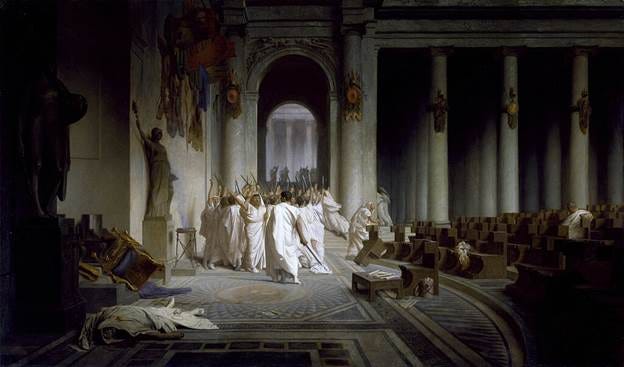
The Roman world provides one of the most instructive historical contexts for understanding the development of capital punishment. Roman jurisprudence, shaped by the Mos Maiorum and later codified in the Lex XII Tabularum, regarded the death penalty as a necessary instrument for preserving civic order. In his defense of the Republic, Marcus Tullis Cicero famously declared in his De Legibus “Salus populi suprema lex esto” or “Let the welfare of the people be the supreme law.” According to Cicero, this precept justified the state’s authority to eliminate threats to public safety, whether through exile, confiscation, and even execution for the common good.
Roman punishments varied according to class and crime. Citizens might face decapitation, considered a relatively dignified death, while non-citizens could be subjected to crucifixion, burning, or exposure to beasts in the arena. The severity of these penalties reflected Rome’s conviction that the state possessed imperium, the sovereign authority to command, to judge, and ultimately to wield the sword in defense of public order. This was not merely a legal prerogative but a deeply embedded cultural assumption about the state’s role as guardian of civic harmony. The presence of the centurio and the lictors bearing the fasces made this authority visible in the most literal sense as the bundled rods signified the power to discipline and correct through corporal punishment, while the axe bound within them proclaimed the state’s ultimate right to inflict death when necessary. Together, these symbols — which Livy notes that the Romans borrowed from the Etruscans — communicated to citizens and subjects alike that Roman justice was backed by a force both orderly and absolute, exercised not arbitrarily but as an expression of the community’s collective will.
Even within a culture that accepted the necessity — and at times the inevitability — of capital punishment, there remained a persistent concern that the exercise of state power not descend into mere brutality. Philosophers such as Lucius Annaeus Seneca urged restraint, reminding his contemporaries in his De Clemencia that “No one is corrected by punishment unless he is made better by it,” a maxim that underscored the belief that justice should aim at moral improvement rather than vengeance. This impulse toward moderation found echoes in Roman legal practice, where the ideal magistrate was expected to balance justice with clemency, mindful that excessive severity did not strengthen but eroded civic trust and social cohesion.
At the same time, the Romans held firmly that certain offenses — such as treason, parricide, sacrilege — struck at the very foundations of the Republic, threatening the stability of the political and religious order. For such crimes, they believed, the ultimate penalty was not only justified but necessary to preserve the integrity of the common good and to reaffirm the moral boundaries upon which Roman society rested.
Capital Punishment in the Old and New Testaments
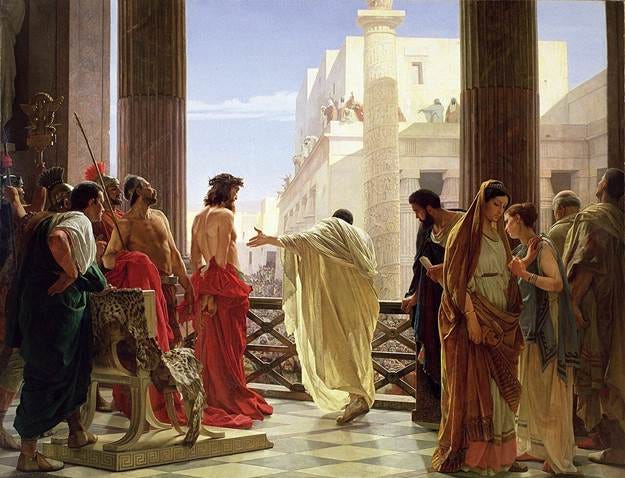
Similarly, the Old Testament offers a theological framework in which capital punishment is understood not merely as a civil prerogative but as a divine ordinance founded in the very moral order itself.
This is most evident in God’s declaration to Noah following the Flood, “Whosoever shall shed man’s blood, his blood shall be shed: for man was made to the image of God” (Genesis 9:6). This has long been understood to ground the legitimacy of capital punishment in the very sanctity of human life. Since man is created in the image and likeness of God, the unjust taking of human life is not merely a private injustice against the individual but a violation against God Himself.

