
How Venice Saved Knowledge
And so saved herself...


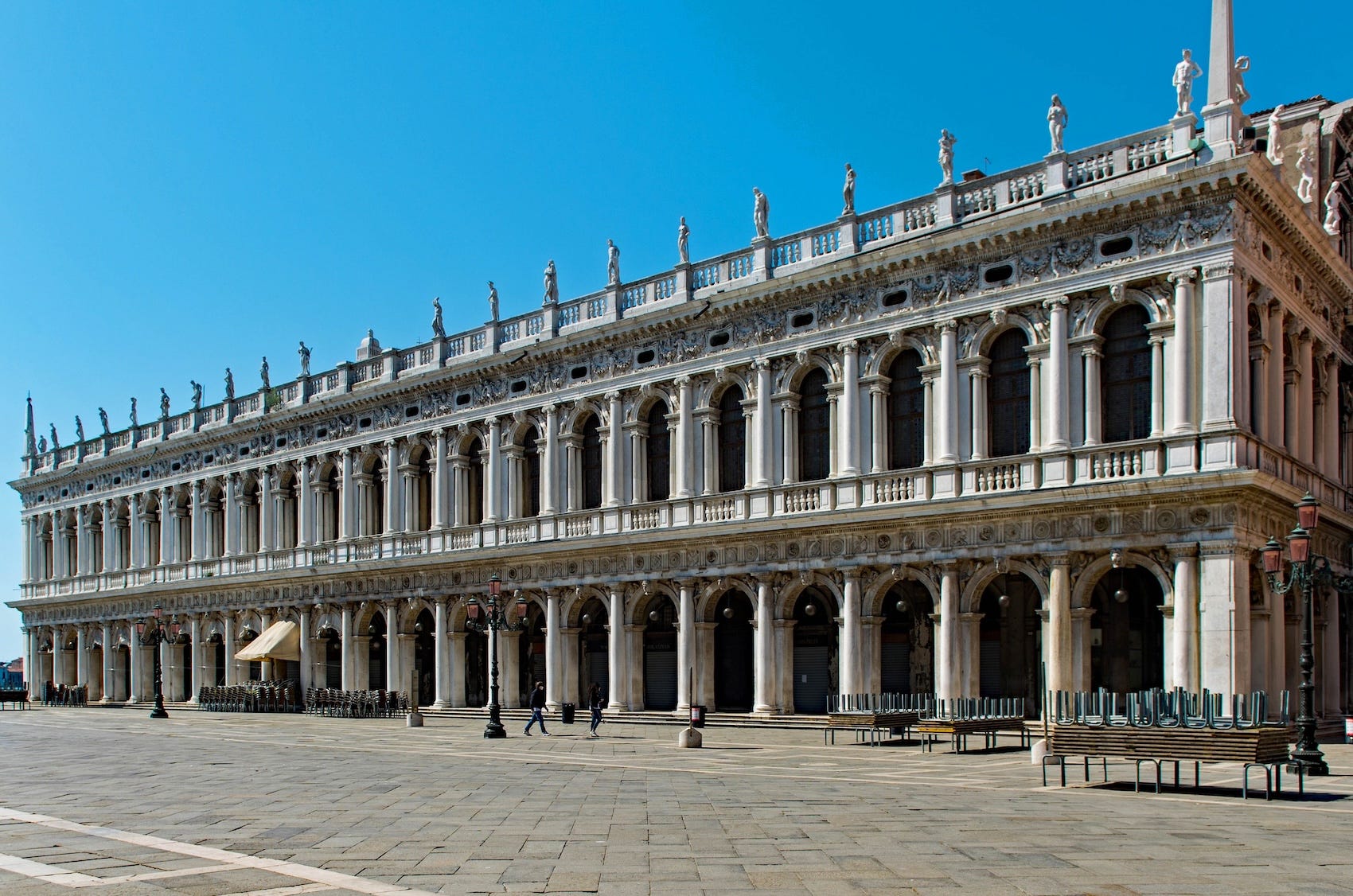
Whether you have been to Venice, or simply admired her in images, it is almost certain that you have in some way seen the magnificent building pictured above.
Occupying pride of place in Saint Mark’s Square, it is passed by tens of millions of visitors each year. Distracted otherwise by the great Basilica of Saint Mark across from it, the mighty campanile which towers over it, or else the historic cafes below it, you could be forgiven however for never stepping inside it.
As a result, it is not generally well known that this sumptuous architecture in fact houses a library, and is without a doubt one of the most important buildings ever erected in the Western world.
It is important not only for its splendour, but for what it represents, and what the Biblioteca Marciana, or Library of Saint Mark, truly represents, is nothing less than the miraculous salvation of precious knowledge that could so easily have been lost forever.
Here is how just a few visionary men stared into oblivion, and transformed tragedy into triumph, for the benefit of Venice, Venetians, and all of us today…
This is a teaser of our paid subscriber essays. You can get tons of useful members-only content and support our mission for a few dollars per month 👇
Two full-length, new articles every single week
Access to the entire archive of useful knowledge that built the West
Get actionable principles from history to help navigate modernity
Support independent, educational content that reaches millions
Staring into the Abyss
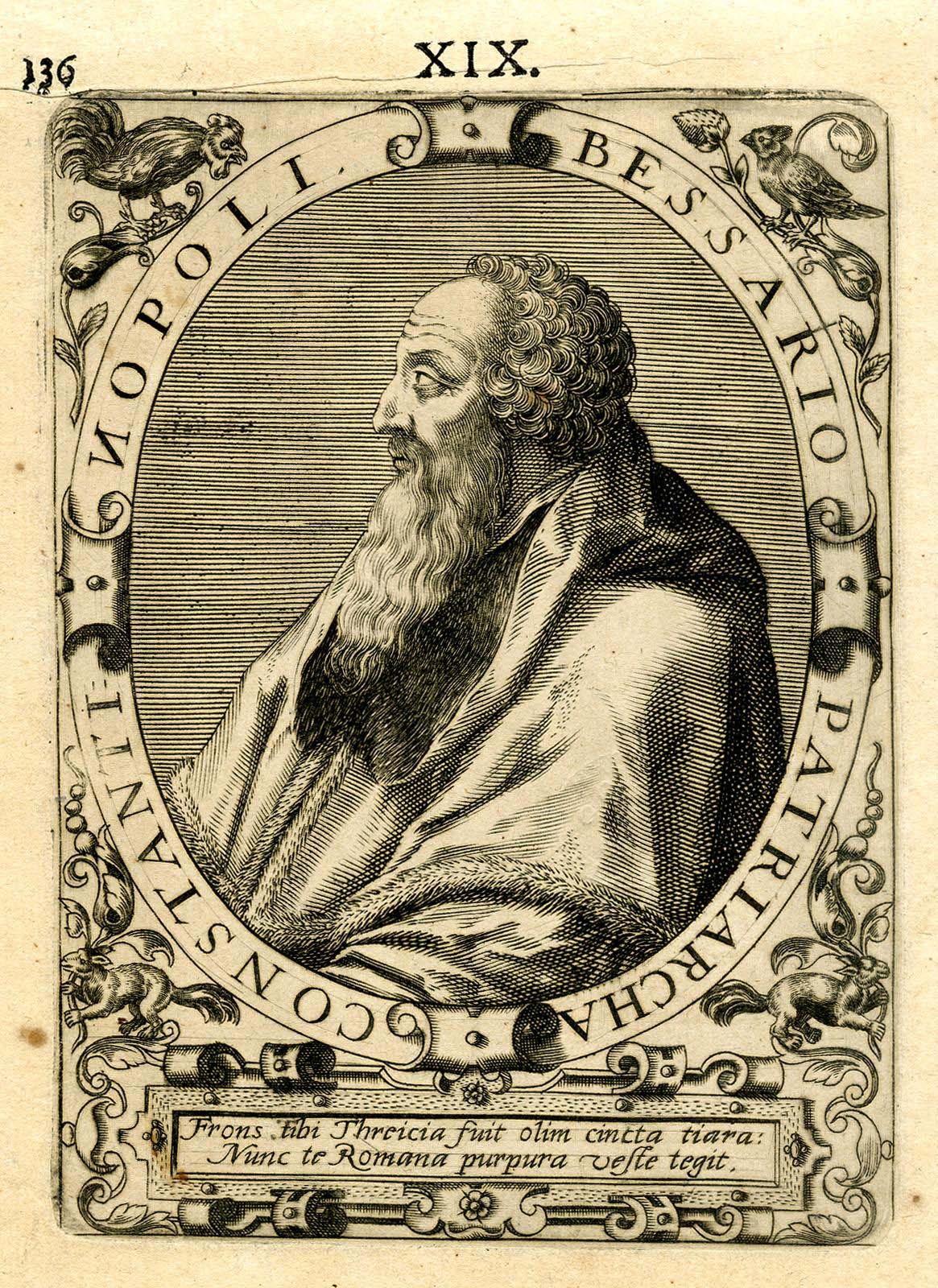
It is said that we do not truly understand the value of something until we have lost it. Wise indeed, therefore, is the man who understands that value while there is still time to salvage it, and one such man was Basilius Bessarion.
Bessarion, after all, lived through the worst possible moment for any Christian Greek. Born at the turn of the 15th century, he would witness his home country, the Eastern Roman Empire, endure its final tortured decades, as the Ottoman Turks grew in power and menace on all sides.
Few Greeks worked harder to stave off the apocalypse however than Bessarion, who as a cleric, lobbied tirelessly for the reunification of the Western and Eastern Churches, hoping that a united Christendom might then be brought to bear upon the Turk. In this he would briefly succeed, when his inspirational rhetoric at the Council of Ferrara in 1438 proved critical in bolstering official support. Thus in Florence Cathedral on the July 6th 1439, the act of reunion was sealed before Emperor John VIII Palaeologus and Pope Eugene IV. In recognition of his efforts, a few months later Bessarion was created a Cardinal, and the future, for a moment, held promise.
It was of course, not to last. The disastrous Battle of Varna five years later shattered any remaining will for a crusade to relieve Constantinople, and in 1453, the great city of Constantine fell at last to Sultan Mehmet II. For Bessarion, it was a catastrophe felt in every corner of his body and soul.
Fortunately however, Cardinal Bessarion could not and would not remain passive, and was determined to prevent the total erasure of both his people and the memory of their achievements….
Planting the Seed
With Emperor Constantine XI having fallen heroically in the doomed defence of Constantinople, Bessarion would become something of a rallying point for fellow Greeks exiled from their conquered homeland.
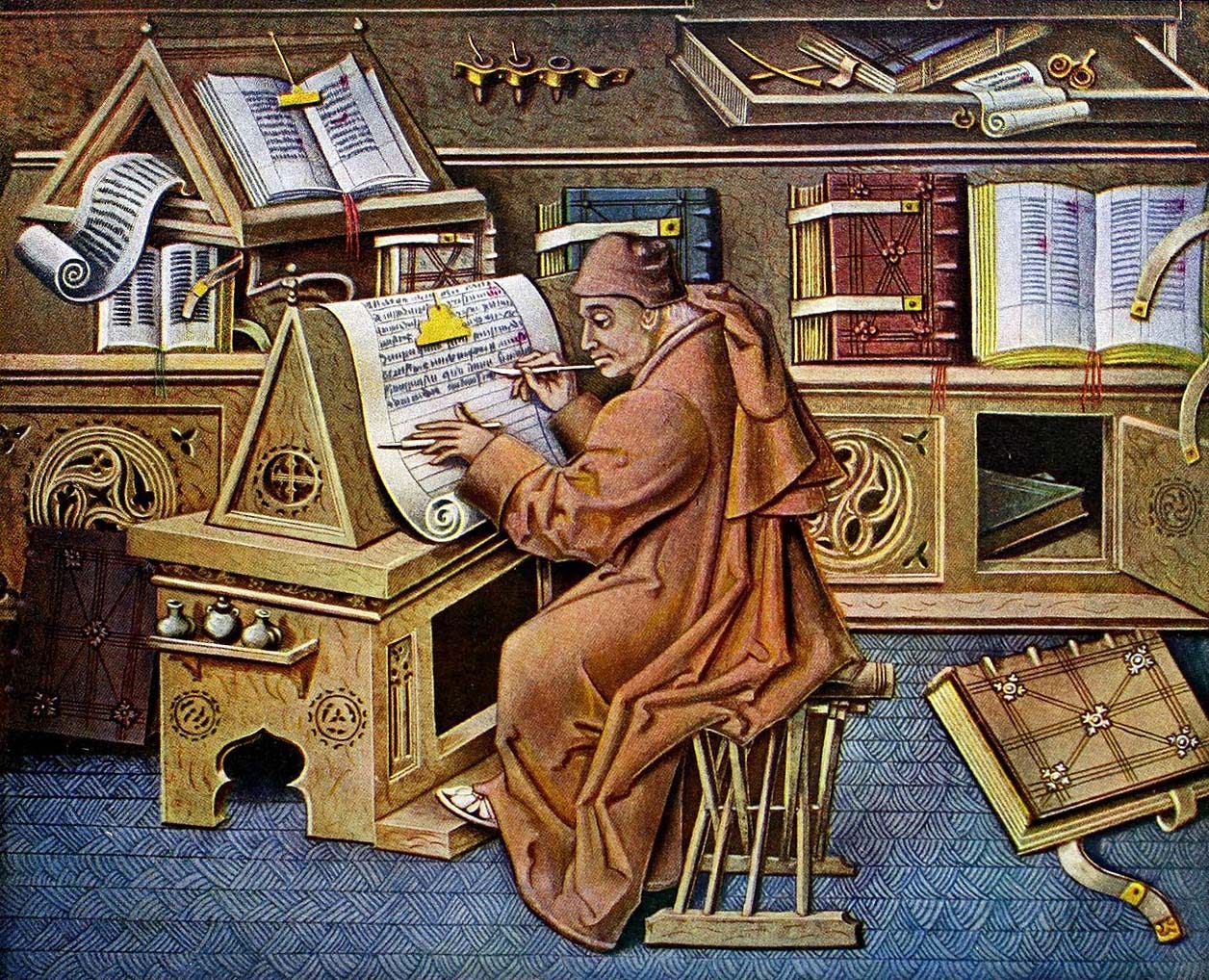
The Cardinal however did not rest idle. As his career advanced rapidly through the Church, he devoted his rising influence and funds to two ends. In public, he travelled far and wide, lobbying tirelessly for a campaign to liberate Greece. In private, he tracked down every surviving Greek codex and manuscript he could conceive of.
While he had already been in possession of many when he first arrived in Italy, he swiftly established a network across the Peninsula and Greece itself to source other works. Whether from local bookshops, private dealers or importers, it did not matter. Even when on official business abroad, the Cardinal would make time to peruse the local markets for hidden textual jewels. But it did not cease there, for what Bessarion could not find, he ordered, giving up his own house to professional scribes he had hired to copy out more elusive texts. It was an expensive and time-consuming task in an age yet to see the printing press. Yet with hopes of a reconquest of Greece fading, with every year that passed the Cardinal’s foresight only grew in wisdom.
But knowledge is futile if it is not shared, and thus on May 31st 1468, the now elderly Bessarion made an extraordinary declaration. In a letter to Doge Cristoforo Moro, he donated his vast collection to the state where he believed it would be safest, and more readily appreciated. A state which, like Constantinople herself had once been, was a bridge between East and West — the Republic of Venice — writing the following words:
“Though nations from almost all over the earth flock in vast numbers to your city, the Greeks are most numerous of all: as they sail in from their own regions they make their first landfall in Venice, and have such a tie with you that when they
put into your city they feel they are entering another Byzantium…So I have given and granted all my books, both in Latin and Greek, to the most holy shrine of the Blessed Mark in your glorious city, sure in the knowledge that this is a duty owed to your generosity, to my gratitude, and to the country which you wanted me to share…”
Cardinal Bessarion, Act of Donation, 1468
By the time of his death six years later, Cardinal Bessarion had amassed an impressive collection of Latin texts. This, however, was paltry in comparison to his library of 482 Greek manuscripts, which dwarfed any other in existence in Western Europe. This furthermore counted many of the oldest and most important texts in existence, including works of Homer, Aristophanes, Euripides, Aristotle, and Plato. We must almost certainly credit Bessarion, too, with rescuing the Deipnosophistae of Athenaeus from oblivion, as the manuscript he donated is now the only copy to survive intact today.
It was an astounding inheritance for the Venetians, and one their government would, naturally, not at first fully appreciate. Soon enough, Bessarion’s texts were hidden away in crates in the Doge’s Palace. Shockingly, some even found their way onto the shelves of dubious local bookshops. The Cardinal had saved his people’s heritage from destruction. Who now would save it from neglect?
Fifty long years later, Venice would be blessed by one of her greatest rulers, who not only shared Bessarion’s vision, but would elevate it beyond the Cardinal’s wildest dreams…
