


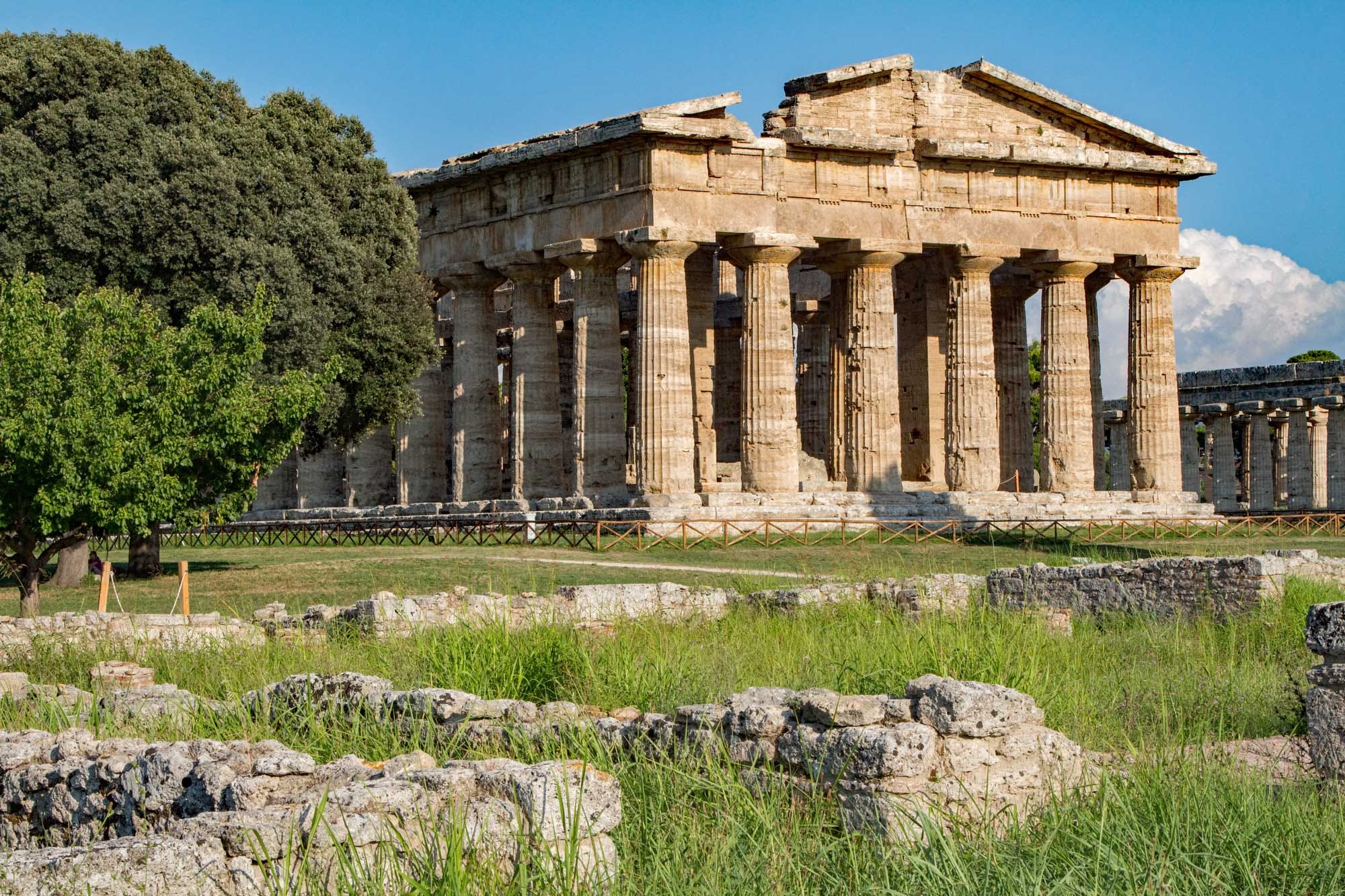
If there is one emotion that unites all men of all the nations of the Western world, it is perhaps the one we feel when confronted with the ruins of Ancient Greece and Rome.
What, after all, can tug the heartstrings of the romantic soul more than the sight of past glory in a state of present humility?
Rome, after all, forms the benchmark of any Western notion of earthly glory. As the seat of the Roman Church, for over a billion souls it forms the benchmark of spiritual glory too. For many long centuries, a journey to Rome would result in a profound emotional reaction to seeing the ruins of that glory.
But why, and more importantly, is our reverence for ruins actually a disservice to our ancestors?
Reminder: You can get tons of members-only content dedicated to useful knowledge, and support our Mission at the same time for a few dollars per month 👇
Two full-length, new articles every single week
Get actionable principles from history to help you navigate modernity
Access to the entire archive of useful knowledge that built the West
Support independent, educational content that reaches millions
Do we Ignore Them?
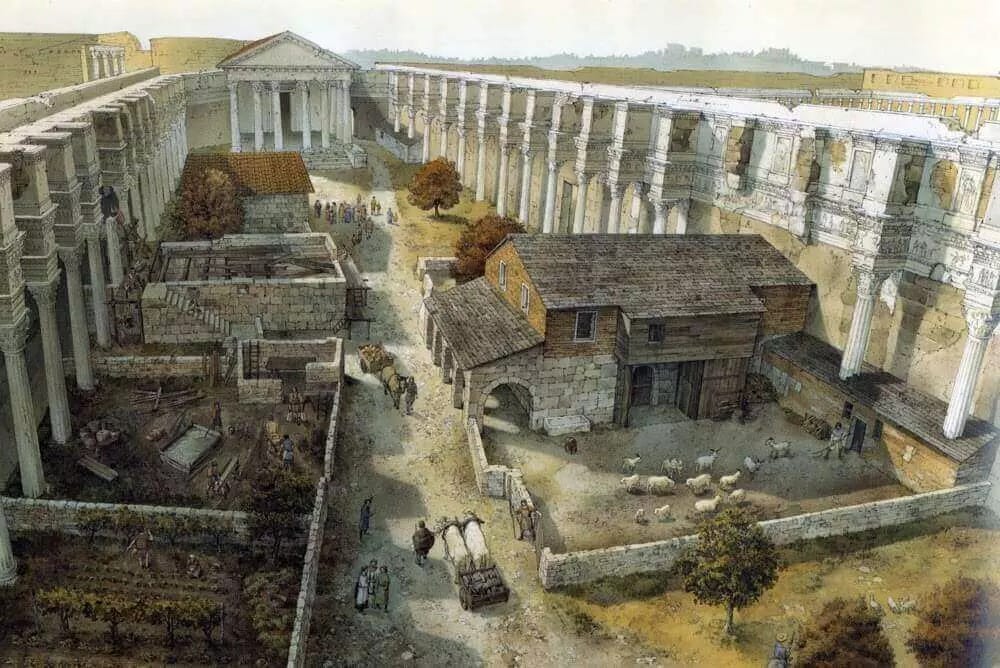
The collapse of Roman power in the West was equalled only by the collapse of the Roman population itself.
In the days of Augustus, Rome became the first city in the world to reach a million inhabitants. Following the the deposition of Romulus Augustulus in AD 476 however, only a few short decades would see her plunge to barely 30,000 souls. It would not reach a million again until the dictatorship of Mussolini.
Consequently, for the vast majority of Rome’s post-imperial existence, the city was simply too large for the population that resided there. Ruin was inevitable, and exacerbated by the second order effects of imperial collapse. When the Ostrogoths cut the aqueducts during the Siege of Rome in AD 538, large sections of essential infrastructure simply ceased to be. With education clinging on in isolated monastic communities, enormous sections of the formerly literate populace fell into ignorance, not only of written language, but their very identity.
With no money to maintain the once great ransacked edifices, nature and theft alike worked to dismantle them. With the new Romans lacking any understanding of what these great buildings were, and therefore caring nothing for them, they viewed their cultural heritage much like anyone knocked back to the lowest rung of Maslow’s hierarchy of needs — raw materials. To the medieval Roman, the pride of Caesars was a mere source of commodities, to be plundered at will.
Ruins had become what lottery winnings are to the financially irresponsible. Once people realized that they could forgo the effort and expense of quarrying and cutting stone themselves, and simply take what lay on the ground, exploiting the fruit of someone else’s labor, the inevitable happened:
“There is much porphyry and marble from ancient buildings, but every day these marbles are destroyed by being burnt for lime in scandalous fashion. What is modern is poor, that is to say the new buildings — the beauty of Rome lies in what is in ruins. The men of the present day, who call themselves Romans, are very different in bearing and in conduct from the ancient inhabitants. Breviter loquendo, they all look like cowherds’.”
Alberto de’ Alberti, March 1444
Through ignorance, the Romans themselves became precisely the barbarians their ancestors had reviled. That said, a case can be made to defend this approach, no matter how wounding to the soul. What was the point of maintaining structures that circumstances had rendered obsolete?
We may scoff, but how would you convince an impoverished Roman, who had no concept of history, that slabs of broken marble were better off on a dilapidated ruin than saving him money for the repairs of his family home?
Do We Protect Them?
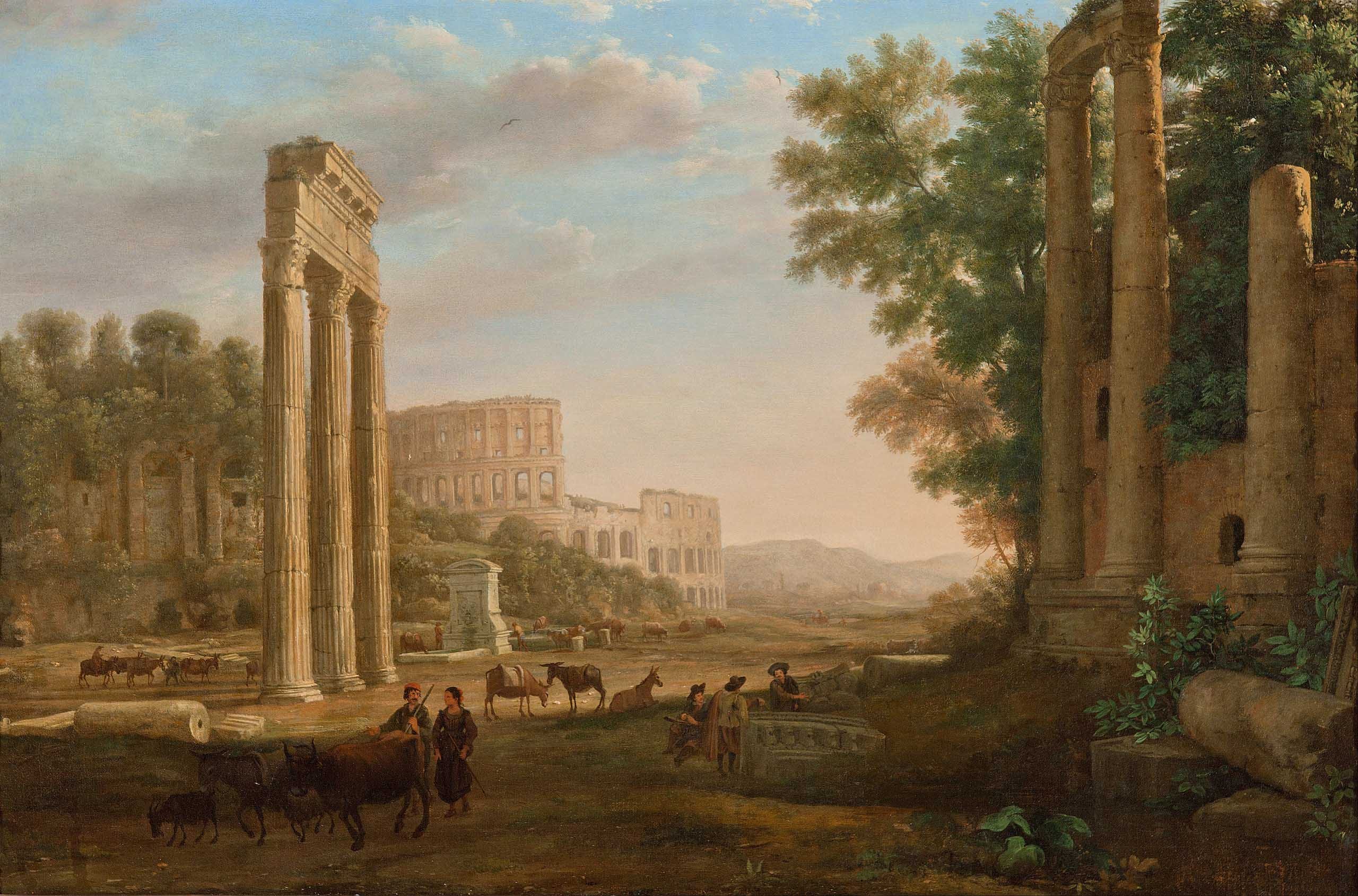
It would not be until the Renaissance that any perceptible effort was made to think of Rome’s ruins as anything more than a rubbish heap to be picked through at leisure.
The great Roman Forum, from where one quarter of the world’s population had once been ruled, was now the Campo Vaccino, or ‘cow field’. Where once senators had passed, livestock now dragged a plow. Thankfully, however, in early 1337 one Italian man who had developed a curiosity in obscure ancient texts happened to visit Rome, and was shocked at what he found:
“For today who are more ignorant about Roman affairs than the Roman citizens? Sadly do I say that nowhere is Rome less known than in Rome. I do not deplore only the ignorance involved (although what is worse than ignorance?) but the disappearance and exile of many virtues. For who can doubt that Rome would rise again instantly if she began to know herself?”
Petrarch, Letter to Giovanni Colonna, Familiares VI.2
This then brings us to the immediate reason why the European Renaissance happened at all, and why it was powerful. Words can exaggerate, and stories can embellish, but these towering vestiges of Antiquity did not lie. To the Italian who then cared, there was simply no getting around the fact that these ruins were irrefutable evidence that a civilization vastly more advanced than their own had existed not merely in the past, but fully a thousand years earlier, on the very same soil as their own.
The question of what constitutes ‘more advanced’ requires more nuance to answer in modern times than it did in the 14th century, but the dynamic remains the same. After all, speaking of advances in technology and political thought are meaningless noise in the face of a glory that defies quantity or attempts to rationalize it. Men instinctively know when something with meaning and value has been lost, and the more difficult it is to put into words, the more powerful and impenetrable that knowledge becomes.
Petrarch may well have felt that he was yelling into a void, but his firm stand would allow others to run where he had walked. As the Renaissance gathered pace, and a reverence of Roman civilization caught flame, with it came the understanding that ruins were a direct anchor to that civilization. By the 15th century, the ruling elites themselves recognized that something had to be done to avoid that anchor being cut:
“‘Oh Rome! Your very ruins are a joy,
Fallen is your pomp; but it was peerless once!
Your noble blocks wrench’d from your ancient walls
Are burn’d for lime by greedy slaves of gain.
Villains! If such as you may have their way
Three ages more, Rome’s glory will fade’”Pope Pius II, Epigram
In 1462, Pope Pius II issued a bull, Cum almam nostram Urbem, which explicitly prohibited the deliberate destruction of Rome’s ancient monuments, in one of numerous moves by the Supreme Pontiffs to safeguard Western heritage.
At the same time, Italy’s living buildings gradually started to resemble her ancient ones. Classical architecture was re-emerging. It was fashionable, well funded, and married pagan material wonder to Christian spiritual glory.
Such was the true meaning of the Renaissance, or Rebirth. One the one hand, a respectful reverence for civilizational roots, and on the other, a commitment to draw upon those roots to build something new which honored them.
It is a difficult balance to strike, so where did it all go wrong, and why, perversely, is our romanticization of ruins largely responsible for this?
