
How Founding Myths Forge Nations and Empires
The Hero as the Architect of Civilization


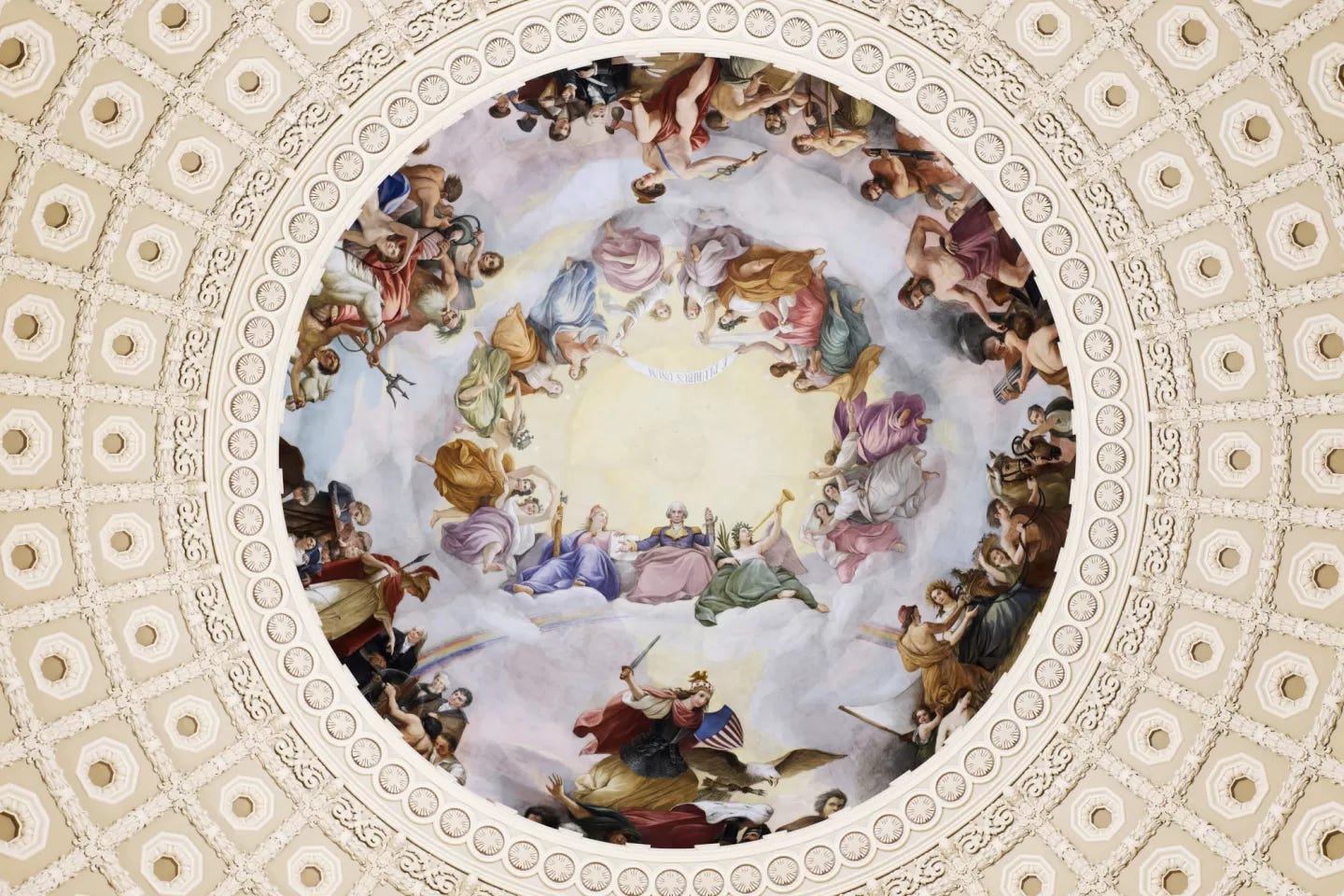
Long before a people codifies law, drafts a constitution or constructs a senate floor, it learns to imagine itself through the founding myths it tells — around fires, in marketplaces, and in the epic poems passed from one generation to the next.
A village that gathers each year to retell how its ancestors — whether real or imagined — crossed the seas or over mountain range is already a nation in embryo. This story grows into ritual, the ritual matures into tradition, and the tradition becomes their civilizational character.
These stories do more than recount origins, but rather articulate the virtues a community admires, the vices it wishes to restrain, and the kind of human being it hopes to produce.
In his Republic, Plato suggests that the founders of a city must be “the makers of tales.” He understood that political communities are shaped not by syllogisms but by a captivating idea. A founding myth is therefore not merely a narrative of beginnings but a template for national character, embodied in the hero who stands at its centre. Moreover, these myths explain why a land is cherished, why ancestors are honored, and why the future is worth defending.
Yet their deepest power lies in the transformational power of their stories. Geography becomes homeland, ancestry becomes inheritance, and the founding hero becomes a model of civic virtue.
Modern historiography, however, tends to treat these stories as complete fabrications — superstitious relics of the past that need to be cleared away so that the “real” history can be taught. Yet in stripping away the poetry, it strips away the animating principles that create a people.
While history reduced to a science may inform, it cannot inspire, and it is no coincidence that the nations that have endured for centuries — if not millennia — are precisely those with the strongest founding mythologies.
Myth, then, is not an escape from reality. It is the cultural framework that allows a society to interpret its reality, to endure its trials, and to realize its destiny. When citizens understand themselves as co-constructors in a long, unfolding narrative, they accept burdens and responsibilities that no policy or bureaucratic appeal could ever legislate.
However, when that foundational myth is dismissed or forgotten, the animating principle that binds civic life is slowly but surely unravelled, and the nation inevitably collapses into a loose confederation of atomized factions with nothing to bind them together.
Reminder: You can get tons of members-only content dedicated to useful knowledge, and support our Mission at the same time for a few dollars per month 👇
Two full-length, new articles every single week
Get actionable principles from history to help you navigate modernity
Access to the entire archive of useful knowledge that built the West
Support independent, educational content that reaches millions
Romulus and Remus: The Twins Who Forged an Empire
“Go and tell the Romans that by heaven’s will, Rome shall be capital of the world. Let them learn to be soldiers. Let them know, and teach their children, that no power on earth can stand against Roman arms.” – Titus Livius (Ab Urbe Condita: The Early History of Rome)
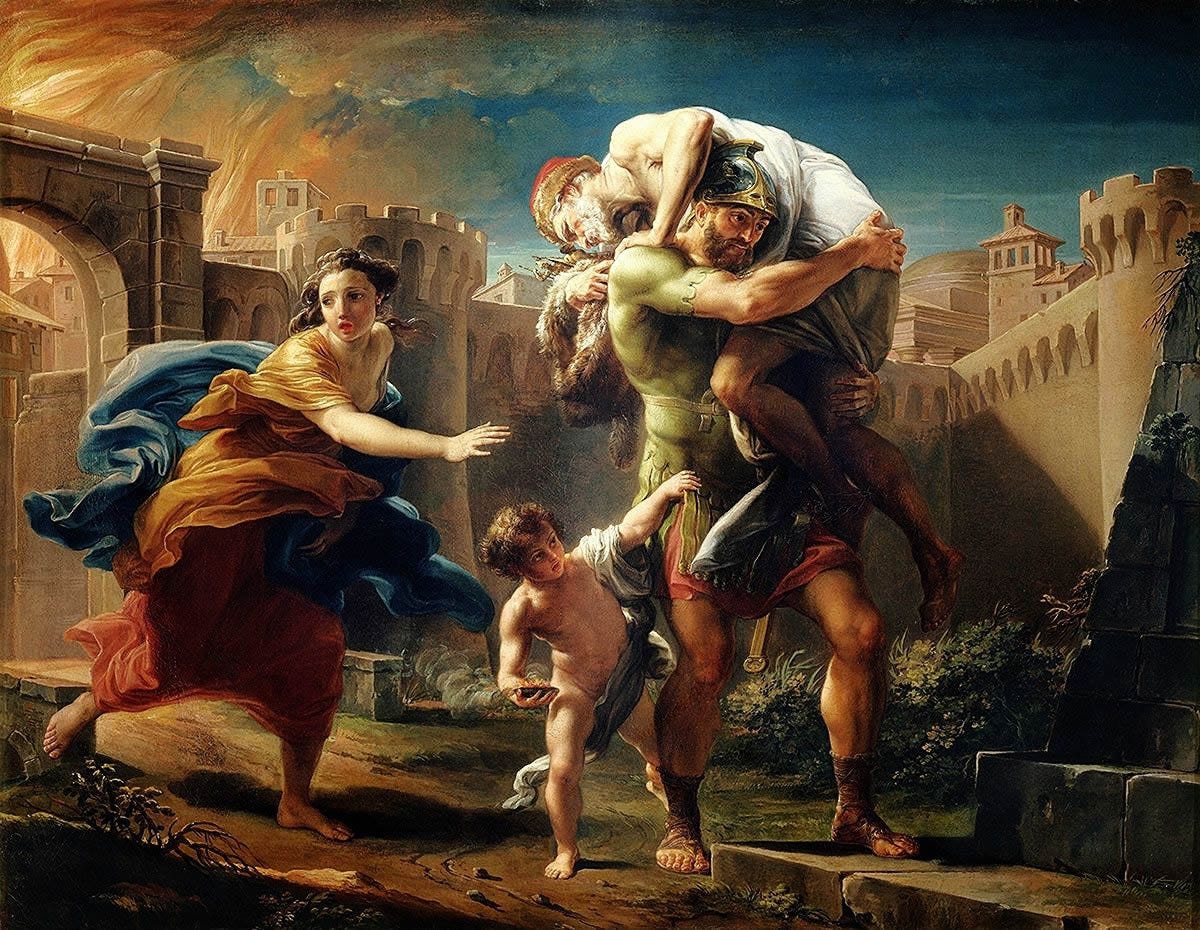
According to Roman tradition, the origins of the eternal city lie in the survival of two infants abandoned on the banks of the Tiber River. Romulus and Remus were said to be descendants of Aeneas, the Trojan exile whose journey westward preserved both his royal lineage and the household gods of his people. They were also believed to be sons of Mars, a divine paternity that placed Rome under the patronage of the god of war from its very inception.
This connection situated Rome within a chain of continuity stretching back to the heroic age described in Homer’s Iliad, giving the city a pedigree that combined divine sanction with the memory and inheritance of a fallen civilization.
Ancient historians record that the twins were abandoned because Amulius, having usurped the throne from his brother Numitor, feared any legitimate heirs who might one day challenge his rule and therefore ordered the infants to be destroyed. Fate would have it that Romulus and Remus would survive their exposure being rescued by a she‑wolf who “gave them suck, as though she had been sent by some god to preserve the founders of Rome.”
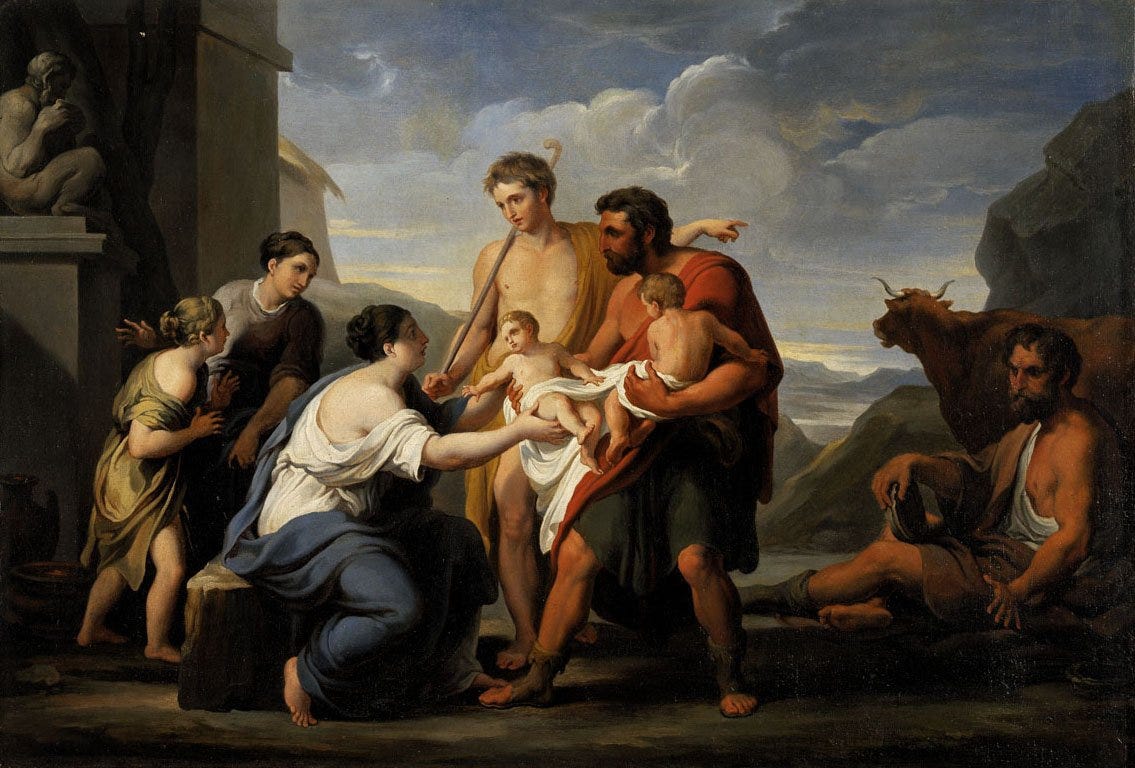
In his Early History of Rome, Titus Livius recounts that then, raised by shepherds and ignorant of their noble past, Romulus and Remus grew into figures “of extraordinary size and strength, and as soon as they were old enough they roamed the hills hunting and engaging in contests of speed and strength”. This naturally drew men of the surrounding country to them like the gravitational pull of a celestial body.
When they resolved to establish a settlement for their people, disagreement arose over its location and leadership. The auguries they sought offered no clear resolution, and their rivalry hardened into open hostility. On the Palatine Hill, Romulus began to trace the boundary of his new city, and Remus, in an act interpreted as a challenge to the sacredness of the boundary, stepped across the unfinished wall.
Romulus withdrew his weapon and slew his brother since such a violation of his city’s honor was intolerable, and in doing so delivered the historic aphorism that would come to characterize the Roman people: “so perish whosoever shall overleap my battlements”.
In this episode, the Romans later saw the first assertion of the city’s authority and the principle that its security and preservation outweighed all other obligations. For later generations, the killing of Remus was read as the moment in which the inviolability of the pomerium — the sacred boundary that marked not merely the physical limits of the city but the sphere of its divine protection — was first established in blood.
Thus the myth concluded with fratricide, divine ancestry, and the establishment of a sacred boundary that would effectively shape Roman self‑understanding for millennia.
In the years that followed, Romulus was remembered not only as the city’s founder but as its first conqueror, subduing the neighbouring tribes of the Caeninenses, Antemnates, and Sabines, thereby demonstrating that Rome’s destiny lay in expansion from its very inception. He was also revered as a religious lawgiver, establishing sacred rites, priestly offices, and the first political assemblies — a reminder that Roman authority was always intertwined with divine sanction.
As sons of Mars, Romulus and Remus embodied a divine temperament marked by austerity, discipline, and a readiness for conflict — traits the Romans believed they inherited. Romulus’ own life reinforced this belief. He was a warrior‑king who fought, ruled, and worshiped with equal severity, and in doing so, became the archetype of the Roman man — pious, martial, and unyielding. His ascent into the heavens as Quirinus, Rome’s deified founder, further cemented the idea that Roman identity was forged through a fusion of religious duty and military prowess.
Following Romulus, the Roman people embodied an austerity of spirit that bordered on severity, a disciplined acceptance of the burdens imposed by fortuna, and a conviction that both the individual and the collective city moved within a destiny larger than themselves — a destiny they believed lesser peoples could neither imitate nor withstand.
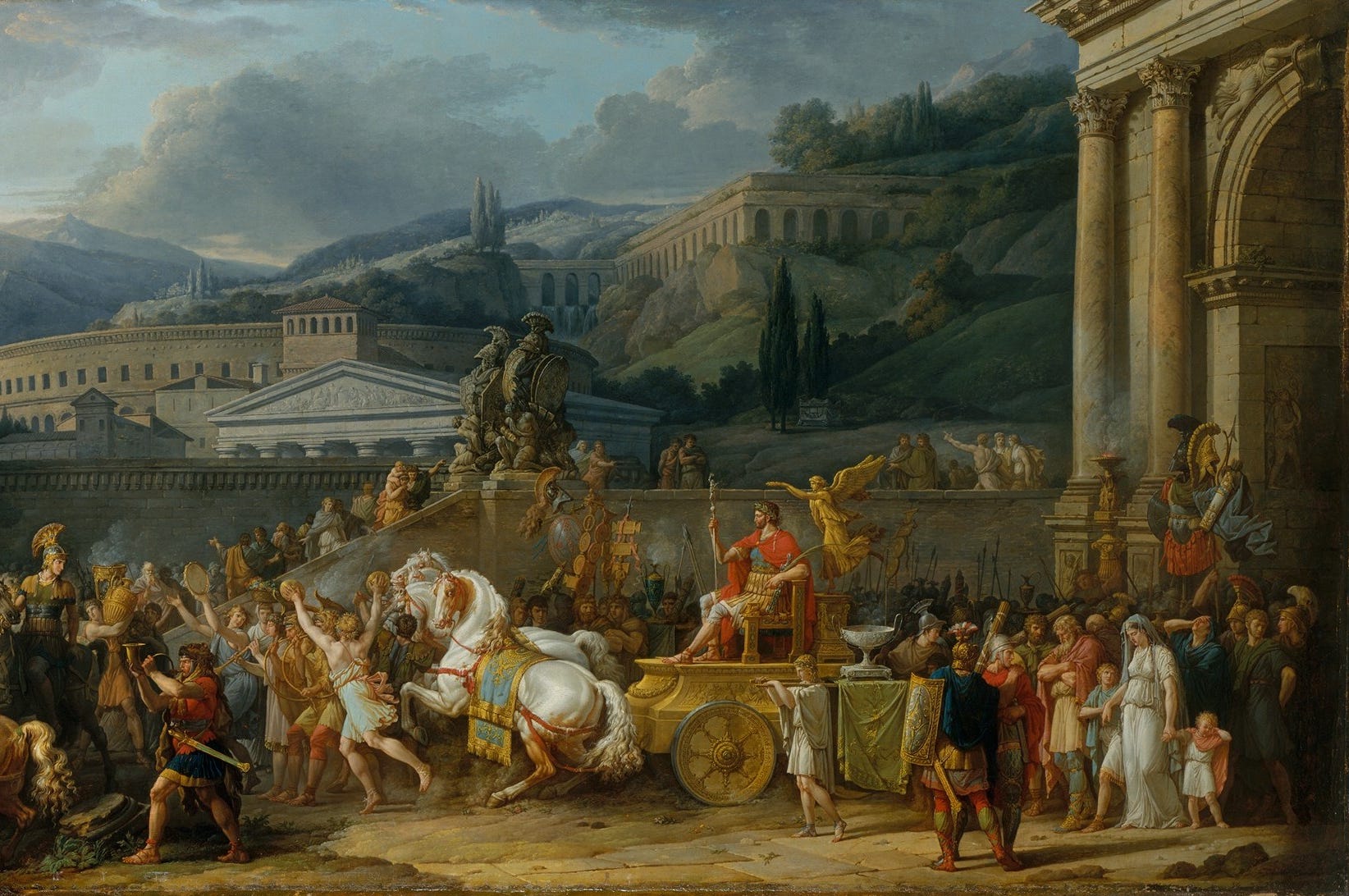
Over time, Romans came to see in these foundational myths the earliest expression of the Mos Maiorum — not merely the “way of the ancestors” but the hard inheritance that set them apart from the softer nations they would later conquer. It became the standard by which they measured themselves and legitimized their rule.
This mythic legacy cultivated a fierce Roman exceptionalism: a people born in struggle, descended from the god of war, and consecrated by sacrifice. Convinced that the blood of Mars ran in their veins, the Romans interpreted victory as the visible working of fatum — a cosmic mandate rather than a human achievement.
In this way, the myth furnished the psychological and spiritual foundations of the relentless militarism that enabled Rome to subdue the ancient world and impose the imperium that would later be celebrated as the Pax Romana.
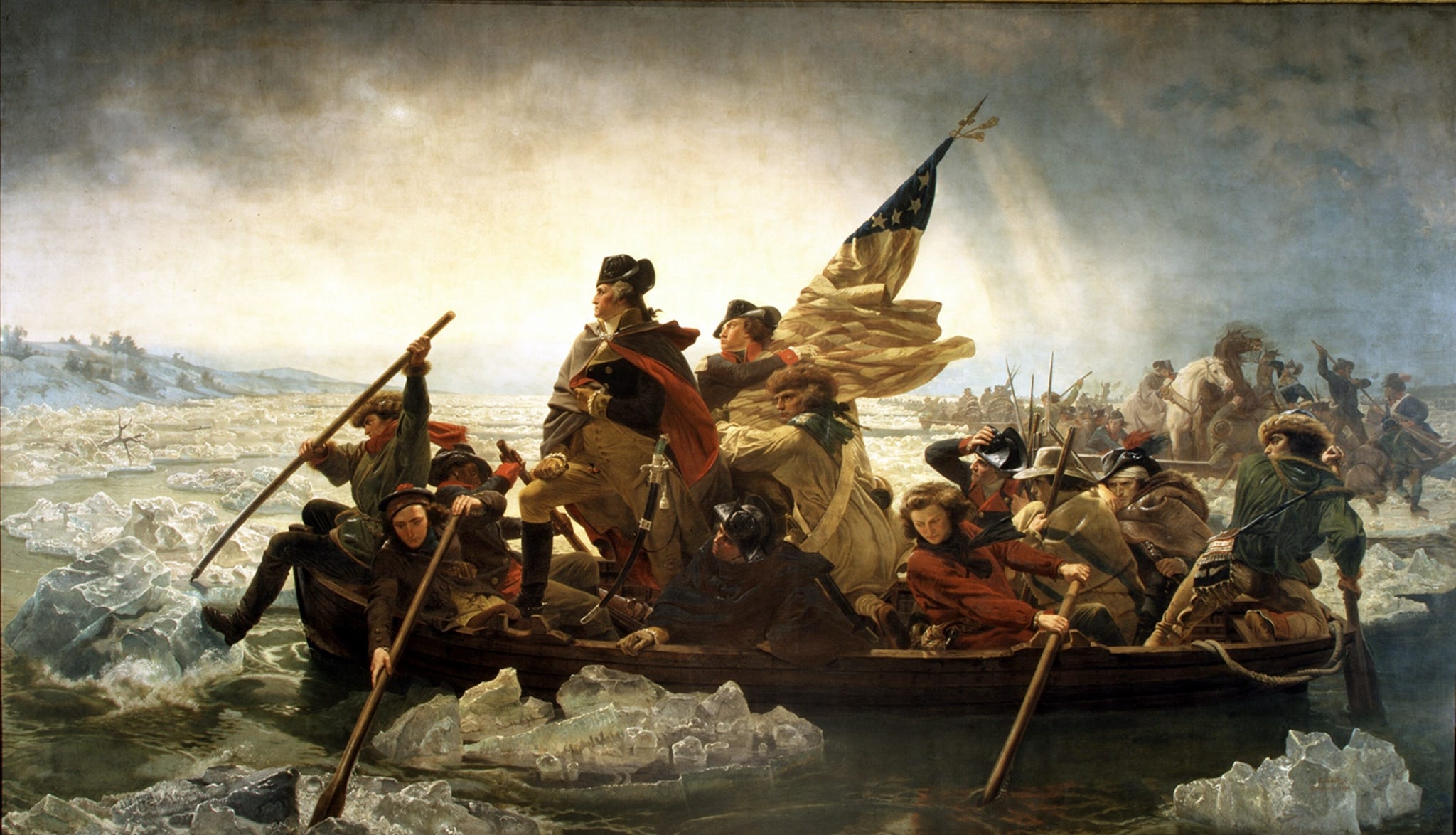
George Washington: The General Who Became the Republic
“The preservation of the sacred fire of liberty… is finally staked on the experiment entrusted to the hands of the American people.” — George Washington (First Inaugural Address)
The origins of the United States of America are inseparable from the figure of George Washington, whose life came to embody the transition from colonial dependency to national sovereignty.
Born into the provincial gentry of Virginia, Washington belonged to a society still shaped by English customs yet increasingly conscious of its distance from the imperial centre. His early military service in the French and Indian War placed him at the frontier of imperial conflict, where the limits of British authority and the ambitions of the colonies became unmistakably visible.
When tensions with Britain escalated, Washington emerged as the figure capable of uniting disparate colonial interests. His conduct during the Revolutionary War — namely, austere self‑command, political restraint, and a reputation for unwavering reliability — became the template for the American character. As he wrote to the Continental Congress in 1776, “I have no lust for power, but a sincere wish to serve my country,” a declaration that later generations would treat as the moral foundation of his leadership.
In the darkest winters of the war, he embodied a civic ideal: a leader who accepted hardship without complaint, subordinated personal ambition to the common good, and held together a fragile army through sheer moral authority.
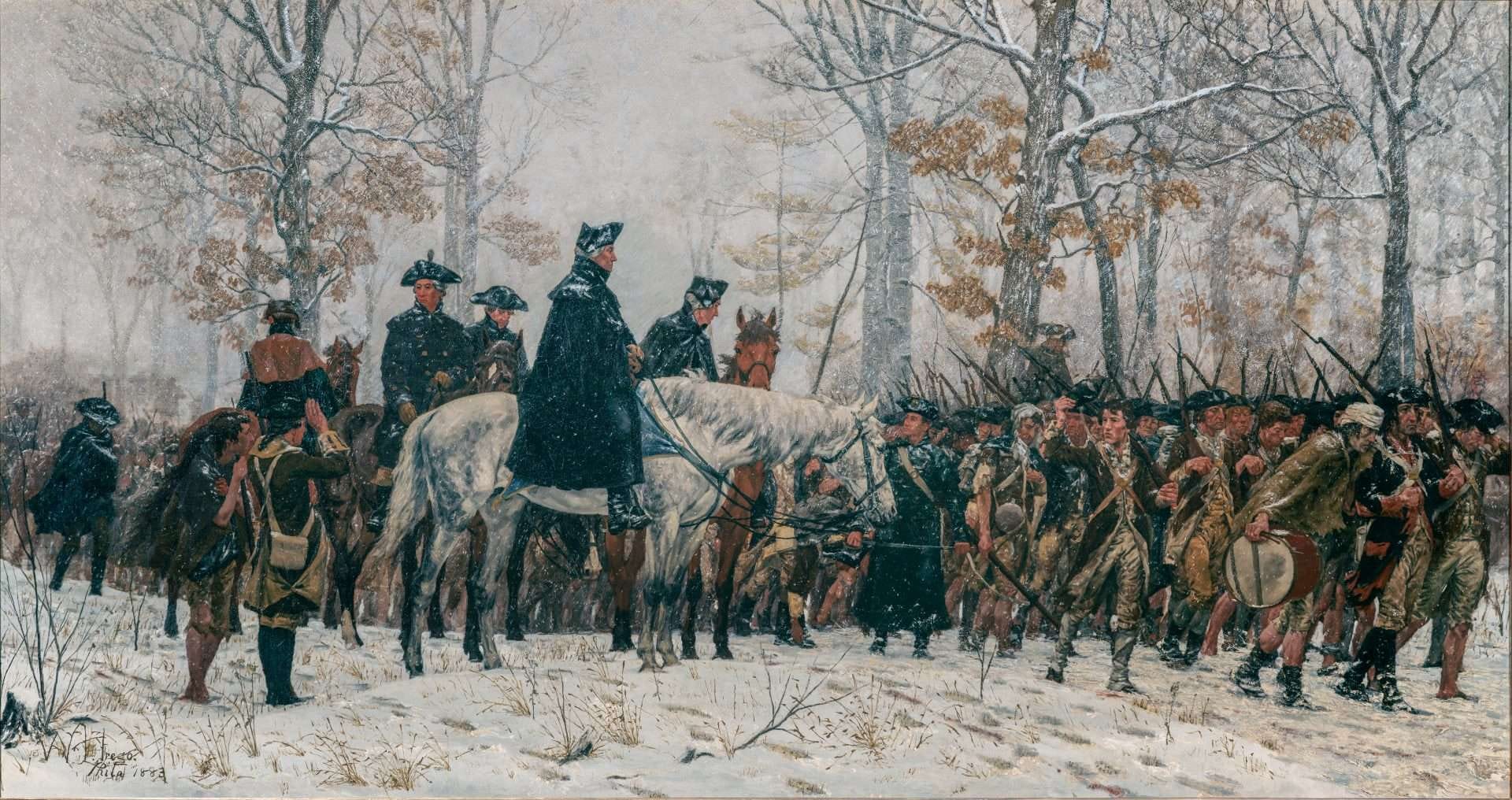
At Valley Forge, where disease, hunger, and desertion threatened to dissolve the Continental Army, Washington’s refusal to abandon his men became a defining moment in the American imagination. During the retreat across New Jersey in 1776, when defeat seemed imminent, his calm persistence prevented the revolution from collapsing. And at Trenton and Princeton, his willingness to strike boldly when all seemed lost demonstrated that resolve, not resources, would determine the fate of the new nation.
Later generations would see in him the first assertion of a distinctly American virtue; the belief that liberty required discipline, sacrifice, and a willingness to endure trials for the sake of posterity.
Washington was also a man steeped in the classical tradition. In urging his officers to cultivate “the virtues of the ancients,” he revealed not only admiration but a deliberate effort to shape the new republic in continuity with the classical world. Educated in the histories of Greece and Rome, he and the other Founding Fathers consciously drew upon the ancient republics when drafting the Constitution.
The Roman model offered both inspiration and warning: from it they adopted the language of the Senate, the symbolism of the fasces, the ideal of the citizen‑soldier, and the conviction that public virtue was the foundation of political liberty, even as they rejected the imperial temptations that had corrupted the later Republic.
Thus, while they adopted Roman models of law, representation, and civic virtue, they carefully constructed political created checks and balances to prevent the slide into autocracy.
This contrast reached its defining moment when Washington declined the offer of kingship and voluntarily surrendered military power. In his own words, “I retire from the great theatre of action,” a renunciation that Americans interpreted as the crowning achievement of the Revolution — the decisive act that ensured the republic would be founded on consent rather than coercion.
In that renunciation, Washington became the American Cincinnatus, the patriotic citizen‑soldier who surrenders authority and returns to private life once public duty is fulfilled.
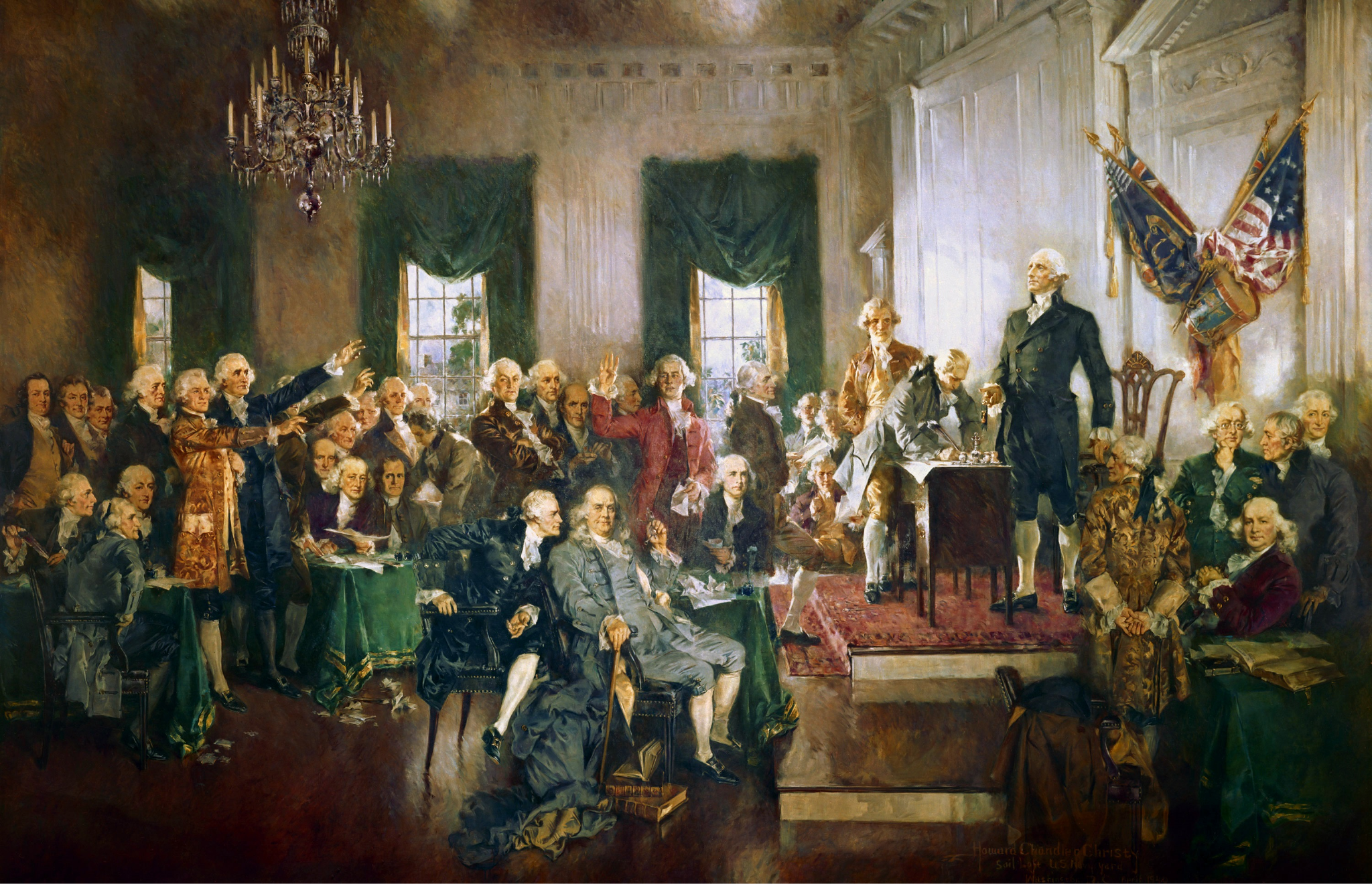
Over time, Americans came to see in Washington’s life the earliest expression of their own civilizational code — a New World analogue to the Roman Mos Maiorum. His example became the standard by which leaders were judged and distinguished the American new republic from the old monarchies of Europe.
As the United States expanded westward, asserted itself on the world stage, and came to see itself as the defender of freedom, Americans interpreted their rise as the unfolding of a national destiny. This conviction was later reinforced when the United States entered the World Wars, casting itself as the decisive power that would restore order, defend democratic ideals, and secure the peace that older empires could no longer guarantee.
In this way, the Washington myth became the republic’s foundational narrative, shaping its conviction that the United States of America possessed a singular role in history. From exceptionalism to Manifest Destiny and eventually to global hegemony, Americans came to see themselves as co-constructors of a new political order defined by liberty and sustained by their willingness to defend it.
Destroying Mythology Destroys Nations
Oswald Spengler saw the decay of the mythic imagination as the first symptom of civilizational decline since a culture that no longer believes its founding stories has already begun to exhaust its inner vitality. Like a tree severed from its roots, a people severed from its mythology withers and dies because it is the animating spirit and unifying principle of their civilization.
When a nation’s founding myths are attacked, trivialized, or discarded, the consequences are not only cultural but civilizational. A people stripped of its stories becomes disoriented, unable to understand who they are, what they honor, or why their future is worth defending.
Myth is the connective tissue between past, present, and future — the vessel of cultural memory through which a civilization recognizes itself across generations. It provides a moral framework, a model of character, and a vision of the kind of human being the nation aims to form.
Modernity’s obsession with scientific reduction empties myth of meaning and treats the past as irrelevant, but a people that abandons its founding stories is not enlightened — it is committing cultural suicide.
The destruction of mythology is therefore not enlightenment but cultural vandalism. A people that forgets its foundations forgets itself, and once that forgetting begins, the unraveling is swift, silent, and almost always irreversible. For when a nation ceases to believe the stories that once gave it purpose, it does not become rational, it becomes hollow — a civilization moving, as G. K. Chesterton put it, “with a weary and heavy heart, toward the dark house of its own extinction.”
Thank you for reading.
Join the fight for the Soul of our Civilization!
By subscribing to Atlas Press, you are supporting an honest group of guys who are working to help revitalize Western Civ through the re-enrichment of the Western mind. We appreciate your support greatly and hope you join us.
The rot in our US politics is both a cancer of greed and a symptom of spiritual and cultural decline.
Interestingly, the role of myth appears to be less about forgetting (though that is part of it) and more about the tug of war over revisions.
Those on the left want to reconcile with the sins of our nation’s past with the aspirations of our founding texts and desire for justice and progress.
But too often this means shedding a simple story in favor of a complex and tainted one. And so those on the right often push back on those attempts to revise our founding myths, and see it as a direct assault on the soul of our nation—though it is really a reaction to discomfiting truth, amplified into extremism and white washing by those white narcissists who desire above all to be at the center of the story.
I wonder what lessons history has for a nation that has successfully reframed their founding myth to positive effect. I wonder too if it is possible to reconcile the desire for simplicity and heroism with a need for truth and repentance.
Not a single original idea 😔 you beat me to it 😭