



Culture does not emerge in a vacuum. It is shaped by war, religion, and the long continuity of tradition. But beneath all these lies something older and more elemental — the earth itself.
The ancients understood this instinctively. Their gods were mountains and rivers, their religious rituals followed the rhythm of the seasons, and their myths were inseparable from the land that sustained them.
In his Geographica, the Greek writer Strabo observed that “the character of a people is closely connected with the nature of the land they inhabit,” and thus, the landscape becomes the first architect of culture, setting the boundaries within which societies struggle, adapt, and imagine their futures. While some landscapes may offer great blessings others impose harsh burdens — and nowhere is its influence more visible than between the cultures that form in the mountains and those of the plains.
Across history, highland peoples have tended toward hardness, independence, and a kind of simple ferocity, while lowland peoples have tended toward cooperation, order, and the creation of complex institutions. The mountains demand struggle and the plains reward stability. These cultural differences are not accidents but recurring patterns that emerge from the particular environments in which these peoples were formed.
Reminder: You can get tons of members-only content dedicated to useful knowledge, and support our Mission at the same time for a few dollars per month 👇
Two full-length, new articles every single week
Get actionable principles from history to help you navigate modernity
Access to the entire archive of useful knowledge that built the West
Support independent, educational content that reaches millions
The Highlands: Feuding and Ferocity
Mountain landscapes are unforgiving, and the peoples who inhabit them are formed accordingly. Xenophon, while marching his warbands through the highlands of Anatolia, noted that the highland tribes they encountered were “all warriors,” which he attributed to the steep ridges and narrow passes that sheltered them.
In such regions the soil is thin, the winters are long, and the margin between survival and ruin dangerously narrow. Life at a higher altitude is a continual contest against the cold, hunger, and isolation, and for this reason, softness becomes a civilisational liability while perpetual vigilance, courage, and a readiness to defend what little one possesses with ferocity become the virtues that the land itself demands. Over generations these pressures crystallize into culture — into codes of honor, fierce autonomy, and an instinctive suspicion, even brazen hostility, of outsiders.
In the Scottish Highlands, the glens and granite ridges produced a society of clans whose loyalties were intense and whose feuds could span centuries. Their pastoral economy made cattle the measure of wealth, and this dependence rendered them perpetually vulnerable to raiding by rivals and enemies alike. Honor, therefore, was not a metaphysical abstraction but a practical shield since a reputation for swift and severe retaliation deterred theft and preserved the fragile equilibrium of clan dynamics.
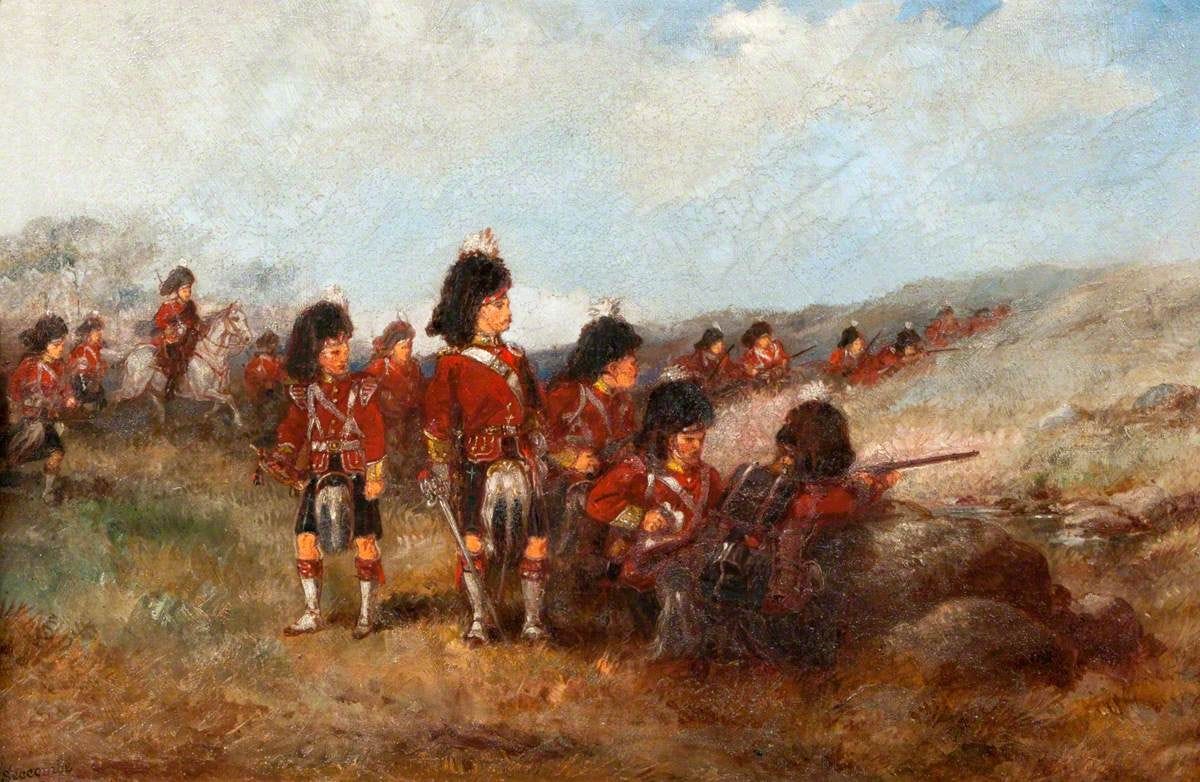
From childhood, young Highland men were trained in the use of the broadsword, targe, and dirk; clan gatherings doubled as musters; and bards preserved genealogies that bound warriors to ancestral deeds of heroism and loyalty. When the clans took the field, they fought as they lived — decisively, at close quarters, and with a terrifying unity of purpose. The famed Highland charge, a sudden downhill rush accompanied by a single musket volley and a roar meant to unnerve the enemy, was the distilled expression of this world. It was not simply an act of aggression but the battlefield analogue of their daily existence — a people shaped by scarcity, steep ground, and the constant possibility of sudden violence.
Farther south-east, in the Dinaric Alps, the Albanian highlanders lived under the Kanun, a clan-based code that enshrined hospitality, loyalty, and blood‑feuding as the pillars of social order. The gjakmarrja — the taking of blood for blood — was not a spontaneous eruption of violence but a regulated institution, binding families to cycles of vengeance that could endure for generations. A single killing could place entire households under threat, forcing men to live armed, vigilant, and ready to retaliate at a moment’s notice.
This perpetual readiness hardened them, producing a culture in which courage was compulsory and hesitation fatal. Their stone towers and terraced fields clung to slopes that invading armies could not easily reach, and while many empires came to dominate the plains below, the highlanders remained beyond their control — untaxed, ungoverned, and largely untouched.
For the highlander, the land itself was a fortress, and the men it formed were unyielding — accustomed to feud, wary of central authority, and fiercely protective of clan autonomy. Ancient observers understood this pattern well. In his Histories, Herodotus records Xerxes’ remark that “it is not natural for men who dwell in a rich land to be willing to fight,” while elsewhere he notes that harsh lands teach their inhabitants to be hardy.
The Scots of the Highlands and the Albanians of the Dinaric Alps embody this perennial truth: the mountains cultivate a primitive toughness because they allow for no other alternative. Their loyalties are tight, their histories marked by feud, and their ferocity is not a cultural eccentricity but the natural response to a world where the earth is stern and survival is never certain.
The Lowlands: Settlement and Order
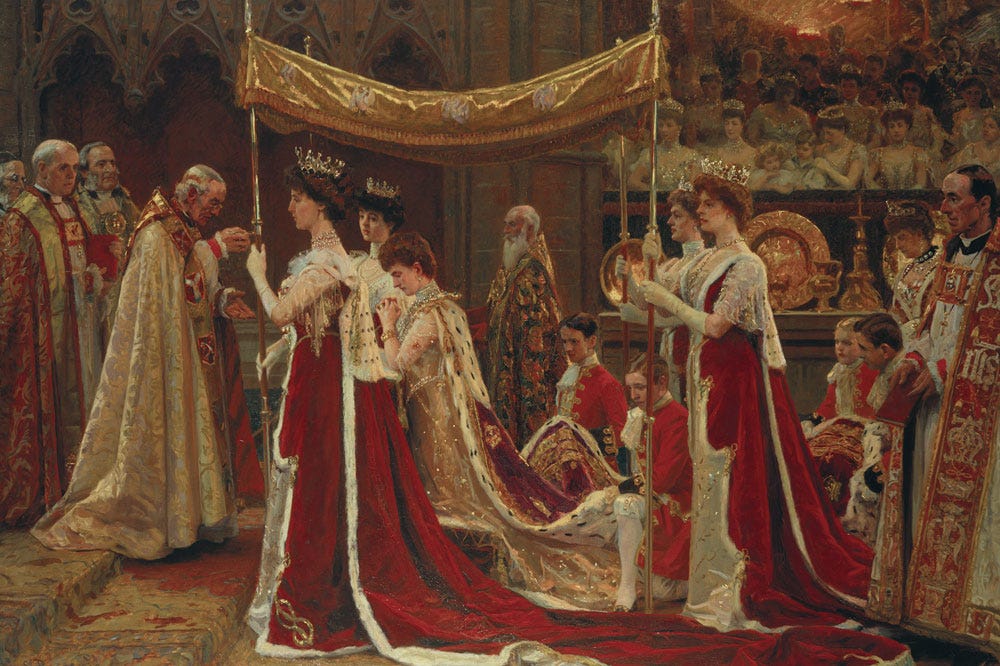
The plains tell a different story. While the mountains are harsh and unpredictable, the lowlands are generous with broad horizons, fertile soils, gentle slopes, and climates whose rhythms are predictable, allowing for the formation of refined men and highly ordered societies.
Strabo observed that “the plains, being easy to traverse and cultivate, incline their inhabitants toward social life and political organization” as abundance allowed a people to expand beyond the scale of kinship groups. The lowlands allow for large-scale — even industrial — farming, and the surplus resources can be used to support specialist artists and artisans, giving rise to increasingly complex institutions. Cooperation becomes more valuable than ferocity in lowland environments because agriculture demands coordination rather than brute force.
The future can be provisioned for, and so societies begin to think ahead in generations rather than seasons — because unlike the herdsmen in the mountains, a farm can’t be stolen in the same way a herd of cattle can. This stability anchors the community encouraging foresight and the slow accumulation of order.
Nowhere is this clearer than in Greece. The rugged interior of the Peloponnese produced fiercely independent hill communities, but the plains of Attica nurtured a different ethos. Its open terrain supported olive groves, vineyards, and grain fields, which in turn sustained dense settlement and maritime trade. This agricultural base freed citizens for political life, allowing Athens to develop councils, courts, and assemblies that were unmatched in the ancient world.
Aristotle noted that those who live in harsh regions “are full of spirit but somewhat deficient in intelligence and skill; hence they remain comparatively free, but lack political organization”. In Attica, the polis was the natural social extension of a landscape that favoured assembly, deliberation, and civic refinement. The Athenian Golden Age, its drama, philosophy, architecture, and naval empire, was built on the stability and surplus that only fertile lowlands could provide.
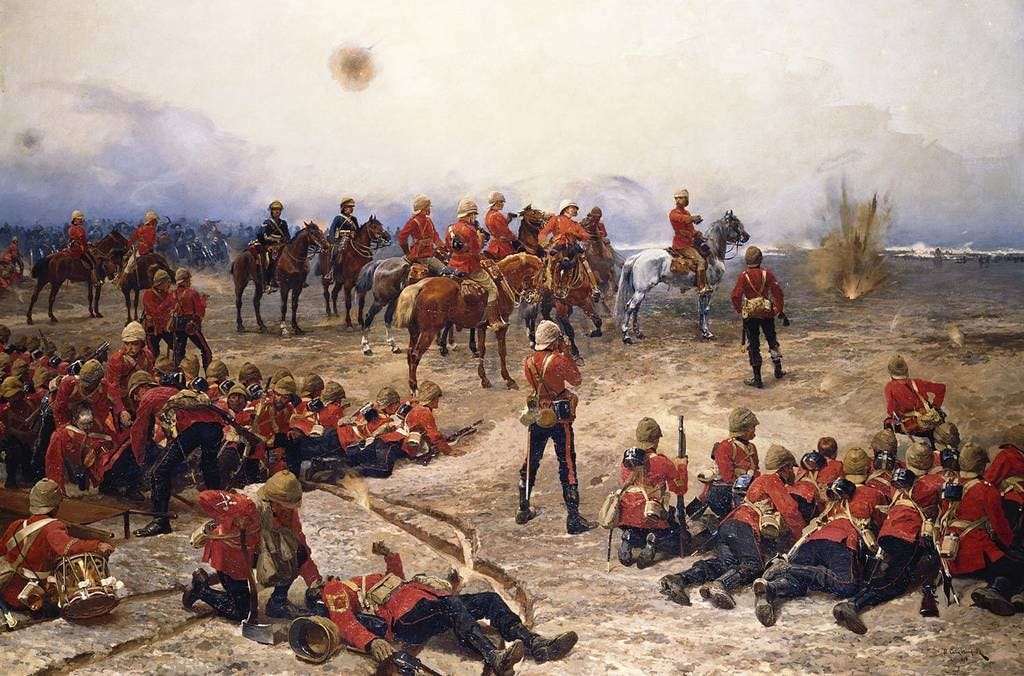
The same pattern reappears in medieval and early modern Europe. The English lowlands, with their rolling fields and temperate climate, produced one of the most stable agrarian systems in the Western world. Secure harvests sustained a prosperous yeomanry, underwrote the development of common law, and allowed political power to be negotiated through counsel and contract rather than imposed by force.
Over centuries, this stability fostered the slow evolution of parliamentary governance, a commercial culture rooted in predictable property rights, and an industrial economy capable of unprecedented expansion. By the eighteenth and nineteenth centuries, this combination of agricultural security, legal continuity, and commercial dynamism enabled Britain to project power across the globe, turning a small island kingdom into the hegemon of the modern world.
Lowland cultures tend to cultivate a different moral and political temperament from their highland counterparts. The generosity of the plains encourages stability over raiding, institutions over personal honor, and cooperation over clan loyalty. In Attica, this abundance produced the polis, the deliberative habits of citizenship, and the Athenian Golden Age, and in England, it produced parliamentary government, complex commercial systems, industrial power, and ultimately the capacity to reshape a global order.
Both stand as the clearest demonstrations of a deeper civilizational pattern: where the land is fertile and the harvest secure, societies can anchor themselves, refine their political life, and build empires that can change the course of history.
Civilization Depends on Ferocity and Order
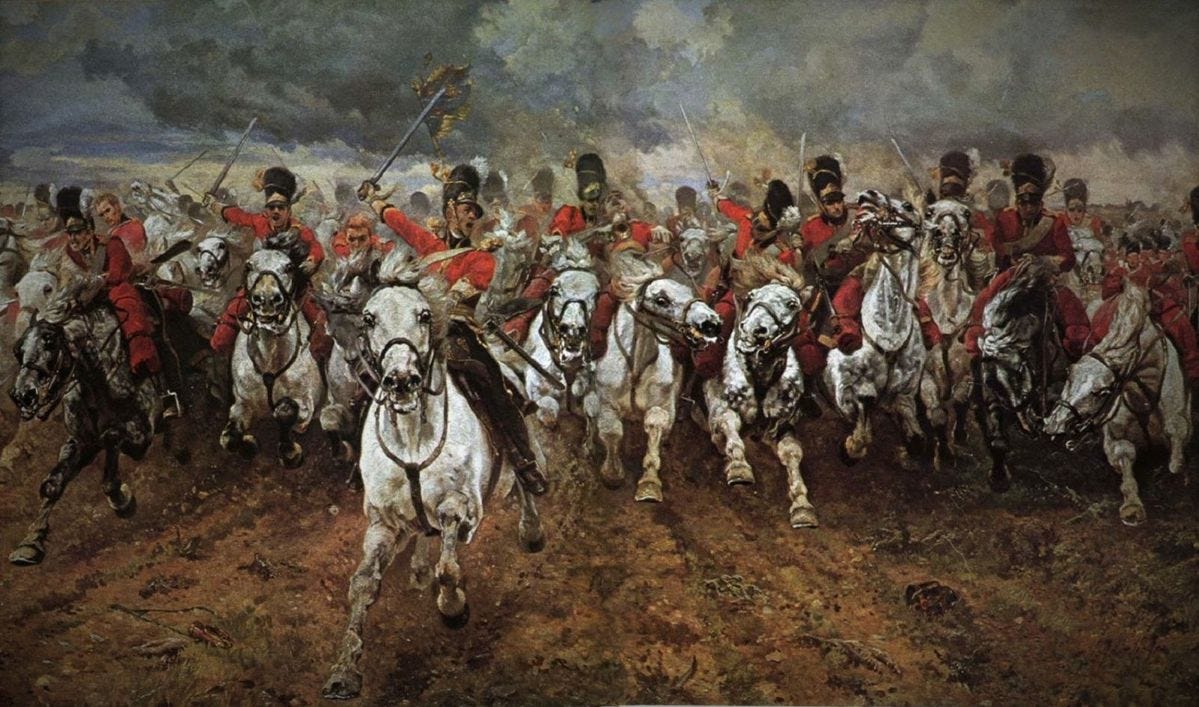
The greatest empires in history realised that civilization depends on maintaining the delicate equilibrium between highland ferocity and lowland order. We need the harshness of the heights and the stability of the plains, fusing courage with discipline, independence with cooperation, and martial readiness with institutional foresight.
However, that equilibrium has begun to dissolve. For the first time in human history, we have insulated ourselves from the elemental forces that shaped us for thousands of years. Mountains are cut down, rivers redirected, and the plains have been transformed into vast urban centres. We warm our homes, cool our cities, and surround ourselves with technologies that buffer us from the elements or any form of inconvenience. In mastering the environment, we have fashioned a new kind of human being — one who enjoys unprecedented comfort yet feels an ever-increasing sense of purposelessness.
For most of history, identity was forged in the existential struggle between man and man and man and nature. Scarcity demanded discipline, danger demanded courage, and the land itself demanded resilience. Today, abundance demands nothing. We no longer contend with the world; we remake it in our image, and in removing hardship, we remove the very conditions that formed the civilization we have inherited.
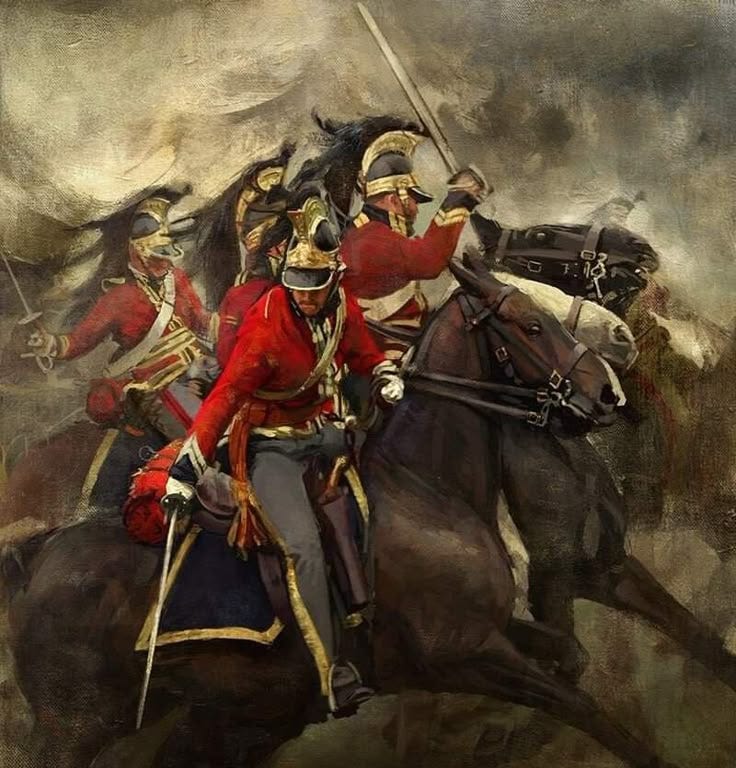
The danger is subtle but profound. A society that loses its connection to the mountains becomes soft, complacent, and unprepared for sudden conflict and crises that no amount of technology can mitigate, and a society that abandons its plains loses its sense of order, foresight, and institutions that no amount of conquest can restore. The sobering warnings of Herodotus, Livy, and Xenophon echo faintly across the centuries: luxury weakens, comfort corrodes, and prosperity — when left unchallenged — can undo even the mightiest of empires.
The West needs to rediscover the ferocity of the heights and the order of the plains, fusing courage with discipline, autonomy with cooperation, and martial readiness with institutional foresight. Our comfort and complacency is the cause of our ruin.
Join the fight for the Soul of our Civilization!
By subscribing to Atlas Press, you are supporting an honest group of guys who are working to help revitalize Western Civ through the re-enrichment of the Western mind. We appreciate your support greatly and hope you join us.