


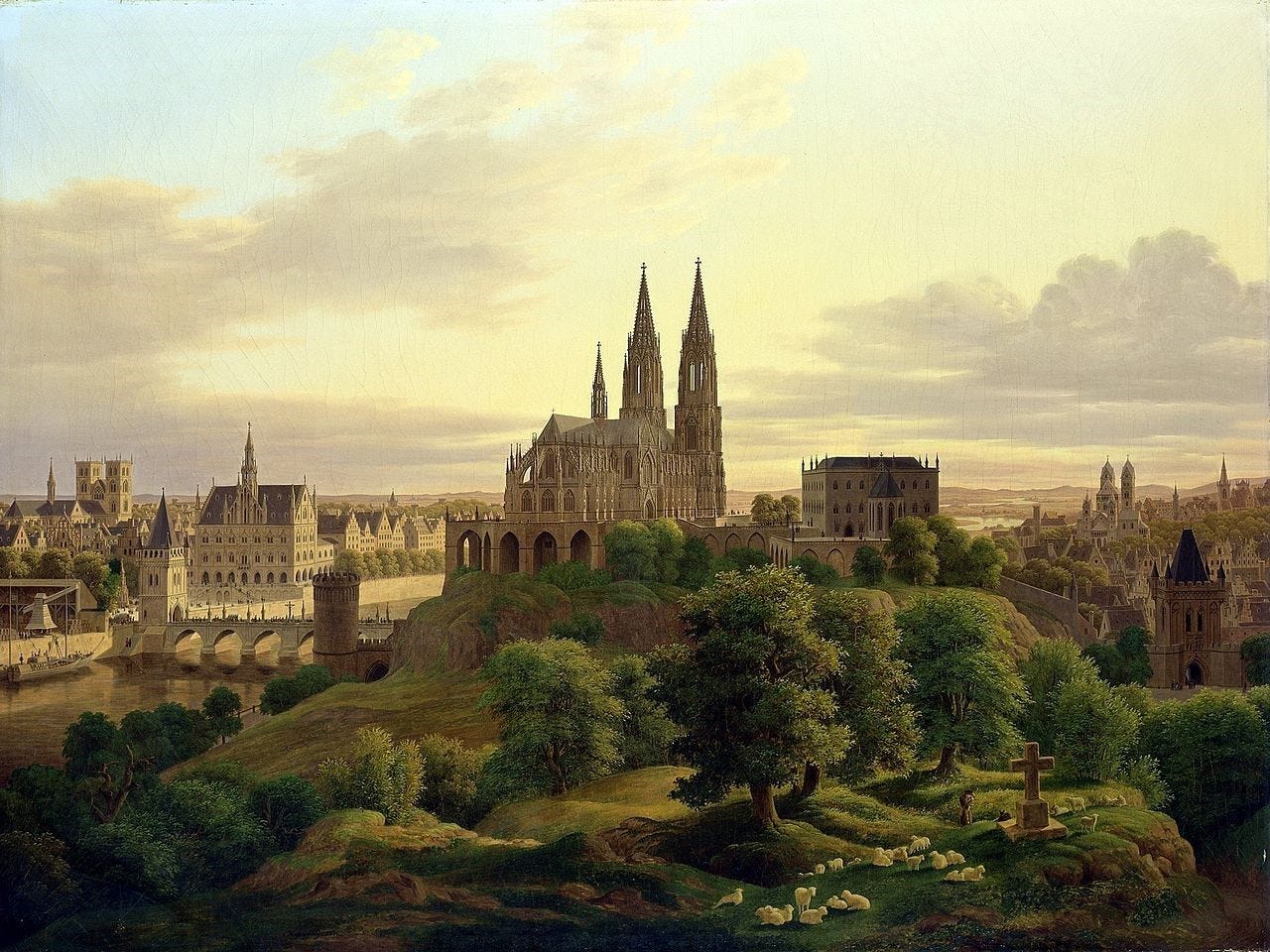
“The real conqueror of the world is the machine.”
— Oswald Spengler (The Decline of the West)
The Industrial Revolution occupies a singular place in the social and spiritual history of the West as it reshaped the material foundations of human existence in ways that inevitably altered the moral and theological order. As Will Durant observed in his sweeping reflections on civilizational change, “every economic system is a moral order”, and when the economic foundations shift, the moral architecture of society shifts with them.
Scholars have long noted that when the structures of daily life are transformed, the deeper patterns of meaning that depend upon them are transformed as well. The shift from agrarian rhythms to industrial systems did not simply change how people worked, it also reconfigured how they understood themselves, their families, their communities, and their relationship to the divine. As economic life became increasingly mechanized and technologically mediated, the human person was gradually reimagined less as a creature in a constellation of natural, familial, and spiritual relations, and more as an economic unit of production whose value could be measured in output and efficiency. Oswald Spengler foresaw this tension between mechanization and the older order, writing that “the machine is the enemy of the organic”, capturing the incisive truth that the logic of the machine stands fundamentally at odds with the rhythms of living tradition and culture.
This transformation, which unfolded over generations, marked a decisive turning point in the long history of Western civilization — a transformation whose consequences continue to shape the modern condition.
Reminder: you can get tons of useful members-only content and support our mission for a few dollars per month 👇
Two full-length, new articles every single week
Access to the entire archive of useful knowledge that built the West
Get actionable principles from history to help navigate modernity
Support independent, educational content that reaches millions
The Agrarian Order and Its Moral Architecture
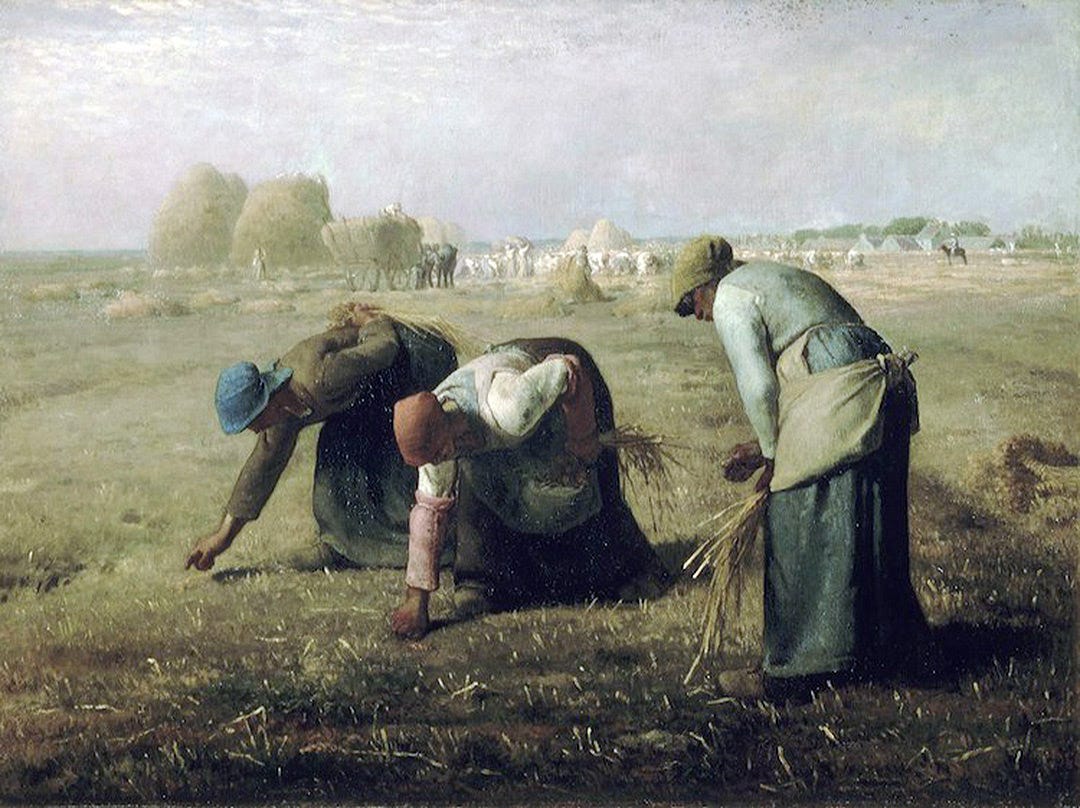
For centuries, the agrarian household served as the basic unit through which economic, familial, and religious life were woven together. The land shaped the rhythms of labor, and those rhythms cultivated patience, reverence, and a sense of continuity that bound generations to one another.
Families worked within kinship networks that transmitted memory and identity, while religious practice canonized the cycles of sowing and harvest, embedding their temporal labor within a larger horizon of divine providence. In such a world, the individual human person understood himself as part of a coherent moral order in which the material and spiritual dimensions of life were mutually reinforcing. Historian Christopher Dawson captured this reality succinctly when he wrote that “the whole life of the community was related to the soil”, a rootedness that gave traditional societies their cultural unity.
St Thomas Aquinas and the Scholastics articulated this harmony by emphasizing that human flourishing required the integration of bodily needs, communal obligations, and spiritual aspirations. The household economy, modest and self‑sustaining, provided the conditions for such integration, and although agrarian life contained hardship, it also offered a stable framework in which the virtues could be cultivated and the soul oriented toward its proper ends. Oswald Spengler, reflecting on this older world, remarked that “the peasant is the eternal man”, suggesting that agrarian life preserved a primordial human orientation toward nature, ancestry, and the divine. Will Durant likewise noted that traditional rural societies possessed a moral coherence grounded in continuity, remarking that “civilization begins where chaos and insecurity end”, a condition made possible by the stable, intergenerational structures of agrarian life.

Protestant Work Ethic and the Revaluation of Labor
The early modern period introduced a significant shift in the moral meaning of labor, as the Protestant Work Ethic — especially in its Calvinist expression — recast economic diligence as a spiritual obligation. Industriousness, thrift, and disciplined effort became not only practical virtues but an indicator of piety, and prosperity increasingly appeared as a visible confirmation of one’s divine favor. Christopher Dawson noted this transformation when he observed that Protestant culture created “a new type of religious personality, disciplined, industrious, and self‑controlled”, a disposition that aligned naturally with emerging capitalist structures.

