
Civilization is in the Garden
How Western Civilization is replanted in gardens...


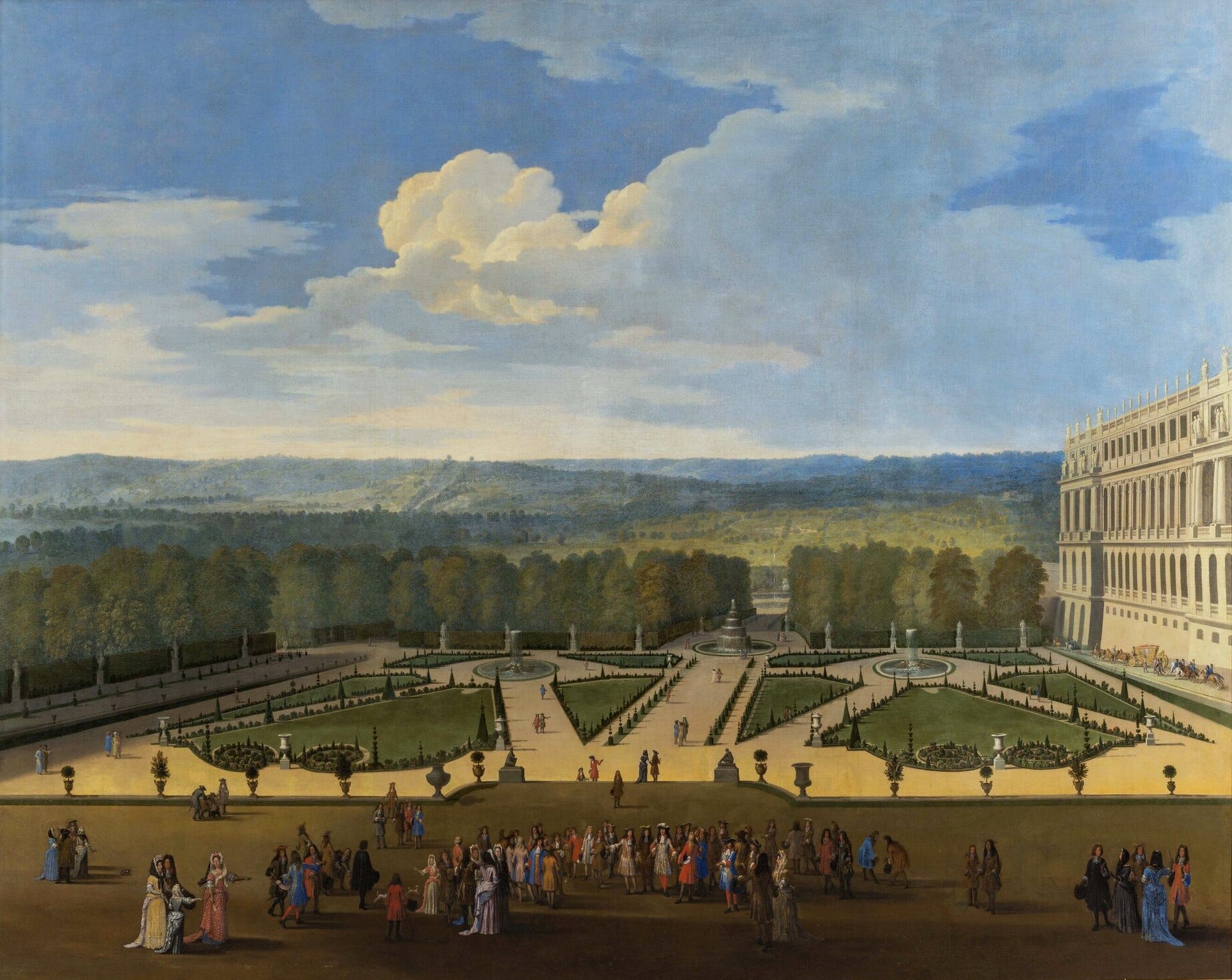
“Many things grow in the garden that were never sown there”
Thomas Fuller, Gnomologia, 1732
There are many signs of civilization, from the more familiar monuments to the innovations of the mind and of science. Another that hides in plain sight, however, is how far it has been able to master Nature.
Or more properly, how far it has been able to harness Nature to serve the needs of that civilization. In its primal stages, a civilization is at war with the encroach of flora and fauna. In its maturity, what was once intimidating can be tamed to support life and even be transformed into a source of beauty and pleasure. As a result, the most literal example of civilization is arguably the garden.
But the modern man, busy at work and in the house, has many distractions from his garden, if he even has one at all. To the city dweller, the thought might be entirely alien. But to neglect the garden is to sever a taproot between yourself and civilization.
So how did our civilization master nature, and why is J.R R. Tolkien’s The Lord of the Rings an ode to gardening?
Reminder: You can get tons of members-only content dedicated to useful knowledge, and support our Mission at the same time for a few dollars per month 👇
Two full-length, new articles every single week
Get actionable principles from history to help you navigate modernity
Access to the entire archive of useful knowledge that built the West
Support independent, educational content that reaches millions
Sweat of the Brow
‘Garden’ today is often used as a catch-all expression to mean, in the bluntest way, the outdoor part of your property, where you would not be irritated to find a plant or wild animal.
To our ancestors, however, things were a little more particular. This of course is because prior to the Industrial Revolution, an ability to work the land was the primary skill of a man, and produce of the soil the lifeblood of the economy. It was our business to understand such things as much as our pleasure. As a result, much of our relationship to the garden has been characterised by a struggle with one particular question — should a garden be functional, or aesthetic?
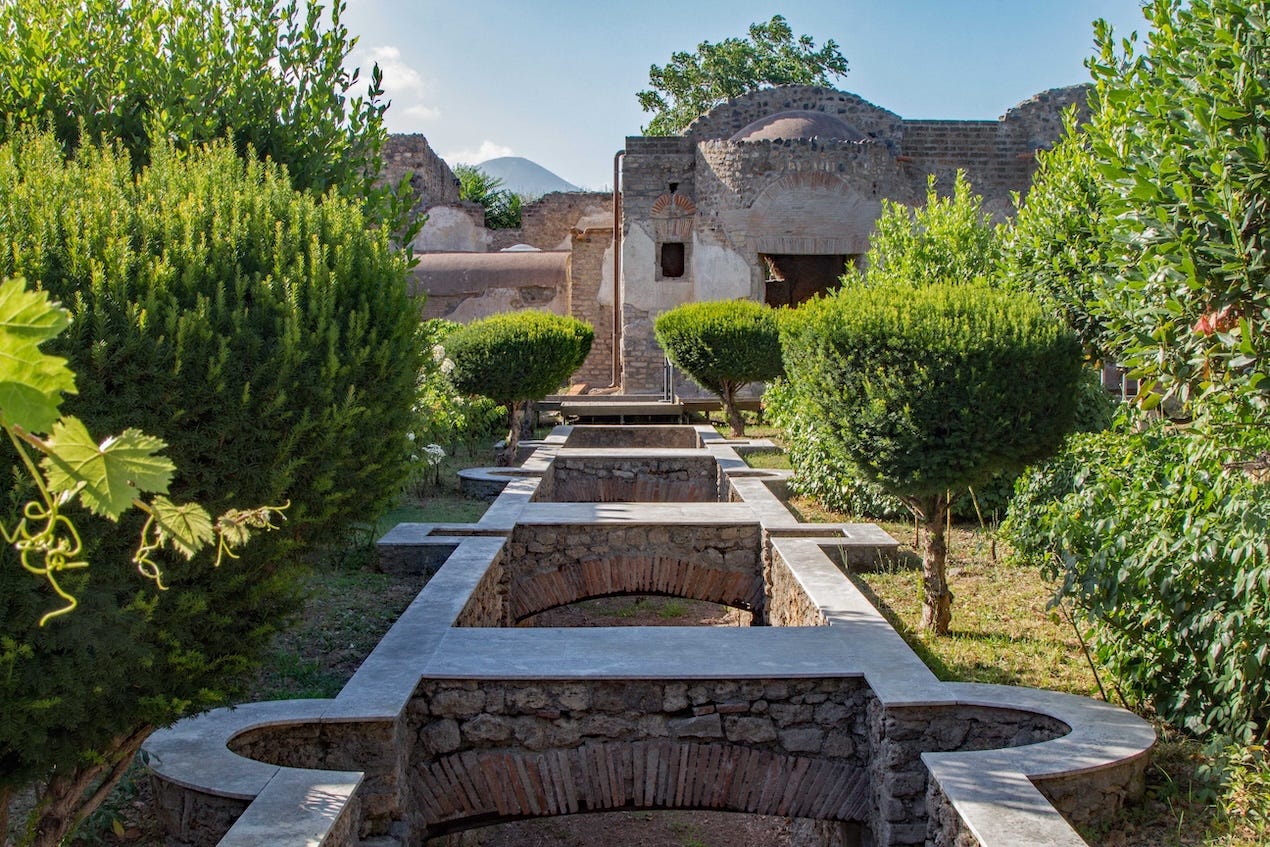
In the ancient Western world, for a long time the answer was very much the former. To the early Romans, a hortus — the root of horticulture — was a small plot of land whose function was to grow vegetables for the kitchen. Since much of the population were farmers anyway, the hortus was generally a phenomenon only for the urban poor. As a result, the use of plants to please the eye tended to occur only on the large country estates where there was room to spare.
Everything changed however around 60 BC, when the general Lucius Licinius Lucullus promptly inverted this dynamic. Stunned by the great water gardens he had observed on campaign in Persia and the East, he attempted to build his own in a vast estate on the Pincian Hill. By all accounts it was a wonder to behold, and clearly established that a garden could be an aristocratic asset. Among its innovations was the use of the garden to display artworks, including statues of gods, heroes and ancestors, harnessing Nature to imprint one’s cultural and familial identity.
Soon enough, it became fashionable among the Roman elite to receive guests in their gardens, which in the beating summer heat of central Italy, formed convenient areas in which to have deep philosophical conversations. As Cicero himself put it:
“If you have a garden in your library, everything will be complete”
Cicero, Ad Familiares, IX.4
It was not all praise, however. Agrarian Rome was highly sensitive to the proper use of land, and saw a certain decadence in gardens that were too large for any one man to manage. Pliny the Elder, whose Natural History was the world’s first encyclopedia, lamented this phenomenon, noting that even the Kings of Rome had once “cultivated their gardens with their own hands”, and confessing melancholy for the days when:
“At Rome at all events a garden was in itself a poor man’s farm”
Pliny the Elder, Natural History, XIX
One should be careful for what one wishes for — you might just get it…
Medieval Function
One of the most astonishing signs of Rome’s collapse in the West is that grand pleasure gardens entirely disappeared from the European continent for almost a thousand years.
With Italy overrun by barbarian hordes, many of whom had no tradition whatsoever of horticulture, Pliny’s wish was ironically fulfilled, as gardening was instantly knocked back to the pre-Lucullus days. The political fragmentation of the early medieval period, and collapse of an overarching authority, in any case, made it unwise to invest large sums in vulnerable suburban or rural estates.

However, the Christianization of Europe posed a new challenge to Western Man. After all, Genesis commands us to subdue the Earth:
“And God blessed them, and God said unto them, Be fruitful, and multiply, and replenish the earth, and subdue it: and have dominion over the fish of the sea, and over the fowl of the air, and over every living thing that moveth upon the earth”
Genesis 1:28
It is no surprise therefore that, along with many other traces of civilization, it was in monks and the monastic life that some form of horticulture survived in Europe. Monastic Orders were required to be self-sufficient, and typically took vows of labor, vows often fulfilled tilling the Earth. Monastic gardens, however, like the cities of the day, were walled off, and generally served to sustain life, not celebrate it.
That said, it was not entirely dead. Larger gardens could be found, but generally they were Giardini dei Semplici, or gardens dedicated exclusively to medicinal herbs, often attached to Europe’s proto-medical schools, such as at Salerno and Padua. Aesthetic beauty was virtually irrelevant. Gardening had gone from being aristocratic to academic.
Fortunately however, the Renaissance would not only revive the roots of civilization, but cleverly reconcile the extravagance of Antiquity with Christian calling…
