Can You Legislate Civic Virtue?
How Genoa harnessed her nobility for the public good...


How can you incentivize the ruling elite to invest in their societies?
It is a question that scores of countries across history have sought to answer, with mixed results.
After all, enforcing the law is one thing. Enforcing civic virtue is quite another. One depends on the hard power of the state, and the other, on the softer power of faith, expectation and social dynamics.
But what if you could combine these, and actually legislate civic virtue? Even better, do so in a way which leaves everyone better off, and uses encouragement over punishment?
In a forgotten masterstroke of genius, city state of Genoa did exactly this in the 16th century, when she reorganized into an aristocratic republic, and entered her entire nobility into a lottery like no other…
Making an Aristocratic Republic
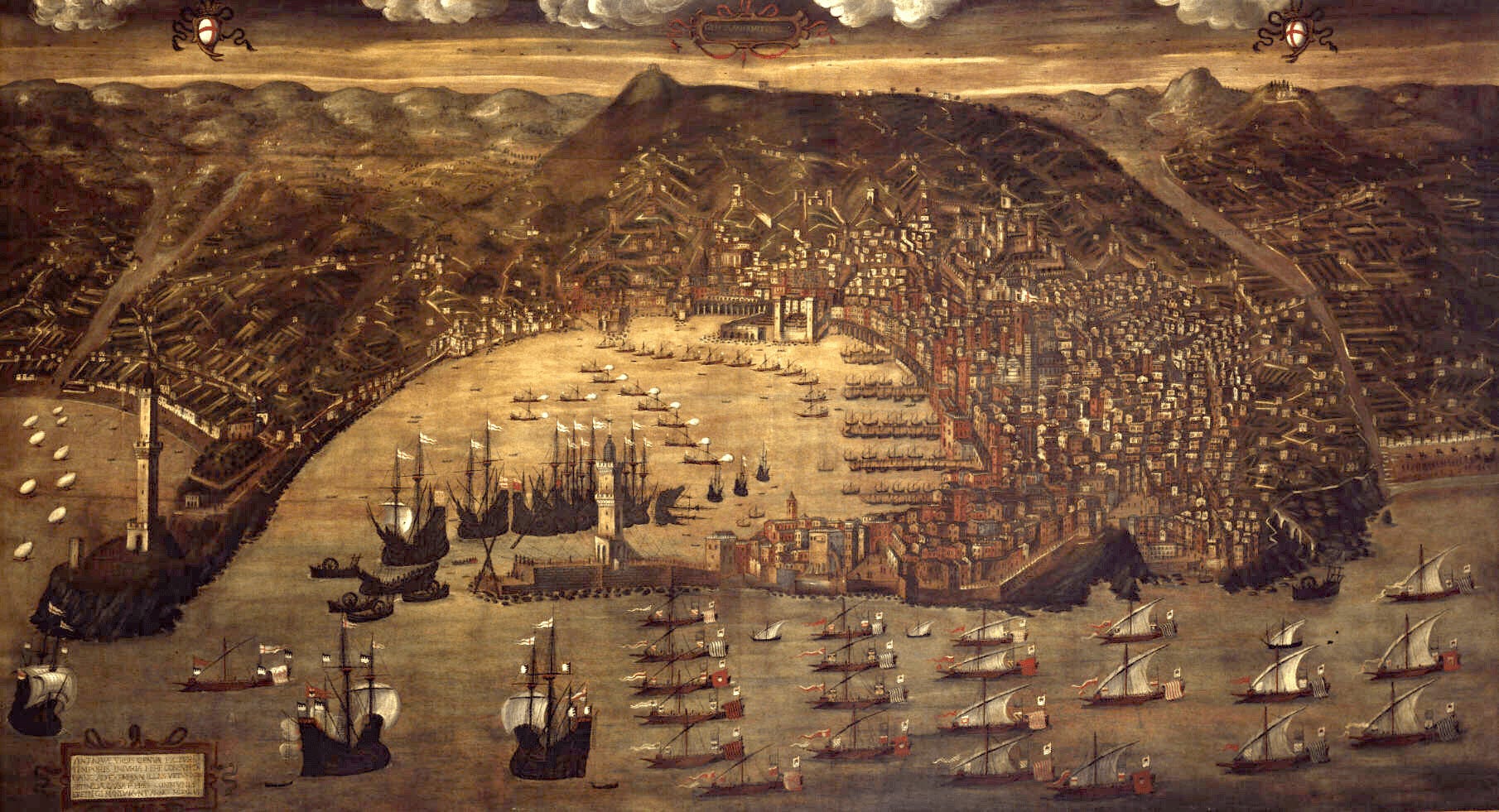
To grow up at the dawn of the 16th century must have been painful for a proud Genoese citizen. The Republic of Genoa had once been among the foremost powers of the Mediterranean, vying with Venice for dominion over maritime trade. But those days seemed long gone now.
The destruction of her fleet at Chioggia in 1380 brought a traumatic end to the golden age, and for the entirety of the 15th century, Genoa fought for her very survival. The only real point of innovation was the foundation, in 1407, of the Banca di San Giorgio, one of the world’s first genuine financial institutions. However, Milanese and later French occupation seemed to mark the end of Genoese independence.
But in 1528, everything changed, when a Genoese mercenary admiral by the name of Andrea Doria could tolerate the arrogance of his French employers no more. Promptly defecting to the French king's sworn enemy, and the most powerful man on earth — Holy Roman Emperor Charles V — Doria expelled the French from Genoa, and set about reorganising the liberated city under a more durable form of government.
Disdainful of the factionalism which had crippled Genoese civic life for over a century, Doria refounded the city state as an aristocratic republic with a brand new constitution. With the democratic and oligarchic arms of government amalgamated into a new singular noble class, much of the infighting of previous years was curtailed. In order to tighten control of the executive branch, and ensure that control of it passed across as many noble families as possible, the term of office of the Doge of Genoa was reduced from life to two years. All was well, and Genoa, thanks to its alliance with Spain and the Holy Roman Empire, enjoyed admirable stability in Italy.
In 1557 however, an extraordinary opportunity fell into her lap. The Spanish Crown defaulted on her debts, causing the near total wipeout of the all powerful German Fugger bank. Genoa however, whose own bankers could readily supply credit, leveraged her privileged position as an associate of the Spanish Crown, and stepped into the void. Almost overnight, the Genoese aristocracy became the bankrollers of the Spanish Empire.
But there was a problem. The city of Genoa herself did not reflect the spectacular influence that the Republic or her noble families now wielded. It was still very much a medieval port, and a rather unappealing destination for the wealthy and glamorous. The nobility was wealthy, put the city looked poor, and there was nowhere suitable for the increasing numbers of foreign visitors to stay.
So in 1576, the Republic of Genoa developed an ingenious solution, one that would both solve the problem and channel aristocratic competition into a healthy outlet…
The Golden Lottery
On the 8th November 1576, the Senate of the Republic of Genoa passed an extraordinary decree. A decree which established a Rollo, or list, of “houses obliged to offer public lodgings”.
This rollo counted no fewer than 52 houses in the city, each belonging to the most eminent noble families in Genoa. Henceforth, whenever the Republic was to receive illustrious visitors, such as ambassadors or heads of state, a public lottery would be taken. Entered into that lottery were the owners of those 52 houses, and the family that ‘won’ would be required to host the visitor in their house, and expected to entertain them for the duration of their stay.
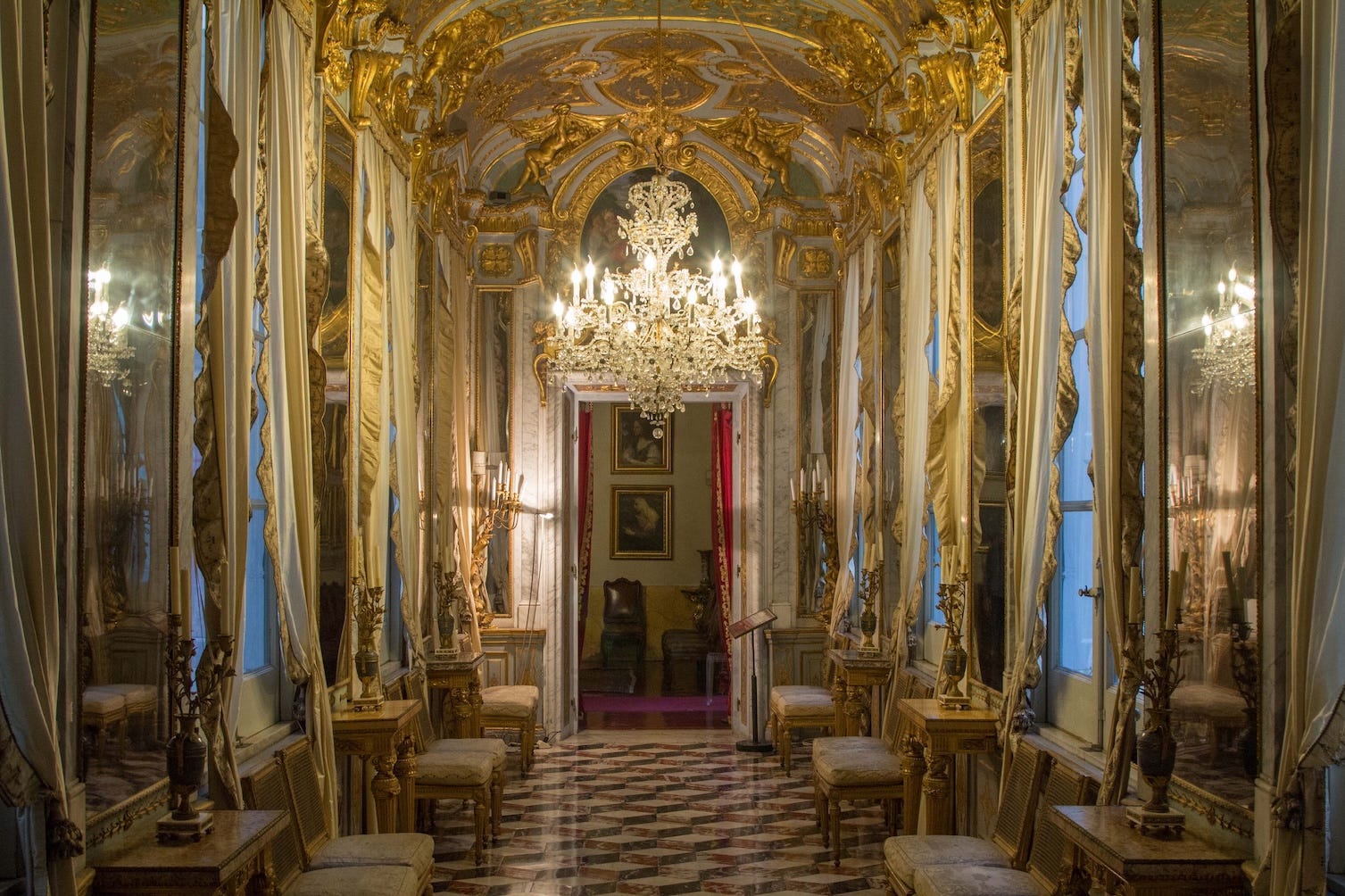
Under the 1576 decree, the 52 houses listed on the Rollo were divided into two categories — maiores and hospitaggi. The maiores were properties deemed suitable to accomodate higher ranking guests, and hospitaggi all others. This division was based on the architectural merits of the house in question, how magnificent its interior decoration was, and how well equipped it was to host events grand enough to meet the standards of the day in Europe.
Nothing like this had ever been done before. Overnight, the Genoese elite were competing against each other for the right to represent their country on the world stage. Crucially, they were competing in a manner which directly and visibly benefitted the city. In order to have a seat at the table, a nobleman now needed a palace fit for the purpose, set in an area that would not reflect poorly on Genoa in the eyes of distinguished guests. The incentive for the nobility was clear. Quite apart from the prestige selection would bring, the chance to host and spend time with Europe’s most influential figures opened the doors to innumerable opportunities.
The effect was, quite simply, electrifying. Ever since Andrea Doria’s reforms, the nobility had toyed with the notion of expanding the city. The visit of Emperor Charles V in 1553 had been a powerful motivator, as many had looked on with envious eyes as the monarch, having no other real alternative, stayed at Doria’s villa on the outskirts. Now was their chance to bask in the limelight too.
How successful was this idea? The numbers speak for themselves. In 1588, a second Rollo was issued. From it we know that just twelve years after the first senatorial decree, the number of eligible palaces had more than doubled to 111. Genoa was being beautified at an astonishing rate, with the entire city now one massive open-air court.
It would also bring with it a near unprecedented feat in the history of nations…
The Second Golden Age