
Austerity and the Making of Empire
Why Civilizations Fall When Religion Fades


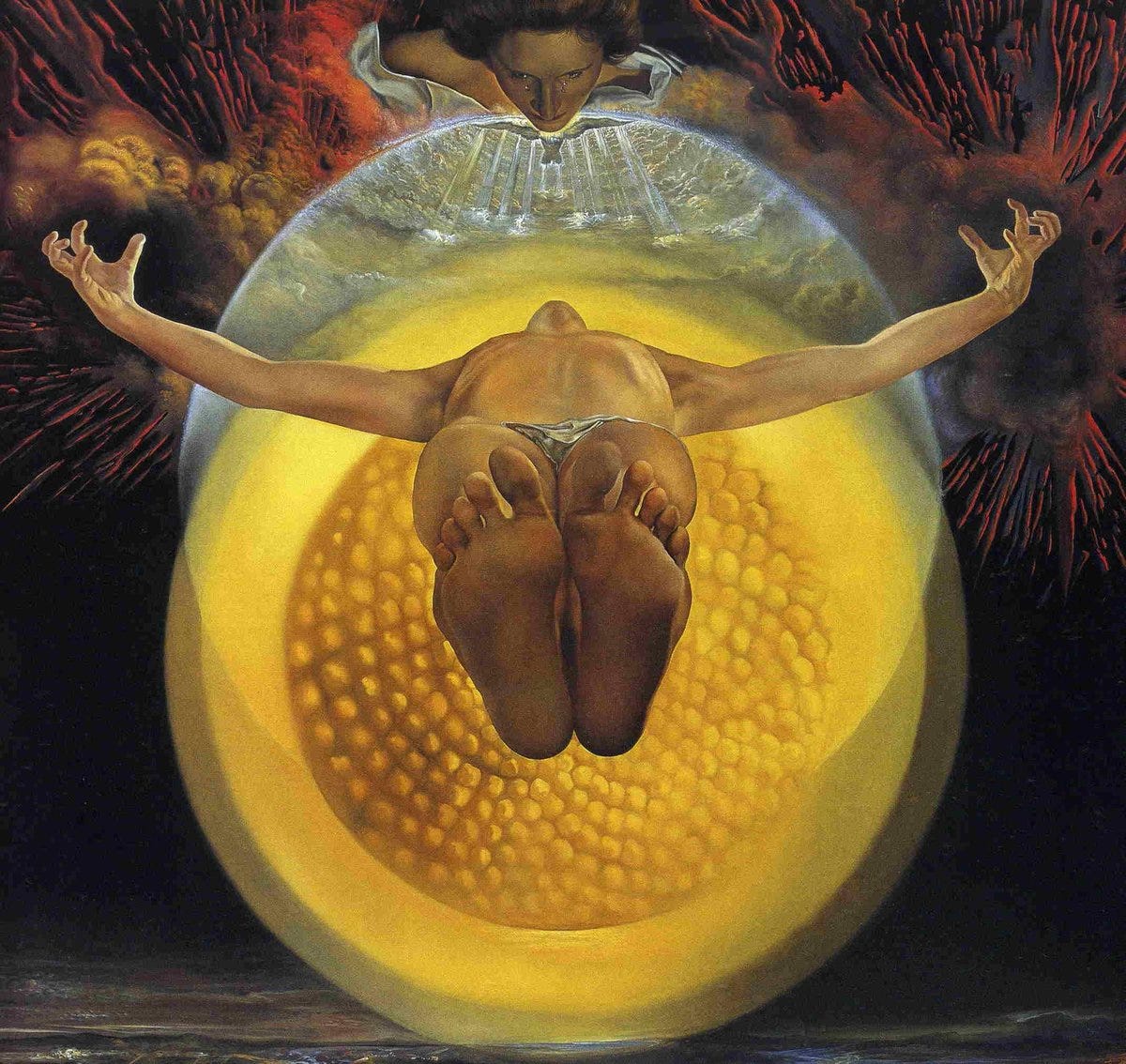
We’re all familiar with the famous maxim: Hard times create strong men, strong men create good times, good times create weak men, and weak men create hard times.
But why?
What is this qualitative force that creates strong men, and how can a civilization prevent good times creating weak men?
Modern theorists have attempted to quantify the lifespan of civilizations. Some, following Sir John Glubb’s famous essay The Fate of Empires, argue that civilizations last roughly 250 years, passing through predictable stages from pioneering vigor to commercial expansion and finally to decadence.
Oswald Spengler, more metaphysical in tone, insisted in The Decline of the West, that cultures rise from the “vitality” of a people rooted in a particular landscape, and decline when that soul becomes exhausted. Despite their differing frameworks, both converge on the same conclusion that civilizations enter a state of decline or “civilizational winter” when they abandon the virtues that made them great.
But rather than succumbing to the deterministic view that history unfolds through impersonal forces alone, historians and political theorists have long recognized that austerity is the animating force behind civilizational vitality and longevity.
Austerity is the disciplined posture that steels a people for endurance, sacrifice, and collective purpose, even when circumstances tempt them toward ease. While poverty often forces a people towards discipline while prosperity just as often dissolves it.
Whether it were the Romans or the Americans, the pages of history reveal that the greatest empires are forged in hardship. By embracing austerity, a civilization remains strong and dynamic, resisting the softening influence of abundance and preserving its vitality across centuries — and no institution has proven more effective at cultivating this posture than religion.
Reminder: You can get tons of members-only content dedicated to useful knowledge, and support our Mission at the same time for a few dollars per month 👇
Two full-length, new articles every single week
Get actionable principles from history to help you navigate modernity
Access to the entire archive of useful knowledge that built the West
Support independent, educational content that reaches millions
The Spiritual Foundations of Political Order
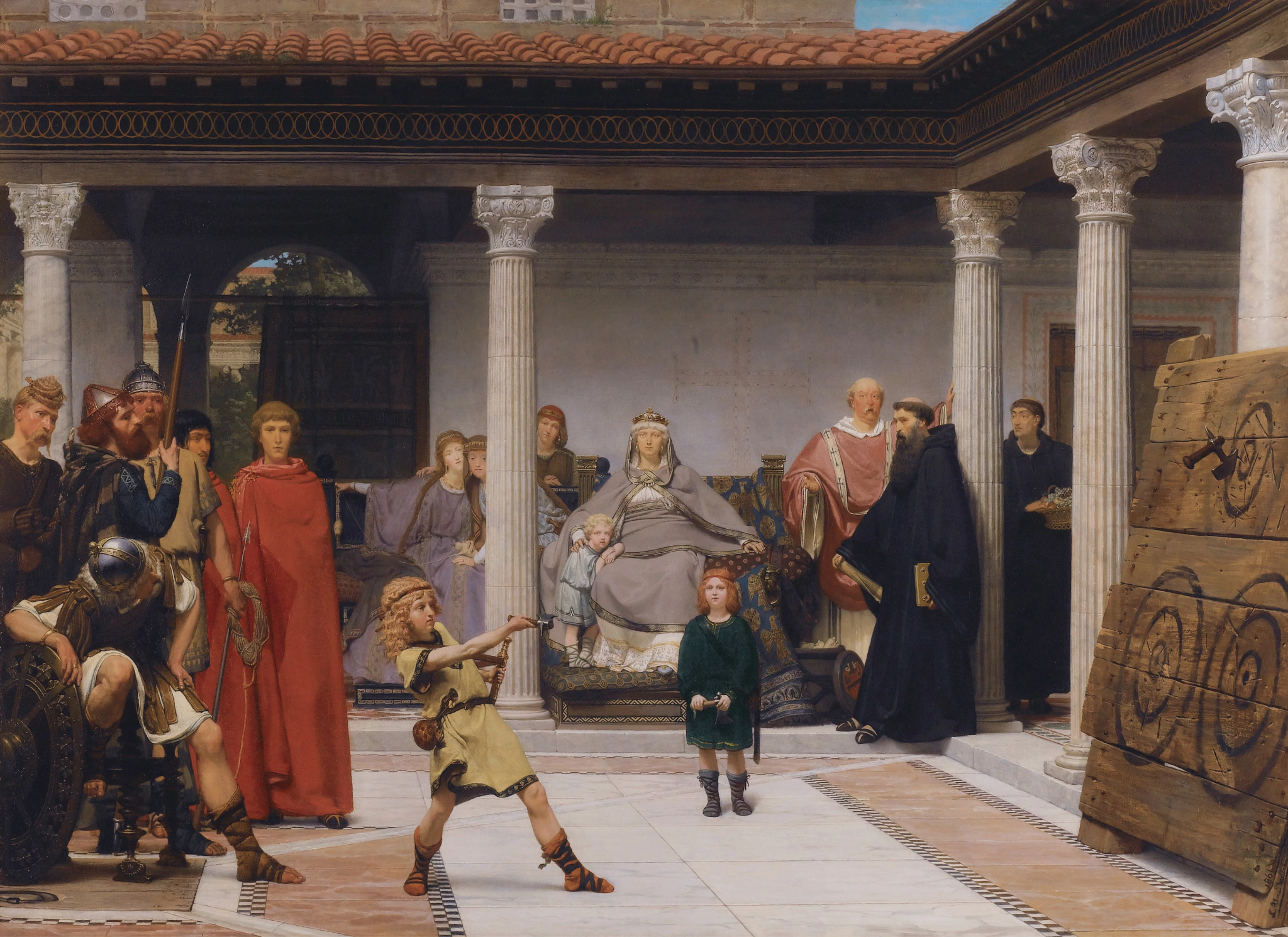
In his Politics, Aristotle wrote that “the first task of the lawgiver is to make the citizens good,” and religion has historically been the lawgiver’s greatest ally in this work. Religion has always been the most reliable institution for producing austerity because it forms rather than coerces, effectively training individuals to restrain the lower appetite, accept limitations, and reorient the self toward higher and more noble ends.
Ancient religious practice made austerity habitual. To sacrifice crops or animals was to surrender immediate gain for a higher purpose. Moreover, fasting taught mastery over hunger, and ritual feasting reinforced gratitude rather than indulgence. These rhythms of denial and celebration cultivated what Xenophon in the Memorabilia called “the habit of ruling oneself,” which he considered to be the foundation of all political order.
In materially poorer societies, this habit was easier to cultivate since necessity reinforced virtue as a means to survival, but when prosperity arrives, only religion can preserve the disciplines that necessity once imposed.

The Discipline Behind Roman Power
While many think of Rome as the powerful empire that came to dominate the ancient world and reshape the course of Western history, they often overlook that the Roman Republic began as a modest agricultural settlement of citizen‑soldiers.
Inspired by the model of their legendary founder Romulus and his successor Numa Pompilius, the Romans were a warlike people who paired martial vigor with strict religious observances. Their austerity was not simply the consequence of environmental factors but was deliberately cultivated through religion, custom, and law — the way of the ancestors the Romans referred to as the Mos Maiorum.
Roman religion itself reinforced this austere posture. The gods of early Rome were not distant abstractions but guardians of the household, the fields, and civic duty. Moreover, rituals were simple, sacrifices modest, and worship centered on discipline rather than ecstatic experiences.
Moreover, the foundational virtues that constituted the Via Romana were religious obligations as much as they were civic ideals. To neglect duty was to offend the gods, and to live simply was to honor them. In short, Roman religion sanctified restraint, making austerity more than a social expectation but a sacred duty.
The citizen-soldier was the secret to the success of the Roman Republic. These men, hardened by labor and oriented toward duty were, according to the Cato the Elder, “the bravest of men and the most steadfast of citizens,” because the land taught them restraint and fortitude. Modest means kept Romans ‘grounded’ in the most literal sense of the word, producing a disciplined citizenry capable of sacrifice and loyal to their familial and civic obligations.
The same principle held true for Rome’s aristocratic families. The Roman domus served as a school of discipline, where the paterfamilias shaped the character of those under his authority and instilled habits of restraint from childhood. Although these households displayed impressive atriums filled with ancestral busts, military trophies, and public honors, their private living quarters remained deliberately austere. This was a purposeful expression of pietas, and served as a reminder to the familia that their status was not determined by wealth but by virtue and service to the Republic.
Spengler saw in this foundation the source of Rome’s civilizational vitality. “Every culture,” he wrote, “is born in the countryside and dies in the cities.” As Rome began to conquer more territory, importing more slaves to work their fields, and concentrate into urbanized centres, its civilizational spirit gave way to something more artificial.
To this end, the historian Sallust lamented that after Rome’s expansion, “ambition drove many men to become false; wealth made them greedy” and “pleasure made them soft.” Luxury increased, religious observance weakened, and the Mos Maiorum was all but abandoned.
Even as Rome became materially wealthy, it lost the strict religious observance that had once sanctified restraint. As a result, prosperity severed the link between abundance and virtue, and without religion to discipline the appetite, Rome’s austerity collapsed — and with it, the character that had sustained the Republic.
The early Republic’s austerity produced strong citizens capable of extraordinary feats, but the victories they won forged an empire inherited by sons accustomed to comfort — men whom Roman moralists condemned as soft, idle, and effeminate. Rather than plowing the fields and fighting in the legions, they frequented spas, spectacles, and the diversions of urban life.
Yet Rome’s story does not end in 476 AD. While the West succumbed to civil war and decadence, the Eastern Roman (Byzantine) Empire endured for nearly a thousand years more. Though pockets of wealth existed in the East, most Romans in the Balkans and Anatolia continued to live as smallholders, soldiers, and farmers whose labor preserved the strong civic character and austere spirit that had once defined the old Roman Republic.
This austere agrarian backbone, further reinforced by Christian monastic austerity that punctuated almost every moment of life, reinforced those conditions that made them strong men and enabled the Byzantines to withstand wave after wave of invasions when others would have surrendered.
Frontier Discipline to Modern Comfort
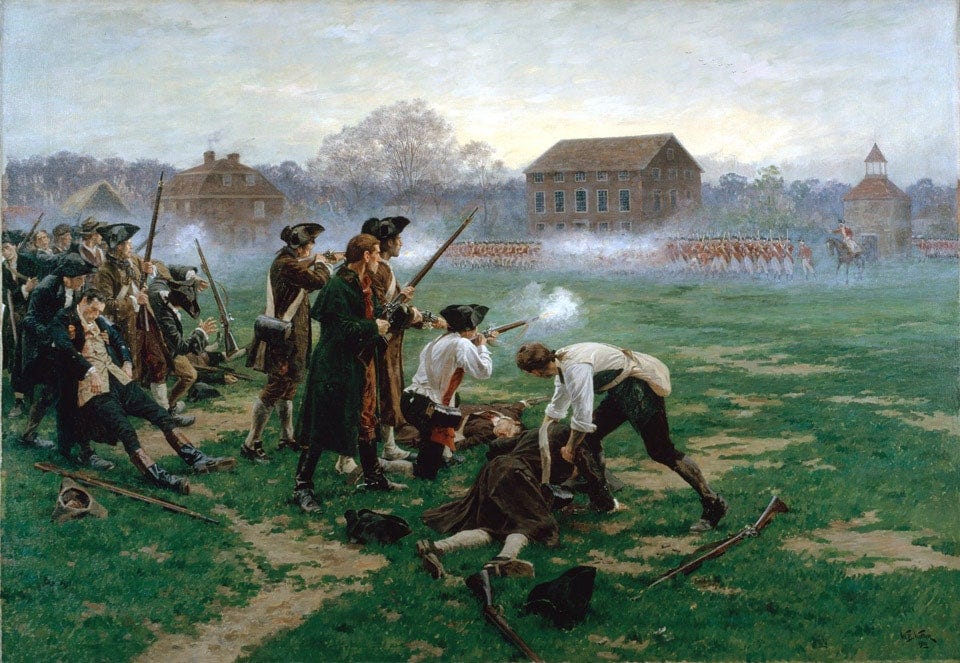
The United States, like Rome, began in austerity. The early republic was shaped by frontier hardship, Protestant self‑discipline, and a civic ethos that prized restraint.
In his Democracy in America, Alexis de Tocqueville observed that Americans possessed “habits of the heart” formed by religion and local self‑government, and these habits produced a culture of self‑command, industriousness, and civic responsibility. Moreover, material scarcity on the frontiers and the severity of the environment instilled within the settlers the fact that survival required discipline.
The American Founding Fathers also understood the necessity of austerity for civic life. George Washington warned in his Farewell Address that “virtue or morality is a necessary spring of popular government,” and John Adams added that “Public virtue cannot exist without private virtue, and public virtue is the only foundation of republics.” These men, well versed in the liberal arts understood that a free people must encourage those dispositions and create those conditions to ensure that strong men do not lose the civilizational vitality that made them exceptional.
For much of its early history, the United States followed the example of the early settlers and Founding Fathers in maintaining a religious and rural character. But as the nation urbanized and industrialized, its cultural foundations inevitably shifted. The agrarian austerity that once shaped American life gave way to abundance.
Moreover, the Christian religion, once the backbone of civic formation, was abandoned. Like Rome, the virtues that had been instrumental in forging the character of the American republic became harder to maintain in a rapidly changing social and political landscape defined by prosperity.
The United States today resembles Rome in its late Republican and early Imperial phases. It is wealthy, powerful, technologically advanced, but increasingly unable to restrain itself. A civilization that becomes prosperous and loses its religious foundations loses the mechanism that produces austerity, and without austerity, the virtues that build the greatest of empires begin to collapse under the weight of their own success.
The Need to Recover Religion and Austerity
Empires rarely fall because they are conquered from external enemies, but rather, fall because they surrender to the forces within. The cause is not primarily economic or political but spiritual. Prosperity without restraint produces weak men, and weak men make hard times inevitable.
If the West is to preserve its prosperity, it must recover the religious foundations that once governed appetite and formed its civilizational character. It requires the humble recognition that a return to religion is necessary for the preservation of Western Civilization since austerity creates those conditions that allow virtue to flourish, and these virtues will strengthen families, communities, and nations.
In short, it is a civilizational safeguard against weakness and effeminacy — which is the inordinate attachment to pleasures, and the pain of being deprived of them.
The task before us is clear. We must embrace austerity in our daily lives, and work to restore the religious and moral foundations that cultivate austerity to ensure that prosperity does not erode our character or the cultural landscape of our nations. The history of Rome reveals that even the mightiest of empires can fall, but austerity mitigates collapse, allowing a people to survive for a thousand years.
Hard times will still come, and when they arrive, strong men will need to rise up and restore good times — or what Spengler called the “civilizational spring” of the West.
Join the fight for the Soul of our Civilization!
By subscribing to Atlas Press, you are supporting an honest group of guys who are working to help revitalize Western Civ through the re-enrichment of the Western mind. We appreciate your support greatly and hope you join us.
I like the hypothesis, and I do believe in the opening line about "hard times create hard men", but actually, I don't think this quite rings true as the "independent variable" that makes great civilizations.
"Austerity" or scarcity is just the norm. Everybody everywhere struggled under scarcity. But most peoples did not create great civilizations. Today, Kyrgyzstan and Tajikistan are scarce on resources. But there are not great civilizations flourishing there at this time, no?
Rome was actually rich in food production, and in population, as it flourished as a kingdom and as a republic. So was Athens. Baghdad also as an Arabic civilization was a rich place. The Golden Age of the Netherlands as an Empire was an "Embarrassment of Riches", as the title of Simon Schama's book about the time is titled. The same could be said of Florence in the Renaissance.
And many of these places, religion was questionable. Florence via the Renaissance marked a break from religion -- DaVinci and his circle are strikingly secular -- as did Athens (turning to philosophy). Rome's religion doesn't seem like it was the key independent variable, since much of the mediterranean at that time shared a similar Greek-ish polytheistic religion.